1. Search Result
Search Result
Results for "

Theranostic Agent

" in MedChemExpress (MCE) Product Catalog:

6

Inhibitors & Agonists

1

Biochemical Assay Reagents

1

Peptides

Cat. No. Product Name Target Research Areas Chemical Structure
  • HY-75706

    PARP Ligands for Target Protein for PROTAC Cancer
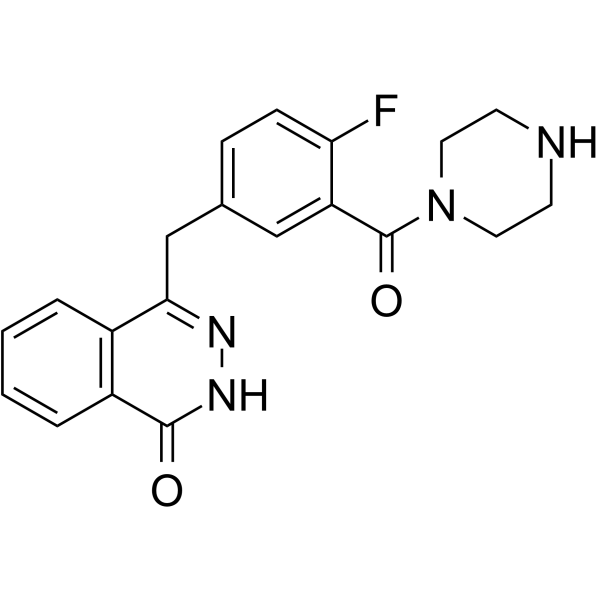
    N-Descyclopropanecarbaldehyde Olaparib is an analogue of Olaparib (HY-10162) containing DOTA moiety. N-Descyclopropanecarbaldehyde Olaparib is a PARP inhibitor used for synthesizing novel dual EGFR and PARP PROTAC, DP-C-4 (HY-141481) . N-Descyclopropanecarbaldehyde Olaparib can be radiolabeled with F-18 or fluorophore for positron emission tomography (PET) or optical imaging in several types of tumor .
    N-Descyclopropanecarbaldehyde Olaparib
  • HY-121462

    Quinoline Blue

    Fluorescent Dye Cancer
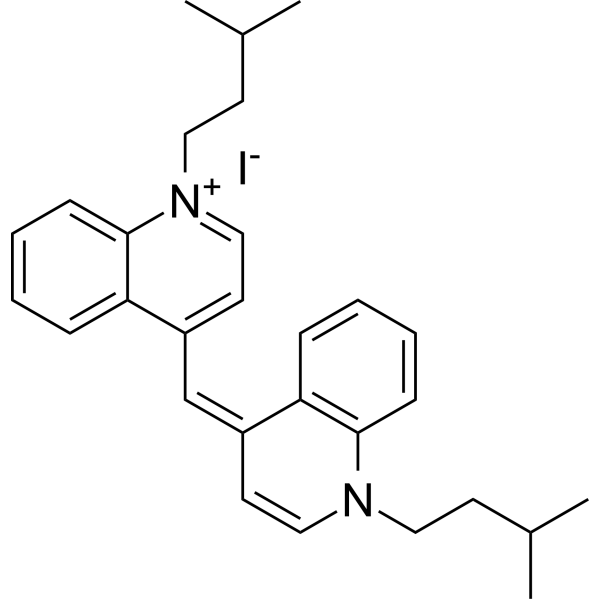
    Cyanine is an excellent fluorescent core scaffold for constructing fluorescent probes. Covalent conjugation of Cyanine with other potent compounds can not only enhance their efficacy but also expand their application modes. Cyanine supports the development of cancer theranostic agents. Cyanine can be used in cancer research .
    Cyanine
  • HY-155485

    HIF/HIF Prolyl-Hydroxylase OAT Cancer
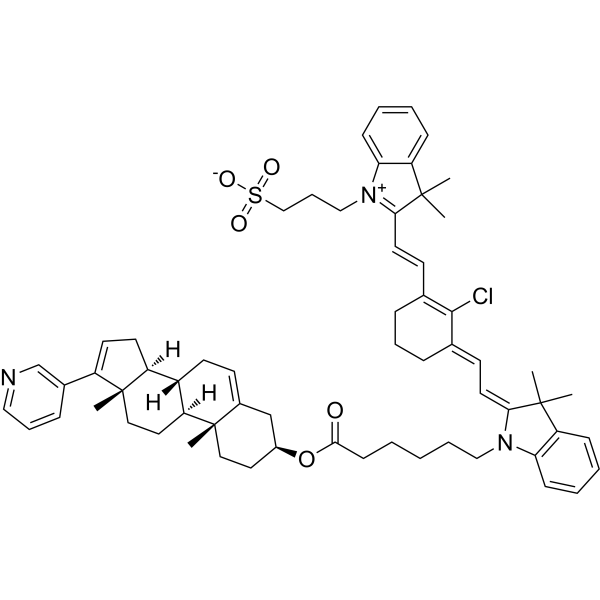
    Abi-DZ-1 is a potential multifunctional theranostic agent via the HIF1α/OATPs pathway. Abi-DZ-1 can be used in the research of tumor-targeted imaging and precision therapy .
    Abi-DZ-1
  • HY-163077

    Reactive Oxygen Species (ROS) Apoptosis Cancer
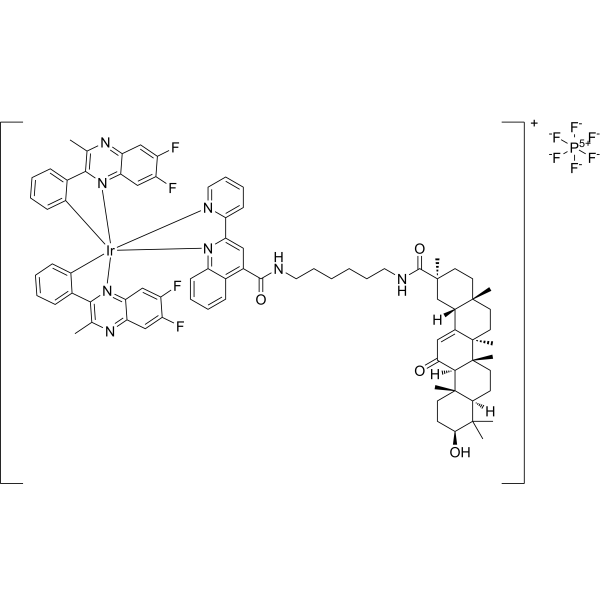
    Anticancer agent 175 (complex 1) ia a near-infrared (NIR) luminescent theranostic complex. Anticancer agent 175 induces ROS accumulation, mitochondrial damage, disruption of Bax/Bcl-2 equilibrium, and tumor cell apoptosis in HepG2 cell line .
    Anticancer agent 175
  • HY-P10648

    HER2-targeting peptide

    EGFR Cancer
    Herceptide (HER2-targeting peptide) is a HER2-targeting peptide, and can be further conjugated to the near-infrared fluorescent dye indocyanine green (HY-D0711) (ICG) for developing theranostic agents .
    Herceptide
  • HY-155070

    DNA/RNA Synthesis Apoptosis Cancer
    SRE-II, an amide derivative, is an activatable photosensitizer for photodynamic cancer research with decreased fluorescence and photosensitizing capabilities. SRE-II can be further converted into the active photosensitizer SDU Red via carboxylesterase-catalyzed amide bond cleavage. SRE-II induces DNA damage and cell apoptosis in the presence of light. SRE-II can act as a promising theranostic agent for triple-negative breast cancer .
    SRE-II

Inquiry Online

Your information is safe with us. * Required Fields.

Salutation


Country or Region *

Applicant Name *


Organization Name *

Department *


Email Address *


Product Name *

Cat. No.


Requested quantity *

Phone Number *


Remarks

Inquiry Online

Inquiry Information

Product Name:
Cat. No.:
Quantity:
MCE Japan Authorized Agent:

