1. Search Result
Search Result
Results for "

bleomycin-induced lung fibrosis

" in MedChemExpress (MCE) Product Catalog:

8

Inhibitors & Agonists

1

Isotope-Labeled Compounds

Targets Recommended:
Cat. No. Product Name Target Research Areas Chemical Structure
  • HY-12678
    Entrectinib
    25+ Cited Publications

    NMS-E628; RXDX-101

    ROS Kinase Trk Receptor Anaplastic lymphoma kinase (ALK) Autophagy Cancer
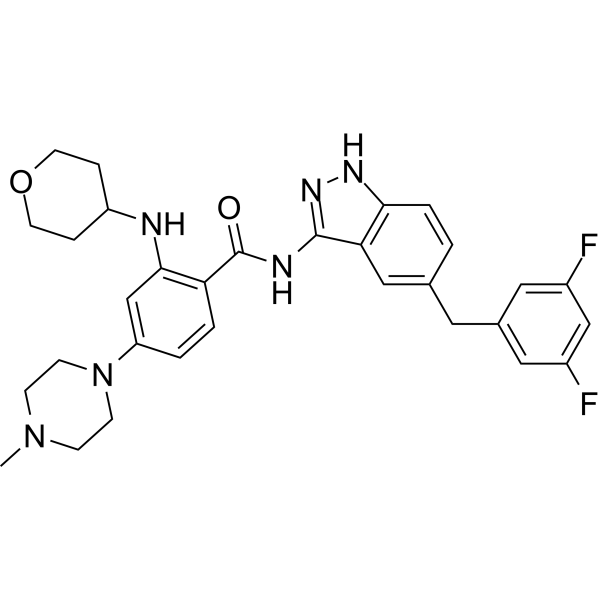
    Entrectinib (NMS-E628) is an orally active, BBB-penetrated and centrally active inhibitor of TrkA/B/C, ROS1 and ALK, with IC50 values of 1, 3, 5, 12 and 7 nM, respectively. Entrectinib induces apoptosis and cycle arrest in cancer cells, has antitumor activity, and attenuates bleomycin-induced lung fibrosis in mice .
    Entrectinib
  • HY-12678R

    NMS-E628 (Standard); RXDX-101 (Standard)

    Reference Standards ROS Kinase Trk Receptor Anaplastic lymphoma kinase (ALK) Autophagy Cancer
    Entrectinib (Standard) is the analytical standard of Entrectinib. This product is intended for research and analytical applications. Entrectinib (NMS-E628) is an orally active, BBB-penetrated and centrally active inhibitor of TrkA/B/C, ROS1 and ALK, with IC50 values of 1, 3, 5, 12 and 7 nM, respectively. Entrectinib induces apoptosis and cycle arrest in cancer cells, has antitumor activity, and attenuates bleomycin-induced lung fibrosis in mice .
    Entrectinib (Standard)
  • HY-12678S

    NMS-E628-d4; RXDX-101-d4

    ROS Kinase Trk Receptor Anaplastic lymphoma kinase (ALK) Autophagy Isotope-Labeled Compounds Cancer
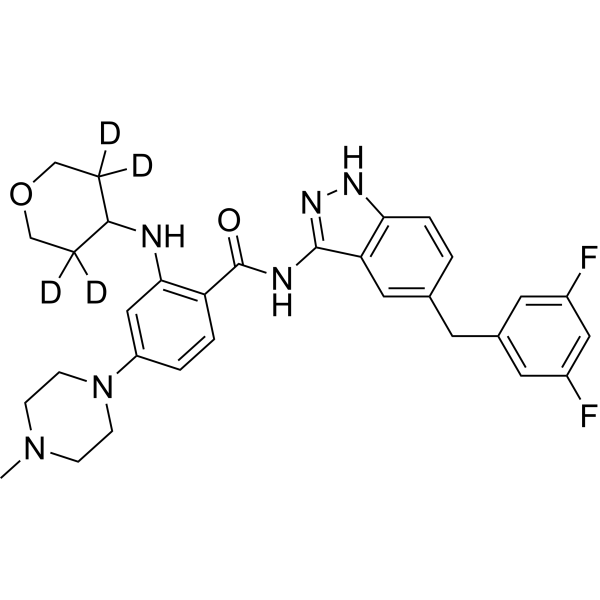
    Entrectinib-d4 (NMS-E628-d4; RXDX-101-d4) is the deuterium labeled Entrectinib (HY-12678). Entrectinib is an orally active, BBB-penetrated and centrally active inhibitor of TrkA/B/C, ROS1 and ALK, with IC50 values of 1, 3, 5, 12 and 7 nM, respectively. Entrectinib induces apoptosis and cycle arrest in cancer cells, has antitumor activity, and attenuates bleomycin-induced lung fibrosis in mice .
    Entrectinib-d4
  • HY-147936

    MMP Inflammation/Immunology
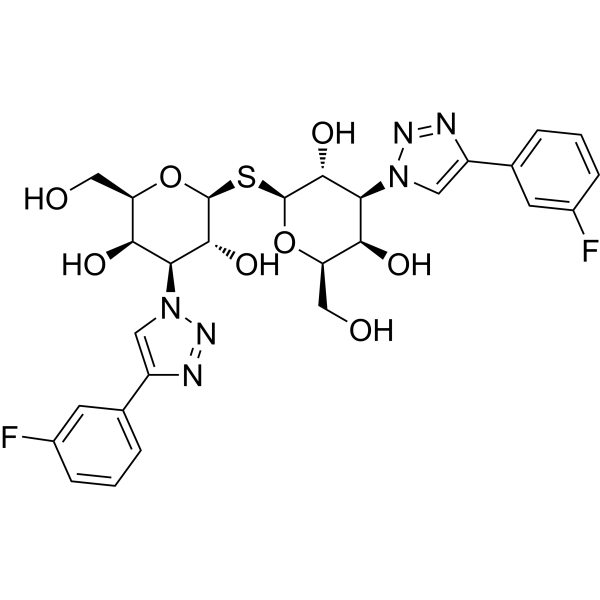
    TP0556351 is a potent and selective matrix metalloproteinase-2 (MMP2) inhibitor with an IC50 value of 0.2 nM. TP0556351 reduces the amount of collagen in the lungs of a Bleomycin-induced pulmonary fibrosis mouse model. TP0556351 can be used for researching idiopathic pulmonary fibrosis (IPF) .
    TP0556351
  • HY-180556

    mTOR PI3K Inflammation/Immunology
    PI3K/mTOR-IN-20 is a selective dual PI3K/mTOR inhibitor. PI3K/mTOR-IN-20 demonstrates nanomolar antiproliferative effects with IC50s of 0.380 and 0.090 μM for MRC-5 and Mlg2908 cells. PI3K/mTOR-IN-20 reduces Ashcroft scores, hydroxyproline content, collagen deposition, and downregulates fibrosis-related proteins, while restoring lung architecture in a Bleomycin-induced pulmonary fibrosis model. PI3K/mTOR-IN-20 shows a favorable safety profile with steady weight recovery and no distinct liver or kidney toxicity. PI3K/mTOR-IN-20 can be used for fetal lung fibroblasts research .
    PI3K/mTOR-IN-20
  • HY-181931

    Phosphodiesterase (PDE) p38 MAPK LPL Receptor ERK JNK Inflammation/Immunology
    Autotaxin-IN-8 (Compound 14E) is an orally active Autotaxin inhibitor with an IC50 of 14.2 nM against hAutotaxin. Autotaxin-IN-8 inhibits Autotaxin activity, MAPK activation, LPAR1 and p-ERK1/2. Autotaxin-IN-8 reduces the phosphorylation levels of JNK and p38. Autotaxin-IN-8 decreases collagen deposition in a mouse model of pulmonary fibrosis. Autotaxin-IN-8 can be used in research related to pulmonary fibrosis .
    Autotaxin-IN-8
  • HY-181741

    Cathepsin Inflammation/Immunology
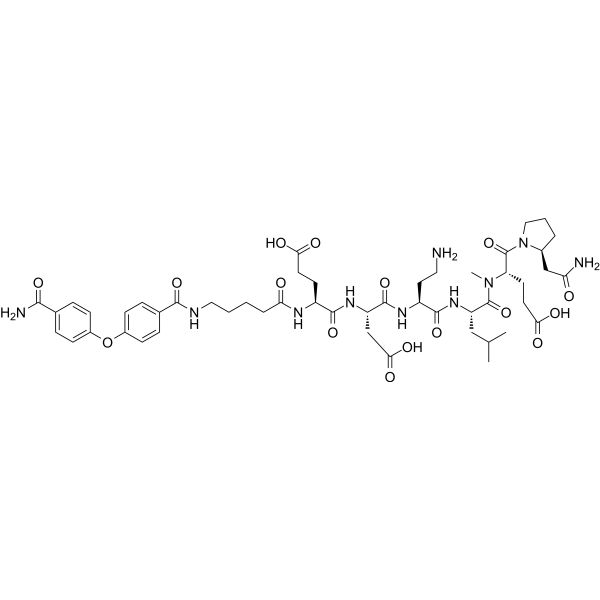
    PI3K-001 is a cathepsin B-responsive prodrug and antifibrotic agent. PI3K-001 undergoes cathepsin B-mediated cleavage of the Val-Ala linker in fibrotic lung lesions to release an active PI3K inhibitor payload, while it remains stable in healthy tissues. PI3K-001 improves collagen deposition, tissue collapse and alveolar injury in fibrotic lung tissues. PI3K-001 is applicable for the research of pulmonary fibrosis .
    PI3K-001
  • HY-181884

    Inflammation/Immunology
    TLR9-IN-3 is a TLR9 antagonist with an IC50 of 0.4 μM. TLR9-IN-3 shows selectivity for TLR4 and TLR8, and inhibits CD69 activation in human whole blood with a corresponding IC50 of 1.1 μM. TLR9-IN-3 can be used in research related to pulmonary fibrosis .
    TLR9-IN-3

Inquiry Online

Your information is safe with us. * Required Fields.

Salutation


Country or Region *

Applicant Name *


Organization Name *

Department *


Email Address *


Product Name *

Cat. No.


Requested quantity *

Phone Number *


Remarks

Inquiry Online

Inquiry Information

Product Name:
Cat. No.:
Quantity:
MCE Japan Authorized Agent:

