17 Results for "

lymphoma mouse xenograft models

" in MedChemExpress (MCE) Product Catalog:
Products (17)

17 Results for "lymphoma mouse xenograft models" in MCE Product Catalog:

10
10 Publications Verification
Cat. No.: HY-131328
CAS No.: 2101700-15-4
Purity:  99.88%
Synonyms: LOXO-305
Target:  

Btk

Research Areas:  

Cancer

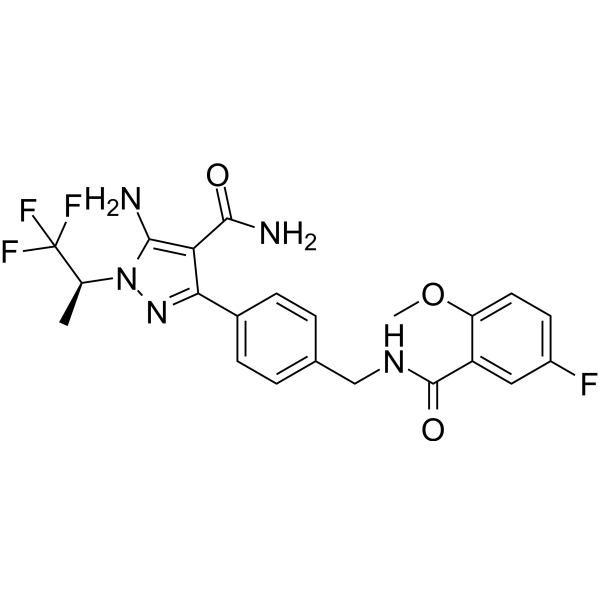
Pirtobrutinib (LOXO-305), a highly selective and non-covalent next generation BTK inhibitor, inhibits diverse BTK C481 substitution mutations. Pirtobrutinib causes regression of BTK-dependent lymphoma tumors in mouse xenograft models. Pirtobrutinib is also more than 300-fold selective for BTK versus 370 other kinases tested and shows no significant inhibition of non-kinase off-targets at 1 μM .
loading...
    loading...
4
4 Cited Publications
Cat. No.: HY-109565
CAS No.: 1799328-86-1
Purity:  99.81%
Synonyms: ASTX660
Target:  

Apoptosis TNF Receptor IAP

Research Areas:  

Cancer

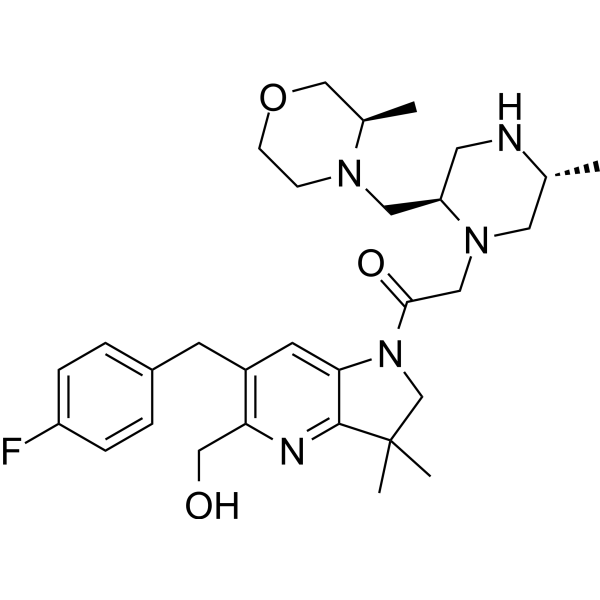
Tolinapant (ASTX660) is an orally active cIAP1/2 and XIAP antagonist, with an IC50 of < 40 nM against XIAP and an IC50 of <12 nM against cIAP1. Tolinapant triggers TNFα-dependent Apoptosis in cancer cells. Tolinapant inhibits tumor growth in mouse xenograft models. Tolinapant can be used in research related to breast cancer, melanoma, lymphoma, multiple myeloma, acute lymphoblastic leukemia and advanced solid tumors .
loading...
    loading...
3
3 Cited Publications
Cat. No.: HY-15163
CAS No.: 1204918-72-8
Synonyms: TG02; SB1317
Target:  

JAK CDK FLT3

Research Areas:  

Cancer

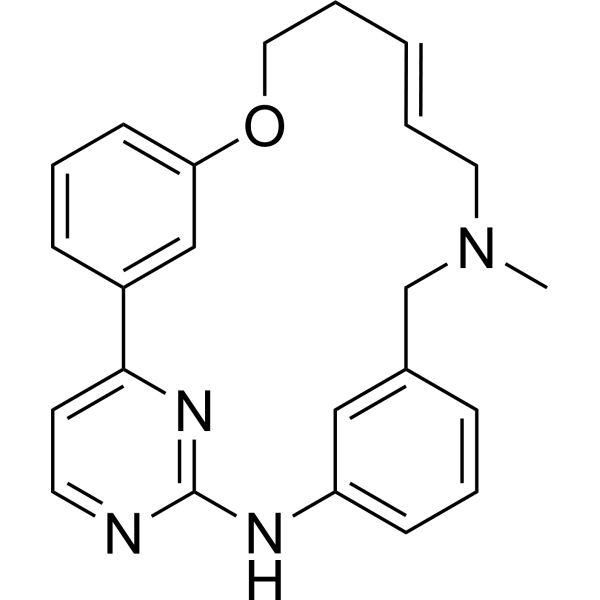
Zotiraciclib (TG02; SB1317) is an orally active JAK2/FLT3/CDK2 inhibitor with IC50 values of 13 nM, 73 nM and 56 nM , respectively. Zotiraciclib inhibits cancer cell proliferation, tumor growth and the activity of CYP2D6. Zotiraciclib exhibits high plasma protein binding rate, Caco-2 permeability and tissue distribution capacity, as well as metabolic stability in human and canine liver microsomes. Zotiraciclib achieves tumor growth inhibition in nude mouse models of colon cancer and lymphoma xenografts. Zotiraciclib can be used for research related to colon cancer, B-cell lymphoma, advanced leukemia, acute leukemia and multiple myeloma .
loading...
    loading...
1
1 Cited Publications
Cat. No.: HY-158421
CAS No.: 63498-32-8
Purity:  99.95%
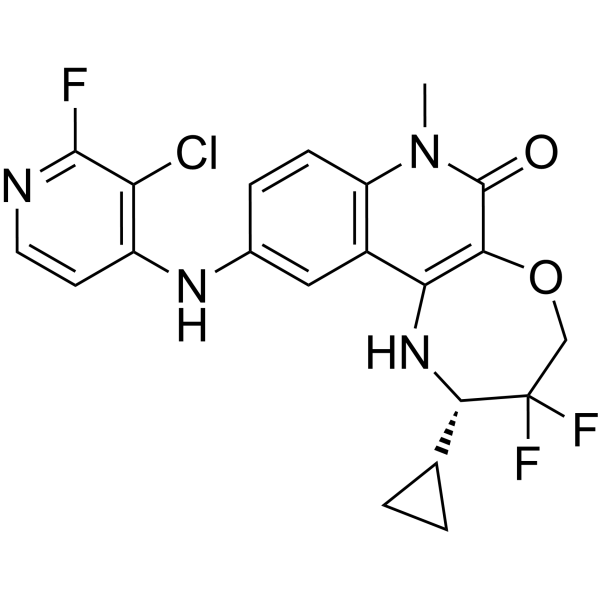
MS-L6 is a OXPHOS inhibitor and antimalarial agent. MS-L6 inhibits NADH oxidation and electron transport. MS-L6 induces OXPHOS uncoupling, dissipates mitochondrial membrane potential, increases non-ATP-coupled oxygen consumption, and reduces ATP synthesis. MS-L6 triggers the production of ROS. MS-L6 exhibits anti-amoebic activity. MS-L6 exerts antitumor activity in mouse lymphoma xenograft models. MS-L6 can be used in research related to B-cell lymphoma, T-cell lymphoma, and non-Hodgkin B-cell lymphoma .
loading...
    loading...
Cat. No.: HY-153521
CAS No.: 2640647-90-9
Purity:  99.30%
Target:  

BCL6

Research Areas:  

Cancer

CCT374705 is an orally active BCL6 inhibitor (IC50 = 4.8 nM) with potent antiproliferative effects in vitro. CCT374705 effectively inhibits tumor growth in a lymphoma xenograft mouse model .
loading...
    loading...
Cat. No.: HY-P991057
CAS No.: 2376730-61-7

Target:  

CD47

Research Areas:  

Cancer

STI-6643 is a fully human IgG4 antibody that targets CD47. STI-6643 blocks CD47-SIRPα interaction, and enables macrophage-mediated phagocytosis of tumor cells. STI-6643 shows anti-tumor activity in mouse lymphoma xenograft models. STI-6643 can be used for the research of Burkitt's lymphoma, solid tumors, relapsed or refractory tumors, and lymphoma. The isotype control for STI-6643 can refer to Human IgG4 (S228P) kappa, Isotype Control (HY-P99003) .
loading...
    loading...
Cat. No.: HY-161989
CAS No.: 3105664-95-4
Target:  

PROTACs BCL6 PAK

Research Areas:  

Cancer

DZ-837 is a BCL6 PROTAC degrader with a DC50 of 557.7 nM. DZ-837 induces BCL6 ubiquitination and degradation in a CRBN-dependent manner via the ubiquitin-proteasome system. DZ-837 activates CDKN1A and CDKN1B, the downstream genes of BCL6. DZ-837 upregulates p21 and p27 proteins . DZ-837 inhibits tumor growth in a diffuse large B-cell lymphoma xenograft mouse model. DZ-837 exerts synergistic antiproliferative effects when combined with Ibrutinib (HY-10997). DZ-837 can be used in studies related to diffuse large B-cell lymphoma .
loading...
    loading...
Cat. No.: HY-156566
CAS No.: 2503036-46-0
Research Areas:  

Cancer

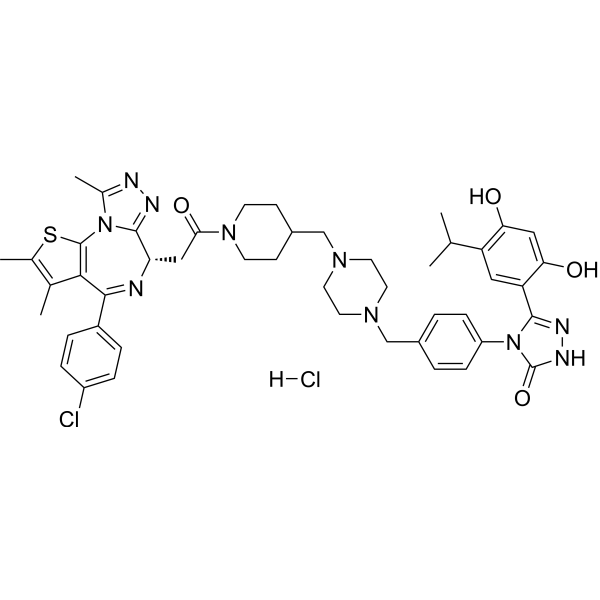
PROTAC BRD4 Degrader-21 is a BRD4-targeting PROTAC degrader with an IC50 value of 59 nM. PROTAC BRD4 Degrader-21 induces ubiquitination of BRD4, leading to its degradation via the proteasome. PROTAC BRD4 Degrader-21 binds to recombinant HSP90α protein with moderate affinity, having an IC50 of 100-1000 nM. PROTAC BRD4 Degrader-21 induces cancer cell death. PROTAC BRD4 Degrader-21 inhibits tumor growth in xenograft mouse models. PROTAC BRD4 Degrader-21 can be used for the research of acute myeloid leukemia, diffuse large B-cell lymphoma .
loading...
    loading...
Cat. No.: HY-178777
CAS No.: 3084696-50-1
Target:  

PROTACs BCL6

Research Areas:  

Cancer

BCL6-760 is an orally active BCL-6 PROTAC degrader with an EC50 of 0.8 nM. BCL6-760 only degrades BCL6 and has no effect on other CRBN substrates. BCL6-760 demonstrates significant efficacy in the orthotopic xenograft mouse model of OCI-LY-1 tumors. BCL6-760 can be used in the research of diffuse Large B-cell Lymphoma (DLBCL) (Pink: BCL-6 ligand (HY-179317); Blue: CRBN ligand (HY-179305); Black: Linker) .
loading...
    loading...
Cat. No.: HY-156249
CAS No.: 1466546-45-1
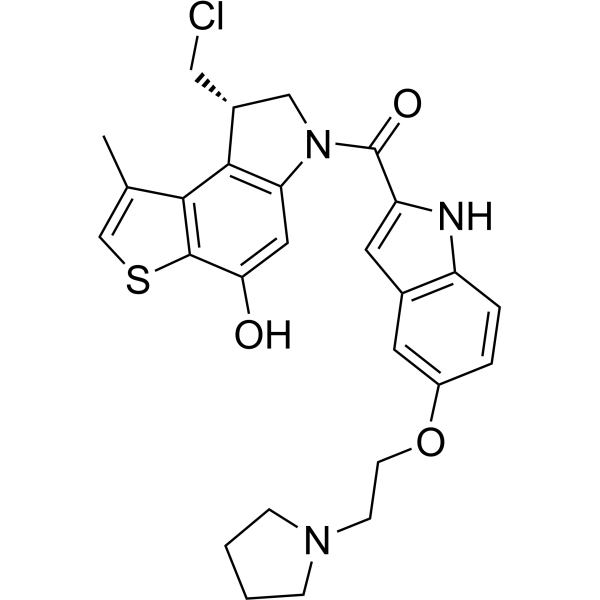
NMS-P528 is a DNA minor groove alkylating agent and ADC payload. NMS-P528 undergoes intramolecular cyclization to form reactive electrophilic derivatives, which in turn induce DNA damage, cell cycle arrest, and Apoptosis. NMS-P528 shows no significant anti-tumor activity as a free payload in a HER2-negative Raji lymphoma mouse xenograft model. NMS-P528 serves as the cytotoxic payload for the antibody-drug conjugate EV20/NMS-P945. NMS-P528 can be used in research related to breast cancer, gastric cancer, colon adenocarcinoma, Burkitt's lymphoma, neuroblastoma, pancreatic cancer, prostate cancer, head and neck cancer, ovarian cancer, and melanoma .
loading...
    loading...
Cat. No.: HY-178343
Target:  

Aurora Kinase Apoptosis

Research Areas:  

Cancer

Aurora A-IN-5 is a potent and highly selective Aurora A inhibitor (IC50 = 0.02 μM), showing 362-fold selectivity for over Aurora B. Aurora A-IN-5 shows its selectivity through unique C−H/π interactions, enhanced hydrophobic contacts, an open binding pocket, and tighter protein packing. Aurora A-IN-5 suppresses Aurora A autophosphorylation, thereby inhibiting cancer cell proliferation by inducing G2/M phase arrest, triggering apoptosis, and suppressing colony formation. Aurora A-IN-5 inhibits tumor growth in MDA-MB-231 xenograft mouse models. Aurora A-IN-5 can be used for breast, cervical, prostate, and lymphoma cancer research .
loading...
    loading...
Cat. No.: HY-168586
CAS No.: 2919995-09-6
Target:  

PROTACs IRAK IKZF Family

Research Areas:  

Cancer

PROTAC IRAK4 degrader-12 is an orally active IRAK4 PROTAC degrader with a DC50 of 4.87 nM in K562 IRAK4-HiBiT cells. PROTAC IRAK4 degrader-12 induces protein degradation of IRAK4, IKZF1 and IKZF3. It inhibits the proliferation of diffuse large B-cell lymphoma cells. It suppresses tumor growth in mouse xenograft models of lymphoma cells. PROTAC IRAK4 degrader-12 can be used for the research of B-cell lymphoma and diffuse large B-cell lymphoma .
loading...
    loading...
Cat. No.: HY-183103
CAS No.: 2222129-13-5
Target:  

Bcr-Abl Src Btk

Research Areas:  

Cancer

PDD-87 is an orally active, blood-brain barrier permeable kinase inhibitor, with IC50 values ranging from 0.07 nM to 0.72 nM against ABL, SRC family, BTK kinases and their key mutants. PDD-87 induces antiproliferative effects in leukemia and lymphoma cells, and inhibits tumor growth in mouse xenograft models. PDD-87 can be used for the research of leukemia and lymphoma .
loading...
    loading...
Cat. No.: HY-182922
CAS No.: 3054394-56-5
Target:  

PROTACs STAT

Research Areas:  

Cancer

SD-965 is a selective STAT3 PROTAC degrader with a DC50 of 0.14 μM. SD-965 promotes the ubiquitination and degradation of STAT3. SD-965 induces rapid, complete and persistent depletion of STAT3 protein. SD-965 induces tumor regression in mouse xenograft models of leukemia and lymphoma .
loading...
    loading...
Cat. No.: HY-109565B
CAS No.: 1799328-50-9
Synonyms: ASTX660 dihydrochloride
Target:  

Apoptosis TNF Receptor IAP

Research Areas:  

Cancer

Tolinapant dihydrochloride (ASTX660 dihydrochloride) is an orally active cIAP1/2 and XIAP antagonist, with an IC50 of < 40 nM against XIAP and an IC50 of <12 nM against cIAP1. Tolinapant dihydrochloride triggers TNFα-dependent Apoptosis in cancer cells. Tolinapant dihydrochloride inhibits tumor growth in mouse xenograft models. Tolinapant dihydrochloride can be used in research related to breast cancer, melanoma, lymphoma, multiple myeloma, acute lymphoblastic leukemia and advanced solid tumors .
loading...
    loading...
Cat. No.: HY-131328S
Synonyms: LOXO-305-13C,d3
Pirtobrutinib- 13C,d3 (LOXO-305- 13C,d3) is the deuterated, 13C-labeled Pirtobrutinib (HY-131328). Pirtobrutinib (LOXO-305), a highly selective and non-covalent next generation BTK inhibitor, inhibits diverse BTK C481 substitution mutations. Pirtobrutinib causes regression of BTK-dependent lymphoma tumors in mouse xenograft models. Pirtobrutinib is also more than 300-fold selective for BTK versus 370 other kinases tested and shows no significant inhibition of non-kinase off-targets at 1 μM .
loading...
    loading...
Cat. No.: HY-P992032
Synonyms: BAY-943 antibody

Target:  

Interleukin Related

Research Areas:  

Cancer

TPP-9476 (BAY-943 antibody) is an anti-human IL3RA (CD123) monoclonal antibody with human IL3RA Kd of 11 nM and cynomolgus monkey IL3RA Kd of 16 nM. TPP-9476 binds specifically to human and cynomolgus monkey IL3RA, undergoes target-dependent internalization into lysosomes of IL3RA-positive cells.TPP-9476 exerts antiproliferative effects in IL3RA-expressing acute myeloid leukemia and classical Hodgkin lymphoma cells, reduces tumor burden, improves survival, and induces complete tumor remission in relevant xenograft mouse models .
loading...
    loading...
  • 1

