1. Search Result
Search Result
Results for "

on-target

" in MedChemExpress (MCE) Product Catalog:

14

Inhibitors & Agonists

1

Peptides

1

Isotope-Labeled Compounds

1

Click Chemistry

Cat. No. Product Name Target Research Areas Chemical Structure
  • HY-17600
    Acalabrutinib
    Maximum Cited Publications
    31 Publications Verification

    Calquence; ACP-196

    Btk Inflammation/Immunology Cancer
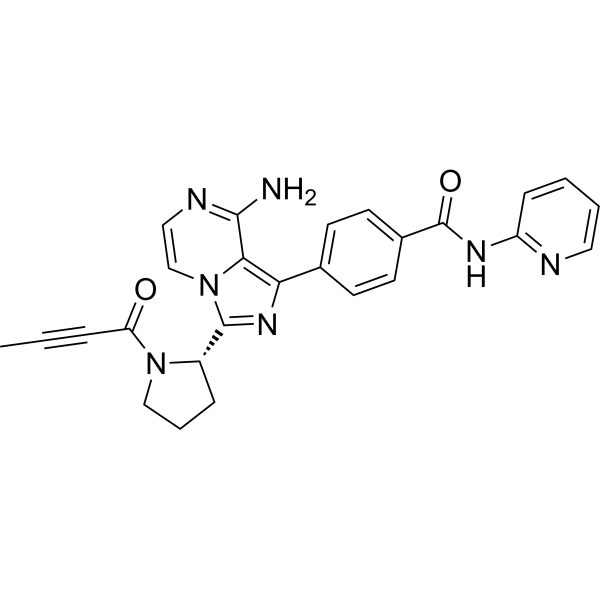
    Acalabrutinib (ACP-196) is an orally active, irreversible, and highly selective second-generation BTK inhibitor. Acalabrutinib binds covalently to Cys481 in the ATP-binding pocket of BTK. Acalabrutinib demonstrates potent on-target effects and efficacy in mouse models of chronic lymphocytic leukemia (CLL). Acalabrutinib can be used for CLL research . Acalabrutinib is a click chemistry reagent, itcontains an Alkyne group and can undergo copper-catalyzed azide-alkyne cycloaddition (CuAAc) with molecules containing Azide groups.
    Acalabrutinib
  • HY-158684

    PROTACs MDM-2/p53 Apoptosis Cancer
    YX-02-030 is a VHL-dependent MDM2 PROTAC degrader with a Kd of 35 nM. YX-02-030 recruits the VHL E3 ligase to form a ternary complex, leading to ubiquitination and proteasome-mediated degradation of MDM2. YX-02-030 inhibits MDM2-p53 and VHL-HIF1α binding with IC50 values of 63 and 1350 nM. YX-02-030 activates TAp73, upregulates p53 family target genes and induces apoptosis. YX-02-030 demonstrates on-target efficacy in TNBC xenograft-bearing mice, extending survival without normal cell toxicity .
    YX-02-030
  • HY-B2091

    Antibiotic Bacterial Infection
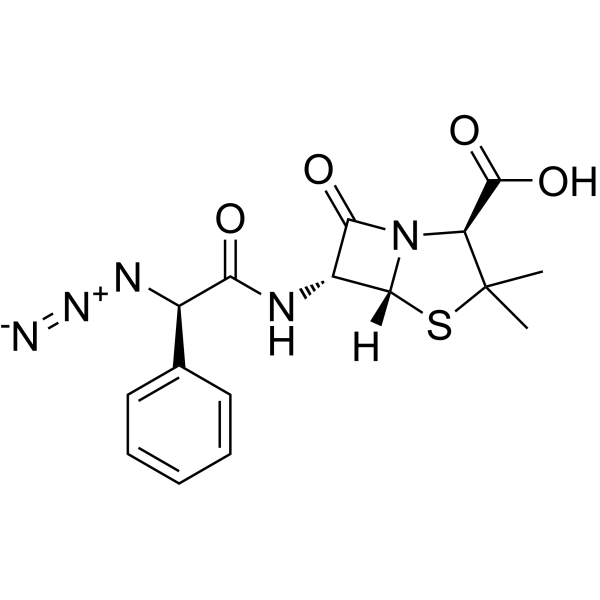
    Azidocillin, a semi-synthetic Penicillin, is an orally active β-lactam antibiotic. Azidocillin bears an azide functionality and retains on-target activity within bacteria. Azidocillin can be used to research osteitis caused by dental surgery, otitis media, enterococcal septicemia and other bacterial infectious diseases . Azidocillin is a click chemistry reagent, it contains an Azide group and can undergo copper-catalyzed azide-alkyne cycloaddition reaction (CuAAc) with molecules containing Alkyne groups. It can also undergo strain-promoted alkyne-azide cycloaddition (SPAAC) reactions with molecules containing DBCO or BCN groups.
    Azidocillin
  • HY-17600S

    ACP-196-d4

    Btk Cancer
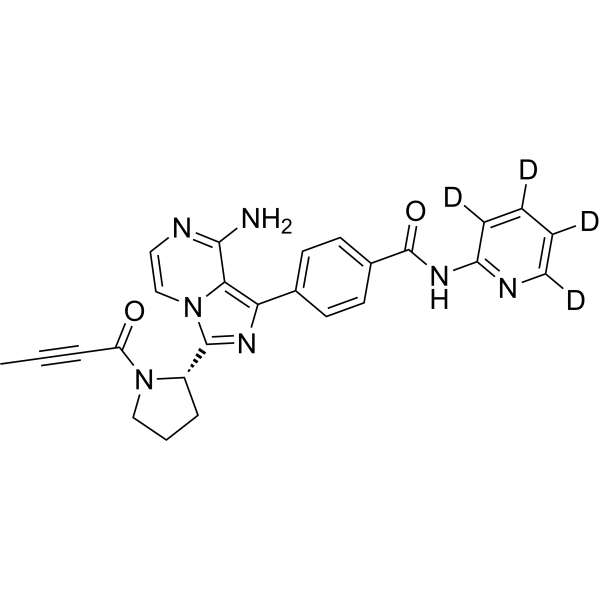
    Acalabrutinib-d4 (ACP-196-d4) is a deuterium labeled Acalabrutinib. Acalabrutinib (ACP-196) is an orally active, irreversible, and highly selective second-generation BTK inhibitor . Acalabrutinib-d4 is a click chemistry reagent, it contains an Alkyne group and can undergo copper-catalyzed azide-alkyne cycloaddition (CuAAc) with molecules containing Azide groups.
    Acalabrutinib-d4
  • HY-103028
    GSK962
    1 Publications Verification

    RIP kinase Others
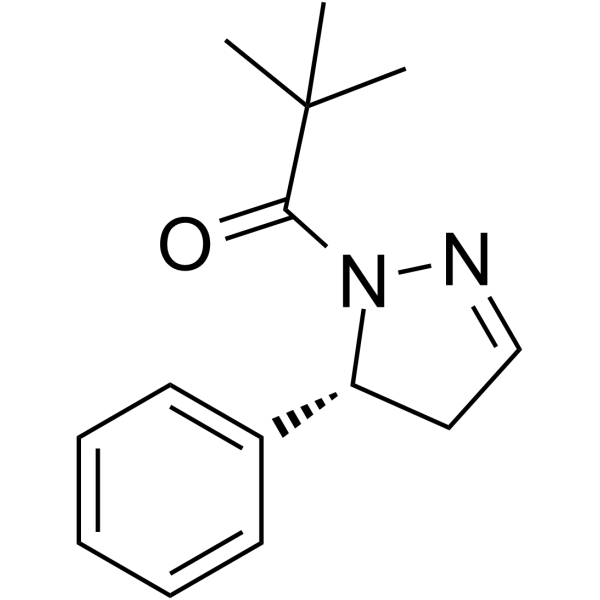
    GSK962 is an inactive enantiomer of GSK963 and can be used to confirm on-target effects .
    GSK962
  • HY-155672

    5-HT Receptor Neurological Disease
    JPC0323 is a dual 5-HT2C/5-HT2A receptor positive allosteric modulator. JPC0323 has on-target properties, acceptable plasma exposure and brain penetration. JPC0323 can be used for the research of neurological disease .
    JPC0323
  • HY-17600R

    ACP-196 (Standard)

    Reference Standards Btk Cancer
    Acalabrutinib (Standard) is the analytical standard of Acalabrutinib. This product is intended for research and analytical applications. Acalabrutinib (ACP-196) is an orally active, irreversible, and highly selective second-generation BTK inhibitor. Acalabrutinib binds covalently to Cys481 in the ATP-binding pocket of BTK. Acalabrutinib demonstrates potent on-target effects and efficacy in mouse models of chronic lymphocytic leukemia (CLL) . Acalabrutinib is a click chemistry reagent, itcontains an Alkyne group and can undergo copper-catalyzed azide-alkyne cycloaddition (CuAAc) with molecules containing Azide groups.
    Acalabrutinib (Standard)
  • HY-P2548

    EGFR Others
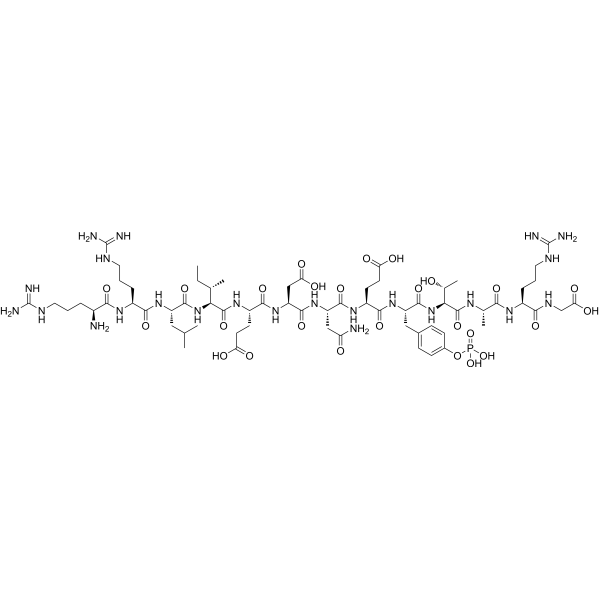
    pp60 (v-SRC) Autophosphorylation Site, Phosphorylated is the phosphorylated peptide of an EGFR substrate. pp60 (v-SRC) Autophosphorylation Site, Phosphorylated can be used for the screening of EGFR Kinase inhibitors via phosphorylated-substrate quantification .
    pp60 (v-SRC) Autophosphorylation Site, Phosphorylated
  • HY-178066

    Bcl-2 Family PROTACs Cancer
    PROTAC BCL-xL/BCL-w Degrader 1 (Compound 44) is a BCL-xL/BCL-w PROTAC degrader. PROTAC BCL-xL/BCL-w Degrader 1 has significant anticancer activity with reduced on-target platelet toxicity . Pink: BCL-xL/BCL-w ligand (HY-10087); Blue: CRBN ligase ligand (HY-163233); Black: linker (HY-Y1230)
    PROTAC BCL-xL/BCL-w Degrader 1
  • HY-172922

    FGFR Cancer
    Arg-IN-1 is a selective Arginine (Arg)-targeting covalent inhibitor with IC50s of 9.7 nM and 30.4 nM for FGFR2 and FGFR3,respectively. Arg-IN-1 has the potential to avoid FGFR1/4-targeted toxicity as well as conquer acquired on-target resistance, potential for FGFR-targeting cancer therapy .
    FGFR-IN-19
  • HY-158627

    5-HT Receptor Others
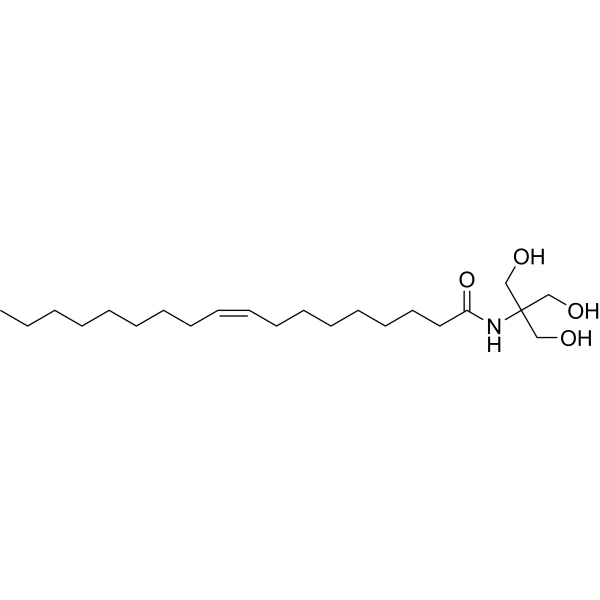
    JPC0323 Oleate is a derivative of JPC0323 (HY-155672). JPC0323 is a dual 5-HT2C/5-HT2A receptor positive allosteric modulator. JPC0323 has on-target properties, acceptable plasma exposure and brain penetration. JPC0323 can be used for the research of neurological disease .
    JPC0323 Oleate
  • HY-B2091A

    Bacterial Antibiotic Infection
    Azidocillin sodium, a semi-synthetic Penicillin, is an orally active β-lactam antibiotic. Azidocillin sodium bears an azide functionality and retains on-target activity within bacteria. Azidocillin sodium can be used to research osteitis caused by dental surgery, otitis media, enterococcal septicemia and other bacterial infectious diseases . Azidocillin sodium is a click chemistry reagent, it contains an Azide group and can undergo copper-catalyzed azide-alkyne cycloaddition reaction (CuAAc) with molecules containing Alkyne groups. It can also undergo strain-promoted alkyne-azide cycloaddition (SPAAC) reactions with molecules containing DBCO or BCN groups.
    Azidocillin sodium
  • HY-103028R

    Reference Standards Others Others
    GSK962 (Standard) is the analytical standard of GSK962 (HY-103028). This product is intended for research and analytical applications. GSK962 is an inactive enantiomer of GSK963 and can be used to confirm on-target effects .
    GSK962 (Standard)
  • HY-17600A

    Calquence maleate; ACP-196 maleate

    Btk Cancer
    Acalabrutinib (Calquence) maleate is an orally active, irreversible, and highly selective second-generation BTK inhibitor. Acalabrutinib binds covalently to Cys481 in the ATP-binding pocket of BTK. Acalabrutinib maleate demonstrates potent on-target effects and efficacy in mouse models of chronic lymphocytic leukemia (CLL). Acalabrutinib maleate can be used for CLL research . Acalabrutinib maleate is a click chemistry reagent, which contains an Alkyne group and can undergo copper-catalyzed azide-alkyne cycloaddition (CuAAc) with molecules containing Azide groups.
    Acalabrutinib maleate

Inquiry Online

Your information is safe with us. * Required Fields.

Salutation


Country or Region *

Applicant Name *


Organization Name *

Department *


Email Address *


Product Name *

Cat. No.


Requested quantity *

Phone Number *


Remarks

Inquiry Online

Inquiry Information

Product Name:
Cat. No.:
Quantity:
MCE Japan Authorized Agent:

