



Valacyclovir
Based on 1 publication(s) in Google Scholar
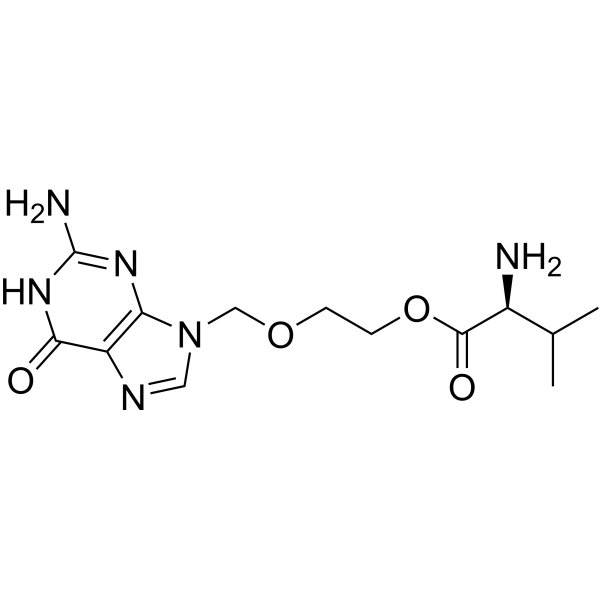
Valacyclovir (Valaciclovir) is an orally active antiviral agent for herpes simplex, herpes zoster, and herpes B. Valacyclovir inhibits HSV-1 W (50=2.9 μg/ml). Valacyclovir is a proagent of Aciclovir (HY-17422) .
For research use only. We do not sell to patients.
- Purity : 98.50%
- CAS No.: 124832-26-4
- Formula: C13H20N6O4
- Molecular Weight:324.34
-
Storage:Powder -20°C, 3 years , 4°C, 2 years ; In solvent -80°C, 6 months , -20°C, 1 month

To place orders, for customer services and technical support, please contact: MedChemExpress USA
Tel: 609-228-6898 E-mail: [email protected] [email protected]


-
 Biological Activity
-
Chemical Information
-
Solvent & Solubility
- Protocols
- Purity & Documentation
- References
-
 Help & FAQs


-
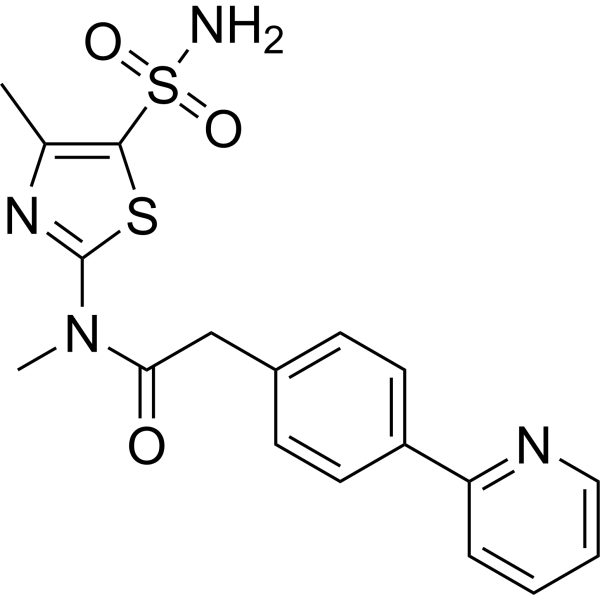
HY-15303
PritelivirHSV Inhibitor -
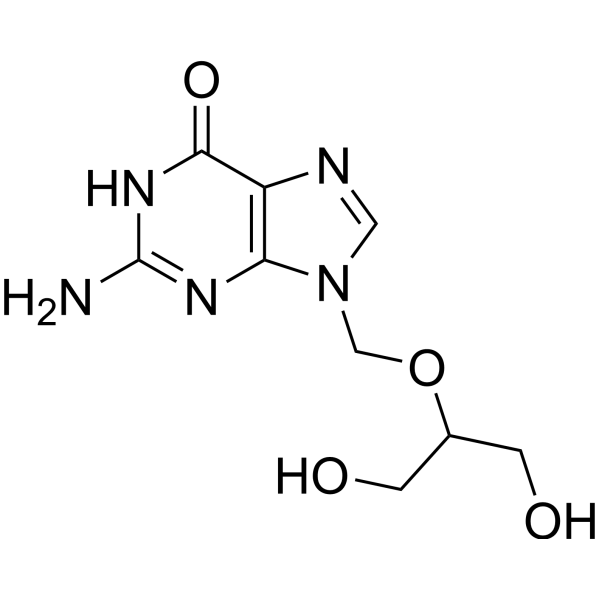
HY-13637
GanciclovirAntiviral Agent -

HY-13637R
Ganciclovir (Standard)Antiviral Agent -
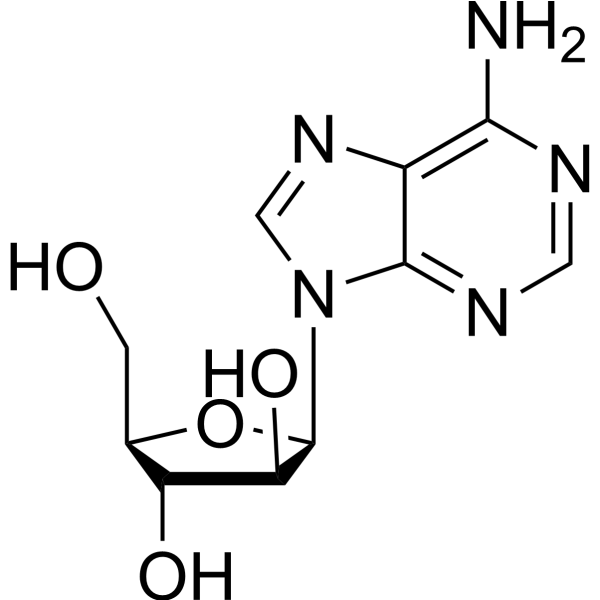
HY-B0277
VidarabineAntiviral Agent -
HY-17426
FamciclovirAntiviral Agent -
HY-118122
FialuridineAntiviral Agent -
HY-17425A
Valacyclovir hydrochlorideAntiviral Agent -

HY-15303R
Pritelivir (Standard)HSV Inhibitor -
HY-B0222
1-DocosanolHSV Inhibitor -
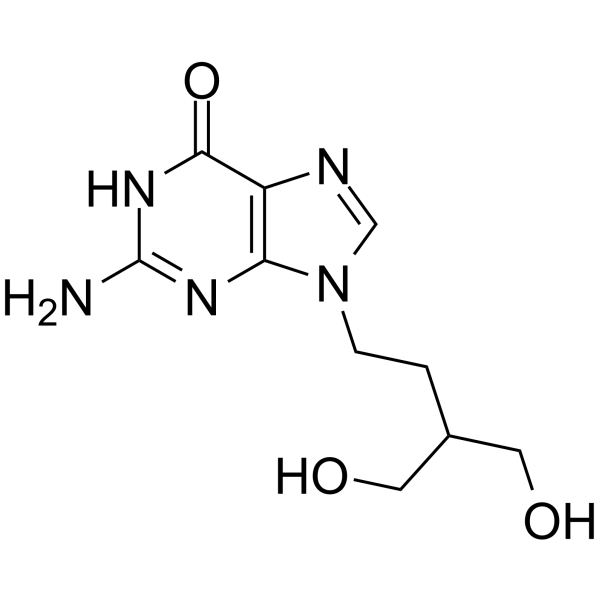
HY-17424
PenciclovirAnti-herpesvirus Agent -
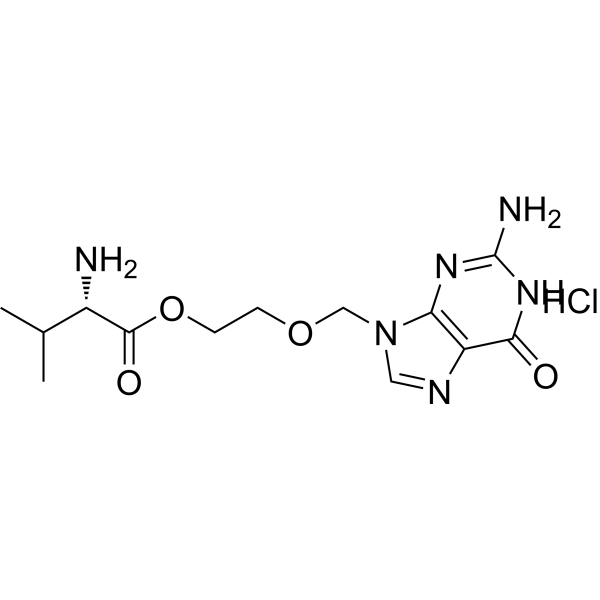
HY-17425AR
Valacyclovir hydrochloride (Standard)Antiviral Agent -
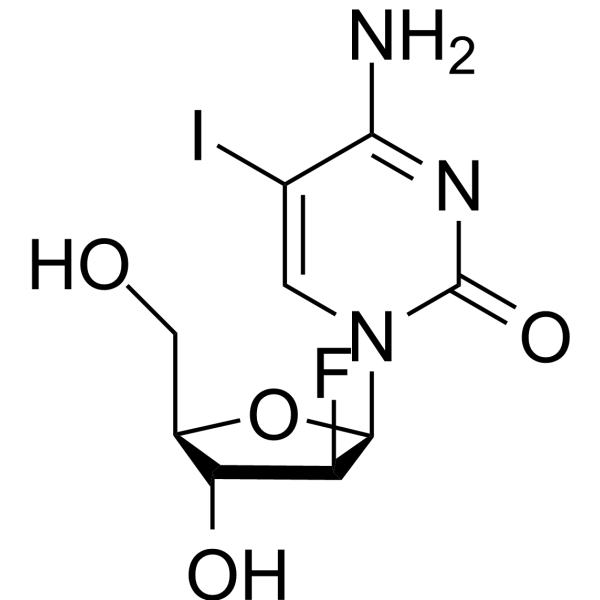
HY-50735
FiacitabineDNA Polymerase Inhibitor
Publications Citing Use of MedChemExpress (MCE) Valacyclovir
MoreAll Antibiotic Isoforms
More

Biological Activity
Description
IC50 & Target
[4]|
HSV-1 2.9 μg/mL (IC50) |
Cellular Effect
|
Cell Line

|
Type | Value | Description | References |
|---|---|---|---|---|
| CHO | IC50 |
1100 μM
Compound: Valacyclovir
|
TP_TRANSPORTER: inhibition of Gly-Sar uptake, L-form (Gly-Sar: 20 uM) in PEPT1-expressing CHO cells
TP_TRANSPORTER: inhibition of Gly-Sar uptake, L-form (Gly-Sar: 20 uM) in PEPT1-expressing CHO cells
|
[PMID: 9706043] |
| CHO | IC50 |
3400 μM
Compound: Valacyclovir
|
TP_TRANSPORTER: inhibition of Gly-Sar uptake, D-form (Gly-Sar: 20 uM) in PEPT1-expressing CHO cells
TP_TRANSPORTER: inhibition of Gly-Sar uptake, D-form (Gly-Sar: 20 uM) in PEPT1-expressing CHO cells
|
[PMID: 9706043] |
| CHO | IC50 |
400 μM
Compound: L-Valyl ester of Zidovudine
|
TP_TRANSPORTER: inhibition of Gly-Sar uptake (Gly-Sar: 20 uM) in PEPT1-expressing CHO cells
TP_TRANSPORTER: inhibition of Gly-Sar uptake (Gly-Sar: 20 uM) in PEPT1-expressing CHO cells
|
[PMID: 9706043] |
| HeLa | IC50 |
1.42 mM
Compound: valacyclovir
|
Inhibition of human PEPT1-mediated [3H]Gly-Sar uptake in human HeLa cells
Inhibition of human PEPT1-mediated [3H]Gly-Sar uptake in human HeLa cells
|
[PMID: 19957998] |
| HeLa | IC50 |
431 μM
Compound: Valacyclovir
|
Inhibitory concentration against [3H]glycylsarcosine uptake in HeLa cells expressing human Intestinal peptide transporter PepT1
Inhibitory concentration against [3H]glycylsarcosine uptake in HeLa cells expressing human Intestinal peptide transporter PepT1
|
[PMID: 15715497] |
In Vitro
Valacyclovir (Valaciclovir; VACV) uptake was concentration dependent and saturable with a Michaelis-Menten constant and maximum velocity of 1.64 mM and 23.34 nmol/mg protein/5 min, respectively. A very similar Km value was obtained in hPEPT1/CHO cells and in rat and rabbit tissues and Caco-2 cells, suggesting that hPEPT1 dominates the intestinal transport properties of VACV in vitro[5].
MedChemExpress (MCE) has not independently confirmed the accuracy of these methods. They are for reference only. Further protocols information, click here.
In Vivo
The concentrations of acyclovir in serum and CSF were measured at steady state after 6 days of oral treatment with 1,000 mg of valacyclovir three times a day[2].
EC50 values of PE and AC in 3T3 cells were 0.02 and 0.01 ug/ml, while values in BHK cells were 0.2 and 0.03 ug/ml. Treatment of infected immunosuppressed mice and FA and VA (b.i.d., 5.5 days) reduced the proportion with erythema from 100% to 24% and 38%, and eliminated ear paralysis, ear lesions (vesicles, etc) and death. Virus was absent from ear and brainstem by day 6, but reappeared after discontinuation in mice treated with VA[3].
MedChemExpress (MCE) has not independently confirmed the accuracy of these methods. They are for reference only.
Clinical Trial
| NCT Number | Sponsor | Condition | Start Date |
Phase
|
|---|---|---|---|---|
| NCT01329991 | Plexxikon| | 2011-05 | PHASE1 |


Chemical Information
-
CAS No. 124832-26-4
-
Appearance Solid
-
Molecular Weight 324.34
-
Formula C13H20N6O4
-
Color White to off-white
-
SMILES
N[C@@H](C(C)C)C(OCCOCN1C=NC2=C1N=C(N)NC2=O)=O
-
Synonyms
Valaciclovir
-
Shipping
Room temperature in continental US; may vary elsewhere.
-
Storage
Powder -20°C 3 years 4°C 2 years In solvent -80°C 6 months -20°C 1 month


Publications (1)
-
Journal Impact Factor
-
Most Recent
-
Front Pharmacol
2020 Mar 11:11:248. PMID: 32218733


Solvent & Solubility
In Vitro:
DMSO : 100 mg/mL (308.32 mM; ultrasonic and warming and heat to 60°C; Hygroscopic DMSO has a significant impact on the solubility of product, please use newly opened DMSO)
Please refer to the solubility information to select the appropriate solvent. Once prepared, please aliquot and store the solution to prevent product inactivation from repeated freeze-thaw cycles.
Storage method and period of stock solution: -80°C, 6 months; -20°C, 1 month. When stored at -80°C, please use it within 6 months. When stored at -20°C, please use it within 1 month.
Please refer to the solubility information to select the appropriate solvent. Once prepared, please aliquot and store the solution to prevent product inactivation from repeated freeze-thaw cycles.
Storage method and period of stock solution: -80°C, 6 months; -20°C, 1 month. When stored at -80°C, please use it within 6 months. When stored at -20°C, please use it within 1 month.
Concentration (start) × Volume (start) = Concentration (final) × Volume (final)
In Vivo:
Select the appropriate dissolution method based on your experimental animal and administration route.
- For the following dissolution methods, please ensure to first prepare a clear stock solution using an In Vitro approach and then sequentially add co-solvents:
- To ensure reliable experimental results, the clarified stock solution can be appropriately stored based on storage conditions. As for the working solution for In Vivo experiments, it is recommended to prepare freshly and use it on the same day.
- The percentages shown for the solvents indicate their volumetric ratio in the final prepared solution. If precipitation or phase separation occurs during preparation, heat and/or sonication can be used to aid dissolution.
Add each solvent one by one: 10% DMSO 40% PEG300 5% Tween-80 45% Saline
Solubility: ≥ 2.5 mg/mL (7.71 mM); Clear solution
This protocol yields a clear solution of ≥ 2.5 mg/mL (saturation unknown).
Taking 1 mL working solution as an example, add 100 μL DMSO stock solution (25.0 mg/mL) to 400 μL PEG300, and mix evenly; then add 50 μL Tween-80 and mix evenly; then add 450 μL Saline to adjust the volume to 1 mL.
Preparation of Saline: Dissolve 0.9 g sodium chloride in ddH₂O and dilute to 100 mL to obtain a clear Saline solution.
Add each solvent one by one: 10% DMSO 90% (20% SBE-β-CD in Saline)
Solubility: ≥ 2.5 mg/mL (7.71 mM); Clear solution
This protocol yields a clear solution of ≥ 2.5 mg/mL (saturation unknown).
Taking 1 mL working solution as an example, add 100 μL DMSO stock solution (25.0 mg/mL) to 900 μL 20% SBE-β-CD in Saline, and mix evenly.
Preparation of 20% SBE-β-CD in Saline (4°C, storage for one week): 2 g SBE-β-CD powder is dissolved in 10 mL Saline, completely dissolve until clear.
In Vivo Dissolution Calculator
Please enter the basic information of animal experiments:
-
-
-
-
Recommended: Prepare an additional quantity of animals to account for potential losses during experiments.
Please enter your animal formula composition:
-
%DMSO +
Recommended: Keep the proportion of DMSO in working solution below 2% if your animal is weak.
-
%+
-
+%Tween-80 + +
-
%Saline +
The co-solvents required include: DMSO, . All of co-solvents are available by MedChemExpress (MCE). , Tween 80. All of co-solvents are available by MedChemExpress (MCE).
Working solution concentration: 0.22 mg/mL
Method for preparing stock solution: mg drug dissolved in μL DMSO. Stock solution concentration: mg/mL.
1. Take μL DMSO stock solution;
2. Add μL .
μL , mix evenly;
3. Then add μL Tween 80, mix evenly;
4. Then add μL
Please ensure that the stock solution in the first step is dissolved to a clear state, and add co-solvents in sequence. You can use ultrasonic heating (ultrasonic cleaner, recommended frequency 20-40 kHz), vortexing, etc. to assist dissolution.

Protocols
-
Research Protocol for Infectious Diseases
Infectious-disease experiments test how pathogens interact with host barriers, innate immune receptors, inflammatory signaling, pathogen replication, and tissue injury; pattern-recognition receptors such as TLRs, RIG-I-like receptors, NOD-like receptors, and inflammasomes detect microbial molecules and activate NF-κB, interferon, and cytokine responses. The central hypothesis is that infection severity reflects the balance between pathogen burden and host response: protective inflammation restricts pathogen growth, whereas excessive or mislocalized inflammation contributes to tissue damage and disease phenotype. Unresolved questions include which host pathways are protective versus pathogenic, why some infection models fail to translate to human disease, and which combined readouts best predict clinically relevant infection outcomes.


Purity & Documentation
-
Data Sheet (275 KB)
-
SDS (393 KB)
- English - EN (393 KB)
- Français - FR (393 KB)
- Deutsch - DE (393 KB)
- Norwegian - NO (393 KB)
- Español - ES (393 KB)
- Swedish - SV (393 KB)
- Italian - IT (393 KB)
- Korean - KR (393 KB)
- Portuguese - PT (393 KB)
-
Handling Instructions (2659 KB)
References
[1]. Valacyclovir. New indication: for genital herpes, simpler administration. Can Fam Physician. 1999 Jul;45:1698-700, 1703-5. [Content Brief]
[2]. Lycke J, et al. Acyclovir levels in serum and cerebrospinal fluid after oral administration of valacyclovir. Antimicrob Agents Chemother. 2003 Aug;47(8):2438-41. [Content Brief]
[3]. Comparison of efficacies of famciclovir and valaciclovir against herpes simplex virus type 1 in a murineimmunosuppression model. Antimicrob Agents Chemother. 1995 May;39(5):1114-9. [Content Brief]
[4]. Dhaliwal DK, Romanowski EG, Yates KA, Valacyclovir inhibits recovery of ocular HSV-1 after experimental reactivation by excimer laser keratectomy. Cornea. 1999 Nov;18(6):693-9. [Content Brief]
[5]. Guo A, Hu P, Balimane PV, Interactions of a nonpeptidic drug, valacyclovir, with the human intestinal peptide transporter (hPEPT1) expressed in a mammalian cell line.J Pharmacol Exp Ther. 1999 Apr;289(1):448-54. [Content Brief]


Complete Stock Solution Preparation Table
Please refer to the solubility information to select the appropriate solvent. Once prepared, please aliquot and store the solution to prevent product inactivation from repeated freeze-thaw cycles.
Storage method and period of stock solution: -80°C, 6 months; -20°C, 1 month. When stored at -80°C, please use it within 6 months. When stored at -20°C, please use it within 1 month.
| Optional Solvent | Concentration Solvent Mass | 1 mg | 5 mg | 10 mg | 25 mg |
|---|---|---|---|---|---|
| DMSO | 1 mM | 3.0832 mL | 15.4159 mL | 30.8318 mL | 77.0796 mL |
| 5 mM | 0.6166 mL | 3.0832 mL | 6.1664 mL | 15.4159 mL | |
| 10 mM | 0.3083 mL | 1.5416 mL | 3.0832 mL | 7.7080 mL | |
| 15 mM | 0.2055 mL | 1.0277 mL | 2.0555 mL | 5.1386 mL | |
| 20 mM | 0.1542 mL | 0.7708 mL | 1.5416 mL | 3.8540 mL | |
| 25 mM | 0.1233 mL | 0.6166 mL | 1.2333 mL | 3.0832 mL | |
| 30 mM | 0.1028 mL | 0.5139 mL | 1.0277 mL | 2.5693 mL | |
| 40 mM | 0.0771 mL | 0.3854 mL | 0.7708 mL | 1.9270 mL | |
| 50 mM | 0.0617 mL | 0.3083 mL | 0.6166 mL | 1.5416 mL | |
| 60 mM | 0.0514 mL | 0.2569 mL | 0.5139 mL | 1.2847 mL | |
| 80 mM | 0.0385 mL | 0.1927 mL | 0.3854 mL | 0.9635 mL | |
| 100 mM | 0.0308 mL | 0.1542 mL | 0.3083 mL | 0.7708 mL |


Valacyclovir Related Classifications
HY-17425 Related Classifications
 Powered by Bioz