



Beclometasone
Based on 3 publication(s) in Google Scholar
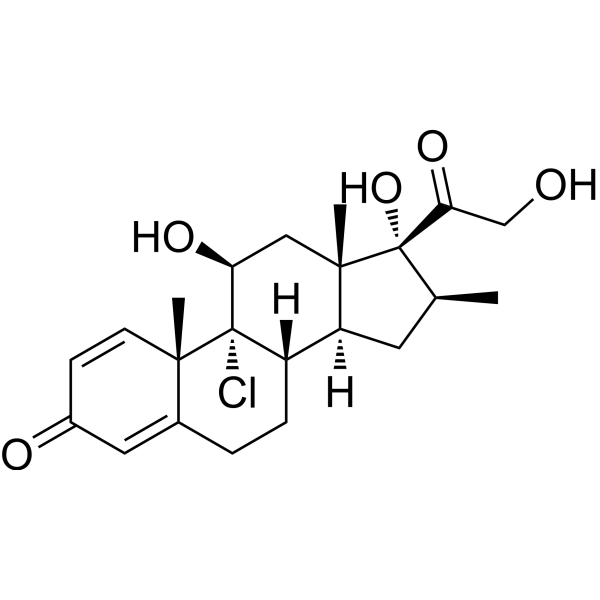
Beclometasone (Beclomethasone) is a prototype glucocorticoid receptor agonist.
연구목적의 판매만을 진행합니다. 환자를 대상으로 한 판매는 하지 않습니다.
- Purity : 99.87%
- CAS No.: 4419-39-0
- 화학식: C22H29ClO5
- 분자량:408.92
-
보관:Powder -20°C, 3 years , 4°C, 2 years ; In solvent -80°C, 6 months , -20°C, 1 month

To place orders, for customer services and technical support, please contact: MedChemExpress USA
Tel: 609-228-6898 E-mail: [email protected] [email protected]


-
 Biological Activity
-
Chemical Information
-
용액&용해도
- Protocol
- 순도&문서
- References
-
 Help & FAQs


-
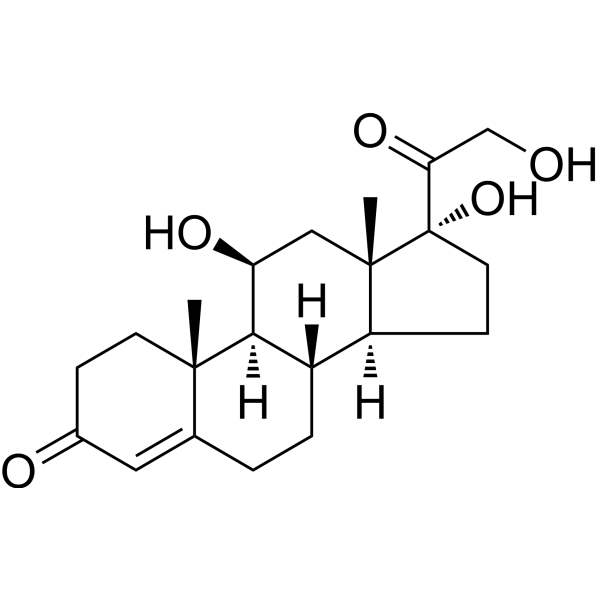
HY-N0583
HydrocortisoneGlucocorticoid Receptor Agonist -
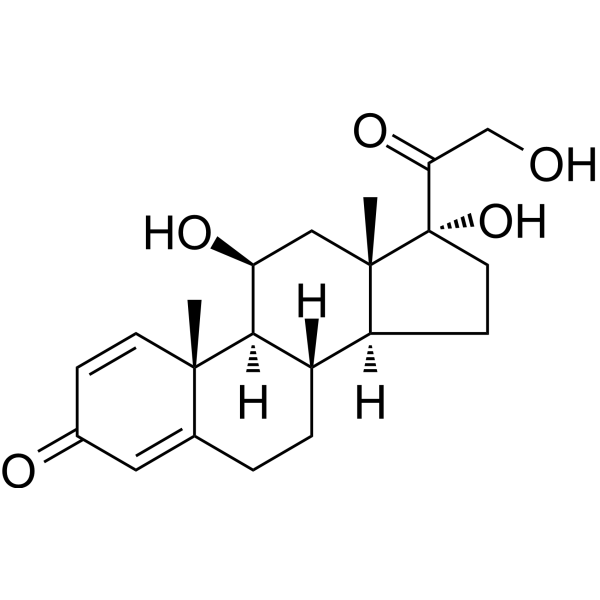
HY-17463
PrednisoloneGlucocorticoid -
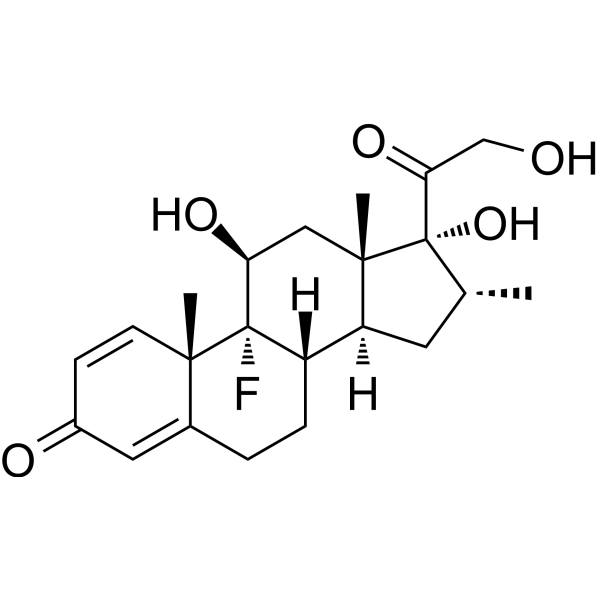
HY-14648
DexamethasoneGR Agonist -
HY-13580
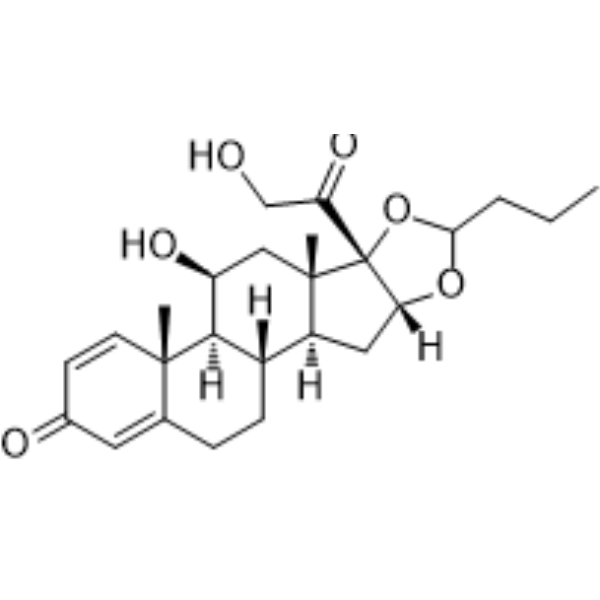
BudesonideGlucocorticoid Receptor Agonist -
HY-17461
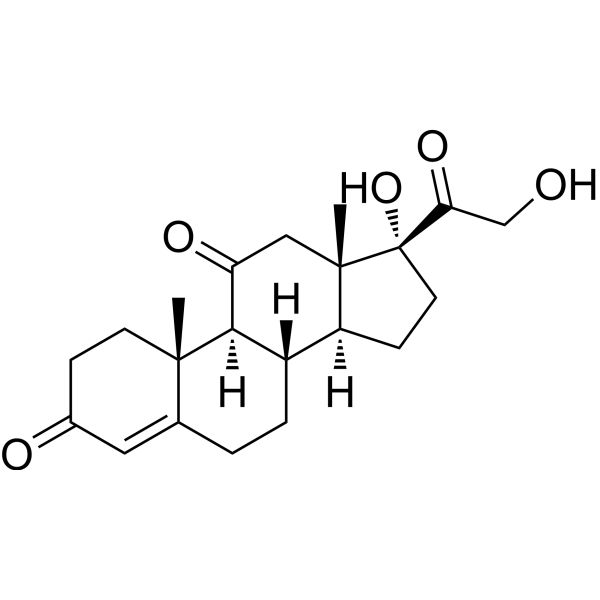
CortisoneGlucocorticoid Receptor Agonist -
HY-B0214
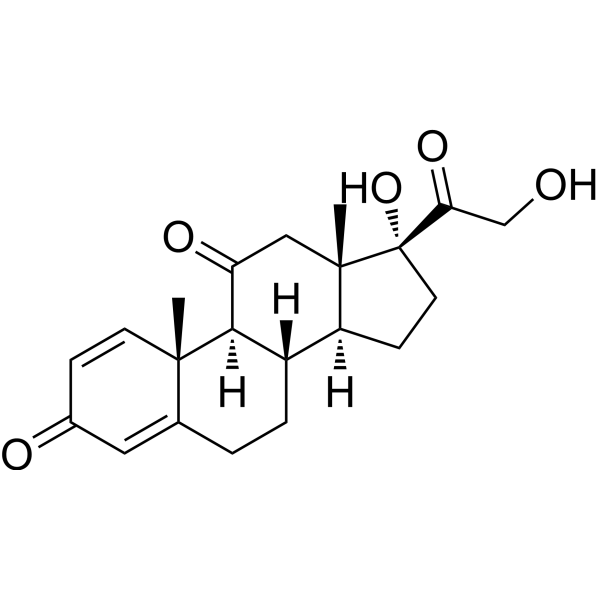
PrednisoneGlucocorticoid Receptor Agonist -
HY-B0328
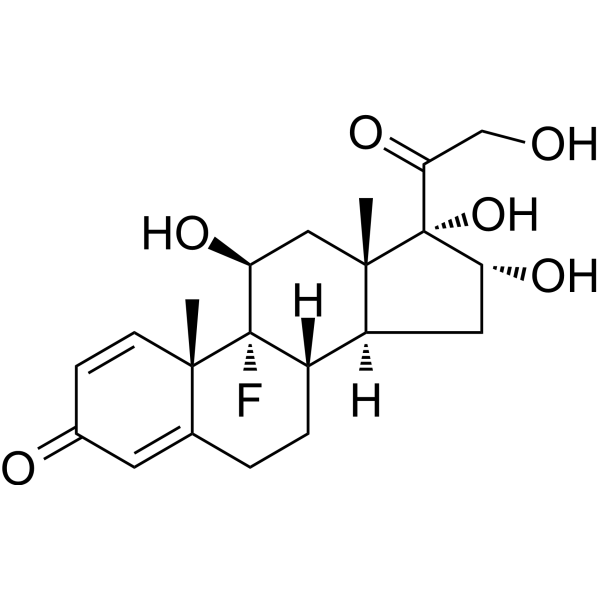
TriamcinoloneSHRs Agonist -
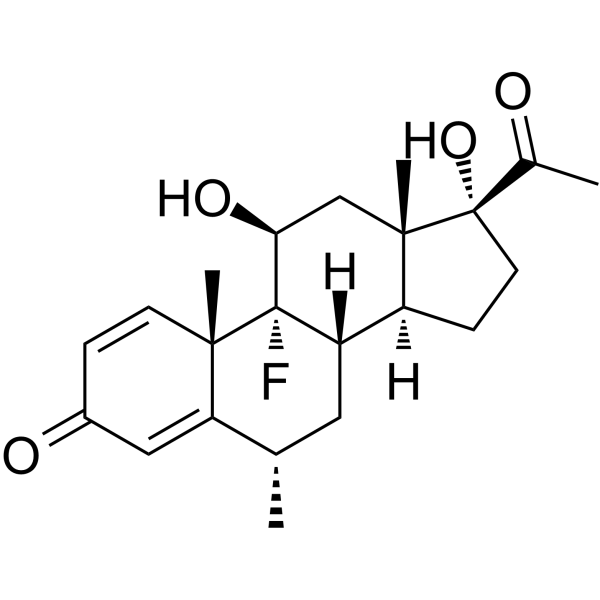
HY-B1893
FluorometholoneGlucocorticoid Receptor Agonist -
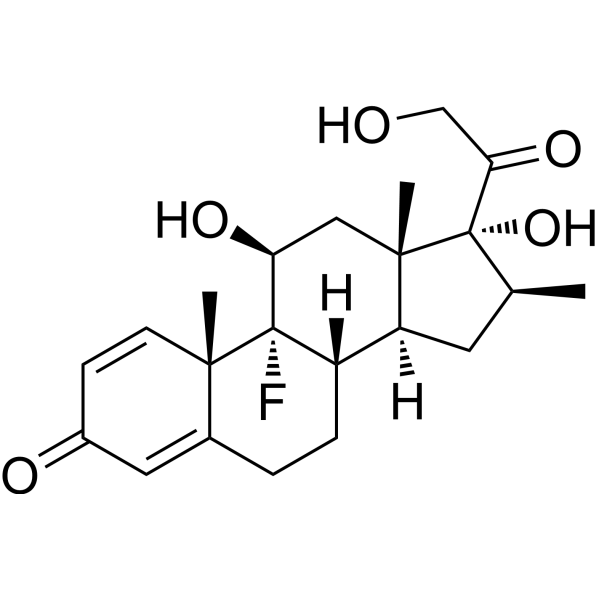
HY-13570
BetamethasoneGlucocorticoid Receptor Agonist -
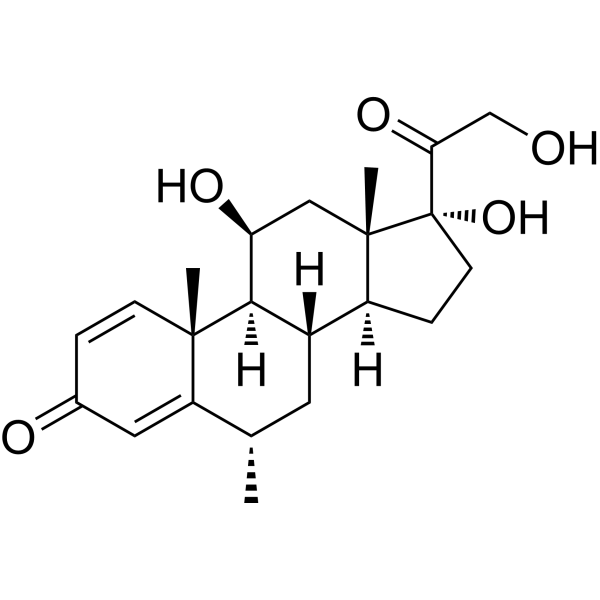
HY-B0260
MethylprednisoloneGlucocorticoid -

HY-13571AR
Beclometasone dipropionate (Standard)Glucocorticoid Receptor Agonist -
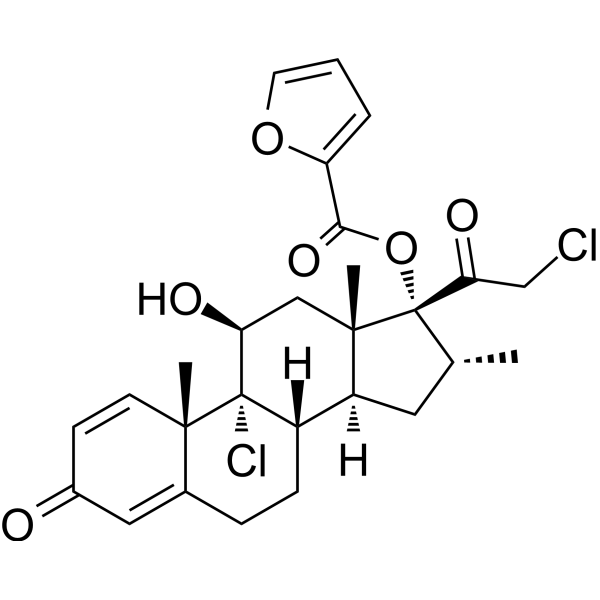
HY-13693
Mometasone furoateGlucocorticoid Receptor Agonist
Publications Citing Use of MedChemExpress (MCE) Beclometasone
More

Biological Activity
제품 설명
IC50 & Target
Glucocorticoid Receptor[1]
In Vitro
An inhibition of the normal physiological neutrophil migration and of neutrophil chemotaxis directed by wounding-induced inflammation is detected at 4 h after administration of 25 μM Beclomethasone. Tumour cell invasion and micrometastasis is also reduced in embryos incubated in 25 μM Beclomethasone 4 h before implantation. In addition, the lysyl oxidase inhibitor β-aminoproprionitrile (βAPN) largely reduces fibrillar collagen and enhances the CHT-TF transmigration of neutrophils, leading to a significant increase of tumour cell invasion and subsequent formation of micrometastases. Notably, βAPN inhibits neutrophil chemotaxis induced by inflammation, indicating that the increase of tumour cell invasion in βAPN-treated embryos is correlated with enhanced non-pathological neutrophil migration, but not with inflammation[1].
MedChemExpress (MCE) has not independently confirmed the accuracy of these methods. They are for reference only. Further protocols information, click here.
Clinical Trial
| NCT Number | Sponsor | Condition | Start Date |
Phase

|
|---|---|---|---|---|
| NCT01329991 | Plexxikon| | 2011-05 | PHASE1 |


Chemical Information
-
CAS No. 4419-39-0
-
Appearance Solid
-
분자량 408.92
-
화학식 C22H29ClO5
-
Color White to off-white
-
SMILES
C[C@@]12[C@](C(CO)=O)(O)[C@@H](C)C[C@@]1([H])[C@]3([H])CCC4=CC(C=C[C@]4(C)[C@@]3(Cl)[C@@H](O)C2)=O
-
Synonyms
Beclomethasone
-
선적
Room temperature in continental US; may vary elsewhere.
-
보관
Powder -20°C 3 years 4°C 2 years In solvent -80°C 6 months -20°C 1 month


Publications (3)
-
Journal Impact Factor
-
Most Recent
-
Nature
2021 Jan;589(7843):620-626. PMID: 33408414 -
Pharm Res
A Biocompatible Synthetic Lung Fluid Based on Human Respiratory Tract Lining Fluid Composition. [Abstract]2017 Dec;34(12):2454-2465. PMID: 28560698 -
Drug Test Anal
High-throughput liquid chromatography tandem mass spectrometry assay as initial testing procedure for analysis of total urinary fraction. [Abstract]2021 Feb;13(2):283-298. PMID: 32852861


용액&용해도
In Vitro:
DMSO : 100 mg/mL (244.55 mM; Need ultrasonic; Hygroscopic DMSO has a significant impact on the solubility of product, please use newly opened DMSO)
Please refer to the solubility information to select the appropriate solvent. Once prepared, please aliquot and store the solution to prevent product inactivation from repeated freeze-thaw cycles.
Storage method and period of stock solution: -80°C, 6 months; -20°C, 1 month. When stored at -80°C, please use it within 6 months. When stored at -20°C, please use it within 1 month.
Please refer to the solubility information to select the appropriate solvent. Once prepared, please aliquot and store the solution to prevent product inactivation from repeated freeze-thaw cycles.
Storage method and period of stock solution: -80°C, 6 months; -20°C, 1 month. When stored at -80°C, please use it within 6 months. When stored at -20°C, please use it within 1 month.
Concentration (start) × Volume (start) = Concentration (final) × Volume (final)
In Vivo:
Select the appropriate dissolution method based on your experimental animal and administration route.
- For the following dissolution methods, please ensure to first prepare a clear stock solution using an In Vitro approach and then sequentially add co-solvents:
- To ensure reliable experimental results, the clarified stock solution can be appropriately stored based on storage conditions. As for the working solution for In Vivo experiments, it is recommended to prepare freshly and use it on the same day.
- The percentages shown for the solvents indicate their volumetric ratio in the final prepared solution. If precipitation or phase separation occurs during preparation, heat and/or sonication can be used to aid dissolution.
Add each solvent one by one: 10% DMSO 90% (20% SBE-β-CD in Saline)
Solubility: ≥ 2.5 mg/mL (6.11 mM); Clear solution
This protocol yields a clear solution of ≥ 2.5 mg/mL (saturation unknown).
Taking 1 mL working solution as an example, add 100 μL DMSO stock solution (25.0 mg/mL) to 900 μL 20% SBE-β-CD in Saline, and mix evenly.
Preparation of 20% SBE-β-CD in Saline (4°C, storage for one week): 2 g SBE-β-CD powder is dissolved in 10 mL Saline, completely dissolve until clear.
In Vivo Dissolution Calculator
Please enter the basic information of animal experiments:
-
-
-
-
Recommended: Prepare an additional quantity of animals to account for potential losses during experiments.
Please enter your animal formula composition:
-
%DMSO +
Recommended: Keep the proportion of DMSO in working solution below 2% if your animal is weak.
-
%+
-
+%Tween-80 + +
-
%Saline +
The co-solvents required include: DMSO, . All of co-solvents are available by MedChemExpress (MCE). , Tween 80. All of co-solvents are available by MedChemExpress (MCE).
Working solution concentration: 0.22 mg/mL
Method for preparing stock solution: mg drug dissolved in μL DMSO. Stock solution concentration: mg/mL.
1. Take μL DMSO stock solution;
2. Add μL .
μL , mix evenly;
3. Then add μL Tween 80, mix evenly;
4. Then add μL
Please ensure that the stock solution in the first step is dissolved to a clear state, and add co-solvents in sequence. You can use ultrasonic heating (ultrasonic cleaner, recommended frequency 20-40 kHz), vortexing, etc. to assist dissolution.

Protocol
-
Research Protocol for Endocrine Diseases
Endocrine diseases often arise from disrupted hormone production, hormone signaling, or target-tissue responsiveness; for diabetes-focused endocrine disease models, insulin signaling regulates glucose uptake, hepatic glucose output, lipid metabolism, and β-cell compensation. Type 2 diabetes develops through interacting defects in insulin resistance, β-cell dysfunction, adipose inflammation, hepatic glucose overproduction, altered incretin signaling, and ectopic lipid metabolism. A major unresolved question is whether endocrine dysfunction is driven primarily by target-tissue insulin resistance, intrinsic β-cell failure, immune/inflammatory stress, or combined multi-organ failure that differs by disease stage.


순도&문서
-
Data Sheet (278 KB)
-
SDS (418 KB)
- English - EN (418 KB)
- Français - FR (418 KB)
- Deutsch - DE (418 KB)
- Norwegian - NO (418 KB)
- Español - ES (418 KB)
- Swedish - SV (418 KB)
- Italian - IT (418 KB)
- Korean - KR (418 KB)
- Portuguese - PT (418 KB)
-
Handling Instructions (2659 KB)
References


Complete Stock Solution Preparation Table
Please refer to the solubility information to select the appropriate solvent. Once prepared, please aliquot and store the solution to prevent product inactivation from repeated freeze-thaw cycles.
Storage method and period of stock solution: -80°C, 6 months; -20°C, 1 month. When stored at -80°C, please use it within 6 months. When stored at -20°C, please use it within 1 month.
| Optional Solvent | Concentration Solvent Mass | 1 mg | 5 mg | 10 mg | 25 mg |
|---|---|---|---|---|---|
| DMSO | 1 mM | 2.4455 mL | 12.2273 mL | 24.4547 mL | 61.1367 mL |
| 5 mM | 0.4891 mL | 2.4455 mL | 4.8909 mL | 12.2273 mL | |
| 10 mM | 0.2445 mL | 1.2227 mL | 2.4455 mL | 6.1137 mL | |
| 15 mM | 0.1630 mL | 0.8152 mL | 1.6303 mL | 4.0758 mL | |
| 20 mM | 0.1223 mL | 0.6114 mL | 1.2227 mL | 3.0568 mL | |
| 25 mM | 0.0978 mL | 0.4891 mL | 0.9782 mL | 2.4455 mL | |
| 30 mM | 0.0815 mL | 0.4076 mL | 0.8152 mL | 2.0379 mL | |
| 40 mM | 0.0611 mL | 0.3057 mL | 0.6114 mL | 1.5284 mL | |
| 50 mM | 0.0489 mL | 0.2445 mL | 0.4891 mL | 1.2227 mL | |
| 60 mM | 0.0408 mL | 0.2038 mL | 0.4076 mL | 1.0189 mL | |
| 80 mM | 0.0306 mL | 0.1528 mL | 0.3057 mL | 0.7642 mL | |
| 100 mM | 0.0245 mL | 0.1223 mL | 0.2445 mL | 0.6114 mL |


Beclometasone Related Classifications
HY-B1540 Related Classifications
 Powered by Bioz