



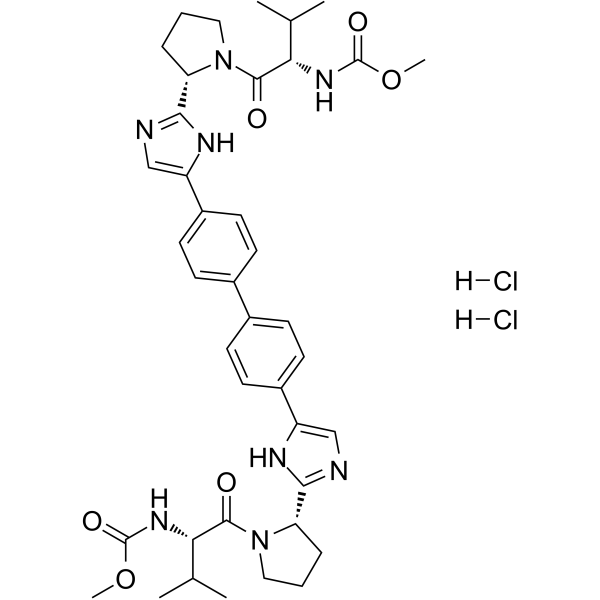
Daclatasvir dihydrochloride
Based on 48 publication(s) in Google Scholar
Daclatasvir dihydrochloride (BMS-790052 dihydrochloride) is a potent and orally active HCV NS5A protein inhibitor with EC50s range of 9-146 pM for multiple HCV replicon genotypes. Daclatasvir dihydrochloride is also an organic anion transporting polypeptide 1B (OATP1B) and OATP1B3 inhibitor with IC50s of 1.5 μM and 3.27 μM, respectively.
For research use only. We do not sell to patients.
- Purity : 99.82%
- CAS No.: 1009119-65-6
- Formula: C40H52Cl2N8O6
- Molecular Weight:811.80
-
Storage:
4°C, sealed storage, away from moisture
* In solvent : -80°C, 6 months; -20°C, 1 month (sealed storage, away from moisture)

To place orders, for customer services and technical support, please contact: MedChemExpress USA
Tel: 609-228-6898 E-mail: [email protected] [email protected]


-
 Biological Activity
-
Chemical Information
-
Solvent & Solubility
- Purity & Documentation
- References
-
 Help & FAQs



Publications Citing Use of MedChemExpress (MCE) Daclatasvir dihydrochloride
More- Hepatology. 2019 May;69(5):1861-1872. [Abstract]
- EMBO Mol Med. 2024 Apr;16(4):870-884. [Abstract]
- Cell Rep. 2021 Nov 23;37(8):110049. [Abstract]
- Int J Radiat Oncol Biol Phys. 2016 Nov 15;96(4):867-876. [Abstract]
- J Med Chem. 2020 Jun 11;63(11):5972-5989. [Abstract]
- Mol Cancer Ther. 2026 Jun 13. [Abstract]
- Eur J Med Chem. 2018 Jan 1:143:1053-1065. [Abstract]
- Ann Hepatol. 2019 Nov-Dec;18(6):816-824. [Abstract]
- Hepatol Commun. 2017 Jul 13;1(6):550-563. [Abstract]
- EMBO Rep. 2016 Jul;17(7):1013-28. [Abstract]
- Pharmaceuticals (Basel). 2022 Feb 18;15(2):242. [Abstract]
- Eur J Pharmacol. 2020 Sep 15:883:173323. [Abstract]
- Eur J Pharmacol. 2019 Jun 15:853:111-120. [Abstract]
- J Gastroenterol. 2019 May;54(5):449-458. [Abstract]
- Front Pharmacol. 2018 Dec 19:9:1438. [Abstract]
- Front Pharmacol. 2016 Dec 21:7:490. [Abstract]
- Int J Antimicrob Agents. 2015 Oct;46(4):381-8. [Abstract]
- PLoS Pathog. 2018 Sep 18;14(9):e1007284. [Abstract]
- Sci Rep. 2018 Jun 6;8(1):8676. [Abstract]
- PLoS Pathog. 2017 May 11;13(5):e1006374. [Abstract]
- Antiviral Res. 2020 May:177:104734. [Abstract]
- Antiviral Res. 2019 Nov:171:104612. [Abstract]
- Antiviral Res. 2017 Dec:148:5-14. [Abstract]
- Antiviral Res. 2017 Oct:146:191-200. [Abstract]
- Antimicrob Agents Chemother. 2015 May;59(5):2496-507. [Abstract]
- Antimicrob Agents Chemother. 2014 Aug;58(8):4555-64. [Abstract]
- Antimicrob Agents Chemother. 2014 Jun;58(6):3327-34. [Abstract]
- Antimicrob Agents Chemother. 2013 Mar;57(3):1180-91. [Abstract]
- J Virol. 2014 May;88(10):5578-94. [Abstract]
- Viruses. 2018 Aug 28;10(9):462. [Abstract]
- J Med Virol. 2023 Dec;95(12):e29290. [Abstract]
- Drug Metab Dispos. 2019 Jul;47(7):768-778. [Abstract]
- Virus Res. 2017 May 2:235:37-48. [Abstract]
- PLoS One. 2016 Jul 21;11(7):e0159511. [Abstract]
- PLoS One. 2016 Apr 22;11(4):e0152036. [Abstract]
- PLoS One. 2015 Aug 11;10(8):e0134707. [Abstract]
- Transpl Infect Dis. 2018 Feb;20(1). [Abstract]
- J Hum Genet. 2020 Jan;65(2):143-153. [Abstract]
- bioRxiv. 2025 Oct 9:2025.10.08.681217. [Abstract]
- Biomed Pharmacother. 2024 Oct:179:117325. [Abstract]
- University of Glasgow. 2024 Mar.
- bioRxiv. 2020 May.
- Biomed Pharmacother. 2019 Aug:116:108976. [Abstract]
- Charles University. 2019 Jun.
- Charles University. 2019.
- Oncotarget. 2017 Dec 21;9(5):5627-5640. [Abstract]
- Seoul National University. 2016 Aug.
- Open Virol J. 2014 Mar 7:8:1-8. [Abstract]
 Customer Validation & Images

-
WB
-
WB
-
WB
-
WB


Biological Activity
Description
IC50 & Target
EC50: 50 pM (HCV replicon genotype 1a), 9 pM (HCV replicon genotype 1b), 71 pM (HCV replicon genotype 2a), 146 pM (HCV replicon genotype 3a), 12 pM (HCV replicon genotype 4a) and 33 pM (HCV replicon genotype 5a)[1]
Kd: 8 nM (NS5A33-202) and 210 nM (NS5A26-202)[2]
IC50: 1.5 μM (OATP1B) and 3.27 μM (OATP1B3)[3]
In Vitro
Daclatasvir (BMS-790052) demonstrates potent inhibitory activity towards all genotypes tested, with EC50 values ranging from 9 pM to 146 pM. Daclatasvir inhibits HCV replicon genotype 1a, 1b, 2a, 3a, 4a and 5a with EC50 values of 50 pM, 9 pM, 71 pM, 146 pM, 12 pM and 33 pM, respectively. Daclatasvir is a potent inhibitor of the JFH-1 genotype 2a infectious virus that replicates in cell culture (EC50=28 pM)[1]. Daclatasvir (BMS-790052) binds tightly to NS5A33-202 and NS5A26-202 with Kds of 8 nM and 210 nM, respectively[2].
MedChemExpress (MCE) has not independently confirmed the accuracy of these methods. They are for reference only.
In Vivo
MedChemExpress (MCE) has not independently confirmed the accuracy of these methods. They are for reference only.
-
Animal Model:NOD/SCID male mice (5 weeks of age, 18-20 g) bearing HCV RNA-transfected cells[4]
-
Dosage:30 mg/kg
-
Administration:Oral administration; daily; for 27 days
-
Result:Reduced serum HCV RNA titers very rapidly by ~1.5 log10 at day 3.
Clinical Trial
| NCT Number | Sponsor | Condition | Start Date |
Phase

|
|---|---|---|---|---|
| NCT01329991 | Plexxikon| | 2011-05 | PHASE1 |


Chemical Information
-
CAS No. 1009119-65-6
-
Appearance Solid
-
Molecular Weight 811.80
-
Formula C40H52Cl2N8O6
-
Color White to yellow
-
SMILES
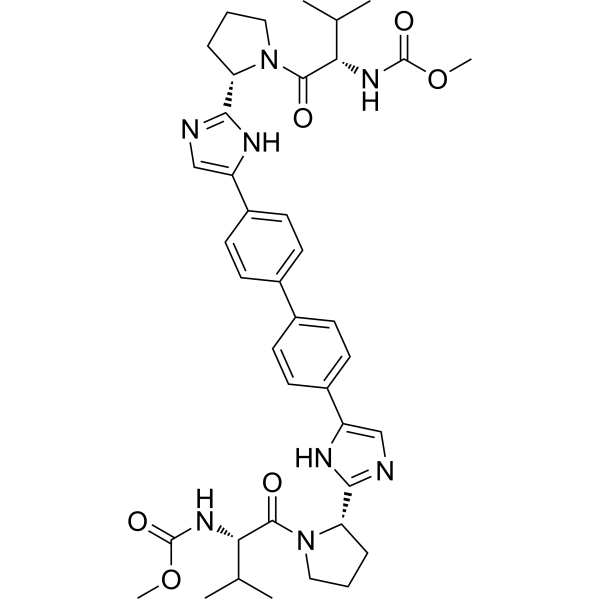
O=C(N1CCC[C@H]1C2=NC=C(C3=CC=C(C4=CC=C(C=C4)C5=CN=C(N5)[C@@H]6CCCN6C([C@H](C(C)C)NC(OC)=O)=O)C=C3)N2)[C@H](C(C)C)NC(OC)=O.[H]Cl.[H]Cl
-
Synonyms
BMS-790052 dihydrochloride; EBP 883 dihydrochloride
-
Shipping
Room temperature in continental US; may vary elsewhere.
-
Storage
4°C, sealed storage, away from moisture
* In solvent : -80°C, 6 months; -20°C, 1 month (sealed storage, away from moisture)


Publications (48)
-
Journal Impact Factor
-
Most Recent
-
Hepatology
Resistance analysis of genotype 3 hepatitis C virus indicates subtypes inherently resistant to nonstructural protein 5A inhibitors. [Abstract]2019 May;69(5):1861-1872. PMID: 29425396 -
EMBO Mol Med
2024 Apr;16(4):870-884. PMID: 38462666 -
Cell Rep
Contribution of autophagy machinery factors to HCV and SARS-CoV-2 replication organelle formation. [Abstract]2021 Nov 23;37(8):110049. PMID: 34788596 -
Int J Radiat Oncol Biol Phys
Targeting Phosphatidylinositol 4-Kinase IIIα for Radiosensitization: A Potential Model of Drug Repositioning Using an Anti-Hepatitis C Viral Agent. [Abstract]2016 Nov 15;96(4):867-876. PMID: 27788957 -
J Med Chem
2-((4-Arylpiperazin-1-yl)methyl)benzonitrile Derivatives as Orally Available Inhibitors of Hepatitis C Virus with a Novel Mechanism of Action. [Abstract]2020 Jun 11;63(11):5972-5989. PMID: 32378892 -
Mol Cancer Ther
Functional genomics and proteomics identify Folate Carrier SLC19A1 as a predictor of pralatrexate sensitivity in diverse T-cell lymphoma models. [Abstract]2026 Jun 13. PMID: 42295240 -
Eur J Med Chem
Discovery and evolution of aloperine derivatives as a new family of HCV inhibitors with novel mechanism. [Abstract]2018 Jan 1:143:1053-1065. PMID: 29232582
Daclatasvir dihydrochloride purchased from MedChemExpress. Usage Cited in: Eur J Med Chem. 2018 Jan 1:143:1053-1065. [Abstract]
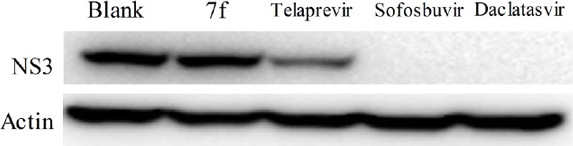
GS4.3 cells are treated with 7f (20 μM), or Telaprevir (0.5μM), Sofosbuvir (0.8 μM), Daclatasvir (0.15 μM) or solvent control for 6 days.
Daclatasvir dihydrochloride purchased from MedChemExpress. Usage Cited in: Eur J Med Chem. 2018 Jan 1:143:1053-1065. [Abstract]
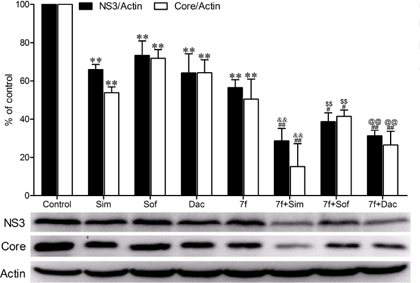
Huh7.5 cells are infected with HCV and simultaneously treated with 7f (10 μM) or DAA (0.04 μM Simeprevir, 0.08 μM Sofosbuvir, or 16 pM Daclatasvir) or 7f plus DAA.
-
Ann Hepatol
Sofosbuvir inhibits yellow fever virus in vitro and in patients with acute liver failure. [Abstract]2019 Nov-Dec;18(6):816-824. PMID: 31594756 -
Hepatol Commun
Ribavirin suppresses hepatic lipogenesis through inosine monophosphate dehydrogenase inhibition: Involvement of adenosine monophosphate-activated protein kinase-related kinases and retinoid X receptor α. [Abstract]2017 Jul 13;1(6):550-563. PMID: 29404478 -
EMBO Rep
Long noncoding RNA EGOT negatively affects the antiviral response and favors HCV replication. [Abstract]2016 Jul;17(7):1013-28. PMID: 27283940 -
Pharmaceuticals (Basel)
Evaluation of the Potency of Anti-HIV and Anti-HCV Drugs to Inhibit P-Glycoprotein Mediated Efflux of Digoxin in Caco-2 Cell Line and Human Precision-Cut Intestinal Slices. [Abstract]2022 Feb 18;15(2):242. PMID: 35215354 -
Eur J Pharmacol
Aloperine inhibits hepatitis C virus entry into cells by disturbing internalisation from endocytosis to the membrane fusion process. [Abstract]2020 Sep 15:883:173323. PMID: 32622669 -
Eur J Pharmacol
Farnesoid X receptor agonist GW4064 indirectly inhibits HCV entry into cells via down-regulating scavenger receptor class B type I. [Abstract]2019 Jun 15:853:111-120. PMID: 30902657 -
J Gastroenterol
Combinations of two drugs among NS3/4A inhibitors, NS5B inhibitors and non-selective antiviral agents are effective for hepatitis C virus with NS5A-P32 deletion in humanized-liver mice. [Abstract]2019 May;54(5):449-458. PMID: 30684016 -
Front Pharmacol
Bicyclol Attenuates Liver Inflammation Induced by Infection of Hepatitis C Virus via Repressing ROS-Mediated Activation of MAPK/NF-κB Signaling Pathway. [Abstract]2018 Dec 19:9:1438. PMID: 30618739 -
Front Pharmacol
Grape Seed Extract Attenuates Hepatitis C Virus Replication and Virus-Induced Inflammation. [Abstract]2016 Dec 21:7:490. PMID: 28066241 -
Int J Antimicrob Agents
Differential inhibition features of direct-acting anti-hepatitis C virus agents against human organic anion transporting polypeptide 2B1. [Abstract]2015 Oct;46(4):381-8. PMID: 26163159 -
PLoS Pathog
Host phosphatidic acid phosphatase lipin1 is rate limiting for functional hepatitis C virus replicase complex formation. [Abstract]2018 Sep 18;14(9):e1007284. PMID: 30226904
Daclatasvir dihydrochloride purchased from MedChemExpress. Usage Cited in: PLoS Pathog. 2018 Sep 18;14(9):e1007284. [Abstract]
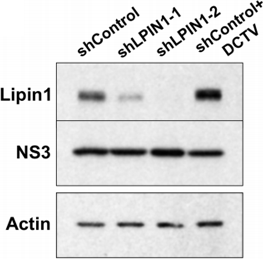
Polyprotein expression efficiency is determined by Western-Blot using an antibody against NS3 and beta actin as loading control.
-
Sci Rep
Lobohedleolide suppresses hepatitis C virus replication via JNK/c-Jun-C/EBP-mediated down-regulation of cyclooxygenase-2 expression. [Abstract]2018 Jun 6;8(1):8676. PMID: 29875371 -
PLoS Pathog
2017 May 11;13(5):e1006374. PMID: 28494029 -
Antiviral Res
Long-chain fatty acyl-coenzyme A suppresses hepatitis C virus infection by targeting virion-bound lipoproteins. [Abstract]2020 May:177:104734. PMID: 32057770 -
Antiviral Res
Construction and characterization of Genotype-3 hepatitis C virus replicon revealed critical genotype-3-specific polymorphism for drug resistance and viral fitness. [Abstract]2019 Nov:171:104612. PMID: 31542377 -
Antiviral Res
Avasimibe: A novel hepatitis C virus inhibitor that targets the assembly of infectious viral particles. [Abstract]2017 Dec:148:5-14. PMID: 29074218 -
Antiviral Res
Celastrol inhibits hepatitis C virus replication by upregulating heme oxygenase-1 via the JNK MAPK/Nrf2 pathway in human hepatoma cells. [Abstract]2017 Oct:146:191-200. PMID: 28935193 -
Antimicrob Agents Chemother
Cyclophilin and NS5A inhibitors, but not other anti-hepatitis C virus (HCV) agents, preclude HCV-mediated formation of double-membrane-vesicle viral factories. [Abstract]2015 May;59(5):2496-507. PMID: 25666154 -
Antimicrob Agents Chemother
Different interaction profiles of direct-acting anti-hepatitis C virus agents with human organic anion transporting polypeptides. [Abstract]2014 Aug;58(8):4555-64. PMID: 24867984 -
Antimicrob Agents Chemother
The combination of alisporivir plus an NS5A inhibitor provides additive to synergistic anti-hepatitis C virus activity without detectable cross-resistance. [Abstract]2014 Jun;58(6):3327-34. PMID: 24687498 -
Antimicrob Agents Chemother
Lucidone suppresses hepatitis C virus replication by Nrf2-mediated heme oxygenase-1 induction. [Abstract]2013 Mar;57(3):1180-91. PMID: 23254429 -
J Virol
2014 May;88(10):5578-94. PMID: 24599999 -
Viruses
Resistance Analysis of a 3-Day Monotherapy Study with Glecaprevir or Pibrentasvir in Patients with Chronic Hepatitis C Virus Genotype 1 Infection. [Abstract]2018 Aug 28;10(9):462. PMID: 30154359 -
J Med Virol
Identification and characterization of Sofosbuvir-resistant mutations of hepatitis C virus genotype 3a replicon. [Abstract]2023 Dec;95(12):e29290. PMID: 38102947 -
Drug Metab Dispos
A Systematic In Vitro Investigation of the Inhibitor Preincubation Effect on Multiple Classes of Clinically Relevant Transporters. [Abstract]2019 Jul;47(7):768-778. PMID: 31068368 -
Virus Res
Evaluation of preclinical antimalarial drugs, which can overcome direct-acting antivirals-resistant hepatitis C viruses, using the viral reporter assay systems. [Abstract]2017 May 2:235:37-48. PMID: 28322919 -
PLoS One
Cyclophilin Inhibitors Remodel the Endoplasmic Reticulum of HCV-Infected Cells in a Unique Pattern Rendering Cells Impervious to a Reinfection. [Abstract]2016 Jul 21;11(7):e0159511. PMID: 27442520 -
PLoS One
2016 Apr 22;11(4):e0152036. PMID: 27104614 -
PLoS One
The Novel Cyclophilin Inhibitor CPI-431-32 Concurrently Blocks HCV and HIV-1 Infections via a Similar Mechanism of Action. [Abstract]2015 Aug 11;10(8):e0134707. PMID: 26263487 -
Transpl Infect Dis
The influence of immunosuppressants on direct-acting antiviral therapy is dependent on the hepatitis C virus genotype. [Abstract]2018 Feb;20(1). PMID: 29111569 -
J Hum Genet
Effect of CYP3A5*3 genetic variant on the metabolism of direct-acting antivirals in vitro: a different effect on asunaprevir versus daclatasvir and beclabuvir. [Abstract]2020 Jan;65(2):143-153. PMID: 31645655 -
bioRxiv
Integrating functional genomics and proteomics identifies Folate Carrier SLC19A1 as a predictor of pralatrexate sensitivity in T-cell lymphoma. [Abstract]2025 Oct 9:2025.10.08.681217. PMID: 41279001 -
Biomed Pharmacother
FDA-approved antivirals ledipasvir and daclatasvir downregulate the Src-EPHA2-Akt oncogenic pathway in colorectal and triple-negative breast cancer cells. [Abstract]2024 Oct:179:117325. PMID: 39226729 -
-
-
Biomed Pharmacother
A proof-of-concept study in HCV-infected Huh7.5 cells for shortening the duration of DAA-based triple treatment regimens. [Abstract]2019 Aug:116:108976. PMID: 31103827 -
-
-
Oncotarget
Interferon sensitivity-determining region of hepatitis C virus influences virus production and interferon signaling. [Abstract]2017 Dec 21;9(5):5627-5640. PMID: 29464023 -
-
Open Virol J
Both Cyclophilin Inhibitors and Direct-Acting Antivirals Prevent PKR Activation in HCV-Infected Cells. [Abstract]2014 Mar 7:8:1-8. PMID: 24799968
Daclatasvir dihydrochloride purchased from MedChemExpress. Usage Cited in: Open Virol J. 2014 Mar 7:8:1-8. [Abstract]
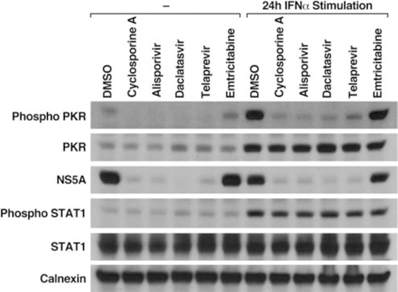
The PKR activation block is not unique to CypI, DAAs also prevent the IFN-induced PKR activation in HCV-infected cells. JFH-1-infected Huh7.5.1 cells are treated with or without CypI (cyclosporine A and alisporivir), DAAs (the HCV NS5A inhibitor daclatasvir and the HCV protease inhibitor telaprevir) and an HIV-1 inhibitor (reverse transcriptase inhibitor emtricitabine). Results are representative of 4 independent experiments.


Solvent & Solubility
In Vitro:
DMSO : ≥ 56 mg/mL (68.98 mM; Hygroscopic DMSO has a significant impact on the solubility of product, please use newly opened DMSO)
H2O : 50 mg/mL (61.59 mM; Need ultrasonic)
* "≥" means soluble, but saturation unknown.
Please refer to the solubility information to select the appropriate solvent. Once prepared, please aliquot and store the solution to prevent product inactivation from repeated freeze-thaw cycles.
Storage method and period of stock solution: -80°C, 6 months; -20°C, 1 month (sealed storage, away from moisture). When stored at -80°C, please use it within 6 months. When stored at -20°C, please use it within 1 month.
* Note: If you choose water as the stock solution, please dilute it to the working solution, then filter and sterilize it with a 0.22 μm filter before use.
Please refer to the solubility information to select the appropriate solvent. Once prepared, please aliquot and store the solution to prevent product inactivation from repeated freeze-thaw cycles.
Storage method and period of stock solution: -80°C, 6 months; -20°C, 1 month (sealed storage, away from moisture). When stored at -80°C, please use it within 6 months. When stored at -20°C, please use it within 1 month.
* Note: If you choose water as the stock solution, please dilute it to the working solution, then filter and sterilize it with a 0.22 μm filter before use.
Concentration (start) × Volume (start) = Concentration (final) × Volume (final)
In Vivo:
Select the appropriate dissolution method based on your experimental animal and administration route.
- For the following dissolution methods, please ensure to first prepare a clear stock solution using an In Vitro approach and then sequentially add co-solvents:
- To ensure reliable experimental results, the clarified stock solution can be appropriately stored based on storage conditions. As for the working solution for In Vivo experiments, it is recommended to prepare freshly and use it on the same day.
- The percentages shown for the solvents indicate their volumetric ratio in the final prepared solution. If precipitation or phase separation occurs during preparation, heat and/or sonication can be used to aid dissolution.
Add each solvent one by one: 10% DMSO 40% PEG300 5% Tween-80 45% Saline
Solubility: ≥ 1 mg/mL (1.23 mM); Clear solution
This protocol yields a clear solution of ≥ 1 mg/mL (saturation unknown).
Taking 1 mL working solution as an example, add 100 μL DMSO stock solution (10.0 mg/mL) to 400 μL PEG300, and mix evenly; then add 50 μL Tween-80 and mix evenly; then add 450 μL Saline to adjust the volume to 1 mL.
Preparation of Saline: Dissolve 0.9 g sodium chloride in ddH₂O and dilute to 100 mL to obtain a clear Saline solution.
Add each solvent one by one: 10% DMSO 90% (20% SBE-β-CD in Saline)
Solubility: ≥ 1 mg/mL (1.23 mM); Clear solution
This protocol yields a clear solution of ≥ 1 mg/mL (saturation unknown).
Taking 1 mL working solution as an example, add 100 μL DMSO stock solution (10.0 mg/mL) to 900 μL 20% SBE-β-CD in Saline, and mix evenly.
Preparation of 20% SBE-β-CD in Saline (4°C, storage for one week): 2 g SBE-β-CD powder is dissolved in 10 mL Saline, completely dissolve until clear.
In Vivo Dissolution Calculator
Please enter the basic information of animal experiments:
-
-
-
-
Recommended: Prepare an additional quantity of animals to account for potential losses during experiments.
Working solution concentration: 0.22 mg/mL
This product has good water solubility, please refer to the measured solubility data in water/PBS/Saline for details.


Purity & Documentation
-
Data Sheet (280 KB)
-
SDS (393 KB)
- English - EN (393 KB)
- Français - FR (393 KB)
- Deutsch - DE (393 KB)
- Norwegian - NO (393 KB)
- Español - ES (393 KB)
- Swedish - SV (393 KB)
- Italian - IT (393 KB)
- Korean - KR (393 KB)
- Portuguese - PT (393 KB)
-
Handling Instructions (2659 KB)
References
[1]. Min Gao, et al. Chemical genetics strategy identifies an HCV NS5A inhibitor with a potent clinical effect. Nature. 2010 May 6;465(7294):96-100. [Content Brief]
[2]. David B Ascher, et al. Potent hepatitis C inhibitors bind directly to NS5A and reduce its affinity for RNA. Sci Rep. 2014 Apr 23;4:4765. [Content Brief]
[3]. Tomomi Furihata, et al. Different interaction profiles of direct-acting anti-hepatitis C virus agents with human organic anion transporting polypeptides. Antimicrob Agents Chemother. 2014 Aug;58(8):4555-64. [Content Brief]
[4]. Seung-Hoon Lee, et al. HA1077 displays synergistic activity with daclatasvir against hepatitis C virus and suppresses the emergence of NS5A resistance-associated substitutions in mice. Sci Rep. 2018 Aug 20;8(1):12469. [Content Brief]


Complete Stock Solution Preparation Table
Please refer to the solubility information to select the appropriate solvent. Once prepared, please aliquot and store the solution to prevent product inactivation from repeated freeze-thaw cycles.
Storage method and period of stock solution: -80°C, 6 months; -20°C, 1 month (sealed storage, away from moisture). When stored at -80°C, please use it within 6 months. When stored at -20°C, please use it within 1 month.
| Optional Solvent | Concentration Solvent Mass | 1 mg | 5 mg | 10 mg | 25 mg |
|---|---|---|---|---|---|
| H2O / DMSO | 1 mM | 1.2318 mL | 6.1592 mL | 12.3183 mL | 30.7958 mL |
| 5 mM | 0.2464 mL | 1.2318 mL | 2.4637 mL | 6.1592 mL | |
| 10 mM | 0.1232 mL | 0.6159 mL | 1.2318 mL | 3.0796 mL | |
| 15 mM | 0.0821 mL | 0.4106 mL | 0.8212 mL | 2.0531 mL | |
| 20 mM | 0.0616 mL | 0.3080 mL | 0.6159 mL | 1.5398 mL | |
| 25 mM | 0.0493 mL | 0.2464 mL | 0.4927 mL | 1.2318 mL | |
| 30 mM | 0.0411 mL | 0.2053 mL | 0.4106 mL | 1.0265 mL | |
| 40 mM | 0.0308 mL | 0.1540 mL | 0.3080 mL | 0.7699 mL | |
| 50 mM | 0.0246 mL | 0.1232 mL | 0.2464 mL | 0.6159 mL | |
| 60 mM | 0.0205 mL | 0.1027 mL | 0.2053 mL | 0.5133 mL |
* Note: If you choose water as the stock solution, please dilute it to the working solution, then filter and sterilize it with a 0.22 μm filter before use.


Daclatasvir dihydrochloride Related Classifications
HY-10465 Related Classifications
 Powered by Bioz