



ITE
Based on 9 publication(s) in Google Scholar
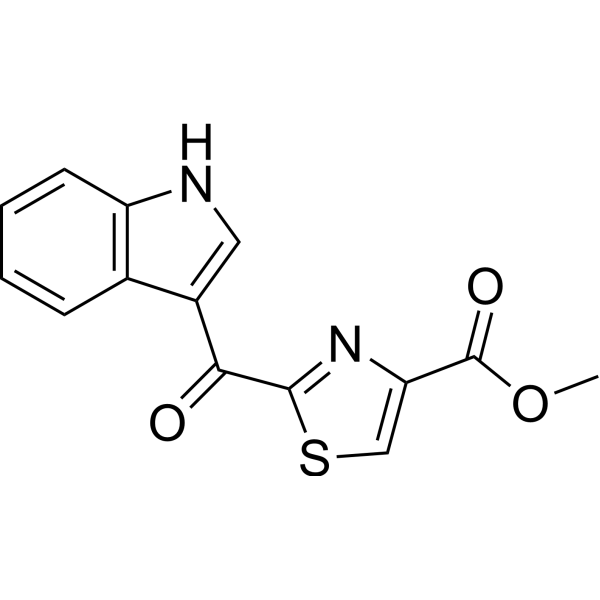
ITE is a potent endogenous agonist of aryl hydrocarbon receptor (AhR), binding directly to AHR, with a Ki of 3 nM. ITE also has immunosuppressive activity.
For research use only. We do not sell to patients.
- Purity : 99.27%
- CAS No.: 448906-42-1
- Formula: C14H10N2O3S
- Molecular Weight:286.31
-
Storage:Powder -20°C, 3 years , 4°C, 2 years ; In solvent -80°C, 2 years , -20°C, 1 year

To place orders, for customer services and technical support, please contact: MedChemExpress USA
Tel: 609-228-6898 E-mail: [email protected] [email protected]


-
 Biological Activity
-
Chemical Information
-
Solvent & Solubility
- Purity & Documentation
- References
-
 Help & FAQs


-
HY-12684
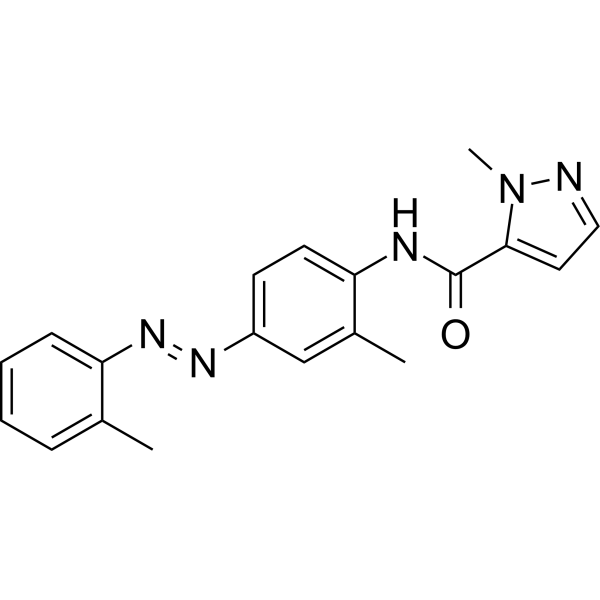
CH-223191AhR Antagonist -
HY-12451
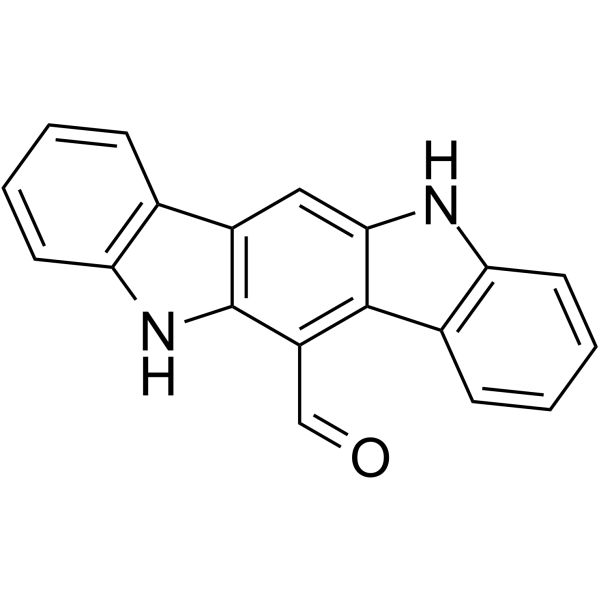
FICZAhR Agonist -
HY-104026
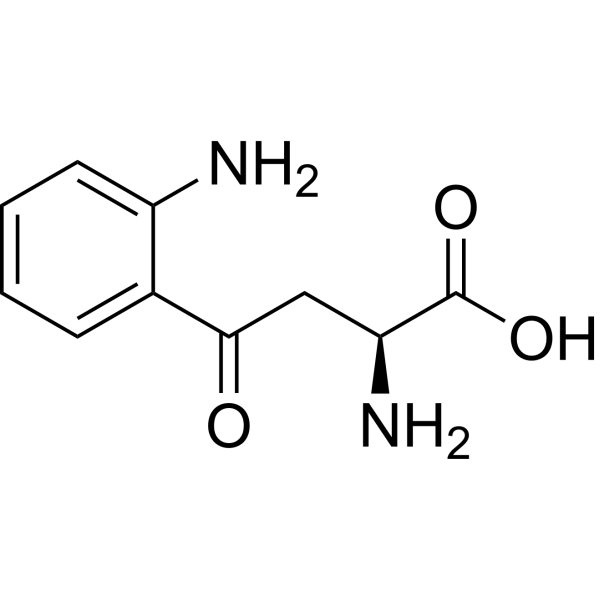
L-KynurenineAryl Hydrocarbon Receptor Agonist -
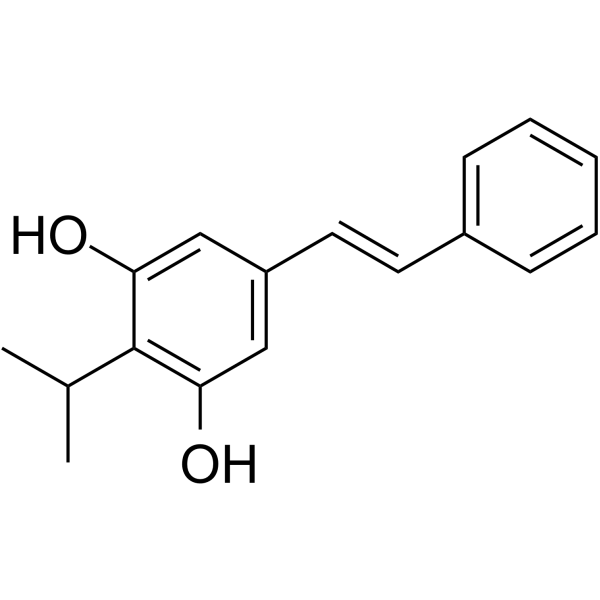
HY-109044
TapinarofAhR Agonist -
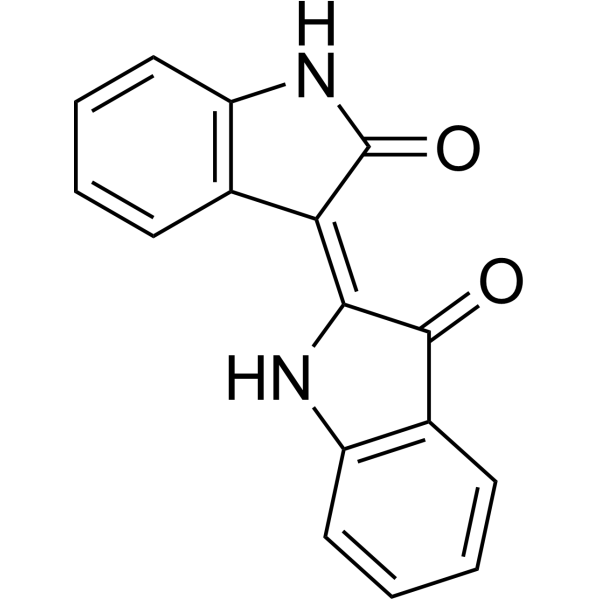
HY-N0117
IndirubinAnticancer Agent -
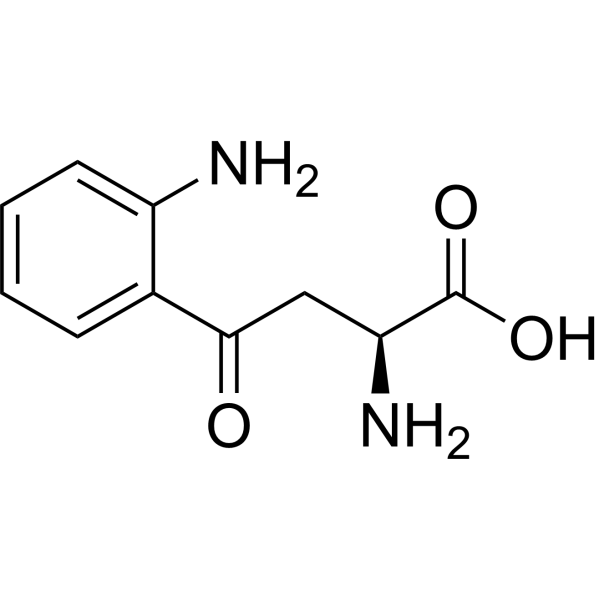
HY-104026R
L-Kynurenine (Standard)Aryl Hydrocarbon Receptor Agonist -
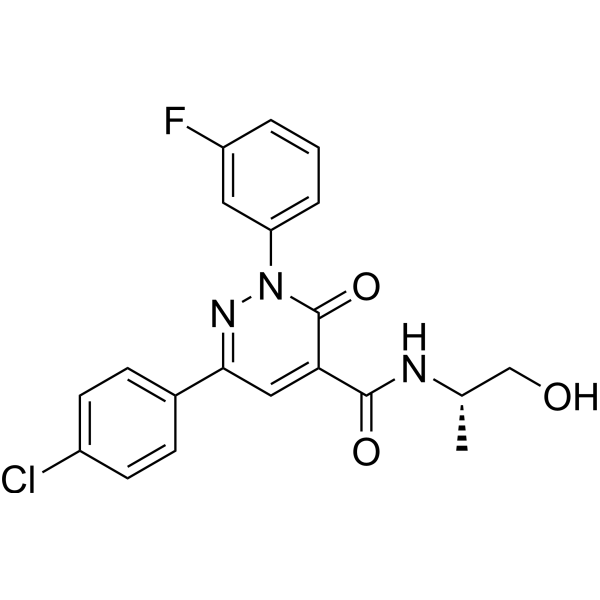
HY-111449
BAY-218AHR Antagonist -
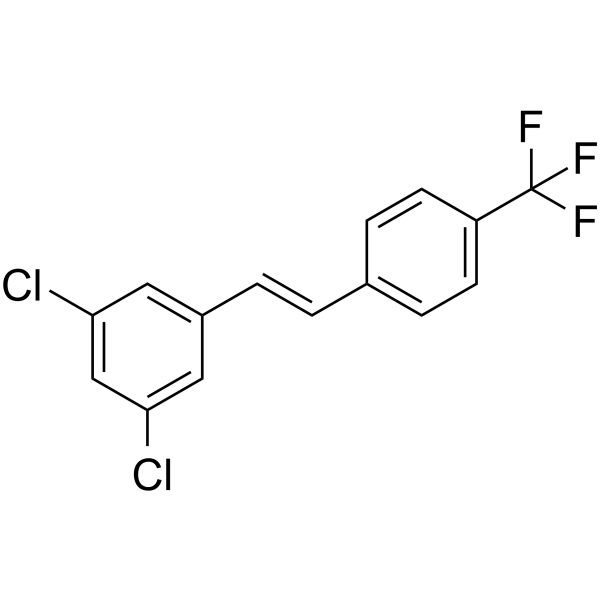
HY-112627
CAY 10465Aryl Hydrocarbon Receptor Agonist -
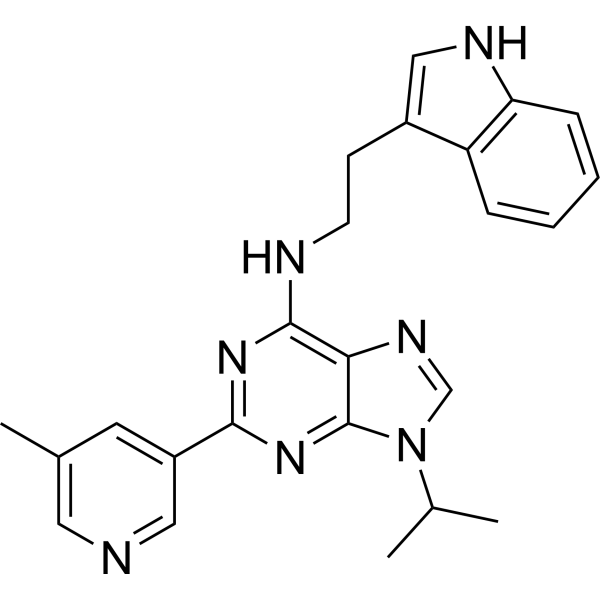
HY-102023
GNF351AHR Antagonist -
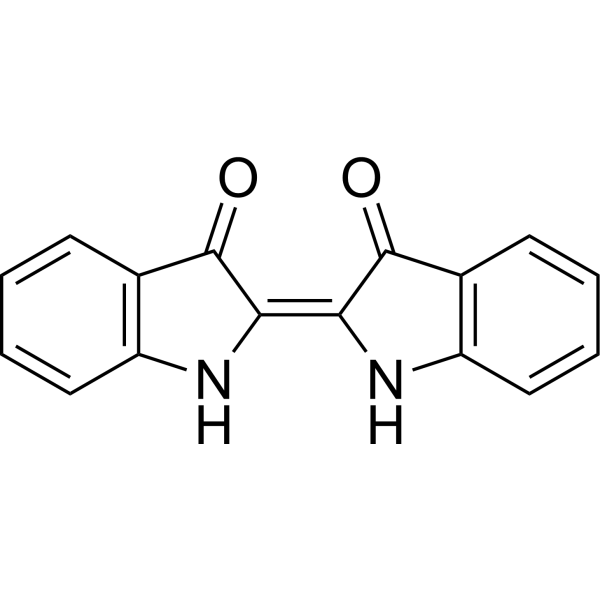
HY-N0335
IndigoBlue Dye -
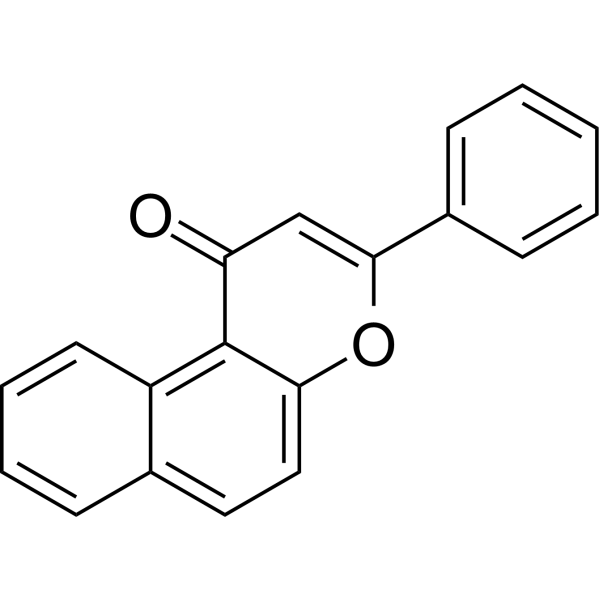
HY-114740
β-NaphthoflavoneAhR agonist -
HY-112629
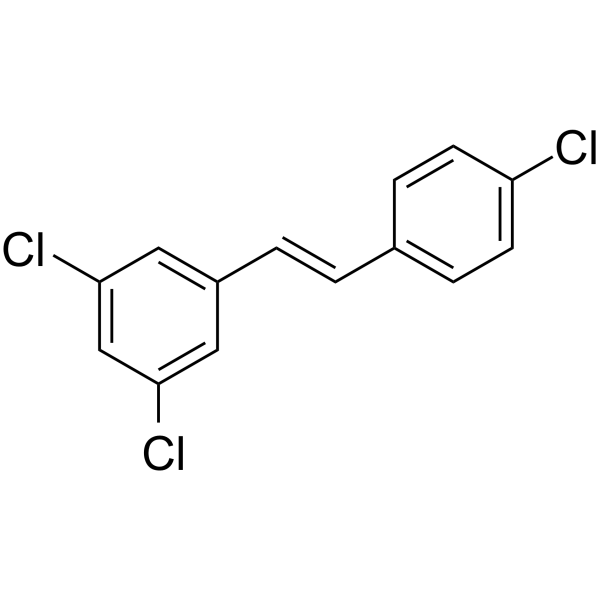
PDM2Aryl Hydrocarbon Receptor Antagonist
Publications Citing Use of MedChemExpress (MCE) ITE
More- Microbiome. 2023 Nov 7;11(1):245. [Abstract]
- Phytomedicine. 2025 May:140:156633. [Abstract]
- Phytomedicine. 2021 Nov:92:153751. [Abstract]
- Int J Biol Macromol. 2026 Jun:369:152765. [Abstract]
- EMBO Mol Med. 2022 Dec 7;14(12):e15677. [Abstract]
- EMBO Mol Med. 2021 May 7;13(5):e13466. [Abstract]
- Clin Epigenetics. 2022 Sep 2;14(1):109. [Abstract]
- J Enzyme Inhib Med Chem. 2025 Dec;40(1):2579675. [Abstract]
- bioRxiv. 2020 Jul.
 Customer Validation & Images

-
Cell Imaging/Staining
-
WB
-
WB
-
WB
-
RT-PCR


Biological Activity
Description
IC50 & Target
Ki: 3 nM (AhR)[1]
In Vitro
ITE is an endogenous agonist of AhR, binding directly to AHR, with a Ki of 3 nM[1]. ITE (0.03-30 mg/mL) decreases the antigen-specific T-cell proliferative responses[2]. ITE potently inhibits human pulmonary artery endothelial (HPAECs) growth at 10 and 20 μM, but shows no effect at 0.01-5 μM. ITE does not affect cell cycle progress of HPAECs at 10 and 20 μM, or induce expression of cleaved caspase-3 protein in HPAECs at 20 μM. In addition, ITE (20 μM) elevates CYP1A1 and CYP1B1 mRNA levels and decreases the levels of AhR protein in HPAECs[3].
MedChemExpress (MCE) has not independently confirmed the accuracy of these methods. They are for reference only.
In Vivo
MedChemExpress (MCE) has not independently confirmed the accuracy of these methods. They are for reference only.


Chemical Information
-
CAS No. 448906-42-1
-
Appearance Solid
-
Molecular Weight 286.31
-
Formula C14H10N2O3S
-
Color Light yellow to yellow
-
SMILES
O=C(C1=CSC(C(C2=CNC3=C2C=CC=C3)=O)=N1)OC
-
Shipping
Room temperature in continental US; may vary elsewhere.
-
Storage
Powder -20°C 3 years 4°C 2 years In solvent -80°C 2 years -20°C 1 year


Publications (9)
-
Journal Impact Factor
-
Most Recent
-
Microbiome
Microbiota-indole 3-propionic acid-brain axis mediates abnormal synaptic pruning of hippocampal microglia and susceptibility to ASD in IUGR offspring. [Abstract]2023 Nov 7;11(1):245. PMID: 37932832
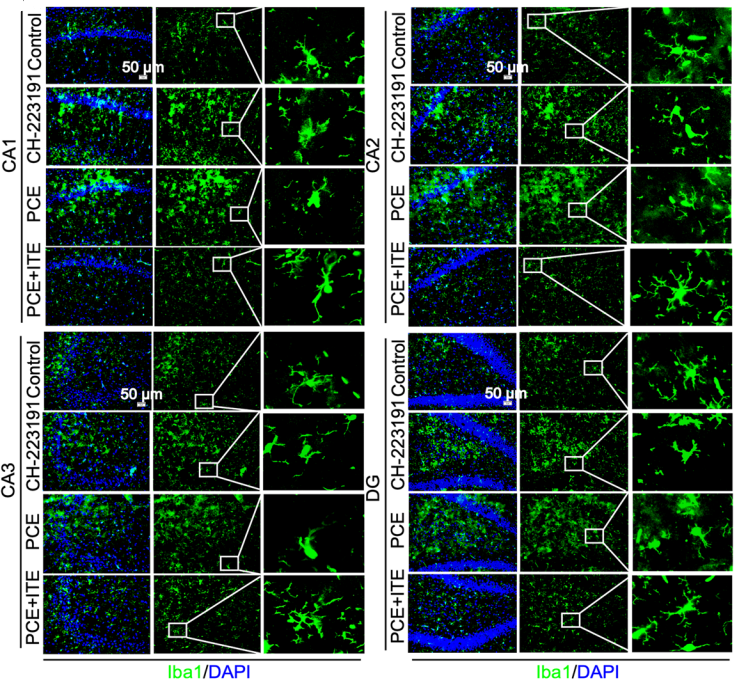
ITE purchased from MedChemExpress. Usage Cited in: Microbiome. 2023 Nov 7;11(1):245. [Abstract]
Images under fluorescence microscopy showing different regions in hippocampus. Iba1 staining (green) and nuclear staining (DIPA, blue). ITE treatment reversed the hippocampal pathology in IUGR rats.
-
Phytomedicine
Quercetin protected the gut barrier in ulcerative colitis by activating aryl hydrocarbon receptor. [Abstract]2025 May:140:156633. PMID: 40088746 -
Phytomedicine
3'-Oxo-tabernaelegantine A (OTNA) selectively relaxes pulmonary arteries by inhibiting AhR. [Abstract]2021 Nov:92:153751. PMID: 34563984 -
Int J Biol Macromol
Aryl hydrocarbon receptor alleviates intestinal ischemia/reperfusion-induced epithelial barrier damage by inhibiting the 5-hydroxytryptamine-mediated complement C3 cascade. [Abstract]2026 Jun:369:152765. PMID: 42214532 -
EMBO Mol Med
2022 Dec 7;14(12):e15677. PMID: 36305167
ITE purchased from MedChemExpress. Usage Cited in: EMBO Mol Med. 2022 Dec 7;14(12):e15677. [Abstract]
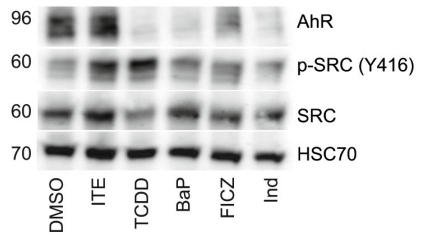
Protein levels of AhR, p-SRC (Y416), and SRC, in the SK28R cell line after treatment with different AhR ligands for 24 h (5 μM BaP, 5 μM indirubin, 5 μM ITE, 10 nM TCDD and 5 μM FICZ).
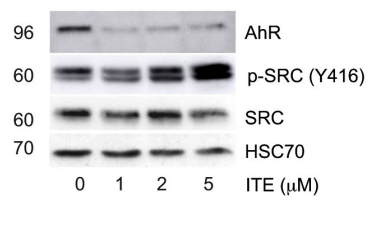
ITE purchased from MedChemExpress. Usage Cited in: EMBO Mol Med. 2022 Dec 7;14(12):e15677. [Abstract]
Protein levels of AhR, p-SRC (Y416), and SRC, in the SK28R cell line after 24 h of treatment with increasing doses of ITE (0-5 μM).
ITE purchased from MedChemExpress. Usage Cited in: EMBO Mol Med. 2022 Dec 7;14(12):e15677. [Abstract]
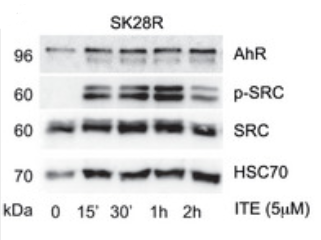
Protein levels of the AhR, p-SRC (Y416), and SRC were analyzed by western blotting in SK28 after various times of treatment with ITE (5 μM) and quantified using ImageJ (Fiji).
ITE purchased from MedChemExpress. Usage Cited in: EMBO Mol Med. 2022 Dec 7;14(12):e15677. [Abstract]
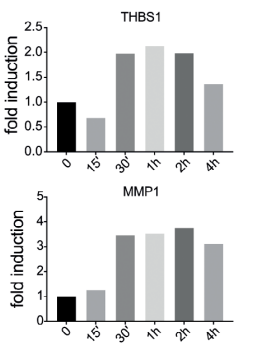
Histogram showing the expression (RT-qPCR) of THBS1 and MMP1 in SK28 after treatment by ITE (5 μM) at different times.
-
EMBO Mol Med
CRISPR screens identify tumor-promoting genes conferring melanoma cell plasticity and resistance. [Abstract]2021 May 7;13(5):e13466. PMID: 33724679 -
Clin Epigenetics
The absence of AhR in CD4+ T cells in patients with acute graft-versus-host disease may be related to insufficient CTCF expression. [Abstract]2022 Sep 2;14(1):109. PMID: 36056390 -
J Enzyme Inhib Med Chem
Discovery of flavonoids as potent inhibitors of CYP1A to alleviate cellular inflammation and oxidative stress induced by benzo[a]pyrene-induced high CYP1A expression. [Abstract]2025 Dec;40(1):2579675. PMID: 41186213 -


Solvent & Solubility
In Vitro:
DMSO : 62.5 mg/mL (218.29 mM; Need ultrasonic; Hygroscopic DMSO has a significant impact on the solubility of product, please use newly opened DMSO)
Please refer to the solubility information to select the appropriate solvent. Once prepared, please aliquot and store the solution to prevent product inactivation from repeated freeze-thaw cycles.
Storage method and period of stock solution: -80°C, 2 years; -20°C, 1 year. When stored at -80°C, please use it within 2 years. When stored at -20°C, please use it within 1 year.
Please refer to the solubility information to select the appropriate solvent. Once prepared, please aliquot and store the solution to prevent product inactivation from repeated freeze-thaw cycles.
Storage method and period of stock solution: -80°C, 2 years; -20°C, 1 year. When stored at -80°C, please use it within 2 years. When stored at -20°C, please use it within 1 year.
Concentration (start) × Volume (start) = Concentration (final) × Volume (final)


Purity & Documentation
-
Data Sheet (278 KB)
-
SDS (396 KB)
- English - EN (396 KB)
- Français - FR (396 KB)
- Deutsch - DE (396 KB)
- Norwegian - NO (396 KB)
- Español - ES (396 KB)
- Swedish - SV (396 KB)
- Italian - IT (396 KB)
- Korean - KR (396 KB)
- Portuguese - PT (396 KB)
-
Handling Instructions (2659 KB)
References
[1]. Song J, et al. A ligand for the aryl hydrocarbon receptor isolated from lung. Proc Natl Acad Sci U S A. 2002 Nov 12;99(23):14694-9. [Content Brief]
[2]. Nugent LF, et al. ITE, a novel endogenous nontoxic aryl hydrocarbon receptor ligand, efficiently suppresses EAU and T-cell-mediated immunity. Invest Ophthalmol Vis Sci. 2013 Nov 13;54(12):7463-9. [Content Brief]
[3]. Pang LP, et al. ITE inhibits growth of human pulmonary artery endothelial cells. Exp Lung Res. 2017 Oct;43(8):283-292. [Content Brief]


Complete Stock Solution Preparation Table
Please refer to the solubility information to select the appropriate solvent. Once prepared, please aliquot and store the solution to prevent product inactivation from repeated freeze-thaw cycles.
Storage method and period of stock solution: -80°C, 2 years; -20°C, 1 year. When stored at -80°C, please use it within 2 years. When stored at -20°C, please use it within 1 year.
| Optional Solvent | Concentration Solvent Mass | 1 mg | 5 mg | 10 mg | 25 mg |
|---|---|---|---|---|---|
| DMSO | 1 mM | 3.4927 mL | 17.4636 mL | 34.9272 mL | 87.3179 mL |
| 5 mM | 0.6985 mL | 3.4927 mL | 6.9854 mL | 17.4636 mL | |
| 10 mM | 0.3493 mL | 1.7464 mL | 3.4927 mL | 8.7318 mL | |
| 15 mM | 0.2328 mL | 1.1642 mL | 2.3285 mL | 5.8212 mL | |
| 20 mM | 0.1746 mL | 0.8732 mL | 1.7464 mL | 4.3659 mL | |
| 25 mM | 0.1397 mL | 0.6985 mL | 1.3971 mL | 3.4927 mL | |
| 30 mM | 0.1164 mL | 0.5821 mL | 1.1642 mL | 2.9106 mL | |
| 40 mM | 0.0873 mL | 0.4366 mL | 0.8732 mL | 2.1829 mL | |
| 50 mM | 0.0699 mL | 0.3493 mL | 0.6985 mL | 1.7464 mL | |
| 60 mM | 0.0582 mL | 0.2911 mL | 0.5821 mL | 1.4553 mL | |
| 80 mM | 0.0437 mL | 0.2183 mL | 0.4366 mL | 1.0915 mL | |
| 100 mM | 0.0349 mL | 0.1746 mL | 0.3493 mL | 0.8732 mL |


ITE Related Classifications
HY-19317 Related Classifications
 Powered by Bioz