



PF429242 dihydrochloride
Based on 12 publication(s) in Google Scholar
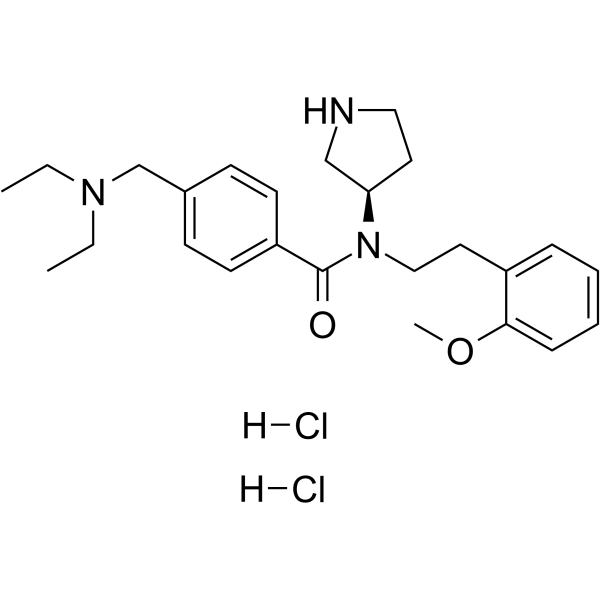
PF429242 dihydrochloride is a reversible and competitive SREBP site 1 protease (S1P) inhibitor with an IC50 of 175 nM.
For research use only. We do not sell to patients.
- Purity : 99.80%
- CAS No.: 2248666-66-0
- Formula: C25H37Cl2N3O2
- Molecular Weight:482.49
-
Storage:
4°C, sealed storage, away from moisture
* In solvent : -80°C, 2 years; -20°C, 1 year (sealed storage, away from moisture)

To place orders, for customer services and technical support, please contact: MedChemExpress USA
Tel: 609-228-6898 E-mail: [email protected] [email protected]


-
 Biological Activity
-
Chemical Information
-
Solvent & Solubility
- Protocol
- Purity & Documentation
- References
-
 Help & FAQs



Publications Citing Use of MedChemExpress (MCE) PF429242 dihydrochloride
More- Nature. 2023 Apr;616(7956):348-356. [Abstract]
- Immunity. 2018 Nov 20;49(5):842-856.e7. [Abstract]
- Autophagy. 2021 Jul;17(7):1592-1613. [Abstract]
- Cell Death Differ. 2021 Jun;28(6):2001-2018. [Abstract]
- Cell Death Dis. 2025 Jul 11;16(1):512. [Abstract]
- Hypertension. 2021 Feb;77(2):405-416. [Abstract]
- Sci China Life Sci. 2022 Feb;65(2):341-361. [Abstract]
- JCI Insight. 2019 Apr 4;4(7):e124174. [Abstract]
- iScience. 2026 Jun 4;29(6):116290. [Abstract]
- J Neurosci Res. 2025 Jun;103(6):e70054. [Abstract]
- Anal Cell Pathol. 2026;2026(1):e6120748. [Abstract]
- bioRxiv. 2026 Apr 7.
 Customer Validation & Images

-
Cell Imaging/Staining
-
Histological Imaging/Staining
-
Histological Imaging/Staining
-
ELISA
-
WB


Biological Activity
Description
IC50 & Target
IC50: 175 nM (S1P)[1]
In Vitro
10 μM PF-429242 inhibits endogenous SREBP processing in Chinese hamster ovary cells. PF-429242 also down-regulates the signal from an SRE-luciferase reporter gene in human embryonic kidney 293 cells and the expression of endogenous SREBP target genes in cultured HepG2 cells. In HepG2 cells, PF-429242 inhibits cholesterol synthesis, with an IC50 of 0.5 μM[1].
The addition of PF-429242 (30 μM) shows statistically significant suppression of infectious viral titers and viral RNA copies in the cell culture fluids. PF-429242 treatment also shows suppressive effects on DENV2 yields in the cultured fluids of human-derived HEK-293, Hep G2, and non-human-primate derived LLC-MK2 cells[2].
PF-429242 efficiently prevents the processing of GPC from the prototypic arenavirus lymphocytic choriomeningitis virus (LCMV) and LASV, which correlates with the compound's potent antiviral activity against LCMV and LASV in cultured cells[3].
MedChemExpress (MCE) has not independently confirmed the accuracy of these methods. They are for reference only.
In Vivo
MedChemExpress (MCE) has not independently confirmed the accuracy of these methods. They are for reference only.


Chemical Information
-
CAS No. 2248666-66-0
-
Appearance Solid
-
Molecular Weight 482.49
-
Formula C25H37Cl2N3O2
-
Color White to light brown
-
SMILES
O=C(N(CCC1=CC=CC=C1OC)[C@H]2CNCC2)C3=CC=C(CN(CC)CC)C=C3.[H]Cl.[H]Cl
-
Shipping
Room temperature in continental US; may vary elsewhere.
-
Storage
4°C, sealed storage, away from moisture
* In solvent : -80°C, 2 years; -20°C, 1 year (sealed storage, away from moisture)


Publications (12)
-
Journal Impact Factor
-
Most Recent
-
Nature
2023 Apr;616(7956):348-356. PMID: 37020026 -
Immunity
Cholesterol Homeostatic Regulator SCAP-SREBP2 Integrates NLRP3 Inflammasome Activation and Cholesterol Biosynthetic Signaling in Macrophages. [Abstract]2018 Nov 20;49(5):842-856.e7. PMID: 30366764
PF429242 dihydrochloride purchased from MedChemExpress. Usage Cited in: Immunity. 2018 Nov 20;49(5):842-856.e7. [Abstract]
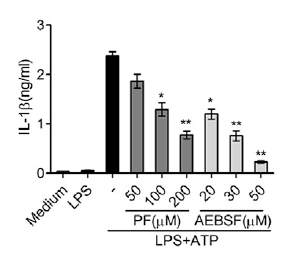
PF429242 dihydrochloride (50-200 μM; 1 h) greatly suppressed the NLRP3 inflammasome activity in LPS-primed BMDMs.
PF429242 dihydrochloride purchased from MedChemExpress. Usage Cited in: Immunity. 2018 Nov 20;49(5):842-856.e7. [Abstract]
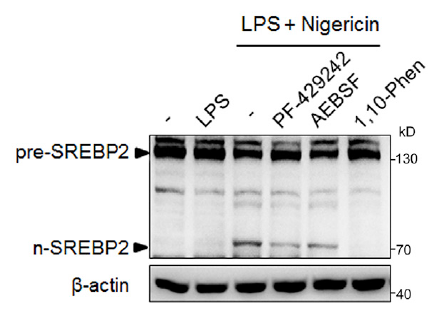
PF429242 dihydrochloride (200 μM; 1 h) suppressed nigericin-induced SREBP2 maturation in LPS-primed THP1 macrophages.
-
Autophagy
Discovery of a potent SCAP degrader that ameliorates HFD-induced obesity, hyperlipidemia and insulin resistance via an autophagy-independent lysosomal pathway. [Abstract]2021 Jul;17(7):1592-1613. PMID: 32432943 -
Cell Death Differ
2021 Jun;28(6):2001-2018. PMID: 33469231
PF429242 dihydrochloride purchased from MedChemExpress. Usage Cited in: Cell Death Differ. 2021 Jun;28(6):2001-2018. [Abstract]
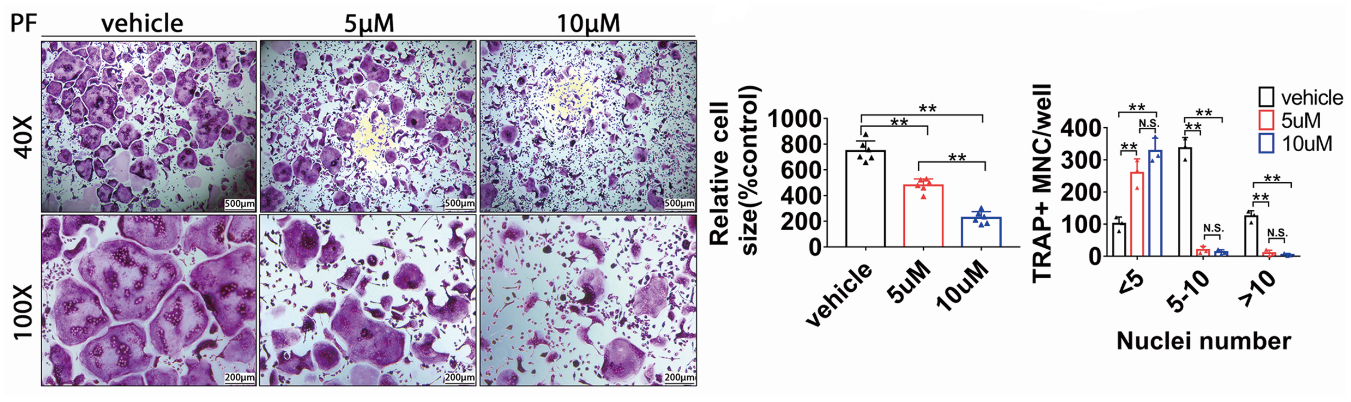
PF429242 dihydrochloride (5-10 μM) significantly inhibited osteoclasts formation in murine BMMs in a dose-dependent manner.
PF429242 dihydrochloride purchased from MedChemExpress. Usage Cited in: Cell Death Differ. 2021 Jun;28(6):2001-2018. [Abstract]
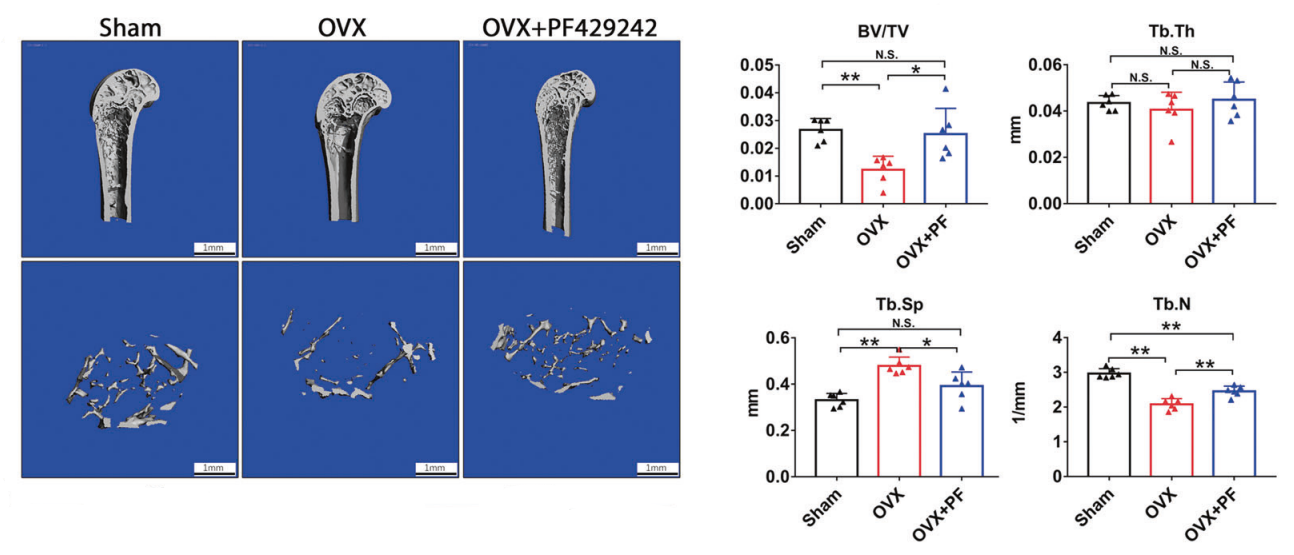
PF429242 dihydrochloride (3 mg/kg; twice a week for 2 months) significantly increased the values of BV/TV and decreased Tb.Sp in OVX-induced osteoporosis mice.
PF429242 dihydrochloride purchased from MedChemExpress. Usage Cited in: Cell Death Differ. 2021 Jun;28(6):2001-2018. [Abstract]
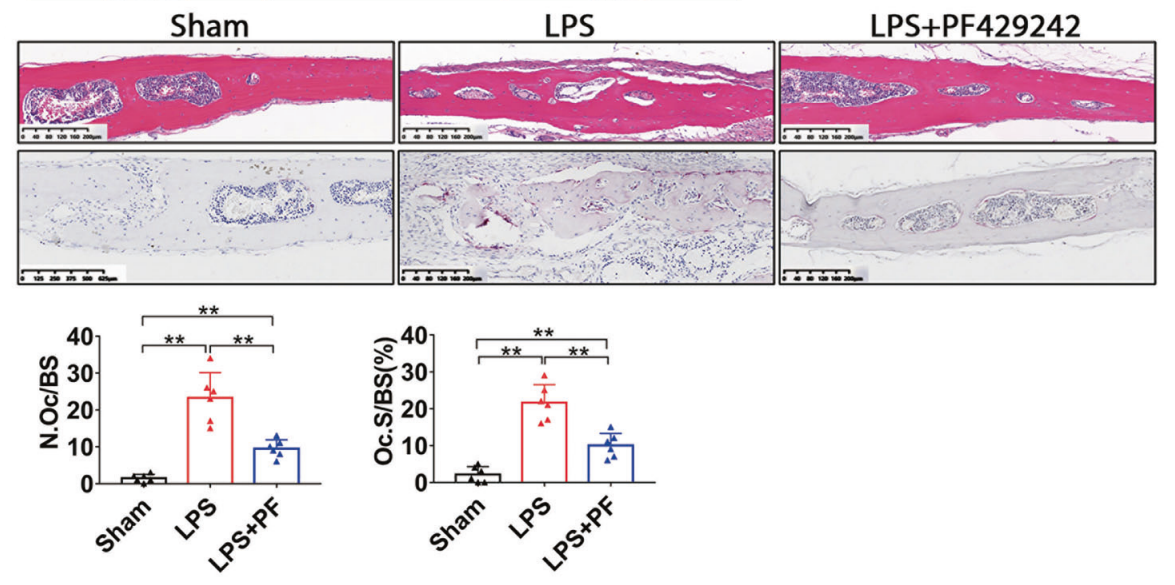
PF429242 dihydrochloride (3 mg/kg; every two days for 2 weeks) reduced osteolysis and osteoclast activity in LPS-induced calvarial osteolysis mice.
-
Cell Death Dis
IFNγ augments TKI efficacy by alleviating protein unfolding stress to promote GSDME-mediated pyroptosis in hepatocellular carcinoma. [Abstract]2025 Jul 11;16(1):512. PMID: 40645933 -
Hypertension
Site-1 Protease-Derived Soluble (Pro)Renin Receptor Contributes to Angiotensin II-Induced Hypertension in Mice. [Abstract]2021 Feb;77(2):405-416. PMID: 33280408 -
Sci China Life Sci
2022 Feb;65(2):341-361. PMID: 34047913 -
JCI Insight
Site-1 protease-derived soluble (pro)renin receptor targets vasopressin receptor 2 to enhance urine concentrating capability. [Abstract]2019 Apr 4;4(7):e124174. PMID: 30944256 -
iScience
Regulation of the endoplasmic reticulum stress sensor ATF6α through multiple oxidoreductases in the ER. [Abstract]2026 Jun 4;29(6):116290. PMID: 42305590 -
J Neurosci Res
Astrocytic HSP60 Deletion Induced Astrocyte Senescence and Inhibited Neuroregeneration via Modulating the S1P/Truncated-BDNF Pathway. [Abstract]2025 Jun;103(6):e70054. PMID: 40448367 -
Anal Cell Pathol
Identification of the Antioxidant Enzyme B166 as a Novel Biomarker for Patients With Glioblastoma Multiforme. [Abstract]2026;2026(1):e6120748. PMID: 41810932 -


Solvent & Solubility
In Vitro:
DMSO : ≥ 83.3 mg/mL (172.65 mM; Hygroscopic DMSO has a significant impact on the solubility of product, please use newly opened DMSO)
H2O : 50 mg/mL (103.63 mM; Need ultrasonic)
* "≥" means soluble, but saturation unknown.
Please refer to the solubility information to select the appropriate solvent. Once prepared, please aliquot and store the solution to prevent product inactivation from repeated freeze-thaw cycles.
Storage method and period of stock solution: -80°C, 2 years; -20°C, 1 year (sealed storage, away from moisture). When stored at -80°C, please use it within 2 years. When stored at -20°C, please use it within 1 year.
* Note: If you choose water as the stock solution, please dilute it to the working solution, then filter and sterilize it with a 0.22 μm filter before use.
Please refer to the solubility information to select the appropriate solvent. Once prepared, please aliquot and store the solution to prevent product inactivation from repeated freeze-thaw cycles.
Storage method and period of stock solution: -80°C, 2 years; -20°C, 1 year (sealed storage, away from moisture). When stored at -80°C, please use it within 2 years. When stored at -20°C, please use it within 1 year.
* Note: If you choose water as the stock solution, please dilute it to the working solution, then filter and sterilize it with a 0.22 μm filter before use.
Concentration (start) × Volume (start) = Concentration (final) × Volume (final)
In Vivo:
Select the appropriate dissolution method based on your experimental animal and administration route.
- For the following dissolution methods, please ensure to first prepare a clear stock solution using an In Vitro approach and then sequentially add co-solvents:
- To ensure reliable experimental results, the clarified stock solution can be appropriately stored based on storage conditions. As for the working solution for In Vivo experiments, it is recommended to prepare freshly and use it on the same day.
- The percentages shown for the solvents indicate their volumetric ratio in the final prepared solution. If precipitation or phase separation occurs during preparation, heat and/or sonication can be used to aid dissolution.
Add each solvent one by one: 10% DMSO 40% PEG300 5% Tween-80 45% Saline
Solubility: ≥ 2.5 mg/mL (5.18 mM); Clear solution
This protocol yields a clear solution of ≥ 2.5 mg/mL (saturation unknown).
Taking 1 mL working solution as an example, add 100 μL DMSO stock solution (25.0 mg/mL) to 400 μL PEG300, and mix evenly; then add 50 μL Tween-80 and mix evenly; then add 450 μL Saline to adjust the volume to 1 mL.
Preparation of Saline: Dissolve 0.9 g sodium chloride in ddH₂O and dilute to 100 mL to obtain a clear Saline solution.
Add each solvent one by one: 10% DMSO 90% (20% SBE-β-CD in Saline)
Solubility: ≥ 2.5 mg/mL (5.18 mM); Clear solution
This protocol yields a clear solution of ≥ 2.5 mg/mL (saturation unknown).
Taking 1 mL working solution as an example, add 100 μL DMSO stock solution (25.0 mg/mL) to 900 μL 20% SBE-β-CD in Saline, and mix evenly.
Preparation of 20% SBE-β-CD in Saline (4°C, storage for one week): 2 g SBE-β-CD powder is dissolved in 10 mL Saline, completely dissolve until clear.
For the following dissolution methods, please prepare the working solution directly:
It is recommended to prepare fresh solutions and use them promptly within a short period of time.
The percentages shown for the solvents indicate their volumetric ratio in the final prepared solution. If precipitation or phase separation occurs during preparation, heat and/or sonication can be used to aid dissolution.
Add each solvent one by one: PBS
Solubility: 100 mg/mL (207.26 mM); Clear solution; Need ultrasonic
In Vivo Dissolution Calculator
Please enter the basic information of animal experiments:
-
-
-
-
Recommended: Prepare an additional quantity of animals to account for potential losses during experiments.
Working solution concentration: 0.22 mg/mL
This product has good water solubility, please refer to the measured solubility data in water/PBS/Saline for details.

Protocol
Animal Administration[1]
Mice: To test the in vivo efficacy of PF-429242 in regulating SREBP target genes, male CD1 mice are dosed i.p. with 10 or 30 mg/kg PF-429242 or saline once every 6 over a 24-h period. Mice are euthanized 6 h after the final dose, and liver tissue is collected, frozen rapidly in liquid nitrogen, and stored at -80°C. For RNA isolation, 50 to 100 mg of frozen liver tissue from each sample is homogenized in 1 ml of TRIzol reagent. Total RNA is extracted following the manufacturer's instructions, and the resulting total RNA from each sample underwent DNA-free treatment[1].
MedChemExpress (MCE) has not independently confirmed the accuracy of these methods. They are for reference only.


Purity & Documentation
-
Data Sheet (277 KB)
-
SDS (701 KB)
- English - EN (701 KB)
- Français - FR (701 KB)
- Deutsch - DE (701 KB)
- Norwegian - NO (701 KB)
- Español - ES (701 KB)
- Swedish - SV (701 KB)
- Italian - IT (701 KB)
- Korean - KR (701 KB)
- Portuguese - PT (701 KB)
-
Handling Instructions (2659 KB)
References
[1]. Hawkins JL, et al. Pharmacologic inhibition of site 1 protease activity inhibits sterol regulatory element-binding protein processing and reduces lipogenic enzyme gene expression and lipid synthesis in cultured cells and experimental animals. J Pharmacol [Content Brief]
[2]. Uchida L, et al. Suppressive Effects of the Site 1 Protease (S1P) Inhibitor, PF-429242, on Dengue Virus Propagation. Viruses. 2016 Feb 10;8(2). pii: E46. doi: 10.3390/v8020046. [Content Brief]
[3]. Urata S, et al. Antiviral activity of a small-molecule inhibitor of arenavirus glycoprotein processing by the cellular site 1 protease. J Virol. 2011 Jan;85(2):795-803. [Content Brief]


Complete Stock Solution Preparation Table
Please refer to the solubility information to select the appropriate solvent. Once prepared, please aliquot and store the solution to prevent product inactivation from repeated freeze-thaw cycles.
Storage method and period of stock solution: -80°C, 2 years; -20°C, 1 year (sealed storage, away from moisture). When stored at -80°C, please use it within 2 years. When stored at -20°C, please use it within 1 year.
| Optional Solvent | Concentration Solvent Mass | 1 mg | 5 mg | 10 mg | 25 mg |
|---|---|---|---|---|---|
| H2O / DMSO | 1 mM | 2.0726 mL | 10.3629 mL | 20.7258 mL | 51.8145 mL |
| 5 mM | 0.4145 mL | 2.0726 mL | 4.1452 mL | 10.3629 mL | |
| 10 mM | 0.2073 mL | 1.0363 mL | 2.0726 mL | 5.1815 mL | |
| 15 mM | 0.1382 mL | 0.6909 mL | 1.3817 mL | 3.4543 mL | |
| 20 mM | 0.1036 mL | 0.5181 mL | 1.0363 mL | 2.5907 mL | |
| 25 mM | 0.0829 mL | 0.4145 mL | 0.8290 mL | 2.0726 mL | |
| 30 mM | 0.0691 mL | 0.3454 mL | 0.6909 mL | 1.7272 mL | |
| 40 mM | 0.0518 mL | 0.2591 mL | 0.5181 mL | 1.2954 mL | |
| 50 mM | 0.0415 mL | 0.2073 mL | 0.4145 mL | 1.0363 mL | |
| 60 mM | 0.0345 mL | 0.1727 mL | 0.3454 mL | 0.8636 mL | |
| 80 mM | 0.0259 mL | 0.1295 mL | 0.2591 mL | 0.6477 mL | |
| 100 mM | 0.0207 mL | 0.1036 mL | 0.2073 mL | 0.5181 mL |
* Note: If you choose water as the stock solution, please dilute it to the working solution, then filter and sterilize it with a 0.22 μm filter before use.


PF429242 dihydrochloride Related Classifications
HY-13447A Related Classifications
 Powered by Bioz