Infection
-
Infection Related Products (18904)
Related Products (18904)

-
Antibodies (22)
-
α-Mycolic acid, keto cis
 0 ImagesCat. No.: HY-N15645CAS No.: 2260795-20-6
α-Mycolic acid, keto cis is a structural lipid component of mycobacterial cell wall. α-Mycolic acid, keto cis can be isolated from Mycobacterium tuberculosis Canetti. α-Mycolic acid, keto cis significantly modulates membrane permeability and stability, promising for mycobacterium tuberculosis infection research.
-
Dichlobentiazox
 0 ImagesCat. No.: HY-134339CAS No.: 957144-77-3
Dichlobentiazox (Compound B14) is a component of Fungicidal compositions. Dichlobentiazox is used in studies on plant diseases caused by phytopathogenic fungi.
-
(Rac)-Adibelivir hydrochloride
 0 ImagesCat. No.: HY-150306CCAS No.: 2954725-84-7Synonyms: (Rac)-IM-250 hydrochloride
(Rac)-Adibelivir hydrochloride ((Rac)-IM-250 hydrochloride) is a blood-brain barrier-penetrant HSV helicase-primase inhibitor and metabolic stabilizer with antiviral activity. (Rac)-Adibelivir hydrochloride is also effective against Acyclovir (HY-17422)-resistant strains, and its deuterated structure exhibits enhanced metabolic stability, reducing the formation of hydroxylated metabolites. (Rac)-Adibelivir prolongs in vivo half-life, reduces administration dosage, improves oral bioavailability, and achieves higher brain exposure in mice. (Rac)-Adibelivir hydrochloride can be used in the research of herpes simplex infection, herpes encephalitis and Alzheimer's disease.
-
Phenoxan
 0 ImagesCat. No.: HY-N21815CAS No.: 134332-63-1
Phenoxan is an inhibitor of cytochrome b and NADH: ubiquinone oxidoreductase. It exerts anti-HIV, antifungal, and cytotoxic effects by inhibiting the electron transport chain, the activity of HIV-1 Reverse Transcriptase, and viral replication. Phenoxan can be used in studies of HIV-1 infection and fungal infections.
-
Urease-IN-13
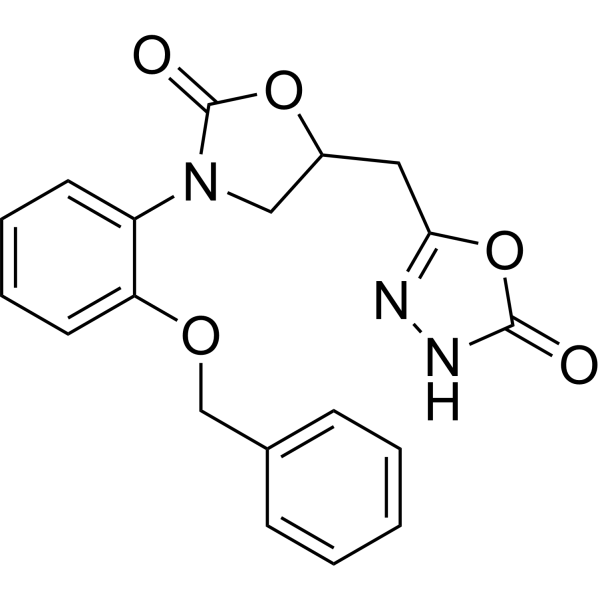 0 ImagesCat. No.: HY-163404CAS No.: 3034860-91-5
Urease-IN-13 (compound d8) is an inhibitor of urease with an IC50 value of 1.21 μM. Urease-IN-13 can be used in the study of infectious gastritis and gastric ulcer.
-
Continentalic acid (Standard)
 0 ImagesCat. No.: HY-N6908RCAS No.: 19889-23-7
Continentalic acid (Standard) is the analytical standard of Continentalic acid (HY-N6908). This product is intended for research and analytical applications. Continentalic acid is a diterpenoid organic acid. Continentalic acid exhibits multiple activities including anti-inflammatory, antioxidant, neuroprotective, antibacterial and antitumor effects. Continentalic acid alleviates oxidative stress, reduces pro-inflammatory cytokine production, inhibits MAPK phosphorylation and neutrophil infiltration, and induces growth inhibition and apoptosis of cancer cells. Continentalic acid can be used in research related to traumatic brain injury, cancer, inflammation and infections.
-
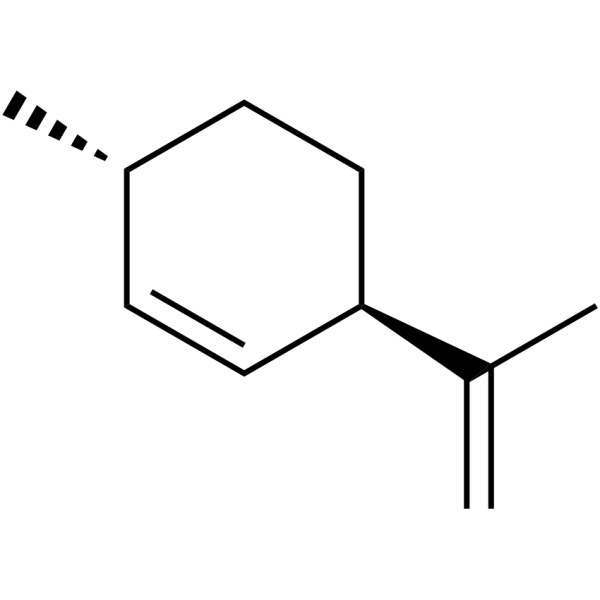
Carvone (Standard)
 0 Images
Carvone (Standard) is the analytical standard of Carvone. This product is intended for research and analytical applications. Carvone is a ketone monoterpene found mostly in the essential oils from plants of the genus Mentha. Carvone is widely used in the pharmaceutical industry, cosmetics and agriculture. Carvone has such effects as antimicrobial, antioxidant, anti-inflammatory, antispasmodic, antinociceptive, anticonvulsant.
-
Antibacterial agent 349
 0 ImagesCat. No.: HY-184237
Antibacterial agent 349 is an antibacterial agent. Antibacterial agent 349 impairs reactive oxygen species clearance, disrupts citrate cycle homeostasis and induces metabolic stress. Antibacterial agent 349 compromises bacterial membrane integrity, increases permeability, and causes intracellular component leakage. Antibacterial agent 349 can be used for the research of bacterial leaf streak.
-
(2R,4R)-UCB7362 hydrochloride
 0 ImagesCat. No.: HY-156063ACAS No.: 2610631-18-8
-
Antifungal agent 100
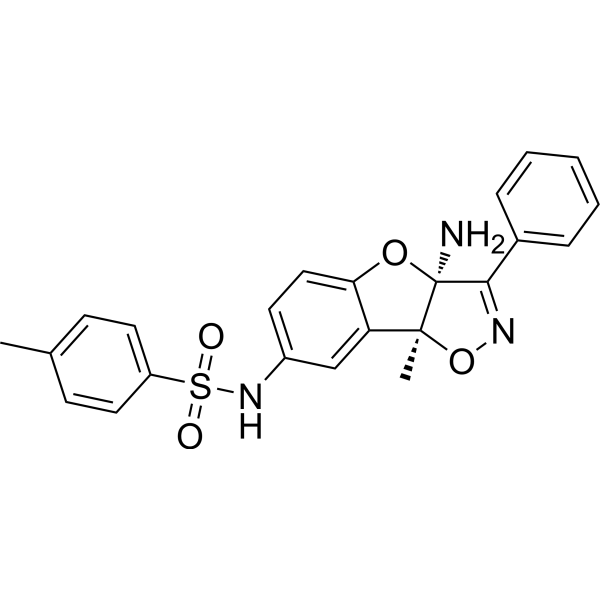 0 ImagesCat. No.: HY-162458CAS No.: 2975157-18-5
Antifungal agent 100 (compound 3i) exhibits significant antifungal effects against S. sclerotiorum with an EC50 value of 0.33 mg/L. Antifungal agent 100 displays an IC50 of 0.63 mg/mL against the Succinate dehydrogenase (SDH) of S. sclerotiorum.
-
ATV03
 0 ImagesCat. No.: HY-168510
ATV03 is an anti-influenza virus agent with excellent anti-influenza A and B virus activity. ATV03 inhibits anti-influenza A (H3N2) and anti-influenza B with EC50 values of 0.78 nM and 2.02 nM, respectively. ATV03 exerts anti-influenza activity by inhibiting polymerase acidic protein (PA) and RNA-dependent RNA polymerase (RdRp), as well as disrupting nuclear protein.
-
Cycloguanil-d6 (hydrochloride)
 0 ImagesCat. No.: HY-12784AS1CAS No.: 2712364-69-5Synonyms: Chlorguanide triazine-d6 hydrochloride
Cycloguanil-d6 (Chlorguanide triazine-d6) hydrochloride is the deuterium labeled Cycloguanil hydrochloride (HY-12784A). Cycloguanil hydrochloride is a dihydrofolate reductase (DHFR) inhibitor with an IC50 of 10.8 μM against human DHFR. Cycloguanil hydrochloride blocks the folate metabolic pathway, thereby affecting nucleotide synthesis and interfering with DNA replication. Cycloguanil hydrochloride inhibits DHFR in Plasmodium and is thus used in malaria research. Cycloguanil hydrochloride also potently inhibits DHFR in human cancer cells and blocks the transcriptional activity of STAT3, thereby exhibiting anticancer activity.
-
Antibacterial agent 77
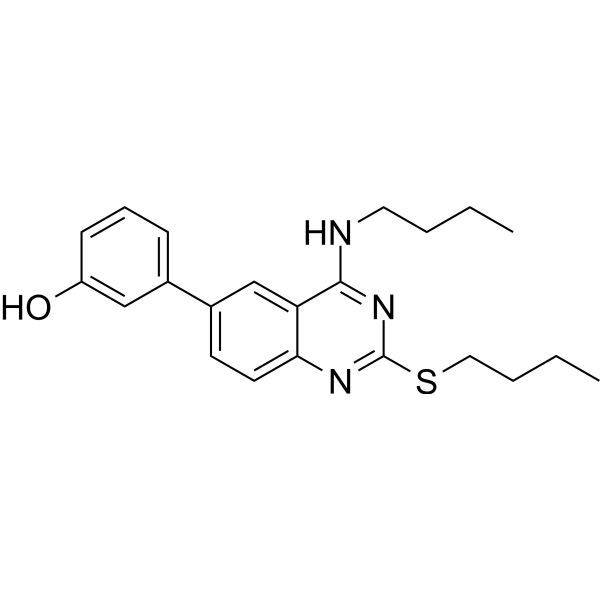 0 ImagesCat. No.: HY-145875CAS No.: 2902561-28-6
Antibacterial agent 77 (compound 12) is an antibacterial agent.
-
BiPNQ
 0 ImagesCat. No.: HY-121187CAS No.: 313513-16-5
BiPNQ is a potent inhibitor of Trypanosoma cruzi, the causative agent of Chagas disease.
-
Nicotinamide hydrochloride
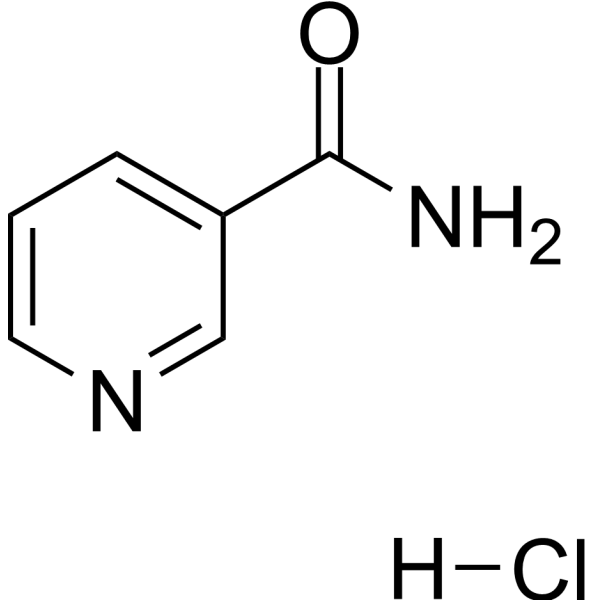 0 ImagesCat. No.: HY-B0150ACAS No.: 25334-23-0Synonyms: Niacinamide hydrochloride; Nicotinic acid amide hydrochloride
Nicotinamide hydrochloride is a form of vitamin B3 or niacin. Nicotinamide hydrochloride inhibits SIRT2 activity (IC50: 2 μM). Nicotinamide hydrochloride also inhibits SIRT1. Nicotinamide hydrochloride increases cellular NAD+, ATP, ROS levels. Nicotinamide hydrochloride inhibits tumor growth and improves survival. Nicotinamide hydrochloride also has anti-HBV activity.
-
Hexetidine (Standard)
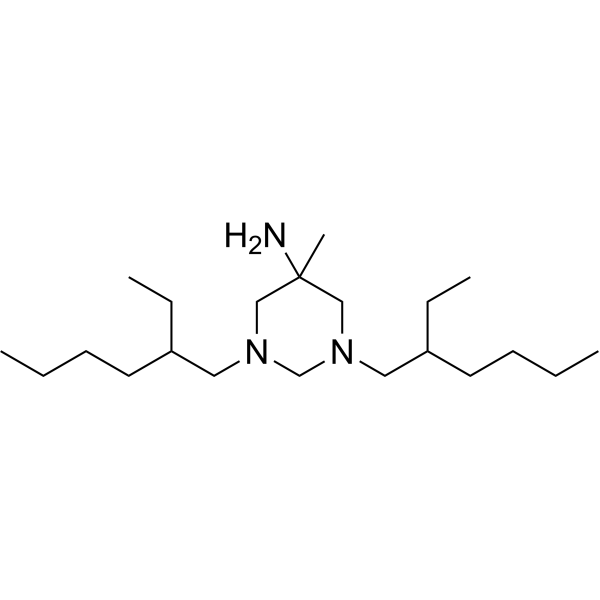 0 Images
Hexetidine (Standard) is the analytical standard of Hexetidine. This product is intended for research and analytical applications. Hexetidine is an orally active antiseptic with broad antibacterial and antifungal activity. Hexetidine give important potential for treatment of oral infections.
-
KDO
 0 ImagesCat. No.: HY-160192CAS No.: 10149-14-1Synonyms: 3-Deoxy-D-manno-2-octulosonic acid
KDO (3-Deoxy-D-manno-2-octulosonic acid) is a characteristic monosaccharide component of capsular polysaccharides of Gram-negative bacteria and meningococcal lipooligosaccharide (LOS), and can also be present in the polysaccharide components of Nelumbo nucifera. KDO together with lipid A constitutes the LOS inner core and is an essential molecule for CD14/TLR4-mediated proinflammatory signaling. KDO can be used in research related to meningococcal disease and inflammation.

-
Miloxacin
 0 ImagesCat. No.: HY-119686CAS No.: 37065-29-5
Miloxacin is an orally active bacteriostatic agent targeting Gram-negative bacteria, exhibiting antibacterial properties similar to Oxolinic acid (HY-B1002) and Nalidixic acid (HY-B0398).