



TY-52156
Based on 12 publication(s) in Google Scholar
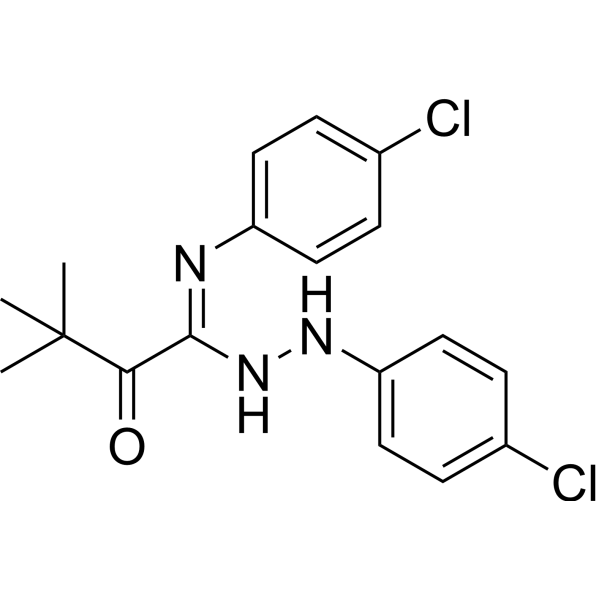
TY-52156 is a potent and selective S1P3 receptor antagonist with a Ki value of 110 nM.
Nos produits utilisent uniquement pour la recherche. Nous ne vendons pas aux patients.
- Pureté : 99.25%
- CAS No.: 934369-14-9
- Formule: C18H19Cl2N3O
- Masse moléculaire:364.27
-
Stockage:Powder -20°C, 3 years , 4°C, 2 years ; In solvent -80°C, 2 years , -20°C, 1 year

To place orders, for customer services and technical support, please contact: MedChemExpress USA
Tel: 609-228-6898 E-mail: [email protected] [email protected]


-
 Activité biologique
-
Chemical Information
-
Solvant et solubilité
- Pureté et documentation
- Références
-
 Help & FAQs


-
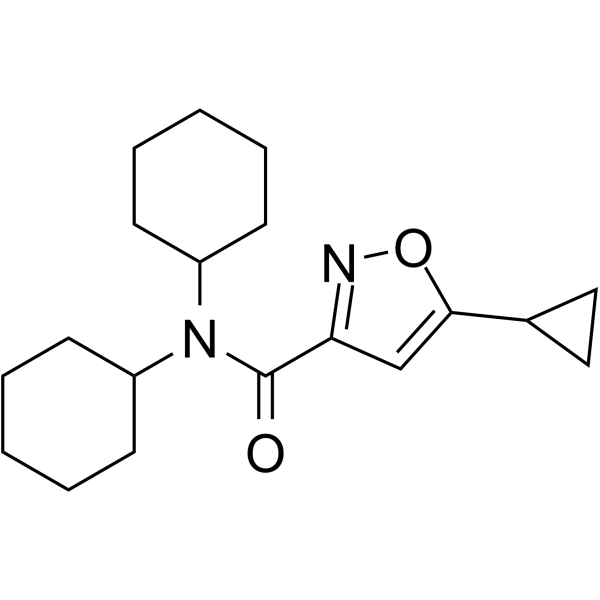
HY-101419
CYM-5541S1P3 Receptor Agonist -
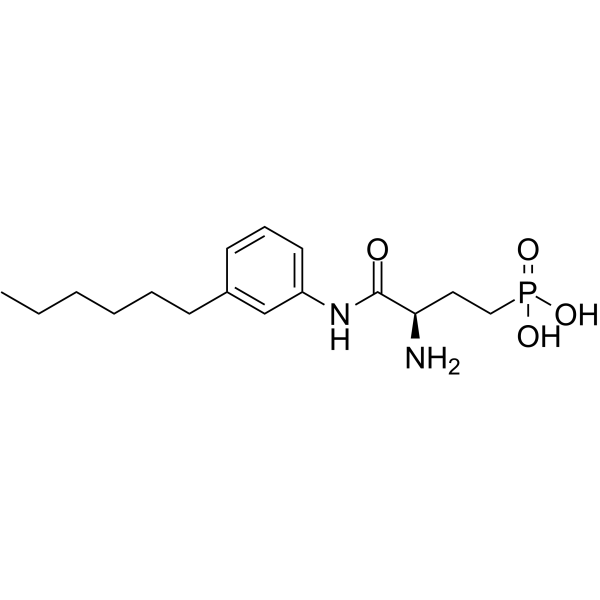
HY-101395
W146S1PR1 Antagonist -
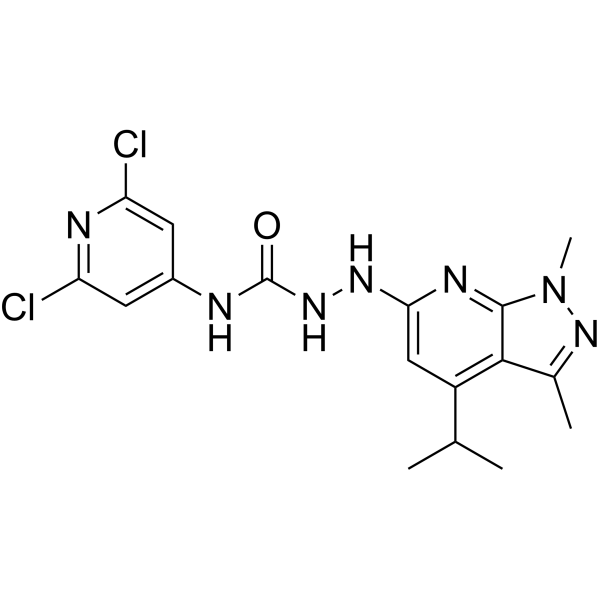
HY-100675
JTE-013S1P2 Antagonist -
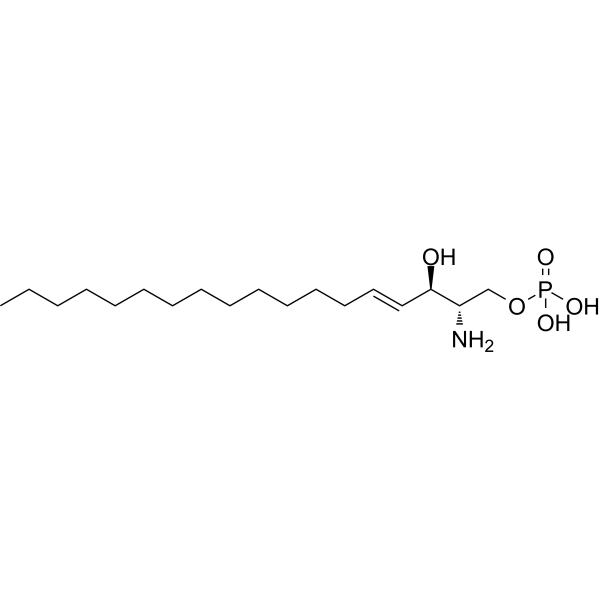
HY-108496
Sphingosine-1-phosphateS1PR Agonist -
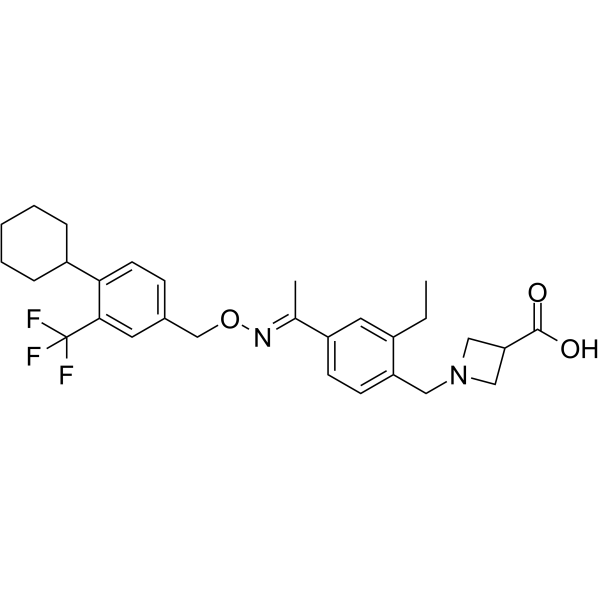
HY-12355
SiponimodS1P1/S1P5 Agonist -
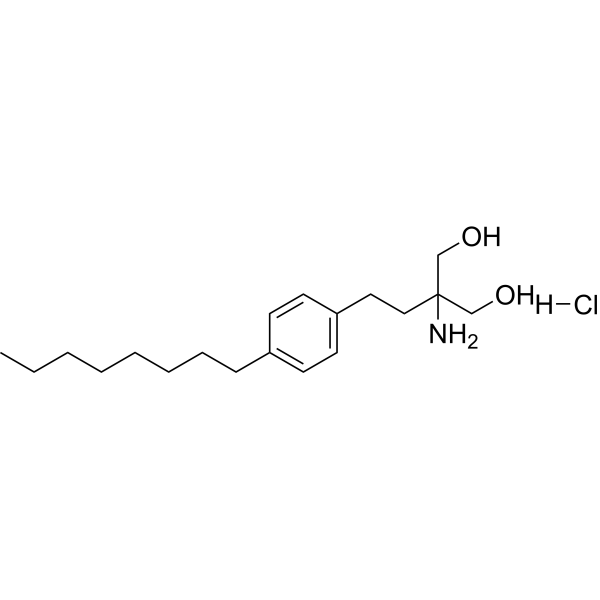
HY-12005
Fingolimod hydrochlorideS1P Receptors Modulator -
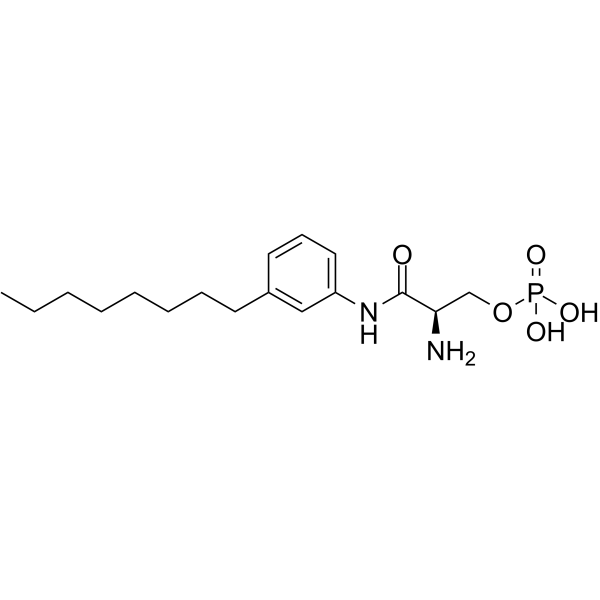
HY-108490
VPC 23019S1P1/3 Antagonist -
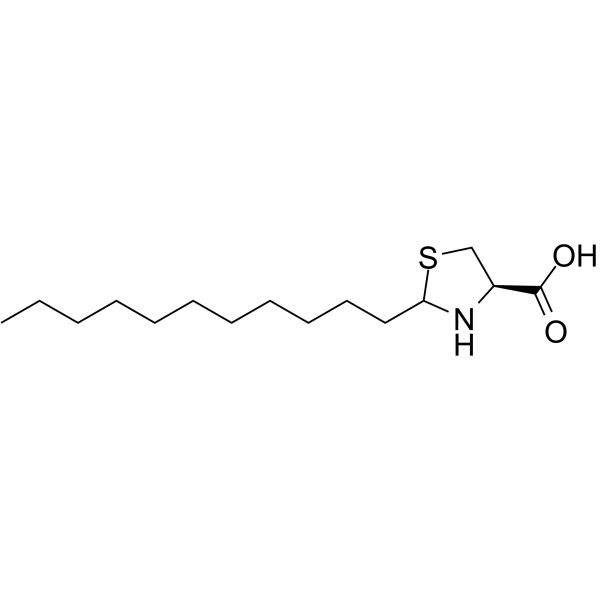
HY-119401
CAY10444S1P3 Antagonist -
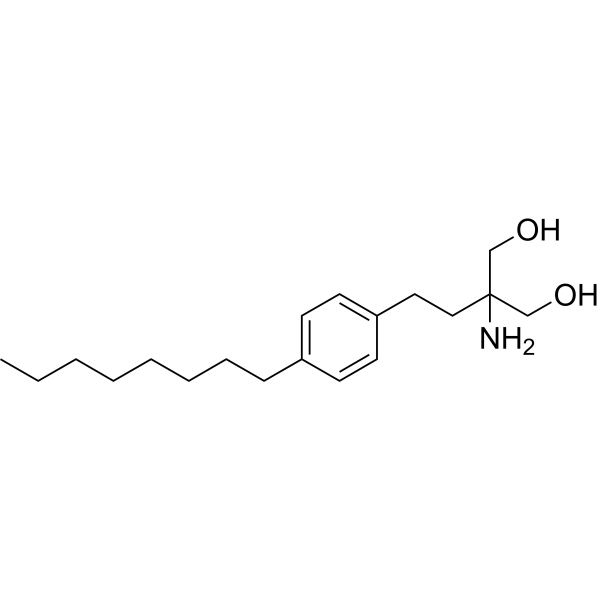
HY-11063
FingolimodS1P Antagonist -
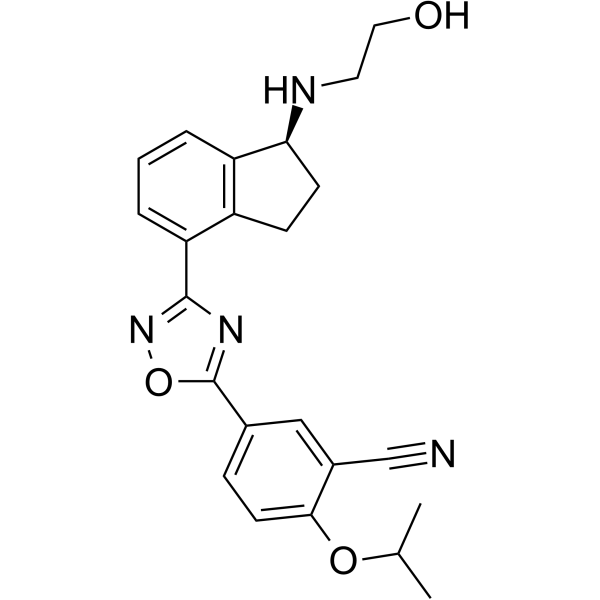
HY-12288
OzanimodS1P Receptor Modulator -
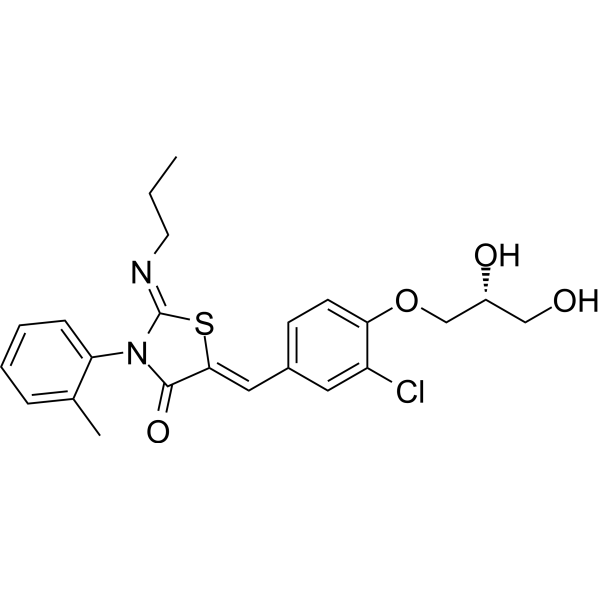
HY-10569
PonesimodS1P1 Agonist -
HY-13660
Mocravimod hydrochlorideS1PR Regulator
Publications Citing Use of MedChemExpress (MCE) TY-52156
More- Cancer Commun (Lond). 2025 Jul 16. [Abstract]
- Nat Cell Biol. 2025 Jun;27(6):918-930. [Abstract]
- Cell Death Dis. 2025 Jan 20;16(1):31. [Abstract]
- J Immunother Cancer. 2023 Aug;11(8):e006343. [Abstract]
- EBioMedicine. 2019 Feb:40:210-223. [Abstract]
- J Transl Med. 2024 Jun 5;22(1):535. [Abstract]
- Oncogene. 2017 Jun 29;36(26):3760-3771. [Abstract]
- iScience. 2024 Oct 30;27(12):111290. [Abstract]
- Vascul Pharmacol. 2022 Feb:142:106941. [Abstract]
- Vet Microbiol. 2021 Oct:261:109177. [Abstract]
- Exp Ther Med. 2018 Jun;15(6):5007-5016. [Abstract]
- Authorea. 2025 Aug 6.
 Customer Validation & Images

-
RT-PCR


Activité biologique
Description
IC50 & Target
Ki: 110 nM (S1P3)[1]
In Vitro
TY-52156 inhibits the S1P3 receptor-dependent increase in [Ca2+]i[1].
TY-52156 shows submicromolar potency and a high degree of selectivity for S1P3 receptor[1].
TY-52156 (10 μM; 10 min) inhibits S1P-induced p44/p42 MAPK phosphorylation[1].
MedChemExpress (MCE) has not independently confirmed the accuracy of these methods. They are for reference only. .
-
Cell Line:Chinese hamster ovary K1 cells
-
Concentration:10 μM
-
Incubation Time:10 min
-
Result:Inhibited S1P-induced p44/p42 MAPK phosphorylation.
In Vivo
MedChemExpress (MCE) has not independently confirmed the accuracy of these methods. They are for reference only.
-
Animal Model:Male SD rats (290–340 g)[1]
-
Dosage:10 mg/kg, 30 mg/kg
-
Administration:Oral administration
-
Result:Inhibited S1P3 receptor-induced bradycardia after oral administration in vivo.


Chemical Information
-
CAS No. 934369-14-9
-
Appearance Solid
-
Masse moléculaire 364.27
-
Formule C18H19Cl2N3O
-
Color Light yellow to yellow
-
SMILES
ClC1=CC=C(/N=C(NNC2=CC=C(Cl)C=C2)/C(C(C)(C)C)=O)C=C1
-
Livraison
Room temperature in continental US; may vary elsewhere.
-
Stockage
Powder -20°C 3 years 4°C 2 years In solvent -80°C 2 years -20°C 1 year


Publications (12)
-
Journal Impact Factor
-
Most Recent
-
Cancer Commun (Lond)
Targeting SPHK1 in macrophages remodels the tumor microenvironment and enhances anti-PD-1 immunotherapy efficacy in colorectal cancer liver metastasis. [Abstract]2025 Jul 16. PMID: 40665874 -
Nat Cell Biol
Sphingosine-1-phosphate signalling activates E-Syt1 to facilitate HDL-derived cholesterol transport. [Abstract]2025 Jun;27(6):918-930. PMID: 40437229 -
Cell Death Dis
S1PR3-driven positive feedback loop sustains STAT3 activation and keratinocyte hyperproliferation in psoriasis. [Abstract]2025 Jan 20;16(1):31. PMID: 39833165 -
J Immunother Cancer
Targeting sphingosine 1-phosphate receptor 3 inhibits T-cell exhaustion and regulates recruitment of proinflammatory macrophages to improve antitumor efficacy of CAR-T cells against solid tumor. [Abstract]2023 Aug;11(8):e006343. PMID: 37591632 -
EBioMedicine
2019 Feb:40:210-223. PMID: 30587459 -
J Transl Med
S1PR3 inhibition protects against LPS-induced ARDS by inhibiting NF-κB and improving mitochondrial oxidative phosphorylation. [Abstract]2024 Jun 5;22(1):535. PMID: 38840216 -
Oncogene
The protumorigenic potential of FTY720 by promoting extramedullary hematopoiesis and MDSC accumulation. [Abstract]2017 Jun 29;36(26):3760-3771. PMID: 28218904
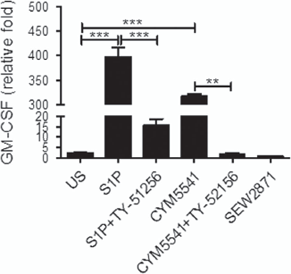
TY-52156 purchased from MedChemExpress. Usage Cited in: Oncogene. 2017 Jun 29;36(26):3760-3771. [Abstract]
G-MDSCs are stimulated with S1P (5 nM), S1pr3 agonist (CYM5541, 10 μM) or S1pr1 agonist (SEW2871, 10 μM) in the presence or absence of S1pr3 antagonist (TY-52156, 10 μM) for 10 h, respectively. GM-CSF mRNA expression is detected by real-time RT–PCR.
-
iScience
Broad and diverse roles of sphingosine-1-phosphate/sphingosine-1-phosphate receptors in the prostate. [Abstract]2024 Oct 30;27(12):111290. PMID: 39618500 -
Vascul Pharmacol
CRH/CRHR1 modulates cerebrovascular endothelial cell permeability in association with S1PR2 and S1PR3 under oxidative stress. [Abstract]2022 Feb:142:106941. PMID: 34781017 -
Vet Microbiol
Lipid metabolism is a novel and practical source of potential targets for antiviral discovery against porcine parvovirus. [Abstract]2021 Oct:261:109177. PMID: 34391196 -
Exp Ther Med
SPHK1 promotes metastasis of thyroid carcinoma through activation of the S1P/S1PR3/Notch signaling pathway. [Abstract]2018 Jun;15(6):5007-5016. PMID: 29805524 -


Solvant et solubilité
In Vitro:
DMSO : ≥ 100 mg/mL (274.52 mM; Hygroscopic DMSO has a significant impact on the solubility of product, please use newly opened DMSO)
* "≥" means soluble, but saturation unknown.
Please refer to the solubility information to select the appropriate solvent. Once prepared, please aliquot and store the solution to prevent product inactivation from repeated freeze-thaw cycles.
Storage method and period of stock solution: -80°C, 2 years; -20°C, 1 year. When stored at -80°C, please use it within 2 years. When stored at -20°C, please use it within 1 year.
Please refer to the solubility information to select the appropriate solvent. Once prepared, please aliquot and store the solution to prevent product inactivation from repeated freeze-thaw cycles.
Storage method and period of stock solution: -80°C, 2 years; -20°C, 1 year. When stored at -80°C, please use it within 2 years. When stored at -20°C, please use it within 1 year.
Concentration (start) × Volume (start) = Concentration (final) × Volume (final)
In Vivo:
Select the appropriate dissolution method based on your experimental animal and administration route.
- For the following dissolution methods, please ensure to first prepare a clear stock solution using an In Vitro approach and then sequentially add co-solvents:
- To ensure reliable experimental results, the clarified stock solution can be appropriately stored based on storage conditions. As for the working solution for In Vivo experiments, it is recommended to prepare freshly and use it on the same day.
- The percentages shown for the solvents indicate their volumetric ratio in the final prepared solution. If precipitation or phase separation occurs during preparation, heat and/or sonication can be used to aid dissolution.
Add each solvent one by one: 10% DMSO 40% PEG300 5% Tween-80 45% Saline
Solubility: ≥ 2.5 mg/mL (6.86 mM); Clear solution
This protocol yields a clear solution of ≥ 2.5 mg/mL (saturation unknown).
Taking 1 mL working solution as an example, add 100 μL DMSO stock solution (25.0 mg/mL) to 400 μL PEG300, and mix evenly; then add 50 μL Tween-80 and mix evenly; then add 450 μL Saline to adjust the volume to 1 mL.
Preparation of Saline: Dissolve 0.9 g sodium chloride in ddH₂O and dilute to 100 mL to obtain a clear Saline solution.
In Vivo Dissolution Calculator
Please enter the basic information of animal experiments:
-
-
-
-
Recommended: Prepare an additional quantity of animals to account for potential losses during experiments.
Please enter your animal formula composition:
-
%DMSO +
Recommended: Keep the proportion of DMSO in working solution below 2% if your animal is weak.
-
%+
-
+%Tween-80 + +
-
%Saline +
The co-solvents required include: DMSO, . All of co-solvents are available by MedChemExpress (MCE). , Tween 80. All of co-solvents are available by MedChemExpress (MCE).
Working solution concentration: 0.22 mg/mL
Method for preparing stock solution: mg drug dissolved in μL DMSO. Stock solution concentration: mg/mL.
1. Take μL DMSO stock solution;
2. Add μL .
μL , mix evenly;
3. Then add μL Tween 80, mix evenly;
4. Then add μL
Please ensure that the stock solution in the first step is dissolved to a clear state, and add co-solvents in sequence. You can use ultrasonic heating (ultrasonic cleaner, recommended frequency 20-40 kHz), vortexing, etc. to assist dissolution.


Pureté et documentation
-
Fiche technique (276 KB)
-
SDS (393 KB)
- English - EN (393 KB)
- Français - FR (393 KB)
- Deutsch - DE (393 KB)
- Norwegian - NO (393 KB)
- Español - ES (393 KB)
- Swedish - SV (393 KB)
- Italian - IT (393 KB)
- Korean - KR (393 KB)
- Portuguese - PT (393 KB)
-
Instruction de manipulation (2659 KB)
Références


Complete Stock Solution Preparation Table
Please refer to the solubility information to select the appropriate solvent. Once prepared, please aliquot and store the solution to prevent product inactivation from repeated freeze-thaw cycles.
Storage method and period of stock solution: -80°C, 2 years; -20°C, 1 year. When stored at -80°C, please use it within 2 years. When stored at -20°C, please use it within 1 year.
| Optional Solvent | Concentration Solvent Mass | 1 mg | 5 mg | 10 mg | 25 mg |
|---|---|---|---|---|---|
| DMSO | 1 mM | 2.7452 mL | 13.7261 mL | 27.4522 mL | 68.6304 mL |
| 5 mM | 0.5490 mL | 2.7452 mL | 5.4904 mL | 13.7261 mL | |
| 10 mM | 0.2745 mL | 1.3726 mL | 2.7452 mL | 6.8630 mL | |
| 15 mM | 0.1830 mL | 0.9151 mL | 1.8301 mL | 4.5754 mL | |
| 20 mM | 0.1373 mL | 0.6863 mL | 1.3726 mL | 3.4315 mL | |
| 25 mM | 0.1098 mL | 0.5490 mL | 1.0981 mL | 2.7452 mL | |
| 30 mM | 0.0915 mL | 0.4575 mL | 0.9151 mL | 2.2877 mL | |
| 40 mM | 0.0686 mL | 0.3432 mL | 0.6863 mL | 1.7158 mL | |
| 50 mM | 0.0549 mL | 0.2745 mL | 0.5490 mL | 1.3726 mL | |
| 60 mM | 0.0458 mL | 0.2288 mL | 0.4575 mL | 1.1438 mL | |
| 80 mM | 0.0343 mL | 0.1716 mL | 0.3432 mL | 0.8579 mL | |
| 100 mM | 0.0275 mL | 0.1373 mL | 0.2745 mL | 0.6863 mL |


TY-52156 Related Classifications
HY-19736 Related Classifications
 Powered by Bioz