



Dopamine Receptor
Dopamine Receptors are a class of G protein-coupled receptors that are prominent in the vertebrate central nervous system (CNS). The neurotransmitter dopamine is the primary endogenous ligand for dopamine receptors. Dopamine receptors are implicated in many neurological processes, including motivation, pleasure, cognition, memory, learning, and fine motor control, as well as modulation of neuroendocrine signaling. Abnormal dopamine receptor signaling and dopaminergic nerve function is implicated in several neuropsychiatric disorders. Thus, dopamine receptors are common neurologic drug targets; antipsychotics are often dopamine receptor antagonists while psychostimulants are typically indirect agonists of dopamine receptors. There are at least five subtypes of dopamine receptors, D1, D2, D3, D4, and D5. The D1 and D5 receptors are members of the D1-like family of dopamine receptors, whereas the D2, D3 and D4receptors are members of the D2-like family.
Dopamine Receptor Isoform Specific Products
All Product Categories
-
Dopamine Receptor Inhibitors
(144)
View all products
-
Dopamine Receptor Agonists
(258)
View all products
-
Dopamine Receptor Antagonists
(451)
View all products
-
Dopamine Receptor Activators
(19)
View all products
-
Dopamine Receptor Modulators
(46)
View all products
-
Dopamine Receptor MDM2 Inhibitor
(1)
View all products
-
Dopamine Receptor Controls
(7)
View all products
-
Dopamine Receptor Ligands
(18)
View all products
-
Dopamine Receptor Related Products (1084)
Related Products (1084)

-
Antibodies (7)
-
Related Compound Screening Libraries (1)
-
Dopamine Receptor Isoform Comparison
-
FMJ-01-042
 0 ImagesCat. No.: HY-181047FMJ-01-042 is a blood-brain barrier-permeable, low-efficacy partial agonist with high affinity (Kᵢ = 4.33 nM) and exceptional subtype selectivity for the dopamine D4 receptor. FMJ-01-042 exhibits good metabolic stability and is suitable for research on neurological and psychiatric disorders.
-
Molindone
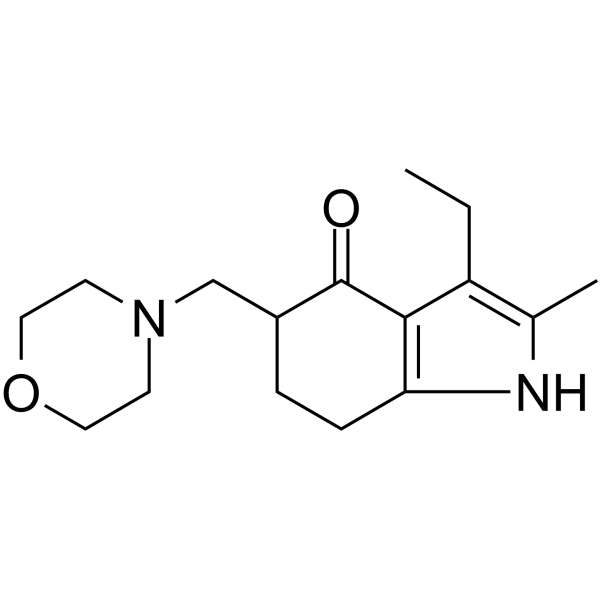 0 ImagesMolindone ((±)-Molindone), an indole derivative, is a potent dopamine D2 and D5 receptor antagonist. Molindone ((±)-Molindone) can be used for the research of schizophrenia and severe mental illness.
-
Trimethobenzamide-d6
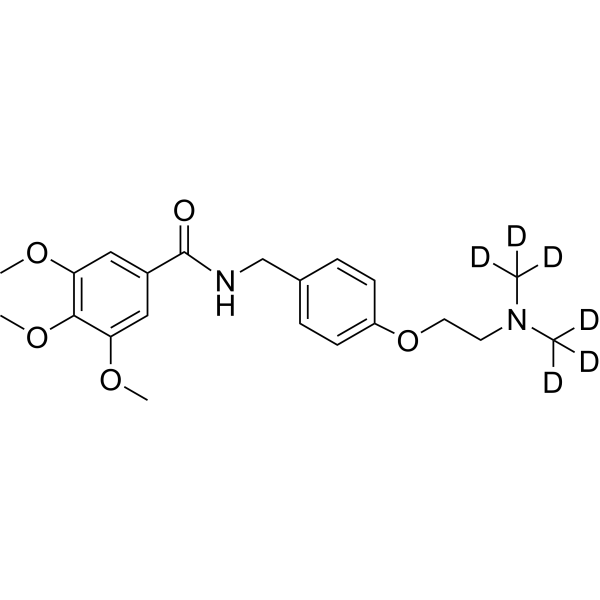 0 ImagesCat. No.: HY-12751SCAS No.: 2070014-97-8Synonyms: Ro 2-9578-d6 free baseTrimethobenzamide-d6 is deuterium labeled Trimethobenzamide. Trimethobenzamide is a blocker of the D2 receptor. Trimethobenzamide is an antiemetic used to prevent nausea and vomiting.
-
Fluphenazine hydrochloride
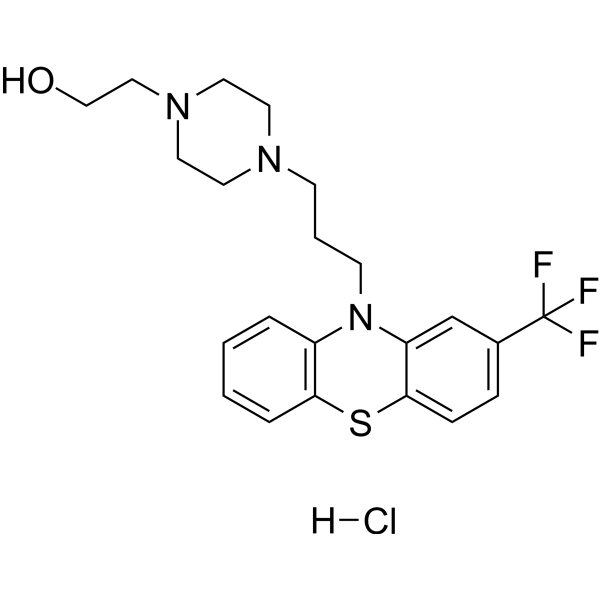 0 ImagesCat. No.: HY-119980BCAS No.: 1254-47-3Fluphenazine hydrochloride is a potent, orally active phenothiazine-based dopamine receptor antagonist. Fluphenazine hydrochloride blocks neuronal voltage-gated sodium channels. Fluphenazine hydrochloride acts primarily through antagonism of postsynaptic dopamine-2 receptors in mesolimbic, nigrostriatal, and tuberoinfundibular neural pathways. Fluphenazine hydrochloride can antagonize Methylphenidate-induced stereotyped gnawing and inhibit climbing behaviour in mice. Fluphenazine hydrochloride can be used for researching psychosis and painful peripheral neuropathy associated with diabetes and has potential to inhibit SARS-CoV-2.
-
Nooglutil
 0 ImagesCat. No.: HY-114576CAS No.: 112193-35-8Synonyms: Nooglutyl; ONK-10Nooglutil (Nooglutyl; ONK-10) is a positive modulator of AMPA-type glutamate receptors (AMPARs). Nooglutil also regulates dopamine D2 receptor function to exert anxiolytic effects. Nooglutil is promising for research of neurodegenerative disorders (e.g., Alzheimer’s disease).
-
RBI-257 maleate
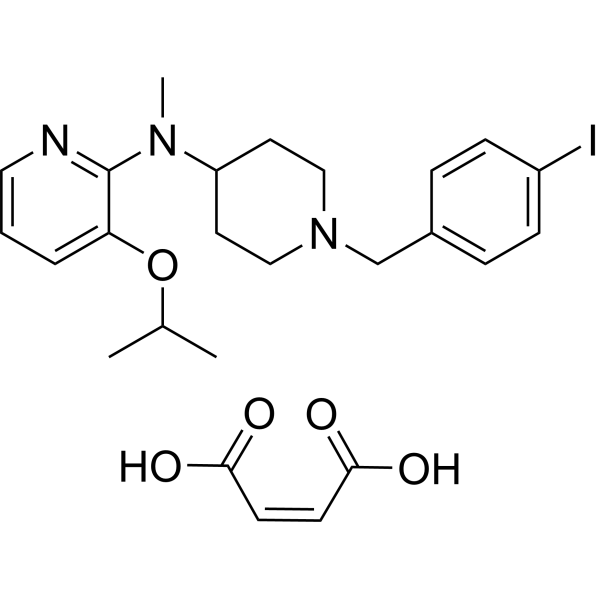 0 ImagesCat. No.: HY-111155CAS No.: 911378-38-6RBI-257 maleate is a potent dopamine D4 receptor antagonist with a Ki value of 0.3 nM.
-
Melperone hydrochloride
 0 ImagesMelperone hydrochloride is a butyrophenone with atypical antipsychotic properties. Melperone hydrochloride is a multireceptor antagonist with Kds of 102 nM, 180 nM, 180 nM, and 150 nM for 5-HT2A, dopamine D2, α1-adrenergic, and α2-adrenergic receptors, respectively. Melperone hydrochloride has weak binding to histamine H1, 5-HT2C, 5-HT1A, 5-HT1D, and muscarinic receptors, with Kd values of 580 nM, 2100 nM, 2200 nM, 3400 nM, >10000 nM, respectively. Melperone hydrochloride is also a CYP2D6 inhibitor. Melperone hydrochloride can be used for the study of schizophrenia, and agitation in the elderly.
-
5-Fluoro-α-methyltryptamine hydrochloride
 0 ImagesCat. No.: HY-W681014CAS No.: 776-56-75-Fluoro-α-methyltryptamine hydrochloride may cause an increase in intracellular levels of 5-HT followed by an increase in 5-HT release. 5-Fluoro-α-methyltryptamine hydrochloride exhibits EC50 values of 37 nM, 14 nM, 78 nM and 8.47 nM for DA, 5HT, NE and 5-HT2A, respectively.
-
L-745870 trihydrochloride
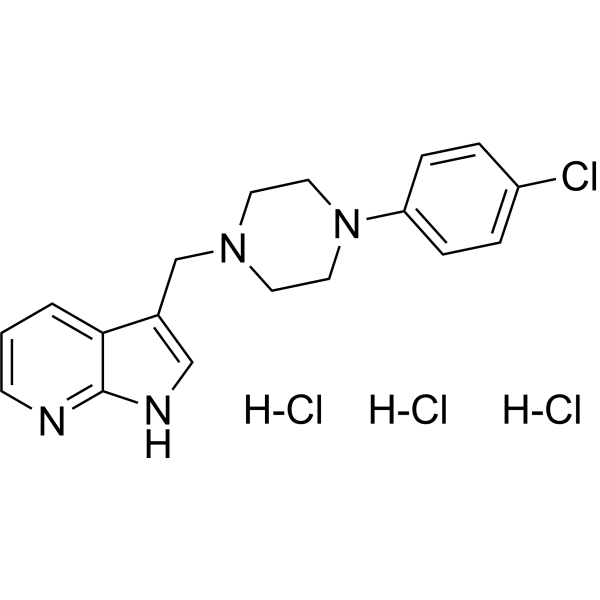 0 ImagesCat. No.: HY-14325ACAS No.: 866021-03-6L-745870 trihydrochloride is a potent, selective, brain-penetrant and orally active dopamine D4 receptor antagonist with a Ki of 0.43 nM. L-745870 trihydrochloride shows weaker affinity for D2 (Ki of 960 nM) and D3 (Ki of 2300 nM) receptors, and exhibits moderate affinity for 5-HT2 receptors, sigma sites and α-adrenoceptors.
-
PIM-35
 0 ImagesCat. No.: HY-W284026CAS No.: 130445-55-5PIM-35 is a derivative of Indole (HY-W001132). PIM-35 significantly inhibits serotonin (5HT) and dopamine (DA) uptake with a weak inhibitory effect on noradrenaline (NA) uptake.PIM-35 has antidepressant activity and can be used for depression research.
-
(+)-Butaclamol hydrochloride
 0 ImagesCat. No.: HY-122979CAS No.: 55528-07-9Synonyms: (+)-AY-23,028; d-Butaclamol hydrochloride(+)-Butaclamol hydrochloride is a neuroleptic agent with dopamine receptor-blocking activity. (+)-Butaclamol hydrochloride is (+)- enantiomer of butaclamol.
-
Dopamine D2 receptor agonist-4
 0 ImagesCat. No.: HY-187430CAS No.: 2977213-17-3Dopamine D2 receptor agonist-4 is a blood-brain barrier permeable Dopamine D2 receptor agonist with an EC50 value of 0.03 nM. Dopamine D2 receptor agonist-4 reduces intracellular cAMP levels. Dopamine D2 receptor agonist-4 acts as a Ferroptosis inhibitor and iron chelator, selectively chelating iron ions, reducing intracellular ferrous ion levels, and exerting cytoprotective effects against iron-dependent ferroptosis in vitro. Dopamine D2 receptor agonist-4 improves motor dysfunction and exerts neuroprotective effects in mouse models of Parkinson's disease. Dopamine D2 receptor agonist-4 can be used in studies related to Parkinson's disease.
-
Clozapine N-oxide-d8
 0 ImagesCat. No.: HY-W748582Clozapine N-oxide-d8 is the deuterium labeled Clozapine N-oxide (HY-17366). Clozapine N-oxide is a major metabolite of Clozapine and a human muscarinic designer receptors (DREADDs) agonist. Clozapine N-oxide activates the DREADD receptor hM3Dq and hM4Di. Clozapine N-oxide can't cross the blood-brain barrier. Clozapine is a potent dopamine antagonist and also a potent and selective muscarinic M4 receptor (EC50=11 nM) agonist.
-
5-OH-DPAT
 0 ImagesCat. No.: HY-131531ACAS No.: 68593-96-4Synonyms: 5-Hydroxy-DPAT5-OH-DPAT (5-Hydroxy-DPAT) is a potent and selective dopamine D2-receptor agonist lacking effects at 5-HT receptors. 5-OH-DPAT produces a moderate facilitation of the male rat sexual behavior.
-
Aramisulpride hydrochloride
 0 ImagesCat. No.: HY-109167ACAS No.: 2129505-46-8Synonyms: (R)-Amisulpride hydrochloride; (R)-Esamisulpride hydrochloride; (R)-DAN 2163 hydrochlorideAramisulpride hydrochloride is a 5-HT7 receptor antagonist with a Ki value of 22 nM. Aramisulpride hydrochloride is a D2/D3 receptor antagonist with a Ki value of 140 nM for D2R and a Ki value of 13.9 nM for D3R. Aramisulpride hydrochloride can be used in psychiatric research.
-
PZ-1657
 0 ImagesCat. No.: HY-179724PZ-1657 (Compound 57) is an orally active, blood-brain barrier permeable, highly selective, and metabolically stable 5-HT7 receptor inverse agonist with a Ki value of 5 nM. PZ-1657 inhibits constitutive cyclic adenosine monophosphate (cAMP) production mediated by the Gs signaling pathway (EC50 value of 2.93 nM). PZ-1657 inhibits CYP3A4 P450 (IC50 = 12.2 μM) and hERG channels. PZ-1657 reduces 5-HT7 receptor-mediated MMP-9 activity. PZ-1657 reverses Phencyclidine-induced cognitive impairment. PZ-1657 possesses antidepressant properties.
-
TDHL-d10
 0 ImagesCat. No.: HY-W744750Synonyms: Tergurid-d10; Terguride-d10; trans-Dihydrolisuride-d10TDHL-d10 (Tergurid-d10; Terguride-d10; trans-Dihydrolisuride-d10) is the deuterium labeled TDHL (HY-12714). TDHL (Tergurid) is a dopamine receptor agonist with a Kd of 0.39 nM for D2 receptor and an orally available 5-HT-2 receptor antagonist.
-
Rotigotine Hydrochloride (Standard)
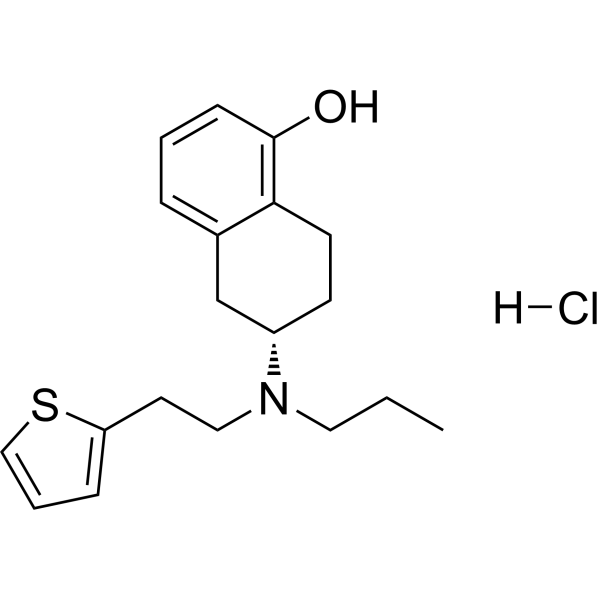 0 ImagesSynonyms: N-0923 Hydrochloride (Standard)Rotigotine (Hydrochloride) (Standard) is the analytical standard of Rotigotine (Hydrochloride). This product is intended for research and analytical applications. Rotigotine Hydrochloride (N-0923 Hydrochloride) is a full agonist of dopamine receptor, a partial agonist of the 5-HT1A receptor, and an antagonist of the α2B-adrenergic receptor, with Ki of 0.71 nM, 4-15 nM, and 83 nM for the dopamine D3 receptor and D2, D5, D4 receptors, and dopamine D1 receptor.
-
Trepipam
 0 ImagesCat. No.: HY-119463CAS No.: 20012-08-2Synonyms: Trimopam; SCH-12679Trepipam (Trimopam; SCH-12679) is a D1-dopamine receptor antagonist. Trepipam can reduce the self-injurious behavior in 6-OHDA-lesioned rats. Trepipam can be used in the research of epilepsy and anxiety neurosis.
-
PZ-1657 hydrochloride
 0 ImagesCat. No.: HY-179724APZ-1657 hydrochloride (Compound 57) is a potent, selective and orally active 5-HT7 receptor inverse agonist with a Ki of 5 nM. PZ-1657 hydrochloride can inhibit the constitutive cAMP production mediated by the Gs signaling pathway (EC50 = 2.93 nM). PZ-1657 hydrochloride can significantly reduce the MMP-9 activity mediated by 5-HT7 receptors in the hippocampus of mice, and the effect is comparable to that of SB-269970 (HY-15370). PZ-1657 hydrochloride can reverse the cognitive deficits observed in the rat novel object recognition test induced by Phencyclidine without affecting the animals' spontaneous activities. PZ-1657 hydrochloride can be used for the research of emotional disorders, such as depression and bipolar disorder.




