



Rotigotine Hydrochloride (Standard)
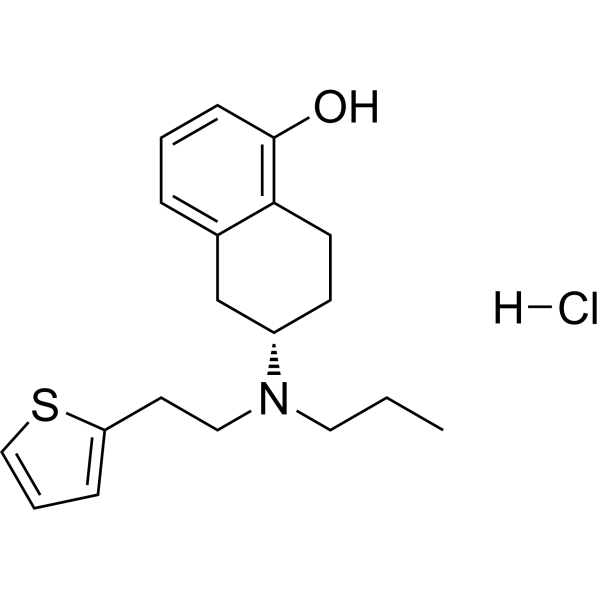
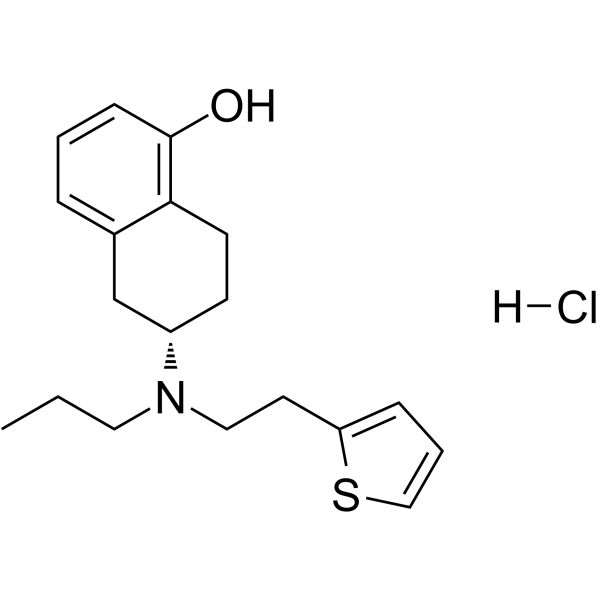
Rotigotine (Hydrochloride) (Standard) is the analytical standard of Rotigotine (Hydrochloride). This product is intended for research and analytical applications. Rotigotine Hydrochloride (N-0923 Hydrochloride) is a full agonist of dopamine receptor, a partial agonist of the 5-HT1A receptor, and an antagonist of the α2B-adrenergic receptor, with Ki of 0.71 nM, 4-15 nM, and 83 nM for the dopamine D3 receptor and D2, D5, D4 receptors, and dopamine D1 receptor.
For research use only. We do not sell to patients.
- Purity : 98%
- CAS No.: 125572-93-2
- Formula: C19H26ClNOS
- Molecular Weight:351.93
-
Storage:
Please store the product under the recommended conditions in the Certificate of Analysis.

To place orders, for customer services and technical support, please contact: MedChemExpress USA
Tel: 609-228-6898 E-mail: [email protected] [email protected]


-
 Product Information
-
Chemical Information
- Purity & Documentation
-
 Help & FAQs


-
HY-A0007
Rotigotine HydrochlorideDopamine Receptor Agonist -
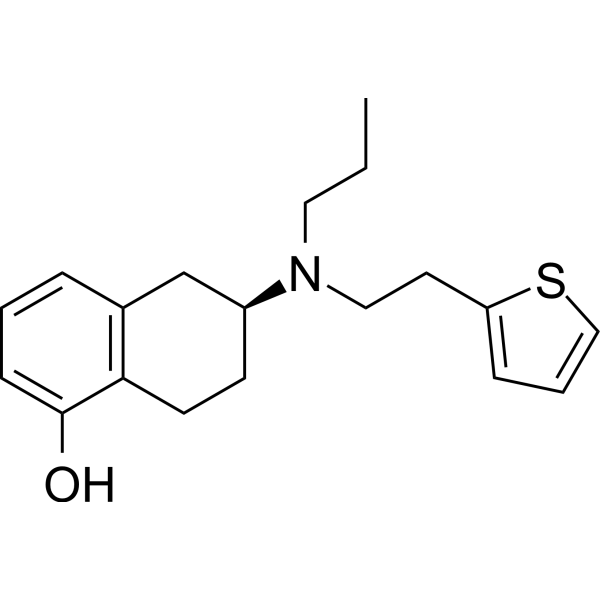
HY-75502
RotigotineDopamine Receptor Agonist -
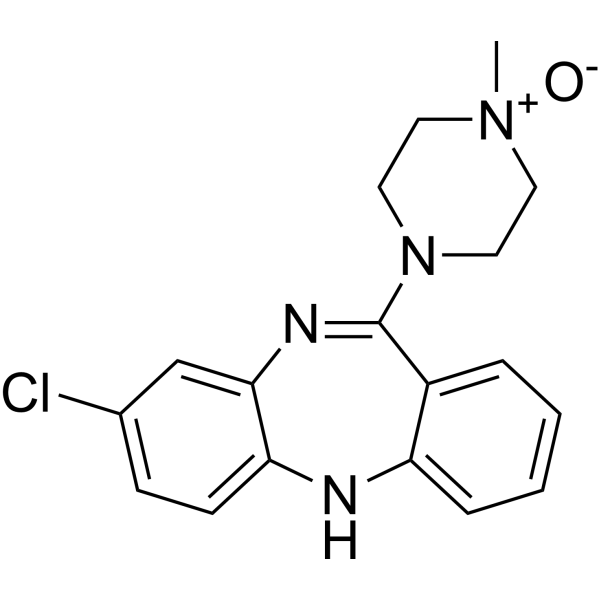
HY-17366
Clozapine N-oxideDREADD Activator -
HY-14763
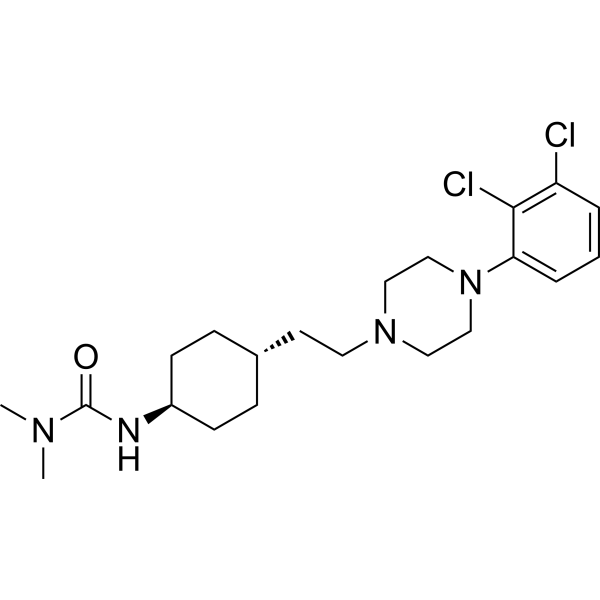
CariprazineD3/D2/5-HT Modulator -
HY-12705A
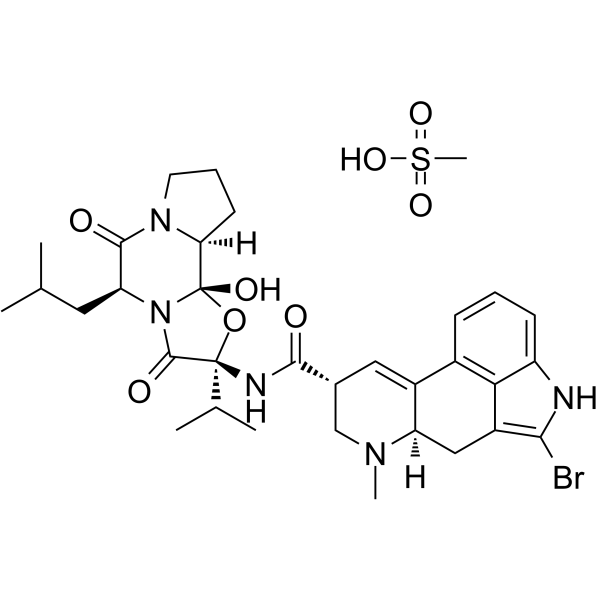
Bromocriptine mesylate -

HY-17366R
Clozapine N-oxide (Standard)DREADD Activator -
HY-B0410
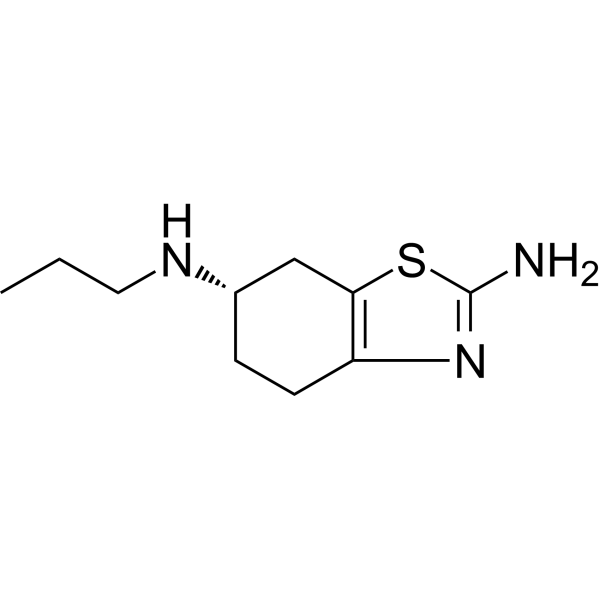
PramipexoleDopamine Receptor Agonist -
HY-17355
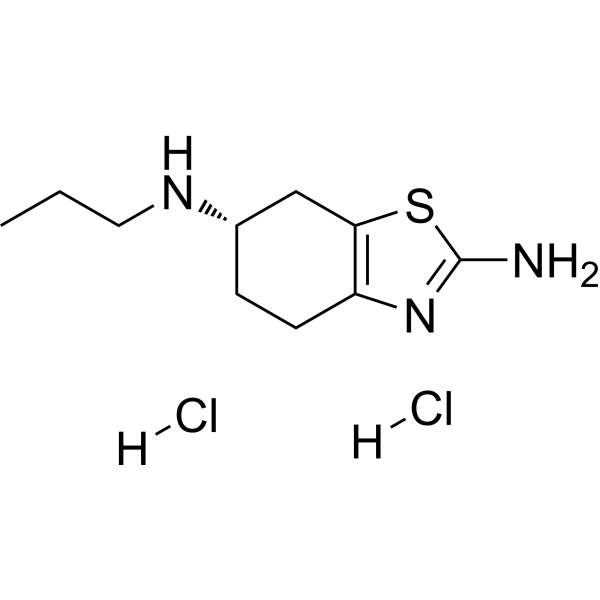
Pramipexole dihydrochlorideDopamine Receptor Agonist -
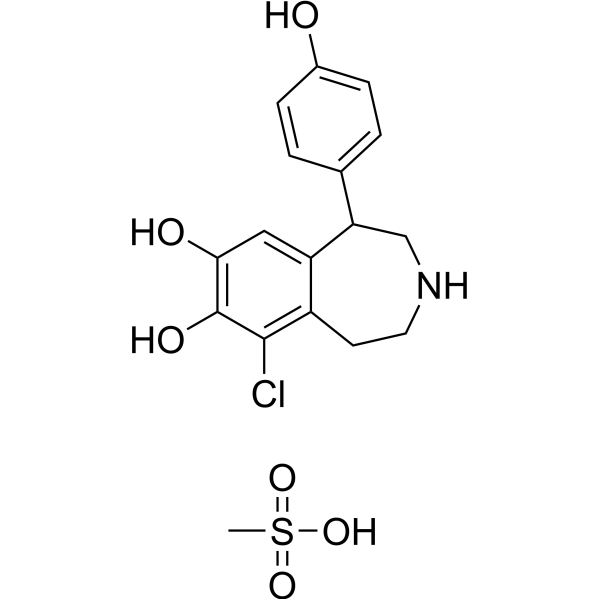
HY-B0735A
Fenoldopam mesylateDopamine DA Receptor Agonist -
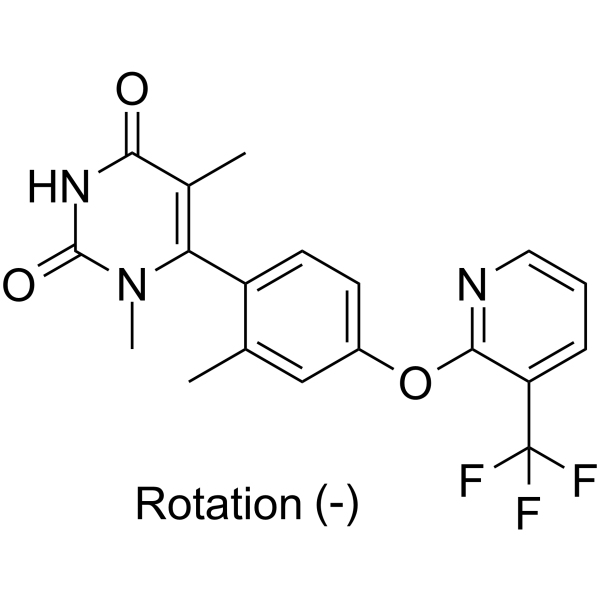
HY-119486
TavapadonDopamine D1/D5 Receptor Agonist -
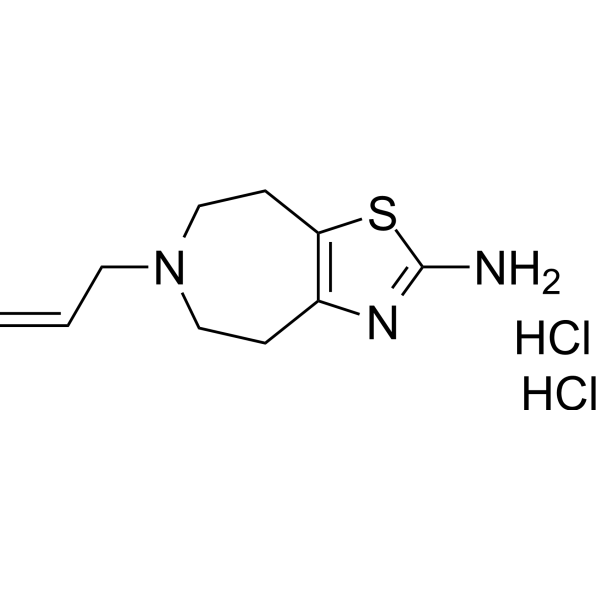
HY-A0008
Talipexole dihydrochlorideDopamine Receptor Agonist -
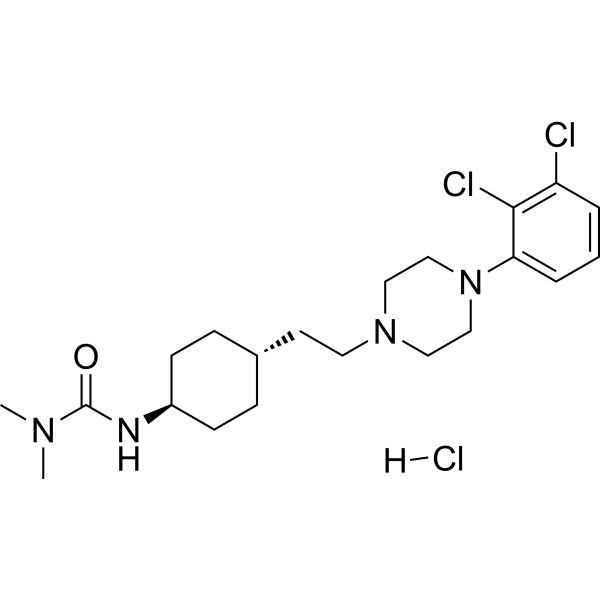
HY-14763A
Cariprazine hydrochlorideDopamine Receptor Modulator


Product Information
Information
Application
The compound is the grade of analytical standard, which is the reference standard supplied assay. It is commonly used in qualitative, quantitative and methodological research experiments in HPLC, GC and MS.


Chemical Information
-
CAS No. 125572-93-2
-
Molecular Weight 351.93
-
Formula C19H26ClNOS
-
SMILES
OC1=C2CC[C@@H](CC2=CC=C1)N(CCC3=CC=CS3)CCC.[H]Cl
-
Synonyms
N-0923 Hydrochloride (Standard)
-
Shipping
Room temperature in continental US; may vary elsewhere.
-
Storage
Please store the product under the recommended conditions in the Certificate of Analysis.


Purity & Documentation
References
[1]. Wood M, et al. Rotigotine is a potent agonist at dopamine D1 receptors as well as at dopamine D2 and D3 receptors. Br J Pharmacol. 2015 Feb;172(4):1124-35. [Content Brief]
[2]. Scheller D, et al. The in vitro receptor profile of rotigotine: a new agent for the treatment of Parkinson's disease. Naunyn Schmiedebergs Arch Pharmacol. 2009 Jan;379(1):73-86. [Content Brief]
[3]. Fenu S, et al. In vivo dopamine agonist properties of rotigotine: Role of D1 and D2 receptors. Eur J Pharmacol. 2016 Oct 5;788:183-91. [Content Brief]
[4]. Radad K, et al. Neuroprotective effect of rotigotine against complex I inhibitors, MPP? and rotenone, in primary mesencephalic cell culture. Folia Neuropathol. 2014;52(2):179-86. [Content Brief]

Calculators
Concentration (start) × Volume (start) = Concentration (final) × Volume (final)


Rotigotine Hydrochloride (Standard) Related Classifications
HY-A0007R Related Classifications
 Powered by Bioz