



Fungal
An antifungal agent is a drug that selectively eliminates fungal pathogens from a host with minimal toxicity to the host.
Classes: 1. Polyene Antifungal Drugs: Amphotericin, nystatin, and pimaricin interact with sterols in the cell membrane (ergosterol in fungi, cholesterol in humans) to form channels through which small molecules leak from the inside of the fungal cell to the outside. 2. Azole Antifungal Drugs: Fluconazole, itraconazole, and ketoconazole inhibit cytochrome P450-dependent enzymes (particularly C14-demethylase) involved in the biosynthesis of ergosterol, which is required for fungal cell membrane structure and function. 3. Allylamine and Morpholine Antifungal Drugs: lylamines (naftifine, terbinafine) inhibit ergosterol biosynthesis at the level of squalene epoxidase. The morpholine drug, amorolfine, inhibits the same pathway at a later step. 4. Antimetabolite Antifungal Drugs: 5-Fluorocytosine acts as an inhibitor of both DNA and RNA synthesis via the intracytoplasmic conversion of 5-fluorocytosine to 5-fluorouracil.
All Product Categories
-
Fungal Related Products (2768)
Related Products (2768)

-
Antibodies (1)
-
Related Compound Screening Libraries (1)
-
N,O-Diacetyltyramine
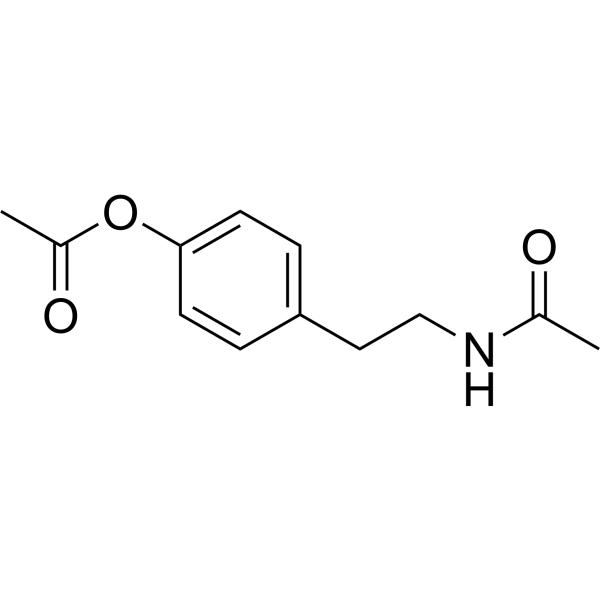 0 ImagesCat. No.: HY-138210CAS No.: 14383-56-3N,O-Diacetyltyramine is a compound with antibacterial activity and cytotoxicity that can be isolated from the actinomycete Pseudonocardia endophytica VUK-10. N,O-Diacetyltyramine has antibacterial activity against Gram-positive and Gram-negative bacteria and fungi. N,O-Diacetyltyramine is cytotoxic to MDA-MB-231, HeLa, MCF-7 and OAW-42 cells.
-
SDH-IN-42
 0 ImagesCat. No.: HY-179287SDH-IN-42 (Compound D28) is a SDH (IC50: 5.38 μg/mL) inhibitor and antifungal agent. SDH-IN-42 exerts antifungal activity against R. solani by disrupting mycelial morphology, increasing cell membrane permeability, inducing the production and accumulation of ROS, and impairing mitochondrial function.
-
NSC145366 monohydrochloride
 0 ImagesCat. No.: HY-117192CAS No.: 1052515-37-3
-
Chondramide D
 0 ImagesCat. No.: HY-N14054CAS No.: 172430-63-6
-
Crocacin C
 0 ImagesCat. No.: HY-N14043CAS No.: 237425-38-6
-
MoTPS1/2-IN-1
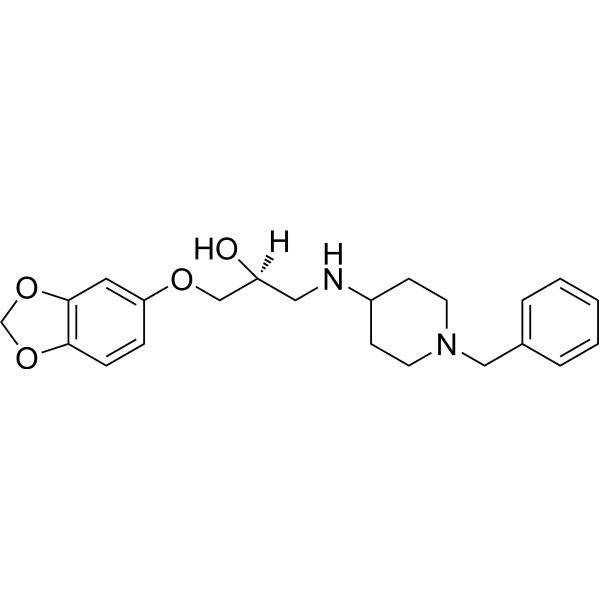 0 ImagesCat. No.: HY-157446MoTPS1/2-IN-1 (Compound A1-4 ) is a bispecific inhibitor of MoTps1 and MoTps2. MoTPS1/2-IN-1 has antifungal activity and showed good inhibitory activity against the growth and virulence of B. cinerea and F. graminearum.
-
Mollugogenol A
 0 ImagesCat. No.: HY-135438CAS No.: 22550-76-1Mollugogenol A is a fungal inhibitor. Mollugogenol A can cause damage to sperm membranes by increasing lipid peroxidation, exhibiting sperm-killing activity.
-
SDH-IN-41
 0 ImagesCat. No.: HY-179296SDH-IN-41 (Compound 3d-1) is an antifungal agent, SDH inhibitor, with an IC50 value of 4.14 mg/L against SsSDH. SDH-IN-41 shows antifungal activity against S. sclerotiorum with an EC50 value of 1.86 mg/L.
-
Hydranthomycin
 0 ImagesCat. No.: HY-N14324CAS No.: 172923-86-3Hydranthomycin is an antibiotic. Hydranthomycin has moderate antifungal activity, and the MIC of Pyricularia oryzae is 25 μg/mL. Hydranthomycin inhibits the growth of Euglena gracilis and has herbicidal activity.
-
CYP51-IN-14
 0 ImagesCat. No.: HY-136764CAS No.: 1155361-12-8CYP51-IN-2 (compound 1n), a Fluconazole (HY-B0101) analog, is a potent antifungal agent. CYP51-IN-2 shows MIC80 of 1 μg/mL for Microsporum gypseum and Candida albicans.
-
Vincetoxicoside B (Standard)
 0 ImagesCat. No.: HY-N1448RCAS No.: 22007-72-3Vincetoxicoside B (Standard) is the analytical standard of Vincetoxicoside B. This product is intended for research and analytical applications. Vincetoxicoside B shows antifungal activity.
-
bc1 Complex-IN-1
 0 ImagesCat. No.: HY-169987CAS No.: 2883052-97-7bc1 Complex-IN-1 (compound 12g) is a potent bc1 complex inhibitor. bc1 Complex-IN-1 shows fungicidal properties against Cucumber downy mildew (CDM).
-
Pentamidine dihydrochloride
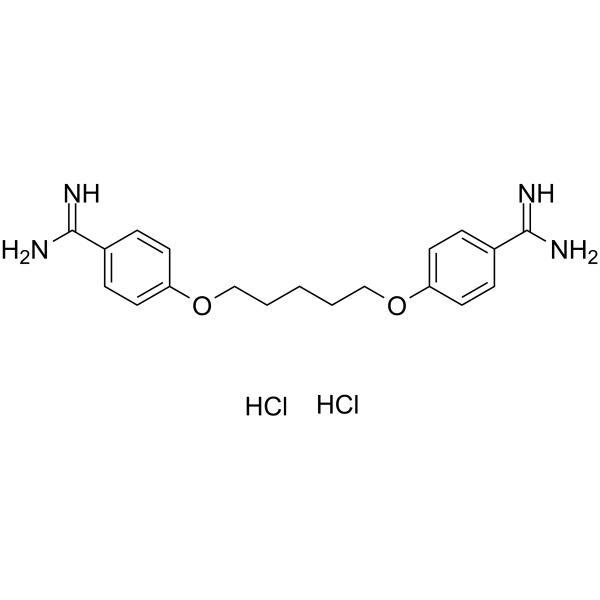 0 ImagesCat. No.: HY-B0537ACAS No.: 50357-45-4Synonyms: MP-601205 dihydrochloridePentamidine dihydrochloride (MP-601205 dihydrochloride) is an antimicrobial agent and interferes with DNA biosynthetics. Pentamidine dihydrochloride inhibits parasite Leishmania infantum with an IC50 of 2.5 μM. Pentamidine dihydrochloride is a potent and selective protein tyrosine phosphatases (PTPases) and phosphatase of regenerating liver (PRL) inhibitor. Pentamidine dihydrochloride has the potential for Gambian trypanosomiasis, antimony-resistant leishmaniasis, and Pneumocystis carinii pneumonia treatment. Antitumor and antibacterial activities.
-
Bromuconazole
 0 ImagesCat. No.: HY-W715812CAS No.: 116255-48-2Bromuconazole is a triazole fungicide with oral efficacy and blood-brain barrier permeability. Bromuconazole protects crops from various fungal contaminations. Bromuconazole exhibits cytotoxicity against a variety of cancer cells, induces G0/G1 cell cycle arrest and inhibits DNA synthesis in cancer cells, and triggers cytoskeletal structural disorder, genotoxic damage, apoptotic (apoptosis) cell death, and mitochondrial membrane depolarization. Bromuconazole activates caspase-3, induces excessive production of ROS, p53 and Bax, lipid peroxidation, increased activities of SOD and CAT, and downregulates Bcl-2. By upregulating p-ERK1/2 and p-JNK, Bromuconazole disrupts the MAPK signaling pathway, impairs the cellular stress response of human trophoblast cells and endometrial cells, and damages the implantation process. Bromuconazole is applicable to research related to glioma, colon cancer, reproductive injury (implantation dysfunction), and cardiac dysfunction.
-
Sotolone-d2
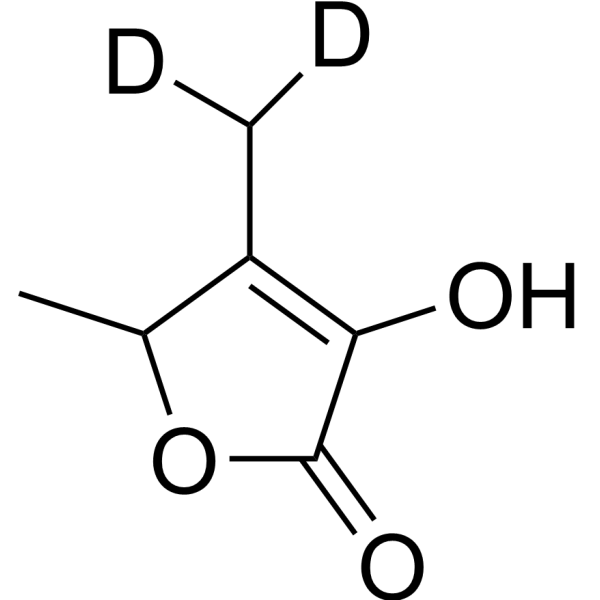 0 ImagesCat. No.: HY-W021008SSynonyms: Dimethylhydroxyfuranone-d2Sotolone-d2 (Dimethylhydroxyfuranone-d2) is deuterated labeled Sotolone. Sotolone is an activator of the human olfactory receptor OR8D1. Sotolone activates the human olfactory receptor OR8D1, with EC50 values of 84.98 μM and 167.2 μM for its S-enantiomer and R-enantiomer, respectively. Sotolone has unique aroma profiles: (R)-sotolone exhibits smoky, burnt, herbal and grassy notes; (S)-sotolone presents sweet, milky, sour and nutty notes. Sotolone also acts as an antifungal agent, showing moderate inhibitory activity against Magnaporthe oryzae in vitro.
-
Coniferyl alcohol (Standard)
 0 ImagesConiferyl alcohol is an orally active lignin biosynthesis intermediate and antifungal agent. Coniferyl alcohol specifically inhibits the growth of fungi (Verticillium longisporum). Coniferyl alcohol inhibits the growth of Nicotiana benthamiana seedlings. Coniferyl alcohol improves cardiac dysfunction in renovascular hypertension and cardiac inflammation.
-
Cyclothiazomycin
 0 ImagesCat. No.: HY-N5185CAS No.: 133352-26-8Cyclothiazomycin selectively inhibits renin activity and does not inhibit pepsin, aspartic acid, serine, mercaptan protease and metalloproteinases. Cyclothiazomycin has weak antifungal activity.
-
CYP51-IN-10
 0 ImagesCat. No.: HY-136760CAS No.: 1155361-08-2CYP51-IN-10 is cytochrome P450 14a-demethylase (CYP51) inhibitor with antifungal activity. CYP51-IN-10 can be used for the research of fungal infection.
-
Cladospolide D
 0 ImagesCat. No.: HY-N14669CAS No.: 371229-61-7Cladospolide D is found in the strain of Cladosporium sp. FT-0012. Cladospolide D has the activity against part of fungi.
-
Benanomicin B
 0 ImagesCat. No.: HY-N15184CAS No.: 116249-66-2Synonyms: Pradimicin CBenanomicin B (Pradimicin C) is an antifungal antibiotic that also has antibacterial activity against two Gram-positive bacteria: Micrococcus luteus and Corynebacterium bovis.




