



HSF1
Heat Shock Factor 1 (HSF1) functions as a master transcriptional regulator, maintaining cellular proteostasis under stress conditions[1][2]. Mechanistically, HSF1 activation induces heat shock proteins (HSPs), which assist in protein folding, prevent misfolding, and modulate apoptosis pathways[3][2][1]. In metabolic contexts, HSF1 regulates lipid homeostasis through the HSF1-CPT1a axis, influencing hepatic fat accumulation in non-alcoholic fatty liver disease (NAFLD) models[4]. Compared with other isoforms, HSF1 specifically activates transcriptional networks distinct from HSP-independent stress responses, including the FOXO3a-ΔNp63α-CDK4 axis in head and neck squamous cell carcinoma (HNSCC)[5]. In pediatric hepatoblastoma, elevated HSF1 correlates with tumor aggressiveness and decreased differentiation, while its inhibition induces apoptosis and reduces tumor growth[6]. Pharmacological modulation of HSF1, either through activators or inhibitors, demonstrates potential for experimental applications: inhibitors such as KRIBB11 or PU-H71 can suppress HSF1-dependent pathways, decreasing proliferation in cancer models, whereas HSF1 activation enhances inducible HSP expression in neurodegeneration studies[2][1][5][6]. The differential roles of HSF1 in disease versus normal physiology underscore its value as a target for isoform-specific drug development, enabling selective modulation of stress response pathways without broadly affecting related transcription factors[1][2][7]. Therefore, HSF1 serves as both a critical mechanistic node in cellular stress adaptation and a strategic intervention point for disease modeling and therapeutic exploration[1][5][6].
References:
- [1]. Breternitz W, et al. The HSF1-CPT1a Pathway Is Differentially Regulated in NAFLD Progression. Cells. 2022 Nov 4;11(21):3504. [Content Brief]
- [2]. Kumar S, et al. HSF1-mediated regulation of tumor cell apoptosis: a novel target for cancer therapeutics. Future Oncol. 2013 Oct;9(10):1573-86. [Content Brief]
- [3]. Fernandez-Funez P, et al. Launching Hsp70 neuroprotection: two drugs better than one. Cell Cycle. 2014;13(11):1657-8. [Content Brief]
- [4]. Meng F, et al. Drug design targeting active posttranslational modification protein isoforms. Med Res Rev. 2021 May;41(3):1701-1750. [Content Brief]
- [5]. Chin Y, et al. Targeting HSF1 for cancer treatment: mechanisms and inhibitor development. Theranostics. 2023 Apr 17;13(7):2281-2300. [Content Brief]
- [6]. Wang Y, et al. HSF1 activates the FOXO3a-ΔNp63α-CDK4 axis to promote head and neck squamous cell carcinoma cell proliferation and tumour growth. FEBS Lett. 2023 Apr;597(8):1125-1137. [Content Brief]
- [7]. Hurley EH, et al. Inhibition of Heat Shock Factor 1 Signaling Decreases Hepatoblastoma Growth via Induction of Apoptosis. Am J Pathol. 2023 Feb;193(2):148-160. [Content Brief]
-
HSF1 Related Products (10)
Related Products (10)

-
Antibodies (2)
-
Rocaglamide
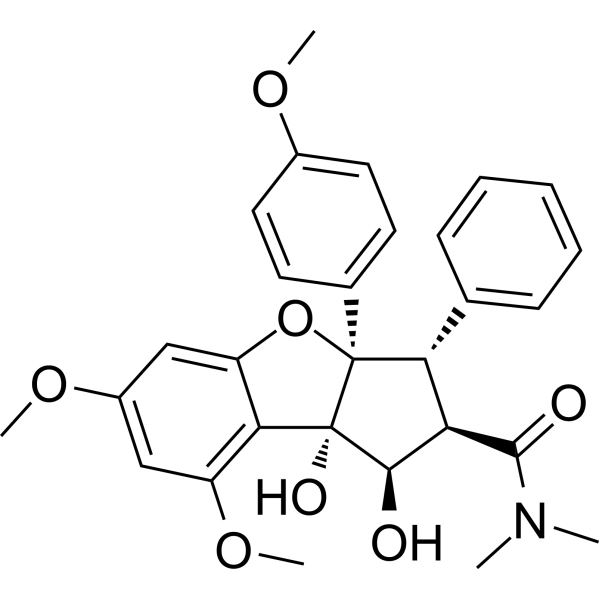 0 ImagesSynonyms: Roc-ARocaglamide (Roc-A) is isolated from the genus Aglaia and can be used for coughs, injuries, asthma and inflammatory skin diseases. Rocaglamide is a potent inhibitor of NF-κB activation in T-cells. Rocaglamide is a potent and selective heat shock factor 1 (HSF1) activation inhibitor with an IC50 of ~50 nM. Rocaglamide inhibits the function of the translation initiation factor eIF4A. Rocaglamide also has anticancer properties in leukemia.
-
Rosolutamide
 0 ImagesSynonyms: ASC-JM17; ALZ-003Rosolutamide (ASC-JM17) is an orally active Nrf1/Nrf2 activator. Rosolutamide activates Hsf1 pathways, upregulates proteasome subunits and antioxidant enzymes, induces proteasome complex structural rearrangement, and enhances ubiquitin-proteasome system-mediated degradation. Rosolutamide reduces mutant androgen receptor and ataxin-3 aggregates, restores mitochondrial function, attenuates reactive oxygen species (ROS) levels, induces apoptosis and ferroptosis, and inhibits cancer cell growth. Rosolutamide can be used for the research of spinal and bulbar muscular atrophy, Huntington’s disease, and temozolomide-resistant glioblastoma.
-
Withanolide D
 0 ImagesCat. No.: HY-N17756CAS No.: 30655-48-2Withanolide D (Compound 2) is a steroidal ester found in Withania somnifera (L.) Dunal, with anticancer activity. Withanolide D can activate the heat-shock factor 1 (HSF1)-dependent stress response. Withanolide D can be used for the research of cancer such as lymphoma.
-
HSF1-IN-3
 0 ImagesCat. No.: HY-184309HSF1-IN-3 is a heat shock transcription factor 1 (HSF1) inhibitor with a Kd value of 23.8 μM against HSF1-DBD. HSF1-IN-3 inhibits the proliferation of cancer cells and induces their apoptosis, with stronger activity in androgen-dependent prostate cancer cells. HSF1-IN-3 reduces the expression of HSP70 and HSP90, downstream effectors of HSF1, and attenuates HSE-driven transcriptional activity. HSF1-IN-3 can be used in the research of cancers such as prostate cancer and leukemia.
-
HSF1-IN-2
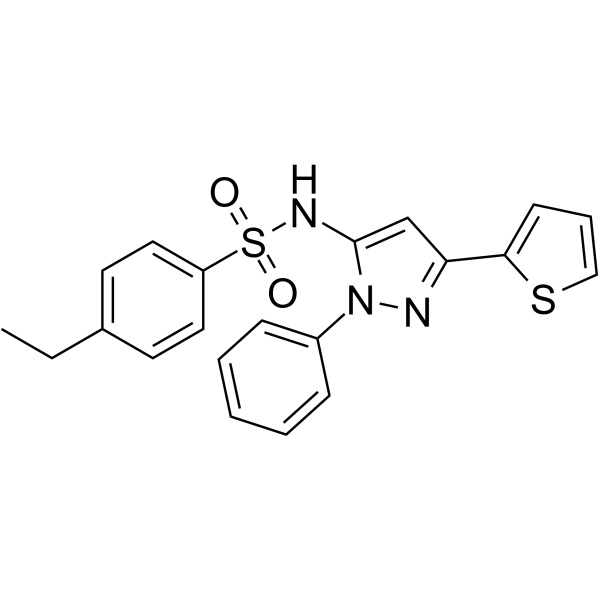
 0 ImagesCat. No.: HY-W224634CAS No.: 304453-52-9
-
Ly101-4B
 0 ImagesCat. No.: HY-164184CAS No.: 1415728-94-7Ly101-4B is an apoptosis inducer and multi-target inhibitor with antiproliferative, antitumor and cycytotoxic effects. Ly101-4B reduces HSF1 expression, inhibits microRNA-214 synthesis, downregulates HSP27, HSP70 and HSP90 expression, while suppressing E2F-dependent transcriptional activity and downregulating its target genes. Ly101-4B induces caspase 3/7-mediated apoptosis by reducing DNA synthesis, inhibiting the cell cycle and G1/S phase transition, without affecting RNA synthesis or inducing necrosis. Ly101-4B is selective for pancreatic ductal adenocarcinoma cells with different genotypes and varying degrees of E2F dependence. Ly101-4B can be used in research related to epithelial ovarian cancer and pancreatic ductal adenocarcinoma.
-
Liriodendrin
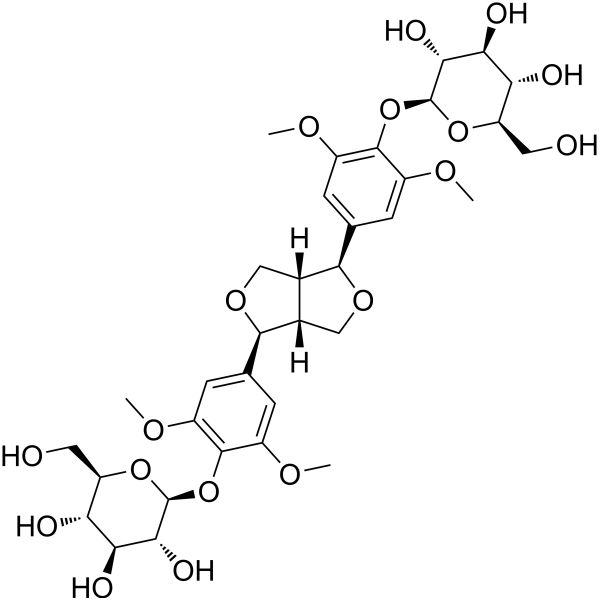 0 ImagesLiriodendrin is an orally effective lignan compound with anti-inflammatory, antioxidant, and anti-platelet aggregation activities. Liriodendrin is isolated and extracted from Sargentodoxae caulis and Linaria vulgaris. Liriodendrin regulates the expression of genes related to inflammation and cellular metabolism by inhibiting the NF-κB, PI3K/Akt, and TLR4 signaling pathways, or by activating the PI3K-DDX18 pathway. Liriodendrin increases the expression of HSF1 and HSP27 without cytotoxicity. Liriodendrin is used in studies on ulcerative colitis, myocardial ischemia-reperfusion injury, sepsis-induced acute lung injury, and chronic endometritis.




