



GPT/ALT
Alanine aminotransferase (ALT), also known as glutamate-pyruvate transaminase (GPT), is a pyridoxal phosphate-dependent aminotransferase that catalyzes the reversible transfer of an amino group between L-alanine and α-ketoglutarate to generate pyruvate and glutamate, thereby linking amino acid metabolism with glucose metabolism[1][2]. ALT plays a central role in intermediary metabolism and hepatic gluconeogenesis, making it an important regulator of carbon and nitrogen flux between tissues[1][2]. Two distinct isoforms, ALT1 (GPT1) and ALT2 (GPT2), are encoded by separate genes and exhibit different cellular and tissue distributions despite catalyzing the same transamination reaction[1][3][2]. Mechanistically, ALT1 is predominantly localized in the cytosol, whereas ALT2 is mainly associated with mitochondria, indicating nonredundant metabolic functions in cellular amino acid handling and energy metabolism[1][3][2]. In disease settings, circulating ALT activity is widely used as a biomarker of hepatocellular injury, liver disease, and hepatotoxicity because liver tissue contains abundant ALT expression[3]. Compared with ALT1, ALT2 has been linked more closely to metabolic adaptations associated with obesity and altered gluconeogenic amino acid utilization, and hepatic GPT2 expression decreases following substantial weight-loss-induced metabolic improvement[4]. Therefore, isoform-specific analysis of ALT1 and ALT2 provides a more refined framework for investigating liver metabolism, metabolic disease mechanisms, and tissue-specific sources of aminotransferase activity[3][4].
References:
- [1]. Negro F. Are statins a remedy for all seasons? J Hepatol. 2015 Jan;62(1):8-10. doi: 10.1016/j.jhep.2014.09.018. Epub 2014 Sep 20. PMID: 25245893. et al. Are statins a remedy for all seasons? J Hepatol. 2015 Jan;62(1):8-10. [Content Brief]
- [2]. Rafter I, et al. Isoform-specific alanine aminotransferase measurement can distinguish hepatic from extrahepatic injury in humans. Int J Mol Med. 2012 Nov;30(5):1241-9. [Content Brief]
- [3]. Caspi L, et al. A balance of lipid-sensing mechanisms in the brain and liver. Cell Metab. 2007 Aug;6(2):99-104. [Content Brief]
- [4]. Hsu CF, et al. Ovulation Enhances Intraperitoneal and Ovarian Seedings of High-Grade Serous Carcinoma Cells Originating from the Fallopian Tube: Confirmation in a Bursa-Free Mouse Xenograft Model. Int J Mol Sci. 2022 Jun 1;23(11):6211. [Content Brief]
All Product Categories
-
GPT/ALT Related Products (2)
Related Products (2)

-
Tunicamycin
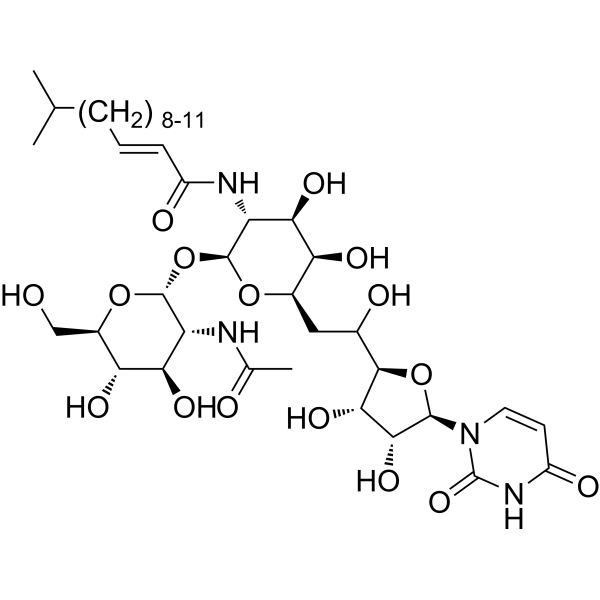 0 ImagesTunicamycin is a mixture of homologous nucleoside antibiotic that inhibits N-linked glycosylation and blocks GlcNAc phosphotransferase (GPT). Tunicamycin causes accumulation of unfolded proteins in cell endoplasmic reticulum (ER) and induces ER stress, and causes blocking of DNA synthesis and cell cycle arrest in G1 phase. Tunicamycin inhibits gram-positive bacteria, yeasts, fungi, and viruses and has anti-cancer activity.Tunicamycin increases exosome release in cervical cancer cells.
-
Linoleylanilide
 0 ImagesCat. No.: HY-116509CAS No.: 19878-10-5Synonyms: Linoleic acid anilide; LAALinoleylanilide (Linoleic acid anilide) is a Linoleic acid (HY-N0729) derivative. Linoleylanilide slightly inhibits the PMA (HY-18739)-induced expression of CD11b. Linoleylanilide inhibits serum LDH, GOT and GPT activities. Linoleylanilide decreases red cell counts and hemoglobin content.



