



DGK
Diacylglycerol kinase;
DGK (Diacylglycerol Kinase) modulates the balance between DAG and phosphatidic acid (PA). DGK phorylates DAG to generate PA. DGK has ten mammalian DGK subtypes (α-κ) with subtype-specific tissue distribution, and they can be classified into 5 types. Among them, DGKα and DGKζ specifically regulate the pool of DAG that is generated as a second messenger after stimulation of the T cell receptor. Whereas, DGKζ is the dominant isoform in T cells. Dysregulation of certain DGK isoforms leads to DAG-activation of PKC, attenuation of insulin signaling, and dysregulation of glucose metabolism. DGK plays a role in many physiological events, including cell proliferation and migration, glucose intake, immunity and neuronal network construction[1][2][3].
References:
- [1]. Riese MJ, et al. Diacylglycerol Kinases (DGKs): Novel Targets for Improving T Cell Activity in Cancer. Front Cell Dev Biol. 2016 Oct 17;4:108. [Content Brief]
- [2]. Shirai Y, et al. Diacylglycerol kinase as a possible therapeutic target for neuronal diseases. J Biomed Sci. 2014 Apr 7;21(1):28. [Content Brief]
- [3]. Massart J, et al. Role of Diacylglycerol Kinases in Glucose and Energy Homeostasis. Trends Endocrinol Metab. 2019 Sep;30(9):603-617. [Content Brief]
All Product Categories
-
DGK Related Products (45)
Related Products (45)

-
Antibodies (2)

-
CU-3
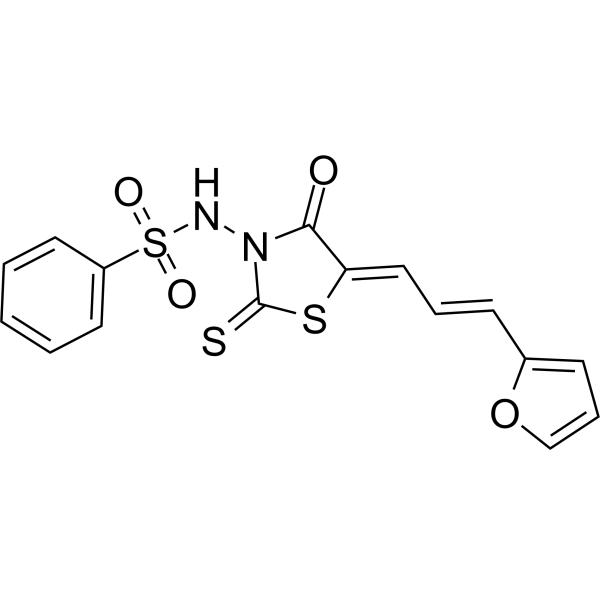 0 ImagesCat. No.: HY-121638CAS No.: 2983265-35-4CU-3 is a DGKα inhibitor with an IC50 of 0.6 μM. CU-3 competitively reduces DGKα’s affinity for ATP via binding to the enzyme’s catalytic region. CU-3 induces apoptosis in cancer cells. CU-3 promotes T-cell activation and enhances IL-2 production. CU-3 can be used for the research of hepatocellular carcinoma and cervical cancer.
-
DGK-IN-11
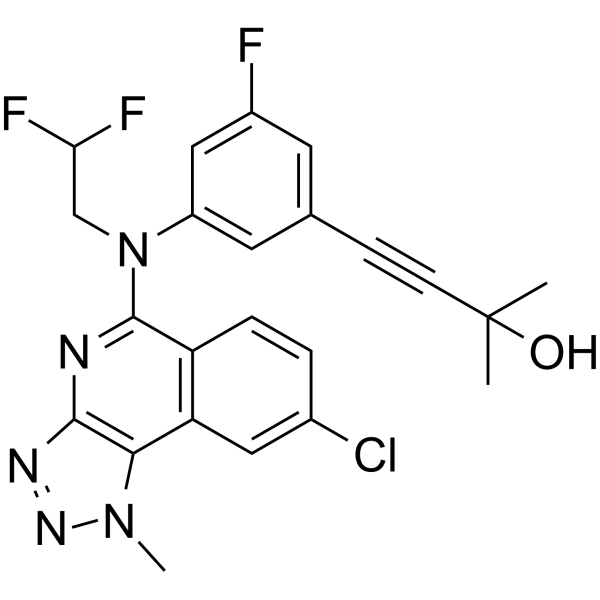
 0 ImagesCat. No.: HY-177601CAS No.: 3023735-36-3DGK-IN-11 (Compound 1) is a diacylglycerol kinase (DGK) inhibitor. DGK-IN-11 exhibits inhibitory activity against DGKα and DGKγ. DGK-IN-11 regulates intracellular diacylglycerol levels and enhances T cell activation, cytokine production, and proliferation. DGK-IN-11 can be used for the study of cancer.

-
DGKα-IN-9
 0 ImagesCat. No.: HY-175727CAS No.: 2980406-85-5
-
DGK-IN-8
 0 ImagesCat. No.: HY-164905CAS No.: 3039488-69-9
-
DGKα-IN-4
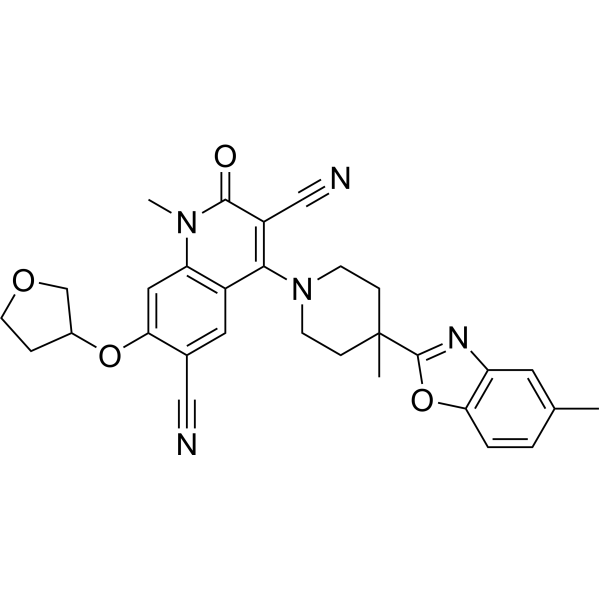 0 ImagesCat. No.: HY-156571CAS No.: 2648723-43-5DGKα-IN-4 (example 432) is a DGKα inhibitor with the IC50 of 0.1 nM, extracted from patent WO2021105117. DGKα-IN-2 significantly enhances the anti-tumor effect of anti-PD-1 by increasing the proliferation and function of T cells. DGKα-IN-3 has the potential for cancer and immunology study.
-
DGKζ-IN-3
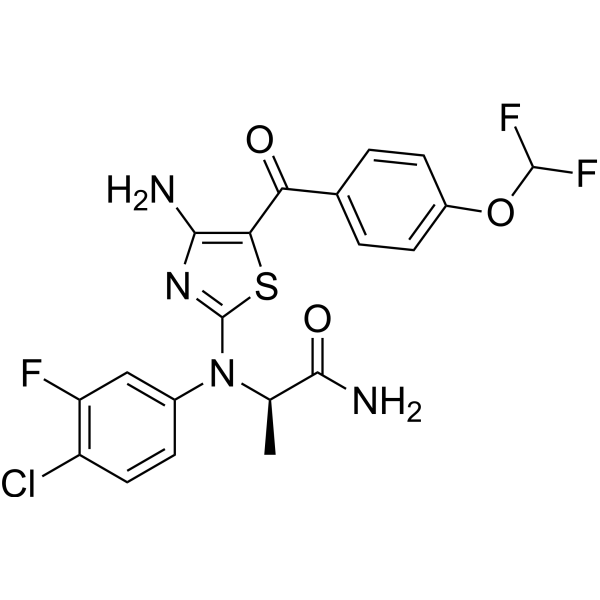 0 ImagesCat. No.: HY-156572CAS No.: 2732901-70-9DGKζ-IN-3 is a DGK-zeta-inhibitor. DGKζ-IN-3 is used in liquid and solid cancer and other diacylglycerol kinase zeta (DGK-ζ) regulation of diseases.
-
DGKζ-IN-10
 0 ImagesCat. No.: HY-170427CAS No.: 3062708-86-2DGKζ-IN-10 (compound 349) is a DGKζ inhibitor, with an IC50 ≤200 nM.
-
DGKα-IN-3
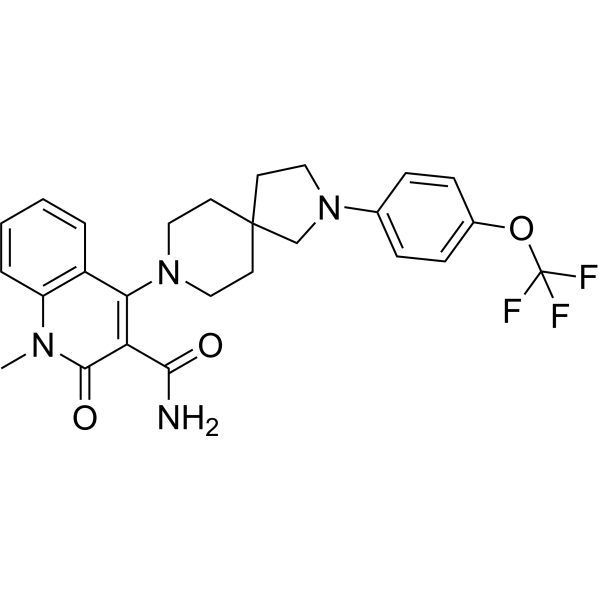 0 ImagesCat. No.: HY-156570CAS No.: 2648418-86-2DGKα-IN-3 (example 25) is a DGKα inhibitor with the IC50 of 283 nM, extracted from patent WO2021105115. DGKα-IN-2 significantly enhances the anti-tumor effect of anti-PD-1 by increasing the proliferation and function of T cells. DGKα-IN-2 has the potential for cancer and immunology study.
-
DGKα&ζ-IN-2
 0 ImagesCat. No.: HY-178327CAS No.: 3039488-61-1DGKα/ζ-IN-2 is a potent, orally active and selective dual DGKα/ζ inhibitor with IC50 values of 23 nM (DGKα) and 1.2 nM (DGKζ). DGKα/ζ-IN-2 exhibits selectivity over other DGK isoforms, such as DGKβ and DGKγ. DGKα/ζ-IN-2 shows robust and dose-dependent immune activation in the presence of antigen presentation in an OT-1 murine model. DGKα/ζ-IN-2 can be used for antitumor immunity.
-
DGKζ-IN-7
 0 ImagesCat. No.: HY-169318CAS No.: 3058006-33-7
-
DGKζ-IN-5
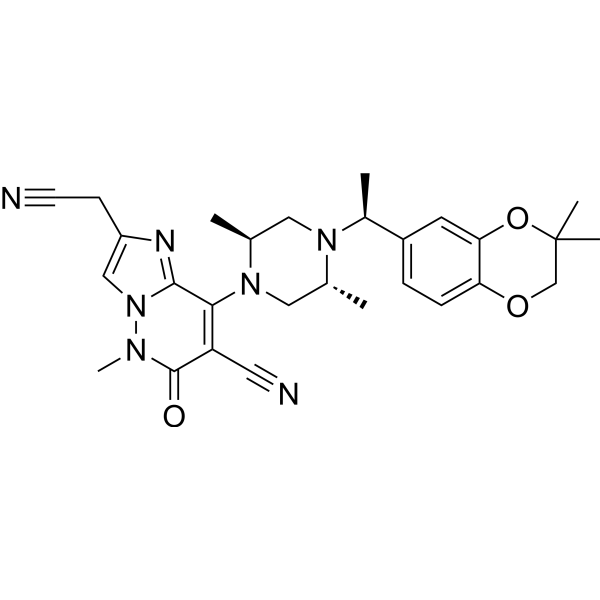 0 ImagesCat. No.: HY-160123CAS No.: 2951002-04-1DGKζ-IN-5 is a DGKζ inhibitor (WO2023125681A1; compound A27a).
-
DGKα-IN-6
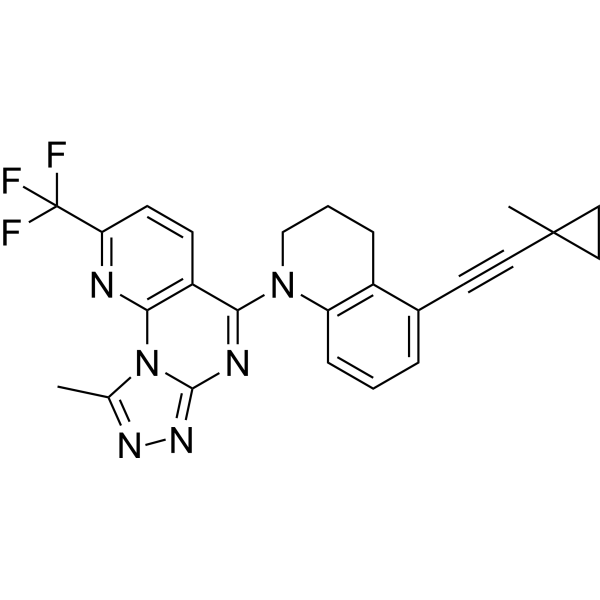 0 ImagesCat. No.: HY-156576CAS No.: 2886734-91-2DGKα-IN-6 is a DGKα inhibitor with the IC50 of 1.377 nM, extracted from patent WO2022271650 (compound 143). DGKα-IN-6 has the potential for cancer study.
-
DGK-IN-13
 0 ImagesCat. No.: HY-177603CAS No.: 3023735-55-6
-
Cochlioquinone A
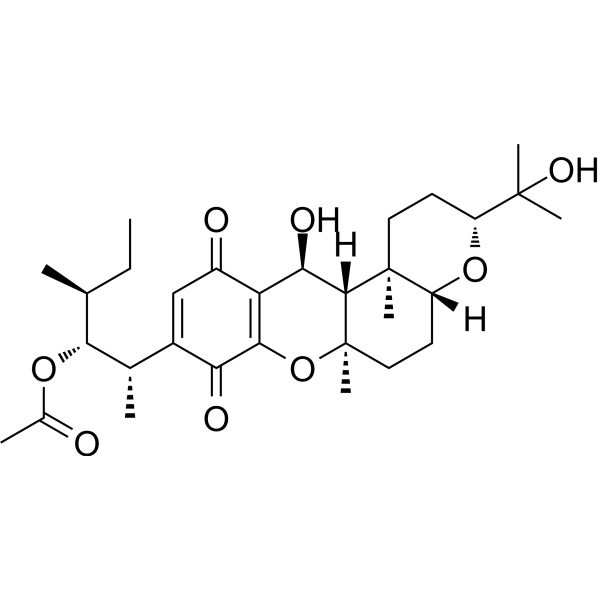 0 ImagesCat. No.: HY-126599CAS No.: 32450-25-2Synonyms: LuteoleersinCochlioquinone A is a ATP-competive diacylglycerol kinase inhibitor (Ki: 3.1 μM). Cochlioquinone A can be isolated from Drechslera sacchari.
-
DGKα/ζ-IN-1
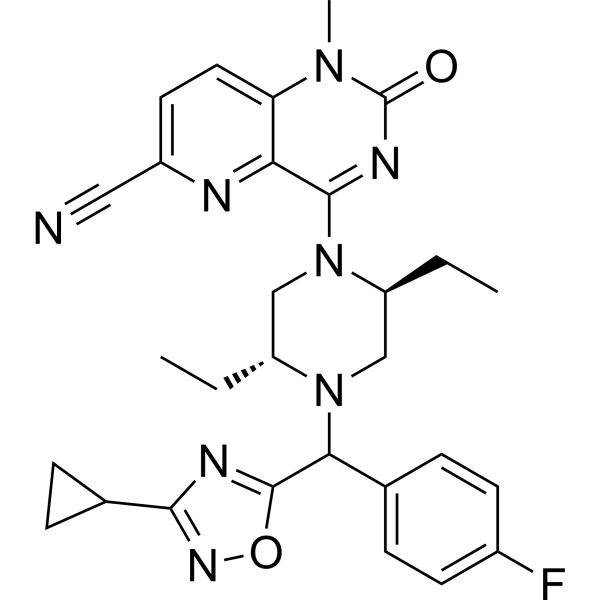 0 ImagesCat. No.: HY-156573CAS No.: 2830643-06-4
-
DGK-IN-12
 0 ImagesCat. No.: HY-177602CAS No.: 3023735-35-2
-
DGKζ-IN-9
 0 ImagesCat. No.: HY-170426CAS No.: 3062706-10-6DGKζ-IN-9 (compound 73) is a DGKζ inhibitor, with an IC50 ≤200 nM.




