



Fluorescent Dye
Fluorescence is a phenomenon of photoluminescence in luminescence. When an atom is irradiated by light, some electrons around the nucleus jump from their original orbitals to higher energy orbitals under the influence of light energy, i.e., from the ground state to the first or second excited single-line state, etc. Due to the instability of the first or second excited singlet state, the electron returns from the excited singlet state to the ground state accompanied by released energy, resulting in fluorescence.
Fluorescent dyes can be covalently bound or physically adsorbed in the structure of the substance. The fluorescence properties allow for the characterization, localization and quantitative analysis of the labeled object. Fluorescent dyes have shown great potential for the detection of proteins, nucleic acids, cells, and immunoassays, attributed to the advantages in non-radioactive contamination, simple experimental operation and easy observation.
Fluorescent dyes have penetrated many fields such as pharmacology, physiology, environmental science, and information science, as well as functional studies of proteins and drug screening.
All Product Categories
-
Fluorescent Dye Related Products (4889)
Related Products (4889)

-
Antibodies (4)
-
SBP-1
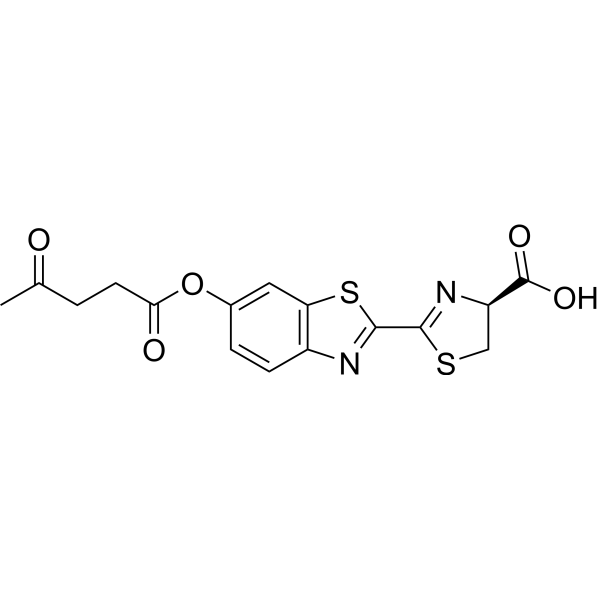 0 ImagesCat. No.: HY-147507CAS No.: 2451986-45-9SBP-1 is a sulfite bioluminescent probe (SBP). SBP-1 exhibits the excellent responsivity, selectivity and sensitivity towards sulfite. The recognition of SBP-1 towards sulfite is based on the mechanism of a sulfite-mediated intramolecular cleavage reaction. SBP-1 can be used for detection of exogenous and endogenous sulfite in living animal. SBP-1 also possesses a capability for quantitatively detecting sulfite within a certain concentration range in solution.
-
C10 AV Ceramide (d18:1/10:0)
 0 ImagesCat. No.: HY-139404CAS No.: 1263052-40-9Synonyms: Anthrylvinyl ceramide; AV Ceramide; AV Ceramide (d18:1/10:0)C10 AV Ceramide (d18:1/10:0) is a fluorescent probe. Anthrylvinyl (AV) acts as the fluorescent label positioned on the amide linked acyl chain on the Ceramide molecule to measure the CERT-mediated transfer. The anthrylvinyl moiety of C10 AV Ceramide (d18:1/10:0) localizes to the hydrophobic region of the bilayer.
-
Dansyl hydrazine-13C2
 0 ImagesCat. No.: HY-W009411SCAS No.: 2108149-00-2Dansyl hydrazine-13C2 is the 13C-labeled Dansyl hydrazine (HY-W009411). Dansyl hydrazine is a carbohydrate-specific fluorescent dye (Ex/Em = 340 nm/525 nm). Dansyl hydrazine undergoes a condensation reaction with aldehyde groups generated by periodate oxidation on carbohydrate-containing structures to form fluorescent hydrazone compounds. Dansyl hydrazine selectively stains polysaccharides in formalin-fixed, paraffin-embedded human post-mortem brain tissues, revealing detailed structural features. Dansyl hydrazine is applicable to research related to Alzheimer's disease, Lafora disease, and polyglucosan body disease.
-
Cy3B amine chloride
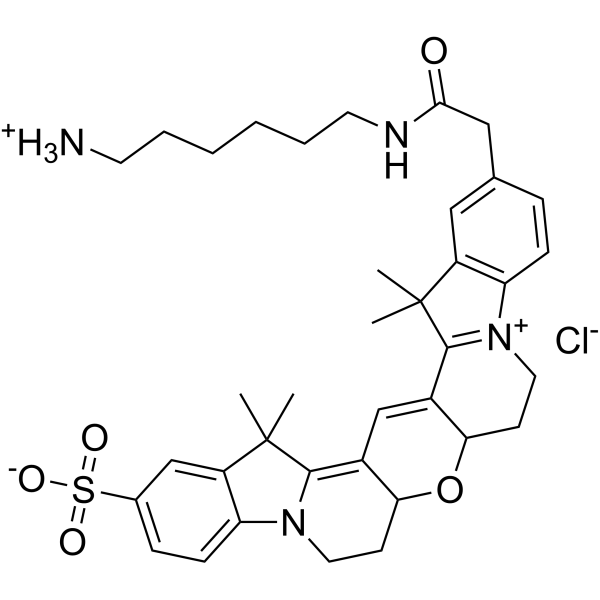 0 ImagesCat. No.: HY-D1852Cy3B amine chloride is a dye derivative of Cyanine 3 (Cy3) (HY-D0822) bearing an amine group. Cy3 is a fluorescent dye with a fluorescence spectrum typically in the green to orange wavelength range. The amine functionality of Sulfo-Cy3 amine can react with carboxyl groups to form covalent bonds. Sulfo-Cy3 amine can bind to biological molecules such as proteins and antibodies to track their location and dynamic changes in biological samples.
-
YADA
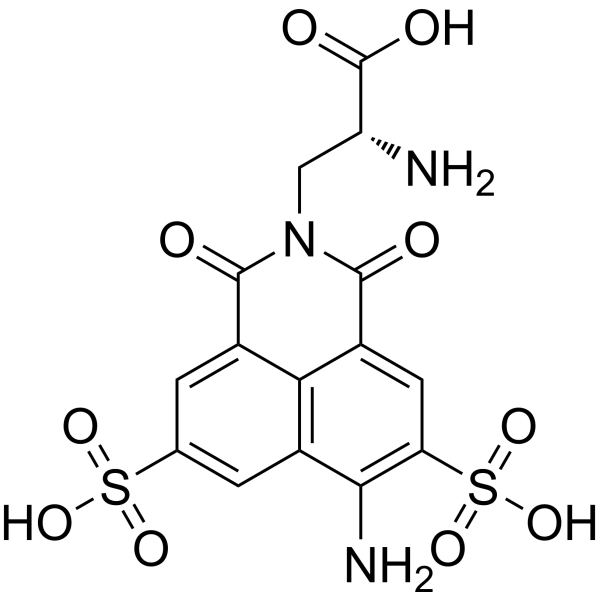 0 ImagesCat. No.: HY-D1189CAS No.: 1471982-33-8Synonyms: Lucifer Yellow 3-amino-D-alanineYADA (Lucifer Yellow 3-amino-D-alanine) is a conjugate of the fluorescent dyes Lucifer yellow and D-alanine, which is a green-yellow fluorescent dye. YADA is suitable for labeling peptidoglycans in living bacteria that can be incorporated into the cell wall where they are being synthesized. YADA has a large Stokes shift and a wide emission spectrum, allowing excitation through a purple light source and detection using a green filter. YADA showed good water solubility, light stability and thermal stability.

-
FITC-Polysucrose 20
 0 ImagesCat. No.: HY-179074FITC-Polysucrose 20 is FITC-labeled Polysucrose 20 (HY-131960B). Polysucrose 20 is a copolymer of sucrose and epichlorohydrin. Polysucrose 20 can be used to prepare cross-linked polysucrose microspheres. FITC-Polysucrose 20 is mainly used for permeability and microcirculation studies (Ex/Em = 488/525 nm).
-
MCA-AVLQSGFR-Lys(Dnp)-Lys-NH2
 0 ImagesCat. No.: HY-P10344CAS No.: 932391-88-3MCA-AVLQSGFR-Lys(Dnp)-Lys-NH2 is a fluorescent substrate used for fluorescence resonance energy transfer (FRET) protease assays. This substrate is employed to measure the activity of SARS-CoV-2 3CLpro.
-
Cyanine7.5 azide chloride
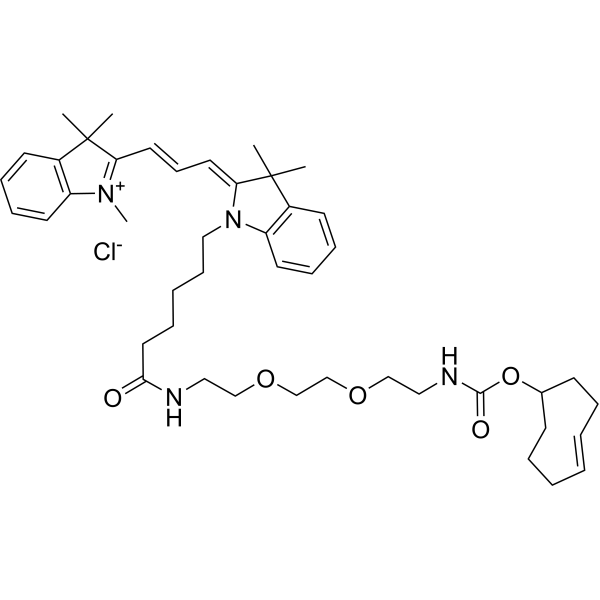
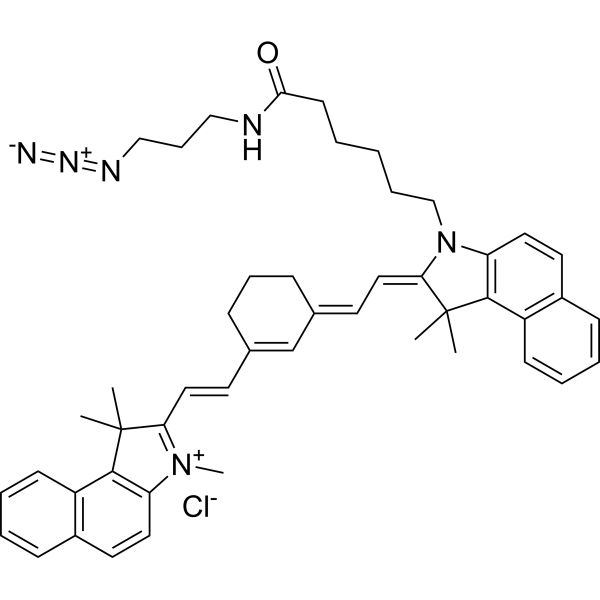 0 ImagesCat. No.: HY-D1318CAS No.: 1628790-36-2Cyanine7.5 azide chloride is a dye derivative of Cyanine 7.5 (Cy7.5) (HY-D0926) with an azide functional group. Cy7.5 is a near-infrared fluorescent dye commonly used for biolabeling and cell imaging. The azide group of Cyanine7.5 azide chloride can react chemically with molecules containing alkyne functionality, such as alkyne or cyclooctyne, to form covalent bonds. Therefore, Cyanine7.5 azide chloride can bind to biomolecules such as proteins and antibodies to track their location and dynamic changes in biological samples.
-
(E)-2-Hexadecenal alkyne
 0 ImagesCat. No.: HY-117072CAS No.: 1778692-99-1(E)-2-Hexadecenal alkyne (compound 2) is a chemical probe used to explore the cellular targets of 2-trans-Hexadecenal. It can covalently modify multiple proteins in cells and provide a tool for studying lipid metabolism-related diseases.
-
4'-Aminoazobenzene-4-sulphonic acid
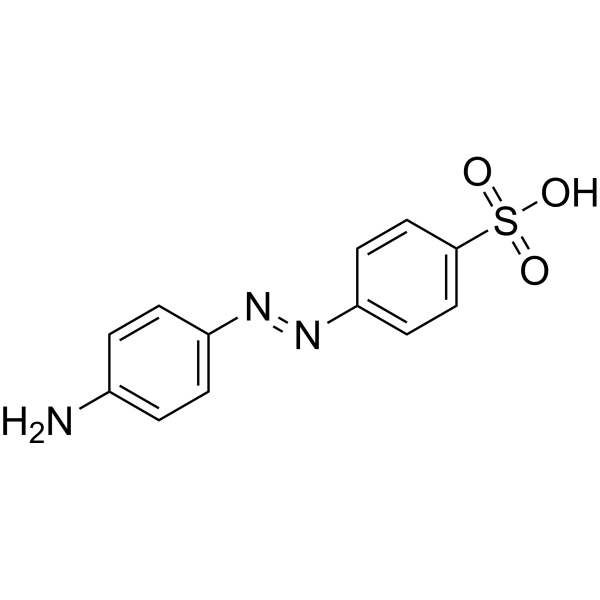 0 Images4'-Aminoazobenzene-4-sulphonic acid is a multifunctional dye. Dyes are important tools in biological experiments. They can help researchers observe and analyze cell structures, track biomolecules, evaluate cell functions, distinguish cell types, detect biomolecules, study tissue pathology and monitor microorganisms. Their applications range from basic scientific research to clinical A wide range of diagnostics. Dyes are also widely used in traditional fields such as textile dyeing, as well as in emerging fields such as functional textile processing, food pigments and dye-sensitized solar cells.
-
Biotin-PEG20000-Alk
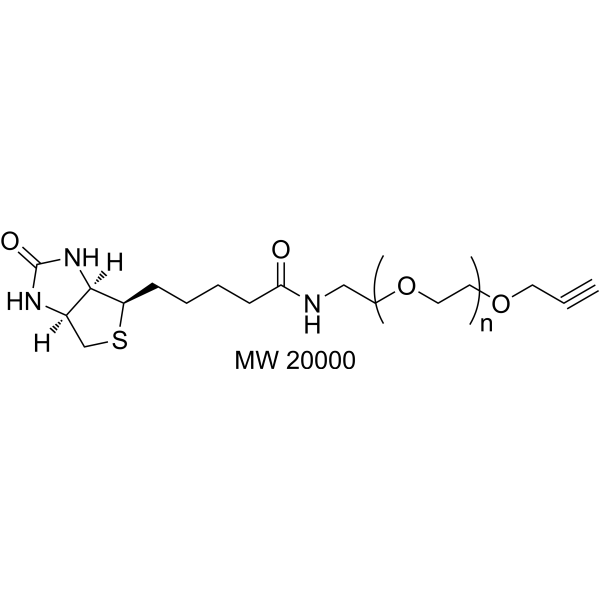 0 ImagesCat. No.: HY-147206FBiotin-PEG20000-Alk is a biotin labeled PEG derivative. Biotin is an enzyme co-factor, can be used for labeling protein; PEG is a hydrophilic and water-soluble polymer with low toxicity; Alk (Alkyne), acyclic (branched or unbranched) aliphatic hydrocarbon, can react with azido, which improve the efficiency of biotin binding targets. Biotin-PEG20000-Alk is a click chemistry reagent, it contains an Alkyne group and can undergo copper-catalyzed azide-alkyne cycloaddition (CuAAc) with molecules containing Azide groups.
-
3-Morpholinobenzanthrone
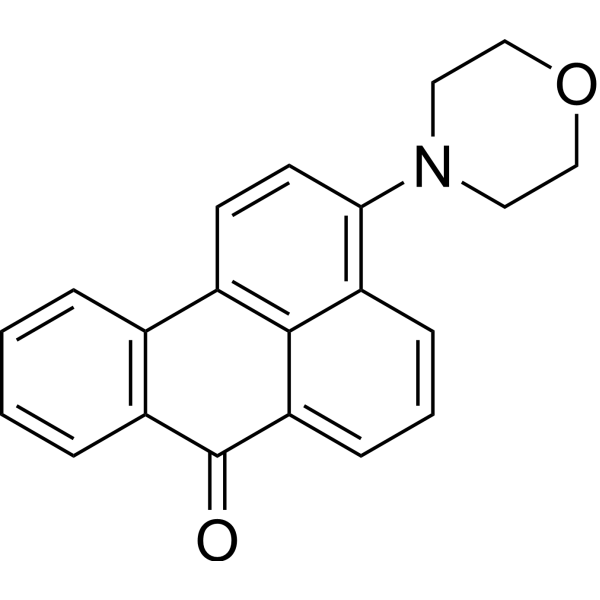 0 ImagesCat. No.: HY-D0786CAS No.: 299927-47-23-Morpholinobenzanthrone is a fluorescent membrane probe, possessing higher dipole moment values in the excited-state than in the ground-state.
-
FAM labled Nucresiran sodium
 0 ImagesCat. No.: HY-177650CFAM labled Nucresiran sodiumis a FAM labled Nucresiran sodium.

-
Cy5.5-PEG10000-N3
 0 ImagesCat. No.: HY-D2563Cy5.5-PEG10000-N3 is a Cy5.5 (HY-D0924)-azide fluorescent dye used to label for protein and nucleic acid. Cy5.5-PEG10000-N3 is a click chemistry reagent, it contains an Azide group and can undergo copper-catalyzed azide-alkyne cycloaddition reaction (CuAAc) with molecules containing Alkyne groups. It can also undergo strain-promoted alkyne-azide cycloaddition (SPAAC) reactions with molecules containing DBCO or BCN groups.
-
(Z-AR)2Rh110
 0 ImagesCat. No.: HY-P11476CAS No.: 88064-36-2(Z-AR)2Rh110 is a Rhodamine derivative. (Z-AR)2Rh110 can be hydrolyzed by trypsin.

-
Dye 40
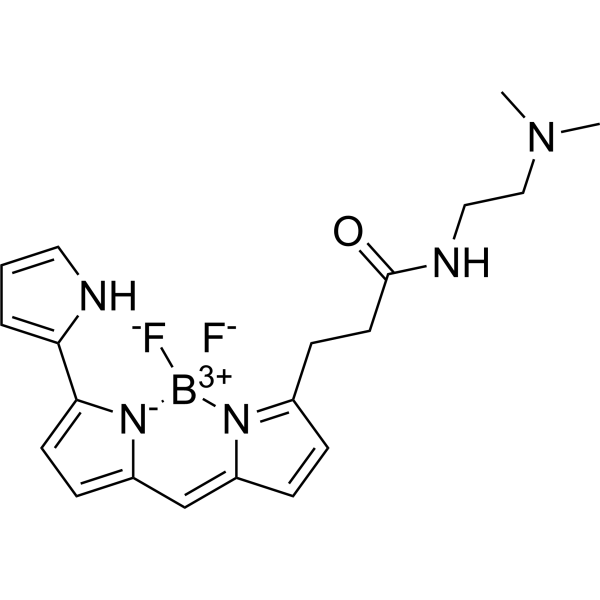 0 ImagesCat. No.: HY-D1298CAS No.: 220524-78-7Dye 40 is a multifunctional dye. Dyes are important tools in biological experiments. They can help researchers observe and analyze cell structures, track biomolecules, evaluate cell functions, distinguish cell types, detect biomolecules, study tissue pathology and monitor microorganisms. Their applications range from basic scientific research to clinical A wide range of diagnostics. Dyes are also widely used in traditional fields such as textile dyeing, as well as in emerging fields such as functional textile processing, food pigments and dye-sensitized solar cells.




