



Insecticide
Insecticide
Insecticides refer to any toxic substances used to kill insects, which exert toxic effects on pests through different mechanisms, thereby achieving the purpose of controlling pest populations and protecting crops and human health. Insecticides have both chemical and biological origins and can be classified into organochlorine insecticides, organophosphorus insecticides, carbamate insecticides, and mineral insecticides based on their chemical properties. Insecticides interact with different target and non-target sites, including receptors, enzymes, and many other known and unknown molecules. Most insecticides are neurotoxicants that target the nervous system, but they can also affect other organs and body systems. Insecticides are metabolized through different metabolic pathways and often serve as biomarkers of exposure in the form of their parent compounds or metabolites. The toxicity of insecticides can be acute, subacute, or chronic, depending on the duration of exposure and the dose involved. Therefore, selecting sensitive, accurate, and validated biomarkers of exposure, effects, and susceptibility appears to be a challenging task.
Insecticides are widely used in agriculture, horticulture, forestry, gardening, homes, offices, and other fields[1][2].
All Product Categories
-
Insecticide Related Products (523)
Related Products (523)

-
Isovalerylshikonin
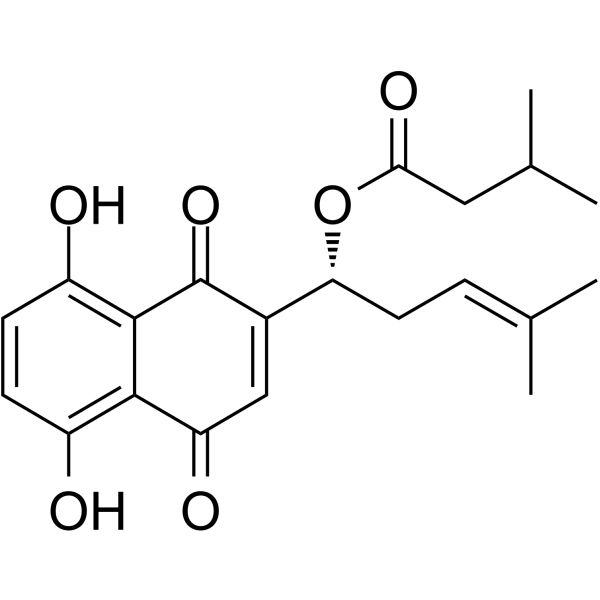 0 ImagesCat. No.: HY-N3012CAS No.: 52387-14-1Isovalerylshikonin (IVS) is a shikonin pigment is identified in the root epidermis of Echium italicum L.
-
1,4-Dichlorobenzene-d4
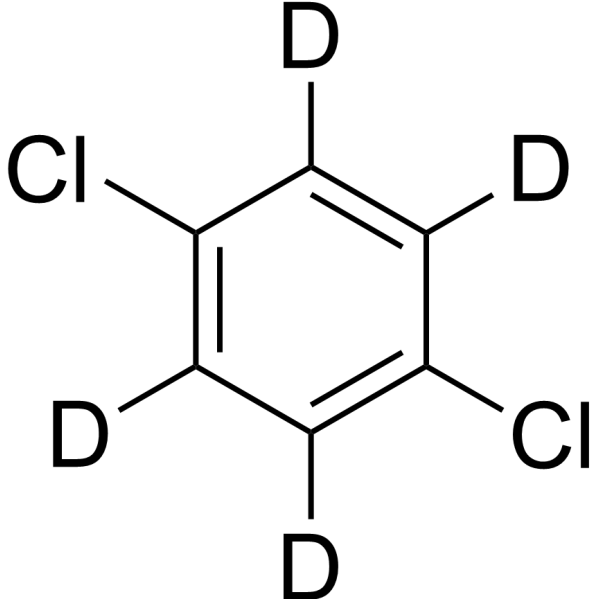 0 Images1,4-Dichlorobenzene-d4 is the deuterium labeled 1,4-Dichlorobenzene. 1,4-Dichlorobenzene is a non-genotoxic, orally active mitogenic/tumor-promoting carcinogen that is also widely used as a dye, resin intermediate, and deodorant, moth repellent/insecticide. 1,4-Dichlorobenzene induces liver tumors in mice and promotes the growth of spontaneous precancerous lesions, but shows no liver tumor-inducing activity in F344 rats. 1,4-Dichlorobenzene increases the levels of white blood cell count, serum alanine aminotransferase and blood urea nitrogen in occupationally exposed populations. 1,4-Dichlorobenzene is metabolized to 2,5-dichlorophenol and excreted in urine, and this metabolite can serve as a biomarker for 1,4-Dichlorobenzene exposure. Due to its specific hepatotoxic characteristics, 1,4-Dichlorobenzene is applicable to liver cancer-related research.
-
Primulic acid I (Standard)
 0 ImagesCat. No.: HY-N10414RCAS No.: 65312-86-9Synonyms: Primulasaponin 1 (Standard); Primula acid I (Standard)Primulic acid I (Standard) is the analytical standard of Primulic acid I. This product is intended for research and analytical applications. Primulic acid I (Primulasaponin 1) is a plant-derived triterpenoid saponin with one sugar chain (monodesmoid).
-
Heterophos
 0 ImagesCat. No.: HY-W783157CAS No.: 40626-35-5Synonyms: HeterofosHeterophos (Heterofos) is an organophosphorus insecticide and an AChE inhibitor. Heterophos inhibits AChE's function of decomposing acetylcholine, causing disorder of insect nerve conduction and exerting insecticidal effects.
-
δ-Nonalactone (Standard)
 0 ImagesCat. No.: HY-W017284RCAS No.: 3301-94-8δ-Nonalactone (Standard) is the analytical standard of δ-Nonalactone (HY-W017284). This product is intended for research and analytical applications. δ-Nonalactone has potent tsetse repellency effect.
-
Melianodiol
 0 ImagesCat. No.: HY-119422CAS No.: 32764-64-0Melianodiol is a triterpenoid product that can be isolated from Melia azedarach.
-
Spirotetramat-enol
 0 ImagesCat. No.: HY-W587734CAS No.: 203312-38-3Spirotetramat-enol, Spirotetramat (HY-120253) metabolite, is an insecticide. Spirotetramat-enol shows inhibitory activity against acetyl-CoA carboxylase. Spirotetramat-enol exerts insecticidal activity against Aphis craccivora Koch.
-
Gluconasturtiin
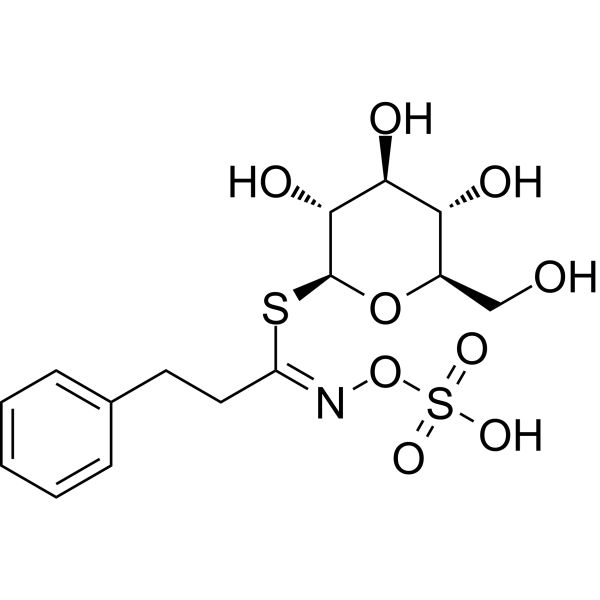 0 ImagesGluconasturtiin is an orally active glucosinolate found in the roots of Brassica juncea and Brassica hirta. Gluconasturtiin acts as a feeding activator for P. maculipennis larvae at low concentrations, while it exhibits toxicity to the larvae at high concentrations.
-
Milbemycin A3 (Standard)
 0 ImagesCat. No.: HY-130423RCAS No.: 51596-10-2Milbemycin A3 (Standard) is the analytical standard of Milbemycin A3 (HY-130423). This product is intended for research and analytical applications. Milbemycin A3 is a 16-membered macrocyclic lactone compound found in the soil bacterium Saccharopolyspora hygroscopicus subsp. aureolacrimosus. Milbemycin A3 enhances the opening of glutamate- and GABA-gated chloride channels and exhibits insecticidal activity. Milbemycin A3 can be used in insect resistance-related research.
-
Temephos (Standard)
 0 ImagesTemephos (Standard) is the analytical standard of Temephos. This product is intended for research and analytical applications. Temephos (Temefos) is an orally active, blood-brain barrier-permeable organophosphate insecticide and AChE inhibitor. By irreversibly inhibiting AChE to induce cholinergic overactivation, Temephos effectively blocks larval development of Aedes aegypti (yellow fever mosquito) and Aedes albopictus (Asian tiger mosquito), and is commonly used in studies related to Dengue Virus, Zika Virus and other relevant pathogens. Temephos exhibits genotoxicity and neurodevelopmental toxicity, and may also cause liver injury, reproductive system abnormalities and cholinergic poisoning symptoms in mammals. Temephos tends to accumulate in adipose tissues and aquatic organisms, and is excreted via feces after metabolism through oxidation and hydrolysis. Note that CYP-mediated metabolic detoxification may reduce the actual larvicidal efficacy of Temephos against some mosquito species. Temephos can be used in research related to dengue fever, Zika virus disease, chikungunya and dracunculiasis.
-
Flubendiamide (Standard)
 0 ImagesCat. No.: HY-W339331RCAS No.: 272451-65-7Synonyms: NNI-0001 (Standard)Flubendiamide (Standard) is the analytical standard of Flubendiamide. This product is intended for research and analytical applications. Flubendiamide is a 1,2-diamide insecticide via action mode of action action by activating the ryanodine receptor.
-
Copper naphthenate
 0 ImagesCat. No.: HY-W072994CAS No.: 1338-02-9Copper naphthenate is an organocopper compound with the properties of a fungicide, preservative, oil-borne protectant, and toxicant. Copper naphthenate increases serum and urine copper levels in exposed populations, causes skin irritation, and induces intraperitoneal toxicity in rats. Copper naphthenate inhibits the growth of decay fungi and molds on moso bamboo, kills the free-living stages of Ichthyophthirius multifiliis, and controls wood-boring insects and termites.
-
Sulcofuron
 0 ImagesCat. No.: HY-W775071ACAS No.: 24019-05-4Sulcofuron is a pesticide. Sulcofuron can be used for production of monoclonal murine anti-pesticide antibodies by in vitro immunisation.
-
Demiditraz
 0 ImagesCat. No.: HY-14787CAS No.: 944263-65-4Synonyms: PF 3814927Demiditraz (PF 3814927) (example 58) is a potent parasiticide. Demiditraz shows potent anti-tick activity against Rhipicephalus sanguineus with an ED100 of 0.1 mg/cm2. Demiditraz can be used for preventing the transmission of tick-borne diseases.
-
Rediocide C
 0 ImagesCat. No.: HY-136799CAS No.: 677277-98-4Rediocide C is a Diterpenoids product that can be isolated from the herbs of Trigonostemon reidioides (Kurz) Craib..
-
Fenitrothion (Standard)
 0 ImagesFenitrothion (Standard) is the analytical standard of Fenitrothion (HY-B1885). This product is intended for research and analytical applications. Fenitrothion is a broad-spectrum and orally active insecticide/acaricide. Fenitrothion inhibits cholinesterase, AMPKα and IRS1/PI3K/AKT. Fenitrothion causes Apoptosis, reduces SOD activity. Fenitrothion shows insecticidal effect against Rhyzopertha dominica and Tribolium castaneum adults. Fenitrothion is widely used in cotton crops, vegetable crops, fruit crops and field crops, especially rice. Fenitrothion can be used for brain and spleen toxicology studies.
-
Triflumuron (Standard)
 0 ImagesCat. No.: HY-B2049RCAS No.: 64628-44-0Triflumuron (Standard) is the analytical standard of Triflumuron. This product is intended for research and analytical applications. Triflumuron is a potent chitin synthesis inhibitor. Triflumuron shows the efficacy in emergence inhibition (EI) against Culex quinquefasciatus and Aedes albopictus, with EI50 values of 5.28 and 1.59 μg/L, respectively. Triflumuron can be used as an insecticide. Triflumuron represents a potential tool for the control of disease vectors in public health.
-
Opoponax oil
 0 ImagesOpoponax oil is an effective insecticide against mosquito larvae.
-
(S)-2-Hydroxy-3-decanone
 0 ImagesCat. No.: HY-N16455CAS No.: 383416-53-3(S)-2-Hydroxy-3-decanone is the primary sex pheromone component of Xylotrechus quadripes beetles, functioning as a volatile olfactory agonist. (S)-2-Hydroxy-3-decanone is promising for research of pests and diseases.
-
Flonicamid (Standard)
 0 ImagesSynonyms: IKI220 (Standard)Flonicamid (Standard) (IKI220 (Standard)) is the analytical standard of Flonicamid (HY-119649). This product is intended for research and analytical applications. Flonicamid (IKI220) is an antifeedant Insecticide active against Hemiptera, Thysanoptera, and piercing-sucking pests including aphids of all species, developmental stages and morphs. Flonicamid inhibits the inward rectifier potassium channel NlKir1, blocking stylet penetration, salivation, sap feeding, honeydew secretion, and fluid secretion by isolated Malpighian tubules. Flonicamid reduces renal excretory function in female Culex pipiens pallens. Flonicamid rapidly disrupts insect feeding behavior without neurotoxic poisoning symptoms, induces irreversible starvation, and increases the mortality of nymph progeny of adult aphids exposed to this agent.



