



Isotope-Labeled Compounds
Isotope-labeled compounds are chemical substances in which some atoms in their molecules are replaced by isotope atoms. The range of stable isotope products can cover from gases to complex molecules. Isotope-labeled compounds could provide a site-specific investigation of structures, making molecules easily detectable by mass spectrometry and NMR, and maintaining the physico-chemical properties of the target molecule at the same time.
MCE isotope-labeled compounds are all stable isotope-labeled compounds and are non-radioactive labeled substances. MCE isotope-labeled compounds are unique tools for identifying and understanding biological and chemical processes. Stable isotope-labeled products are now getting more and more popular among scientists. The scope of application is gradually penetrating into various scientific fields, such as life sciences, food and medicine, agriculture, environment, geology, etc. Stable isotope-labeled compounds have a wide range of applications in the Life Science areas, such as Metabolomics, Proteomics, Clinical studies, Deuterium drugs, etc.
All Product Categories
-
Isotope-Labeled Compounds Related Products (11128)
Related Products (11128)

-
(R)-Neotame-d3
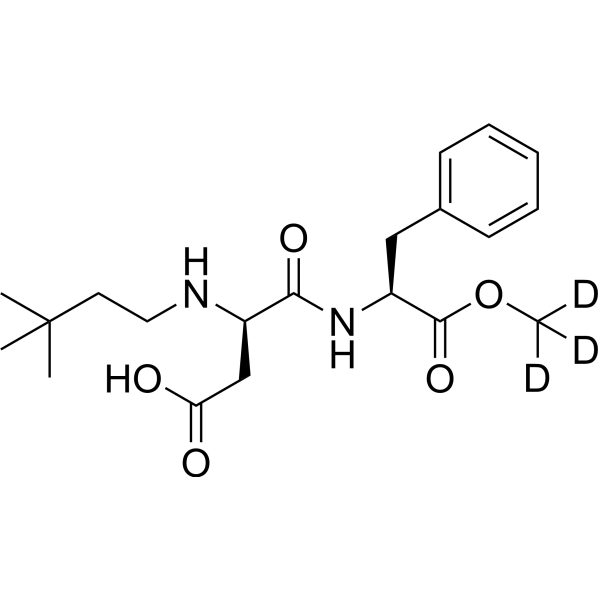 0 ImagesCat. No.: HY-W011053S(R)-Neotame-d3 is the deuterium labeled Neotame. Neotame is a derivative of Aspartame and is a low-caloric and high-intensity artificial sweetener that is 7000-13,000 times sweeter than sugar. Neotame is a non-nutritive sweetener and flavor enhancer that can be used in a variety of foods.
-
Andrographolide-d
 0 ImagesCat. No.: HY-N0191SSynonyms: Andrographis-dAndrographolide-d (Andrographis-d) is the deuterium labeled Andrographolide (HY-N0191). Andrographolide is a NF-κB inhibitor, which inhibits NF-κB activation through covalent modification of a cysteine residue on p50 in endothelial cells without affecting IκBα degradation or p50/p65 nuclear translocation. Andrographolide has antiviral effects.
-
D-Lin-MC3-DMA-d6
 0 ImagesCat. No.: HY-112251S1D-Lin-MC3-DMA-d6 is the deuterium labeled D-Lin-MC3-DMA (HY-112251). D-Lin-MC3-DMA, an ionizable cationic lipid, is a potent siRNA delivery vehicle.
-
Imlunestrant-d4
 0 ImagesCat. No.: HY-145572SSynonyms: LY-3484356-d4Imlunestrant-d4 (LY-3484356-d4) is the deuterated-labeled Imlunestrant (HY-145572). Imlunestrant (LY-3484356) is an orally active, potent and selective estrogen receptor degrader (SERD) with pure antagonistic properties. Imlunestrant results in sustained inhibition of ER-dependent gene transcription and cell growth. Imlunestrant can be used for the research of ER-positive (ER+) advanced breast cancer (aBC) and endometrial endometrioid cancer (EEC).
-
Boc-L-Ala-OH-15N
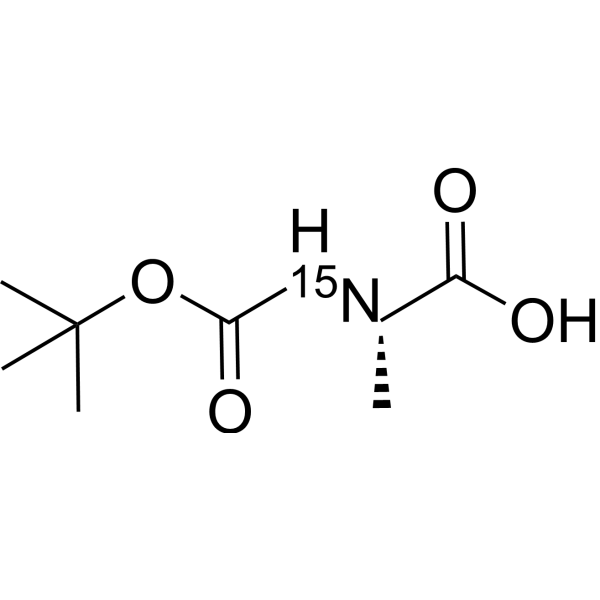 0 ImagesCat. No.: HY-41121S4CAS No.: 139952-87-7Boc-L-Ala-OH-15N is the 15N labeled Boc-L-Ala-OH.
-
Hydroxymethyl ivacaftor-d8
 0 ImagesCat. No.: HY-W746265S1CAS No.: 2089581-30-4Hydroxymethyl ivacaftor-d8 is the deuterated-labeled Hydroxymethyl ivacaftor.
-
1,3-17:0 DG-d5
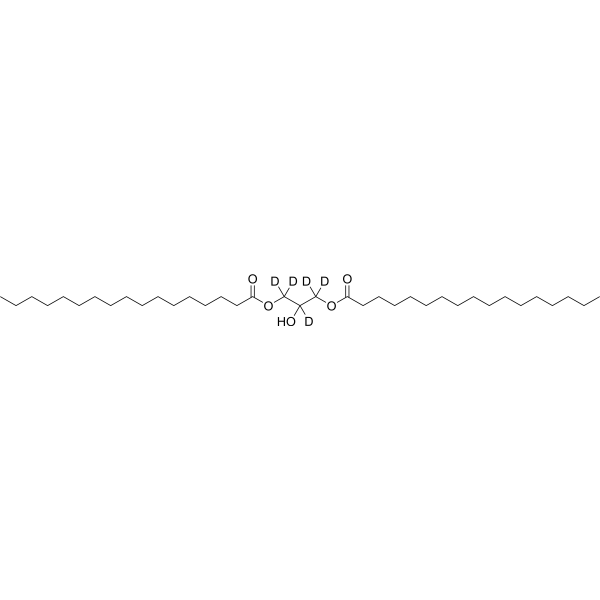 0 Images1,3-17:0 DG-d5 is deuterium labeled 1,3-17:0 DG.
-
(1S,2S)-1,2-Dihydronaphthalene-1,2-diol-d6
 0 ImagesCat. No.: HY-W704638CAS No.: 2734919-67-4(1S,2S)-1,2-Dihydronaphthalene-1,2-diol-d6 is the deuterium labeled (1S,2S)-1,2-Dihydronaphthalene-1,2-diol (HY-W698754).
-
4-Fluorobenzamide-d4
 0 ImagesCat. No.: HY-W711704CAS No.: 1100750-65-94-Fluorobenzamide-d4 is the deuterium labeled 4-Fluorobenzamide (HY-W015762).
-
Mianserin EP impurity E-d4 (hydrochloride)
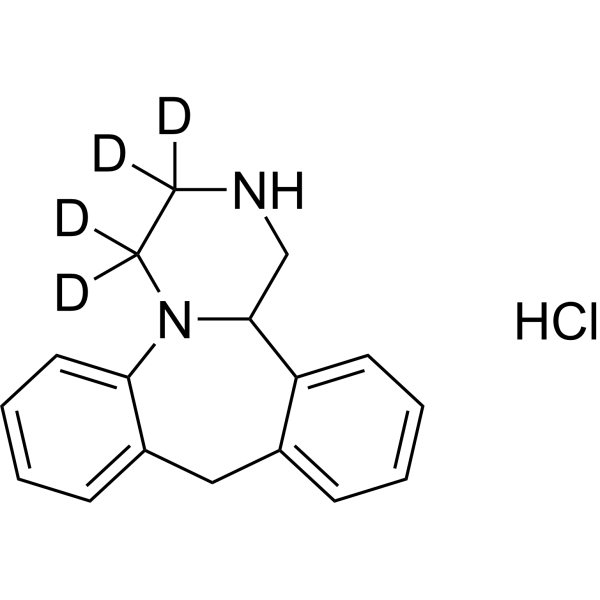 0 ImagesCat. No.: HY-143982SSynonyms: Desmethylmianserin-d4 hydrochloride
-
2,3-Dihydroxypropyl 10-undecenoate-13C
 0 ImagesCat. No.: HY-184109SPurity: 99.24%2,3-Dihydroxypropyl 10-undecenoate-13C is the 13C-labeled 2,3-Dihydroxypropyl 10-undecenoate.
-
Undecanoic acid-d3
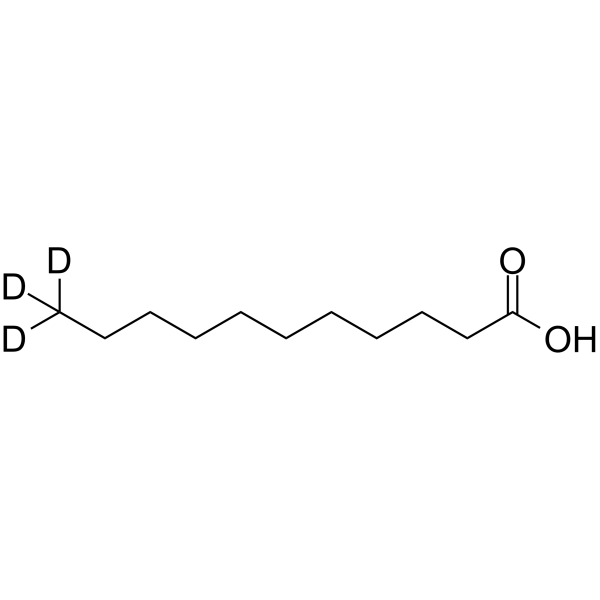 0 ImagesCat. No.: HY-W004282S1CAS No.: 1219802-11-5Synonyms: Undecanoate-d3; Hendecanoic acid-d3Undecanoic acid-d3 (Undecanoate-d3) is the deuterium labeled Undecanoic acid (HY-W004282). Undecanoic acid is a monocarboxylic acid with antifungal property. Undecanoic acid inhibits the production of exocellular keratinase, lipase and the biosynthesis of several phospholipids in T. rubrum.
-
10-OH-NBP-d4
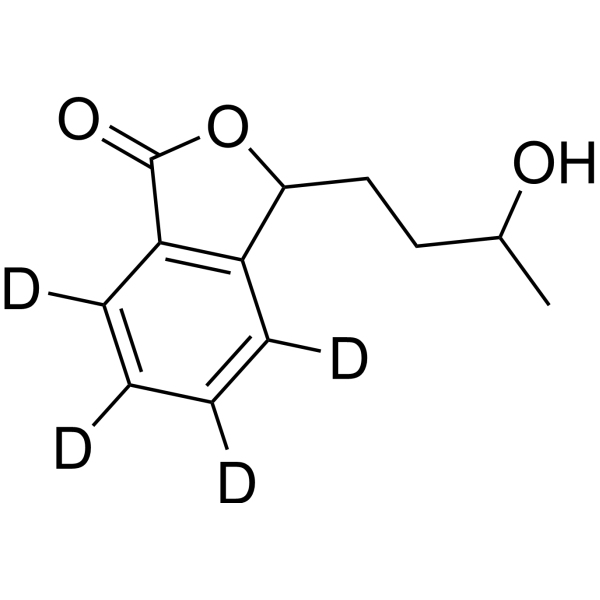 0 ImagesCat. No.: HY-109502S10-OH-NBP-d4 is deuterium labeled 10-OH-NBP. 10-OH-NBP is a Butylphthalide (3-n-Butylphthalide; NBP; HY-B0647) hydroxylated metabolite and can penetrates the blood-brain barrier (BBB). Butylphthalide exerts neuroprotective effects and has potential for cerebral ischemia research.
-
3,4',5-Trichloro-1,1'-biphenyl-d4
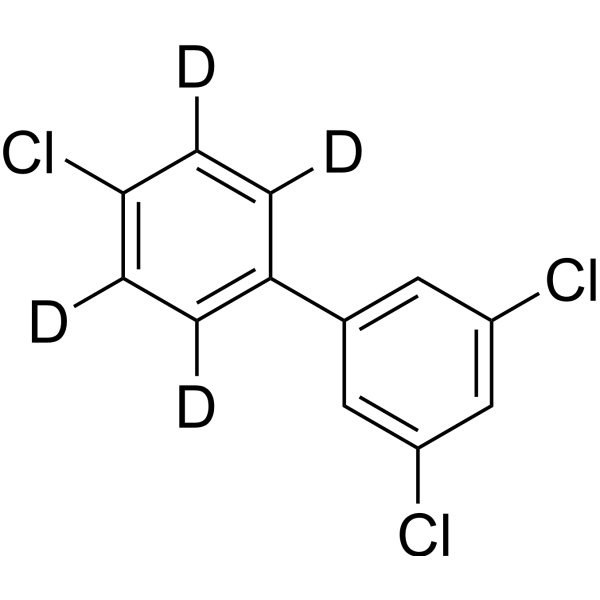 0 ImagesCat. No.: HY-W340893SCAS No.: 1276197-48-83,4',5-Trichloro-1,1'-biphenyl-d4 is the deuterium labeled 3,4',5-Trichloro-1,1'-biphenyl.
-
2-(2-Chloroethyl-d4)-1H-isoindole-1,3-dione
 0 ImagesCat. No.: HY-W741652CAS No.: 1252995-10-02-(2-Chloroethyl-d4)-1H-isoindole-1,3-dione is the deuterium labeled 2-(2-Chloroethyl)isoindoline-1,3-dione (HY-W014424).
-
Civorebrutinib-d4
 0 ImagesCat. No.: HY-111781SSynonyms: WS-413-d4Civorebrutinib-d4 (WS-413-d4) is the deuterated-labeled Civorebrutinib (HY-111781). Civorebrutinib (WS-413) is a selective, orally active BTK and TEC inhibitor with an IC50 of <100 nM for both targets. Civorebrutinib inhibits B cell activation. Civorebrutinib significantly suppresses the in vivo growth of diffuse large B-cell lymphoma cells. Civorebrutinib can be used for the research of diffuse large B-cell lymphoma.
-
2-[(Diphenylmethyl)thio]acetic Acid-d10
![2-[(Diphenylmethyl)thio]acetic Acid-d10](https://file.medchemexpress.com/product_pic/hy-w701263.gif "Click to View 2-[(Diphenylmethyl)thio]acetic Acid-d10 Product Detail") 0 ImagesCat. No.: HY-W701263CAS No.: 1216659-66-32-[(Diphenylmethyl)thio]acetic Acid-d10 is the deuterium labeled 2-(Benzhydrylthio)acetic acid (HY-Y0092).
0 ImagesCat. No.: HY-W701263CAS No.: 1216659-66-32-[(Diphenylmethyl)thio]acetic Acid-d10 is the deuterium labeled 2-(Benzhydrylthio)acetic acid (HY-Y0092).
-
5-(2-Bromoethyl-1,1,2,2-d4)-2,3-dihydrobenzofuran
 0 ImagesCat. No.: HY-W700739CAS No.: 1189652-25-25-(2-Bromoethyl-1,1,2,2-d4)-2,3-dihydrobenzofuran is the deuterium labeled 5-(2-Bromoethyl)-2,3-dihydrobenzofuran (HY-75250).
-
Sulfaphenazole-d4
 0 ImagesSulfaphenazole-d4 is the deuterium labeled Sulfaphenazole (HY-B1218). Sulfaphenazole is a selective inhibitor of human cytochrome P450 (CYP) 2C9 enzyme. Sulfaphenazole is a cytoprotective agent against light-induced death of photoreceptors. Sulfaphenazole inhibits light-induced necrosis and mitochondrial stress-initiated apoptosis. Sulfaphenazole is an off patent sulfonamide antibiotic and demonstrates bactericidal activity through enhanced M1 macrophage activity. Sulfaphenazole can significantly reduce infarct size and restore post-ischemic coronary flow following ischemia and reperfusion.
-
ALK/EGFR-IN-1-d5
 0 ImagesCat. No.: HY-155227SCAS No.: 2730429-93-1ALK/EGFR-IN-1-d5 (Compound (-)-9a) is a deuterated dual-target inhibitor of EGFR and ALK, with an IC50 of 1.08 nM for EGFR and an IC50 of 2.395 nM for ALK. ALK/EGFR-IN-1-d5 inhibits the phosphorylated proteins in the EGFR, ALK, and BRK signaling pathways, blocking the cell cycle, leading to a reduction in mitochondrial membrane potential and cell apoptosis (Apoptosis). ALK/EGFR-IN-1-d5 also significantly inhibits tumor growth in animal models and demonstrates good safety. ALK/EGFR-IN-1-d5 holds promise for research in the field of cancer treatment



