



PKG
cGMP-dependent protein kinase
PKG is a cyclic guanosine monophosphate (cGMP) -dependent serine/threonine kinase, which is activated by cGMP, phosphorylates the substrates, and regulates intracellular signal transduction. PKG inhibits β-catenin and cyclin D1 and regulates cell growth and apoptosis. PKG phosphorylates myosin light chains in smooth muscle cells, causing smooth muscle relaxation, thereby regulating vasodilation and blood pressure. PKG phosphorylates calcium channels for calcium homeostasis regulation. PKG regulates gene expression by phosphorylating transcription factors, thereby affecting cell differentiation and proliferation. PKG also regulates circadian rhythm, anxiety and fear memory. PKG has 2 subtypes, PKG I and PKG II. PKG I is mainly expressed in smooth muscle, platelets and specific neuronal areas, participates in vascular smooth muscle relaxation and cardiac function regulation. PKG II is mainly expressed in intestinal secretory epithelial cells, juxtaglomerular cells, adrenal cortex, chondrocytes and suprachiasmatic nucleus, which is mainly involved in the regulation of kidney and adrenal function, as well as bone growth and development. PKG dysfunction could lead to cancer, neurological or cardiovascular diseases[1][2][3].
References:
- [1]. Francis SH, et al., cGMP-dependent protein kinases and cGMP phosphodiesterases in nitric oxide and cGMP action. Pharmacol Rev. 2010 Sep;62(3):525-63. [Content Brief]
- [2]. Hofmann F, et al., cGMP-dependent protein kinases (cGK). Methods Mol Biol. 2013;1020:17-50. [Content Brief]
- [3]. Karami-Tehrani F, et al., Expression of cGMP-dependent protein kinase, PKGIα, PKGIβ, and PKGII in malignant and benign breast tumors. Tumour Biol. 2012 Dec;33(6):1927-32. [Content Brief]
All Product Categories
-
PKG Related Products (41)
Related Products (41)

-
Antibodies (1)
-
AP-C3
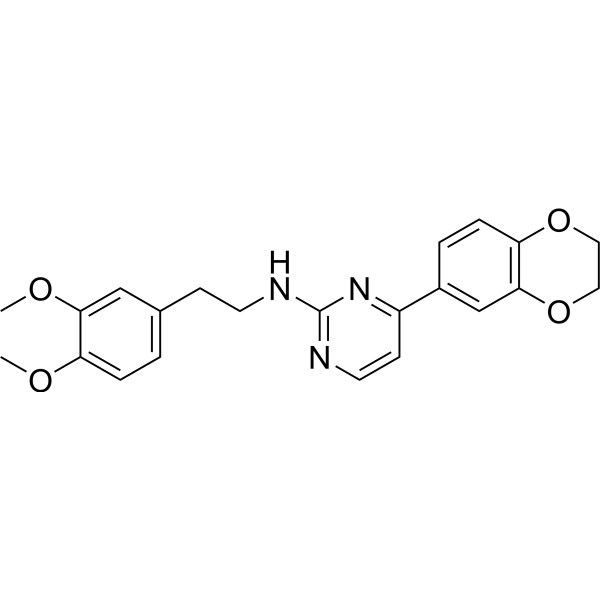 0 ImagesCat. No.: HY-153539CAS No.: 682795-78-4AP-C3 is a potent inhibitor of guanosine 3′,5′-cyclic monophosphate (cGMP)-dependent protein kinase II (cGKII) with a pIC50 of 6.3. AP-C3 only weakly inhibits cGKII-dependent anion secretion.
-
AP-C6
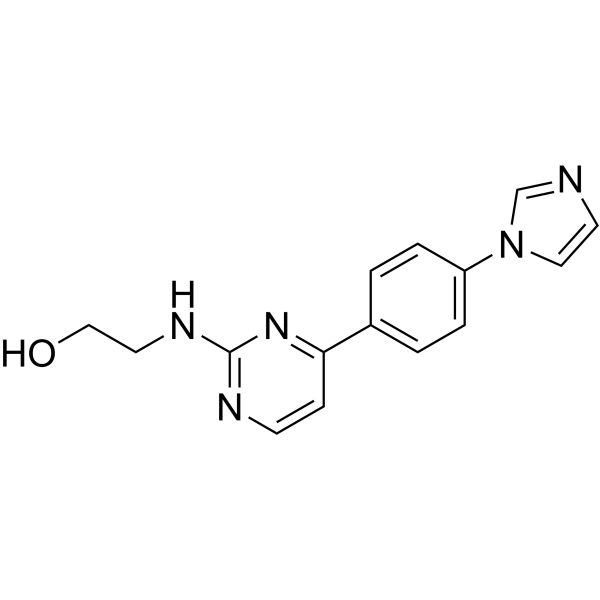 0 ImagesCat. No.: HY-153542CAS No.: 2234276-60-7AP-C6 is a potent inhibitor of guanosine 3′,5′-cyclic monophosphate (cGMP)-dependent protein kinase II (cGKII) with a pIC50 of 6.5. AP-C6 concentration-dependently inhibits human cGKII activity in vitro. AP-C6 potentiate cAMP signaling by PDE inhibition.
-
BPDEtide
 0 ImagesCat. No.: HY-P11034CAS No.: 142353-01-3BPDEtide is a synthetic peptide. BPDEtide has apparent Km values of 68 and 320 μM for cGK and cAK, respectively. BPDEtide is the most selective peptide substrate for measuring cGK activity.
-
Dithio-CN03
 0 ImagesCat. No.: HY-161578Dithio-CN03 is a compound with the highest neuroprotective efficacy. Dithio-CN03 fights the progression of retinitis pigmentosa (RP) by inhibiting the cGMP mediated signaling pathway and reducing photoreceptor cell death. Dithio-CN03 can be used in research into RP and other retinal degenerative diseases.
-
AP-C7
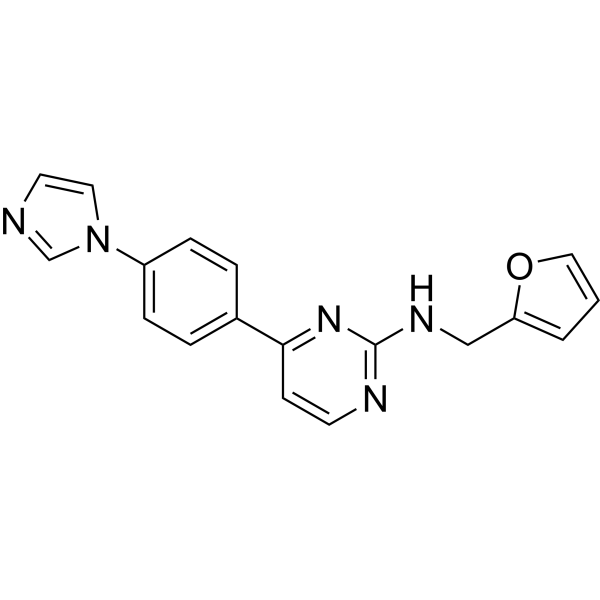 0 ImagesCat. No.: HY-153541CAS No.: 2234275-84-2AP-C7 is an inhibitor of guanosine 3′,5′-cyclic monophosphate (cGMP)-dependent protein kinase II (cGKII) with a pIC50 of 5.0. AP-C7 only weakly inhibits cGKII-dependent anion secretion.
-
Avanafil metabolite M4
 0 ImagesCat. No.: HY-179550Avanafil metabolite M4 (Compound M-4ii) is a metabolite of Avanafil (HY-18252). Avanafil is a selective Phosphodiesterase-5 (PDE-5) inhibitor with IC50s of 5.2, 630, 5700, 6200, 12000, 27000, 51000 and 53000 nM for PDE-5, PDE-6, PDE-4, PDE-10, PDE-8, PDE-7, PDE-2 and PDE-1, respectively. Avanafil activates NO/cGMP/PKG signaling-pathway to decrease loss in BMD, bone atrophy, and oxidative stress. Avanafil inhibits cGMP hydrolysis and thus increases cGMP levels. Avanafil can be used for the research of erectile dysfunction and osteoporosis.
-
LOXL2/sGC modulator-2
 0 ImagesCat. No.: HY-180585LOXL2/sGC modulator-2 (Compound 9k) is a selective and orally active lysyl oxidase-like 2 (LOXL2) and soluble guanylate cyclase (sGC) dual-target regulator. LOXL2/sGC modulator-2 shows inhibitory activity for LOXL2 with an IC50 of 0.1 μM and can activate sGC. LOXL2/sGC modulator-2 can ameliorate vascular remodeling and reduce pulmonary artery pressure. LOXL2/sGC modulator-2 can downregulate PKG1, PCNA, α-SMA, collagen I and fibronectin levels. LOXL2/sGC modulator-2 can be used for the research of pulmonary arterial hypertension .
-
AP-C1
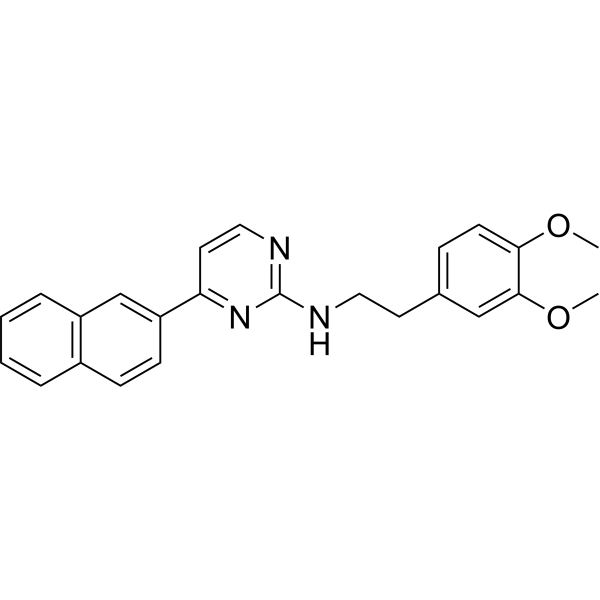 0 ImagesCat. No.: HY-153537CAS No.: 2234280-26-1AP-C1 is a potent inhibitor of guanosine 3′,5′-cyclic monophosphate (cGMP)-dependent protein kinase II (cGKII) with a pIC50 of 6.5. AP-C1 only weakly inhibits cGKII-dependent anion secretion.
-
G-Subtide
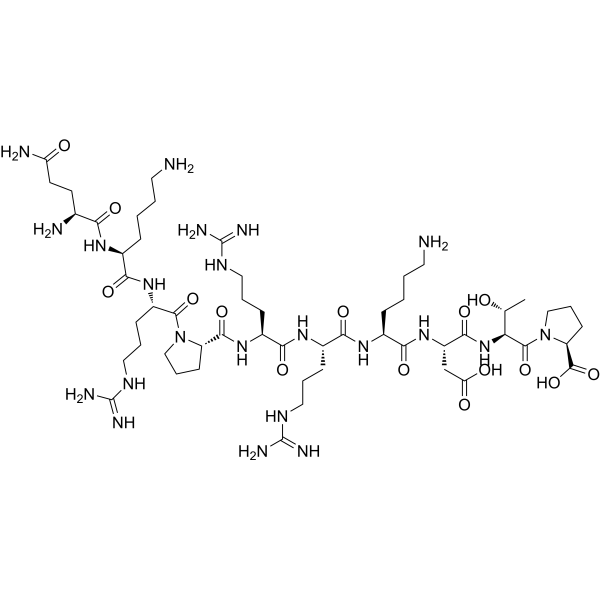 0 ImagesCat. No.: HY-P10036CAS No.: 910804-03-4G-Subtide is a G-substrate peptide localized in Purkinje cells of the cerebellum. G-Subtide has little activity distinct from background and is a preferentially phosphorylated peptide substrate of recombinant PfPKG2 protein.
-
AP-C4
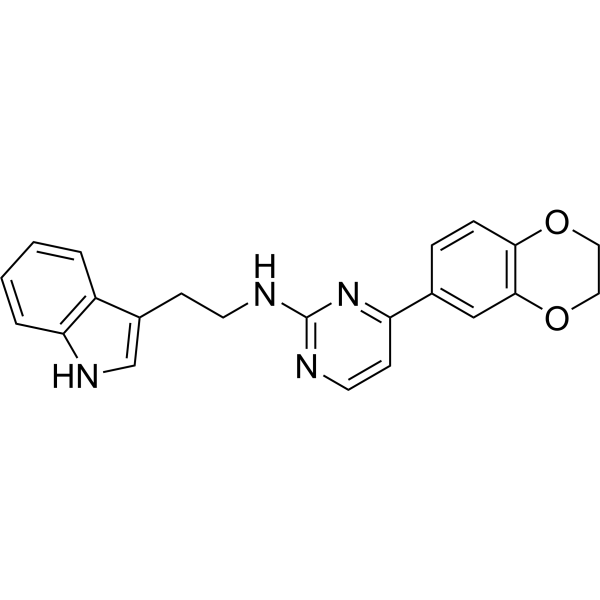 0 ImagesCat. No.: HY-153540CAS No.: 682794-85-0AP-C4 is an inhibitor of guanosine 3′,5′-cyclic monophosphate (cGMP)-dependent protein kinase II (cGKII) with a pIC50 of 5.2. AP-C3 does not inhibit cGKII-dependent anion secretion.
-
1-NH2-cGMP
 0 ImagesCat. No.: HY-131737CAS No.: 78033-42-81-NH2-cGMP is an analog of cGMP.
-
8-Br-PET-cGMP
 0 ImagesCat. No.: HY-137378ACAS No.: 144510-04-38-Br-PET-cGMP is an agonist of cGMP-dependent protein kinase type I (cGKI). 8-Br-PET-cGMP promotes the dimerization of cGKI and activates its catalytic activity by binding to the regulatory domain of cGKI. 8-Br-PET-cGMP can be used to study the role of cGMP signaling pathways in cell growth, vasodilation, and smooth muscle cell function.

-
Sp-8-pCPT-cGMPS
 0 ImagesCat. No.: HY-137108CAS No.: 160385-87-5Sp-8-pCPT-cGMPS is a potent cyclic guanosine monophosphate-gated channel agonist and a lipophilic activator of protein kinase G (types I α, I β, and II) and protein kinase A type II with excellent cell membrane permeability and phosphodiesterase stability. Sp-8-pCPT-cGMPS can be used to study the role of cGMP in neural plasticity and synaptic transmission.
-
PI4Kβ/PKG-IN-1
 0 ImagesCat. No.: HY-174130PI4Kβ/PKG-IN-1 (Compound 19) is an orally active dual inhibitor targeting Plasmodium phosphatidylinositol 4-kinase beta (PI4Kβ) and cGMP-dependent protein kinase (PKG). PI4Kβ/PKG-IN-1 exhibits potent antiplasmodial activity. PI4Kβ/PKG-IN-1 is promising for research of malaria.
-
Sp-8-pCPT-PET-cGMPS
 0 ImagesCat. No.: HY-137629CAS No.: 1262749-63-2Sp-8-pCPT-PET-cGMPS is an activator for PKG-I. Sp-8-pCPT-PET-cGMPS can be used for research of NO/NOS/sGC/PKG-I signaling pathway in cardiac differentiation.
-
8-pCPT-5'-AMP
 0 ImagesCat. No.: HY-134332CAS No.: 78710-84-6Synonyms: 8-(4-Chlorophenylthio)-5'-AMP
-
Sp-cGMPS
 0 ImagesCat. No.: HY-137622CAS No.: 86562-10-9Sp-cGMPS is an activator of cGMP-dependent protein kinases (PKGs). Sp-cGMPS can be used in cardiovascular disease-related research.
-
Rp-8-Br-cGMPS
 0 ImagesCat. No.: HY-135110ACAS No.: 150418-07-8Synonyms: Rp-8-bromo-Cyclic GMPS
-
Rp-8-pCPT-cGMPS
 0 ImagesCat. No.: HY-137373CAS No.: 153660-04-9Rp-8-pCPT-cGMPS is a competitive inhibitor of cGMP-dependent protein kinase (PKG) (Ki=0.5 μM). Rp-8-pCPT-cGMPS has high lipid solubility and can more easily penetrate the cell membrane and reach sufficient concentration inside the cell to inhibit cGMP-dependent protein kinase. Rp-8-pCPT-cGMPS can be used to study the activity and function of cGMP-dependent protein kinase in platelets.




