



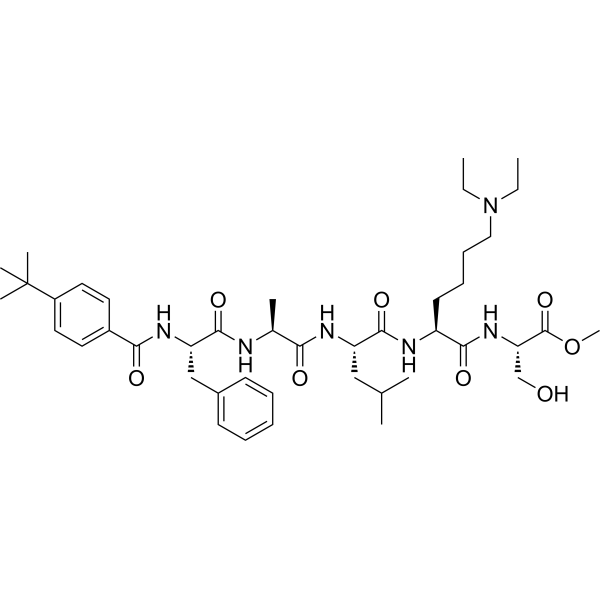
UNC3866
Based on 3 publication(s) in Google Scholar
UNC3866 is a potent antagonist of the CBX7-H3 interaction as determined by AlphaScreen (IC50=66±1.2 nM) and is more than 100-fold selective for CBX7 over the other nine members of this methyl-lysine (Kme) reader panel.
Nur für Forschungszwecke. Wir verkaufen nicht an Patienten.
- Reinheit : 98.02%
- CAS. Nr.: 1872382-47-2
- Formel: C43H66N6O8
- Molecular Weight:795.02
-
Speicherung:
Sealed storage, away from moisture.
Powder -80°C, 2 years , -20°C, 1 year* In solvent : -80°C, 6 months; -20°C, 1 month (sealed storage, away from moisture)

To place orders, for customer services and technical support, please contact: MedChemExpress USA
Tel: 609-228-6898 E-mail: [email protected] [email protected]


-
 Biologische Aktivität
-
Chemical Information
-
Lösungsmittel & Löslichkeit
- Reinheit & Dokumentation
- Verweise
-
 Help & FAQs


-
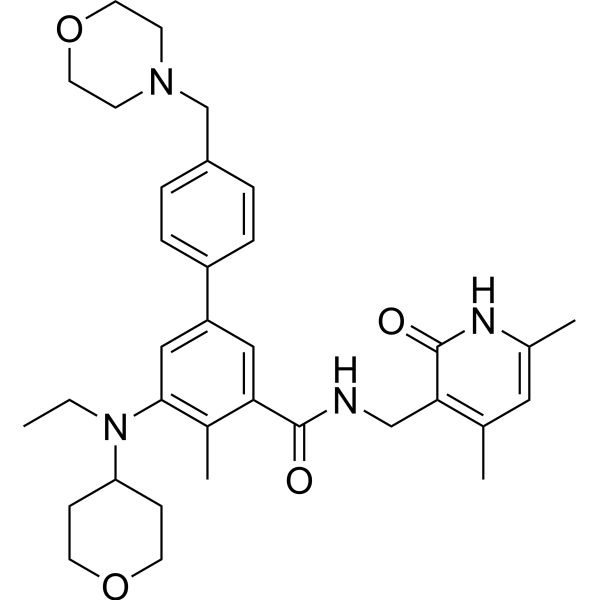
HY-13803
TazemetostatEZH2 Inhibitor -
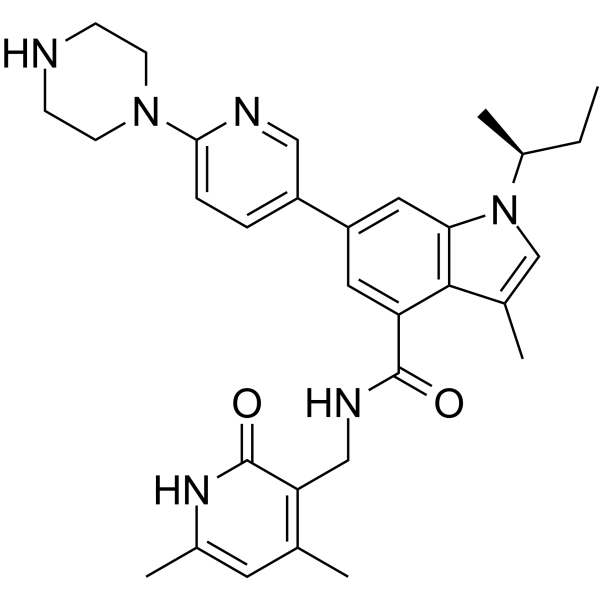
HY-13470
GSK126EZH2 Inhibitor -
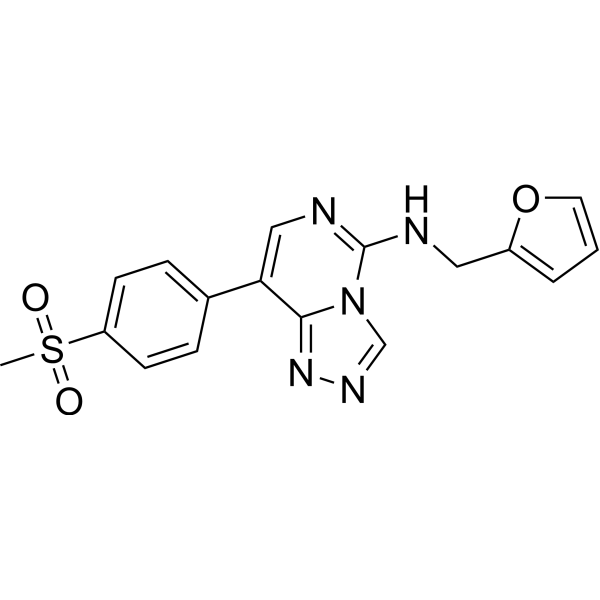
HY-101117
EED226PRC2 Inhibitor -
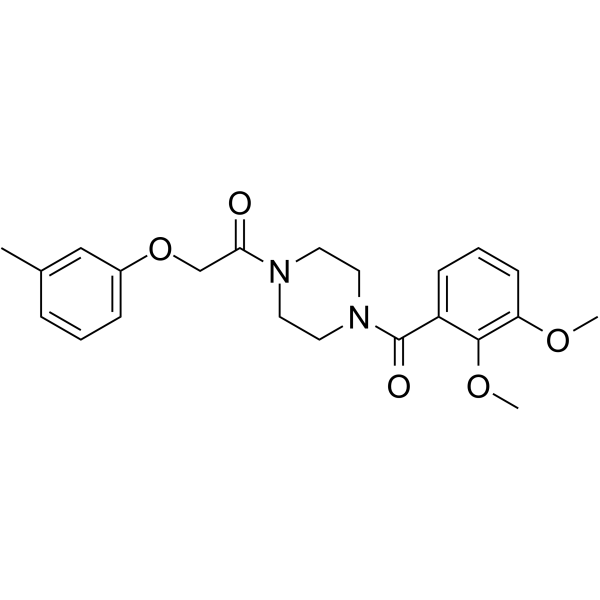
HY-119344
MS37452CBX7 Inhibitor -
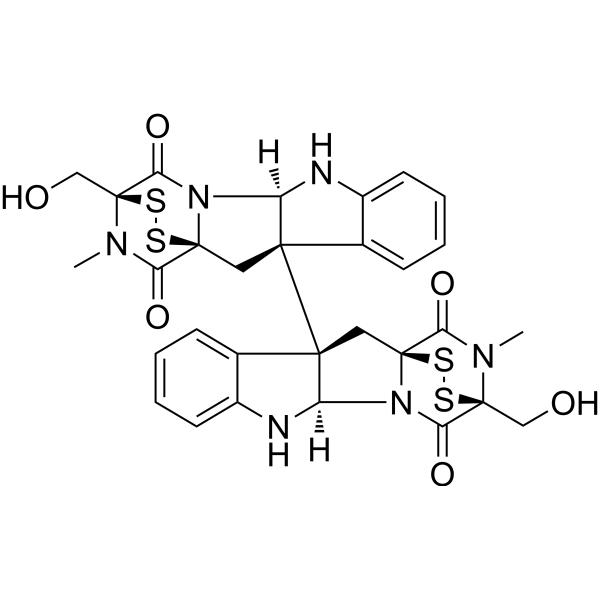
HY-N2019
ChaetocinSU(VAR)3-9 Inhibitor -
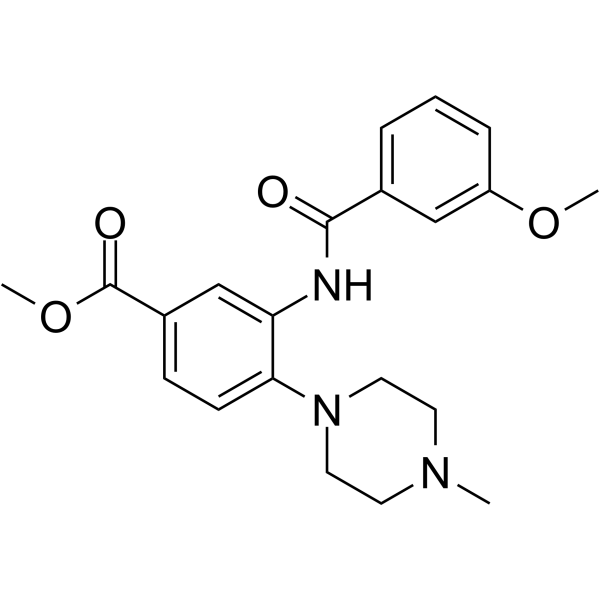
HY-19347
WDR5-0103WDR5 Antagonist -
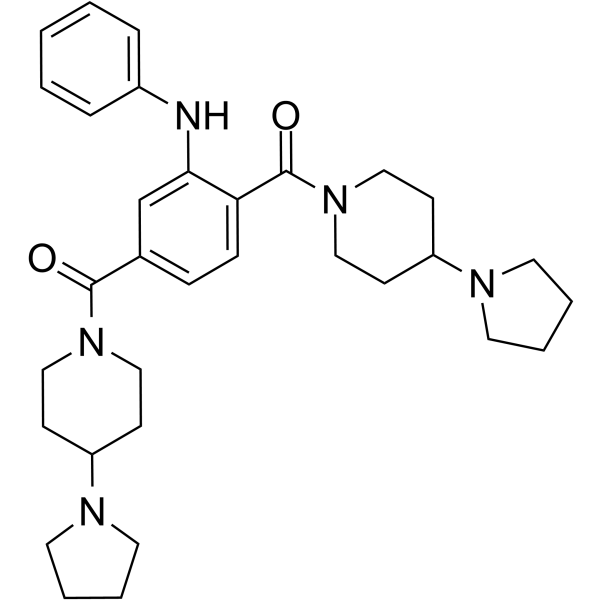
HY-15649
UNC1215L3MBTL3 Inhibitor -
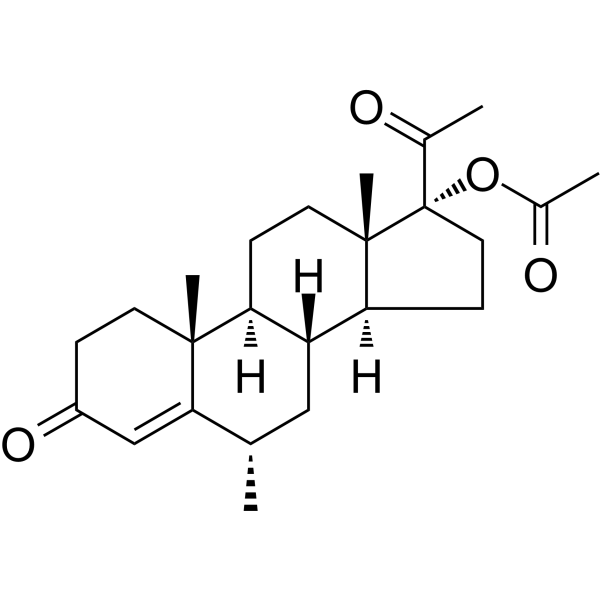
HY-B0469
Medroxyprogesterone acetateProgesterone Receptor Agonist -
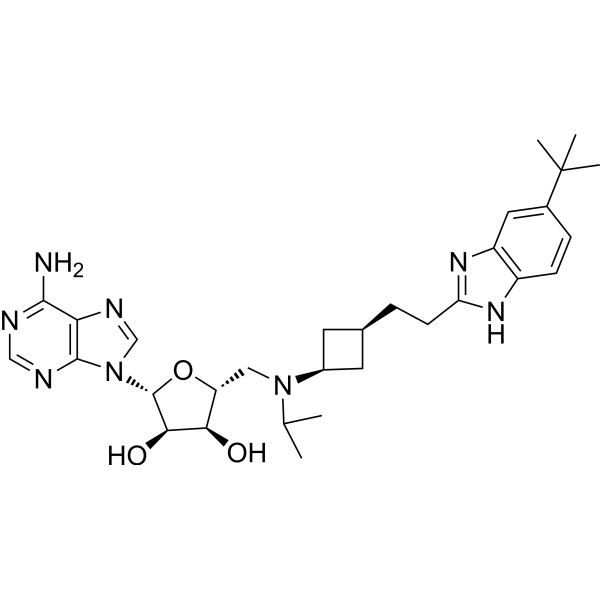
HY-15593
PinometostatDOT1L Inhibitor -
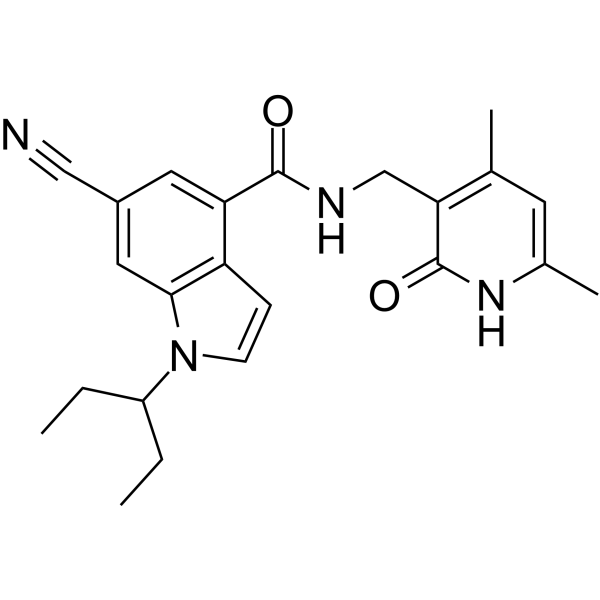
HY-15573
EI1EZH2 Inhibitor -
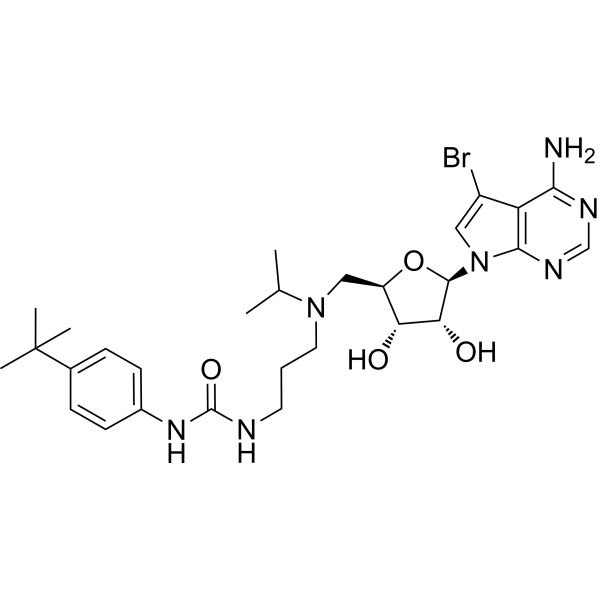
HY-15650
SGC0946DOT1L Inhibitor -
HY-139514
RB-3PRC1 Inhibitor
Publications Citing Use of MedChemExpress (MCE) UNC3866
MoreAlle Histone Methyltransferase Isoform-spezifische Produkte anzeigen
More

Biologische Aktivität
Beschreibung
IC50 & Target
IC50: 66±1.2 nM (CBX7)[1]
Cellular Effect
|
Cell Line

|
Type | Value | Description | References |
|---|---|---|---|---|
| PC-3 | GI50 |
7.6 μM
Compound: UNC3866
|
Antiproliferative activity against human PC3 cells after 3 days by DAPI staining-based microscopic analysis
Antiproliferative activity against human PC3 cells after 3 days by DAPI staining-based microscopic analysis
|
[PMID: 28478342] |
In Vitro
UNC3866, a potent antagonist of the methyl-lysine (Kme) reading function of the Polycomb CBX and CDY families of chromodomains. UNC3866 binds the chromodomains of CBX4 and CBX7 most potently with a Kd of 100 nM for each, and is 6- to 18-fold selective versus seven other CBX and CDY chromodomains while being highly selective versus >250 other protein targets. UNC3866 inhibits PC3 cell proliferation, a known CBX7 phenotype, while UNC4219, a methylated negative control compound, has negligible effects. UNC3866 is a potent and cellularly active antagonist of PRC1 chromodomains. UNC3866 is the most potent ligand reported for CBX7 with a Kd of 97±2.4 nM. UNC3866 is equipotent for CBX4, which is most similar to CBX7, while it is 18-, 6- and 12-fold selective for CBX4/7 over CBX2, -6 and -8, respectively. Additionally, UNC3866 is 65-fold selective for CBX4/7 over CDY1 and 9-fold selective for CBX4/7 over CDYL1b and CDYL2[1].
MedChemExpress (MCE) has not independently confirmed the accuracy of these methods. They are for reference only.


Chemical Information
-
CAS. Nr. 1872382-47-2
-
Appearance Solid
-
Molecular Weight 795.02
-
Formel C43H66N6O8
-
Color White to off-white
-
Versand
Room temperature in continental US; may vary elsewhere.
-
Speicherung
Sealed storage, away from moisture
Powder -80°C 2 years -20°C 1 year * In solvent : -80°C, 6 months; -20°C, 1 month (sealed storage, away from moisture)


Publications (3)
-
Journal Impact Factor
-
Most Recent
-
Nat Commun
Human iPSC-based Modeling of Pulmonary Fibrosis Reveals p300/CBP Inhibition Suppresses Alveolar Transitional Cell State. [Abstract]2026 Feb 12;17(1):1214. PMID: 41680175 -
Acta Pharmacol Sin
2022 Feb;43(2):457-469. PMID: 33850273 -


Lösungsmittel & Löslichkeit
In Vitro:
DMSO : 100 mg/mL (125.78 mM; Need ultrasonic; Hygroscopic DMSO has a significant impact on the solubility of product, please use newly opened DMSO)
Please refer to the solubility information to select the appropriate solvent. Once prepared, please aliquot and store the solution to prevent product inactivation from repeated freeze-thaw cycles.
Storage method and period of stock solution: -80°C, 6 months; -20°C, 1 month (sealed storage, away from moisture). When stored at -80°C, please use it within 6 months. When stored at -20°C, please use it within 1 month.
Please refer to the solubility information to select the appropriate solvent. Once prepared, please aliquot and store the solution to prevent product inactivation from repeated freeze-thaw cycles.
Storage method and period of stock solution: -80°C, 6 months; -20°C, 1 month (sealed storage, away from moisture). When stored at -80°C, please use it within 6 months. When stored at -20°C, please use it within 1 month.
Konzentration (Stammlösung) × Volumen (Stammlösung) = Konzentration (Ziellösung) × Volumen (Ziellösung)
In Vivo:
Select the appropriate dissolution method based on your experimental animal and administration route.
- For the following dissolution methods, please ensure to first prepare a clear stock solution using an In Vitro approach and then sequentially add co-solvents:
- To ensure reliable experimental results, the clarified stock solution can be appropriately stored based on storage conditions. As for the working solution for In Vivo experiments, it is recommended to prepare freshly and use it on the same day.
- The percentages shown for the solvents indicate their volumetric ratio in the final prepared solution. If precipitation or phase separation occurs during preparation, heat and/or sonication can be used to aid dissolution.
Add each solvent one by one: 10% DMSO 40% PEG300 5% Tween-80 45% Saline
Solubility: ≥ 2.5 mg/mL (3.14 mM); Clear solution
This protocol yields a clear solution of ≥ 2.5 mg/mL (saturation unknown).
Taking 1 mL working solution as an example, add 100 μL DMSO stock solution (25.0 mg/mL) to 400 μL PEG300, and mix evenly; then add 50 μL Tween-80 and mix evenly; then add 450 μL Saline to adjust the volume to 1 mL.
Preparation of Saline: Dissolve 0.9 g sodium chloride in ddH₂O and dilute to 100 mL to obtain a clear Saline solution.
Add each solvent one by one: 10% DMSO 90% (20% SBE-β-CD in Saline)
Solubility: ≥ 2.5 mg/mL (3.14 mM); Clear solution
This protocol yields a clear solution of ≥ 2.5 mg/mL (saturation unknown).
Taking 1 mL working solution as an example, add 100 μL DMSO stock solution (25.0 mg/mL) to 900 μL 20% SBE-β-CD in Saline, and mix evenly.
Preparation of 20% SBE-β-CD in Saline (4°C, storage for one week): 2 g SBE-β-CD powder is dissolved in 10 mL Saline, completely dissolve until clear.
In Vivo Dissolution Calculator
Please enter the basic information of animal experiments:
-
-
-
-
Recommended: Prepare an additional quantity of animals to account for potential losses during experiments.
Please enter your animal formula composition:
-
%DMSO +
Recommended: Keep the proportion of DMSO in working solution below 2% if your animal is weak.
-
%+
-
+%Tween-80 + +
-
%Saline +
The co-solvents required include: DMSO, . All of co-solvents are available by MedChemExpress (MCE). , Tween 80. All of co-solvents are available by MedChemExpress (MCE).
Working solution concentration: 0.22 mg/mL
Method for preparing stock solution: mg drug dissolved in μL DMSO. Stock solution concentration: mg/mL. * In solvent : -80°C, 6 months; -20°C, 1 month (sealed storage, away from moisture)
1. Take μL DMSO stock solution;
2. Add μL .
μL , mix evenly;
3. Then add μL Tween 80, mix evenly;
4. Then add μL
Please ensure that the stock solution in the first step is dissolved to a clear state, and add co-solvents in sequence. You can use ultrasonic heating (ultrasonic cleaner, recommended frequency 20-40 kHz), vortexing, etc. to assist dissolution.


Reinheit & Dokumentation
-
Data Sheet (278 KB)
-
SDS (396 KB)
- English - EN (396 KB)
- Français - FR (396 KB)
- Deutsch - DE (396 KB)
- Norwegian - NO (396 KB)
- Español - ES (396 KB)
- Swedish - SV (396 KB)
- Italian - IT (396 KB)
- Korean - KR (396 KB)
- Portuguese - PT (396 KB)
-
Handling Instructions (2659 KB)
Verweise


Complete Stock Solution Preparation Table
Please refer to the solubility information to select the appropriate solvent. Once prepared, please aliquot and store the solution to prevent product inactivation from repeated freeze-thaw cycles.
Storage method and period of stock solution: -80°C, 6 months; -20°C, 1 month (sealed storage, away from moisture). When stored at -80°C, please use it within 6 months. When stored at -20°C, please use it within 1 month.
| Optional Solvent | Concentration Solvent Mass | 1 mg | 5 mg | 10 mg | 25 mg |
|---|---|---|---|---|---|
| DMSO | 1 mM | 1.2578 mL | 6.2891 mL | 12.5783 mL | 31.4457 mL |
| 5 mM | 0.2516 mL | 1.2578 mL | 2.5157 mL | 6.2891 mL | |
| 10 mM | 0.1258 mL | 0.6289 mL | 1.2578 mL | 3.1446 mL | |
| 15 mM | 0.0839 mL | 0.4193 mL | 0.8386 mL | 2.0964 mL | |
| 20 mM | 0.0629 mL | 0.3145 mL | 0.6289 mL | 1.5723 mL | |
| 25 mM | 0.0503 mL | 0.2516 mL | 0.5031 mL | 1.2578 mL | |
| 30 mM | 0.0419 mL | 0.2096 mL | 0.4193 mL | 1.0482 mL | |
| 40 mM | 0.0314 mL | 0.1572 mL | 0.3145 mL | 0.7861 mL | |
| 50 mM | 0.0252 mL | 0.1258 mL | 0.2516 mL | 0.6289 mL | |
| 60 mM | 0.0210 mL | 0.1048 mL | 0.2096 mL | 0.5241 mL | |
| 80 mM | 0.0157 mL | 0.0786 mL | 0.1572 mL | 0.3931 mL | |
| 100 mM | 0.0126 mL | 0.0629 mL | 0.1258 mL | 0.3145 mL |


UNC3866 Related Classifications
HY-100832 Related Classifications
 Powered by Bioz