



Iron Deficiency Anemia
-
Iron Deficiency Anemia (8)

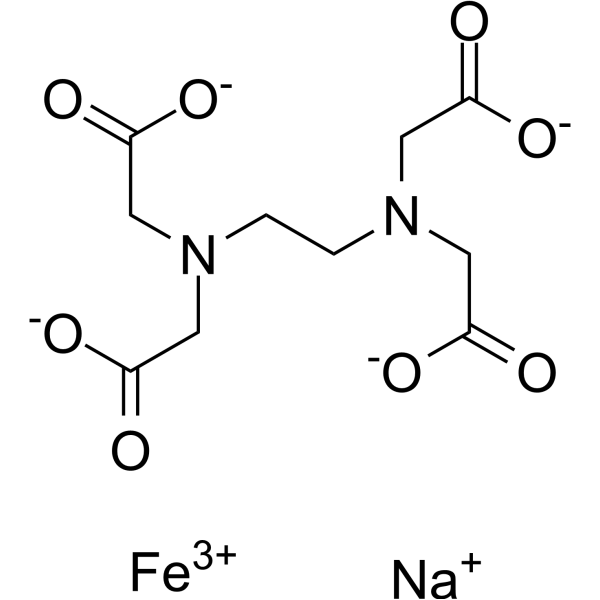
- Formula: C10H12FeN2NaO8
- Molecular Weight: 367.05
EDTA iron sodium (Ethylenediaminetetraacetic acid iron sodium) is an orally active food fortifier and iron chelate. EDTA iron sodium provides absorbable iron during consumption of fortified soy sauce, rice-based meals, or complementary foods made from high-phytate grains. EDTA iron sodium increases serum iron levels for up to 4 h, and total non-heme iron levels in the liver also rise with increasing doses. EDTA iron sodium is applicable to research on iron deficiency anemia and lymphoma.

- Formula: C12H21N3O6
- Molecular Weight: 303.31
Nicotianamine is an orally active ACE inhibitor with an IC50 of 76 nM for rhACE2 and an IC50 of 59 nM for rhACE. Nicotianamine is also a metal chelator with high affinity for ferrous ions and other divalent metal cations. Nicotianamine is isolated from soybean. Nicotianamine reduces systolic blood pressure in spontaneously hypertensive rats. Nicotianamine chelates iron and zinc, promotes iron transport, enhances iron bioavailability through stable Fe2+-NA complexes and intestinal Fe2+ uptake, and promotes phloem-to-sink Fe mobilization, long-distance transport of Zn to leaves and flowers, and pollen development. Nicotianamine is a biosynthetic precursor of plant phytosiderophores, reverses chlorosis, and rescues sterility in NA-free mutants. Nicotianamine is used in research on hypertension, chlorosis, and iron deficiency anemia.

- Formula: C17H13N3OS
- Molecular Weight: 307.37
ALK2-IN-7 is a ALK2 (ACVR1) inhibitor. ALK2-IN-7 is applicable to studies related to BMP/ALK2 signaling, anemia associated with iron homeostasis imbalance, and multiple osteochondromas.
![[U-15N]-Transferrin](https://file.medchemexpress.com/product_pic/hy-187262s.gif "Click to View [U-15N]-Transferrin Product Detail")
[U-15N]-Transferrin is the 15N-labeled Transferrin. Dysfunction of transferrin is closely associated with conditions such as iron-deficiency anemia and liver disease. This isotope can be used in NMR studies to investigate disease mechanisms and in mass spectrometry analysis.

- Formula: FeH2O5S
- Molecular Weight: 169.92
Iron(II) sulfate hydrate is an iron(II) salt with oral activity, acting as an iron supplier, and is easily oxidized to iron(III) in water. Iron(II) sulfate hydrate induces apoptotic morphological changes in cancer cells, and promotes dose‑dependent iron accumulation in rats. Iron(II) sulfate hydrate can be used in studies of leukemia, breast cancer, iron deficiency, anemia, and restless legs syndrome.

RKER-216 is a human monoclonal IgG antibody inhibitor targeting ALK2 with a KD of 58.7 pM. RKER-216 reduces hepcidin transcription in Hep3B.RKER-216 competes with BMP ligands for binding to the extracellular domain of ALK2, thereby inhibiting BMP-SMAD signal. RKER-216 mobilizes tissue iron effectively in inflammatory conditions. RKER-216 improves microcytic anemia in a dose-dependent manner by inhibiting SMAD signaling to reduce hepcidin and promote iron absorption and utilization in vivo. RKER-216 can be used for research on anemia of inflammation.

- Formula: C6H16FeO9
- Molecular Weight: 288.03
Ferrous lactate trihydrate is a type of iron supplement. Ferrous lactate trihydrate promotes the production of hemoglobin by providing available ferrous ions (Fe²⁺). Ferrous lactate trihydrate can be used in studies on iron-deficiency anemia.

- Formula: C6H12FeN3O6
- Molecular Weight: 278.02
Ferric glycinate is an orally active iron-amino acid chelate. Ferric glycinate can be used as a food fortifier for liquid milk fortification, and exhibits low pro-oxidative effects in casein-based infant formula. Ferric glycinate can be applied in studies related to iron deficiency anemia.



