



Schistosoma Japonicum Infection
-
Schistosoma Japonicum Infection (12)

- 1
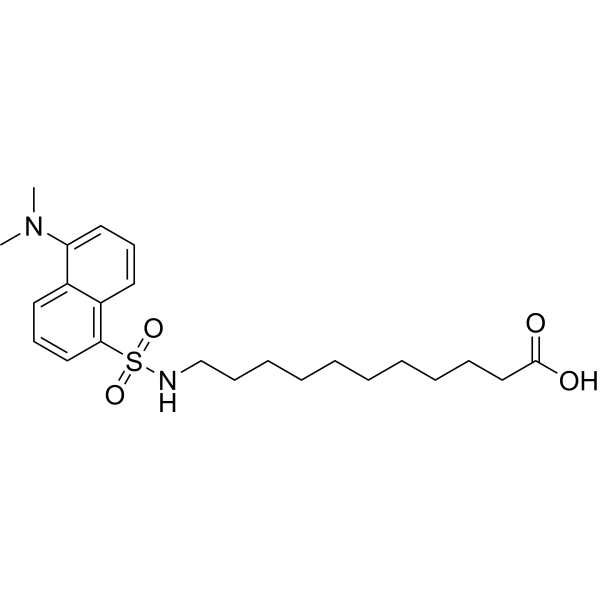
- Formula: C23H34N2O4S
- Molecular Weight: 434.59
DAUDA is a fluorescent fatty acid analog probe, with Kd values of 0.63 μM, 0.82 μM, and 0.66 μM against subtypes/mutants of Schistosoma mansoni Sm14 fatty acid-binding protein, respectively. DAUDA binds to Sm14 fatty acid-binding protein variants, enters their non-polar binding pockets and alters fluorescence emission properties. DAUDA serves as a tracer in competitive binding assays with natural fatty acids to evaluate the fatty acid-binding capacity of Sm14 protein variants. DAUDA is applicable to the research of schistosomiasis.
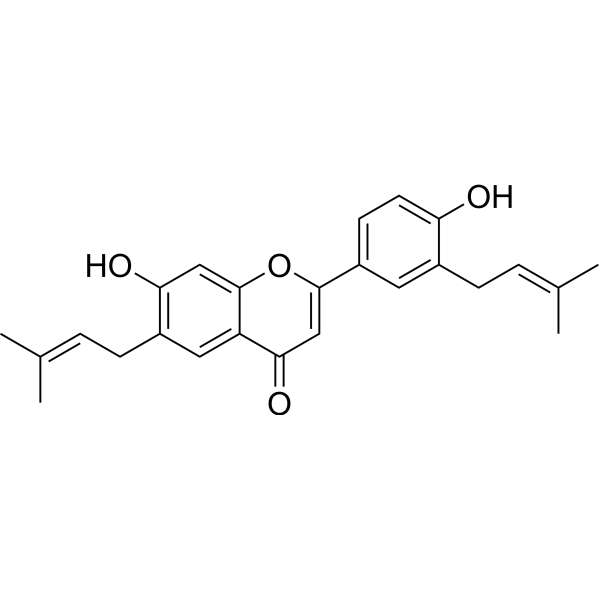
- Formula: C25H26O4
- Molecular Weight: 390.47
Licoflavone B is an orally active flavonoid, with IC50 values of 23.78 μM and 31.5 μM against SmATPase and SmADPase of Schistosoma mansoni, respectively. Licoflavone B selectively targets viral RdRp, inhibits viral replication, and reduces the expression levels of viral NP and PB2. Licoflavone B inhibits c-Myc expression and suppresses cancer cell proliferation. Licoflavone B disrupts the tegument of worms, reduces egg production, and induces the death of adult Schistosoma mansoni. Licoflavone B blocks the activation of the MAPK pathway, maintains colonic barrier integrity, inhibits colonic cell apoptosis, and reshapes the gut microbiota. Licoflavone B can be used in research related to influenza, multiple myeloma, schistosomiasis, and ulcerative colitis.
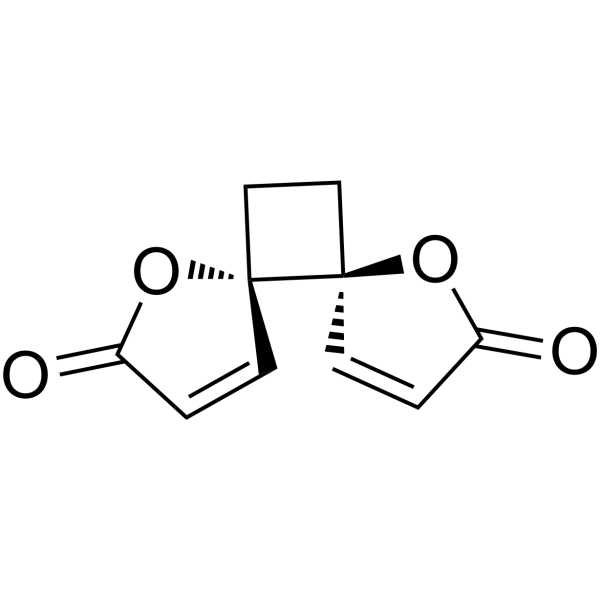
- Formula: C10H8O4
- Molecular Weight: 192.17
Anemonin (Pulsatilla camphor; Anemonine; trans-Anemonin) is a naturally occurring bislactone small molecule derived from Ranunculaceae with blood-brain barrier permeability, possessing a variety of activities including anti-inflammatory, antioxidant, neuroprotective, melanogenesis-inhibiting, and antiparasitic effects. Anemonin inhibits iNOS to reduce NO release; it inhibits PKC-θ protein expression and downregulates the pro-inflammatory factors TNF-α, IL-1β, and IL-6; it enhances the activities of the antioxidant enzymes SOD, CAT, and GSH-Px, and reduces MDA and ROS levels. Anemonin modulates the Bcl-2 / Bax / caspase-3 pathway to inhibit apoptosis; it downregulates melanogenesis-related molecules including MITF, TYR, TRP1, and TRP2, thereby inhibiting melanin synthesis in human melanocytes. Anemonin inhibits Leishmania and Schistosoma mansoni. Anemonin is used in research related to diseases such as hyperpigmentation, cerebral ischemia/reperfusion injury, inflammation, sepsis-induced acute lung injury, acute ulcerative colitis, leishmaniasis, and schistosomiasis.
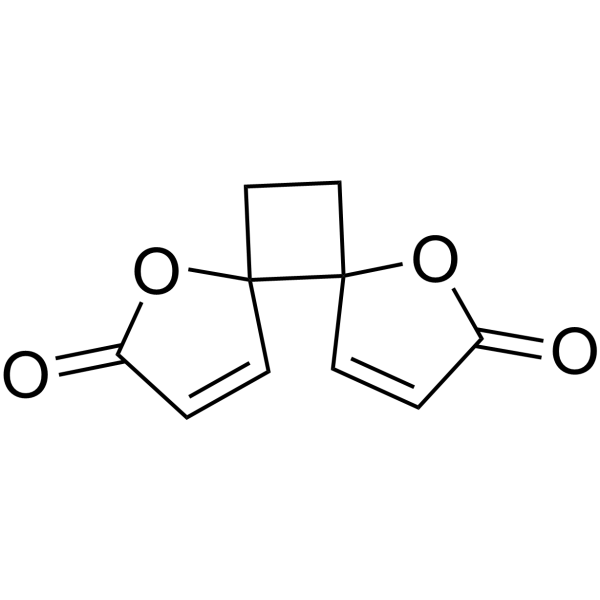
- Formula: C10H8O4
- Molecular Weight: 192.17
(Rac)-Anemonin ((Rac)-Pulsatilla camphor; (Rac)-Anemonine) is an isomer of Anemonin. Anemonin is a naturally occurring bislactone small molecule derived from Ranunculaceae with blood-brain barrier permeability, possessing a variety of activities including anti-inflammatory, antioxidant, neuroprotective, melanogenesis-inhibiting, and antiparasitic effects. Anemonin inhibits iNOS to reduce NO release; it inhibits PKC-θ protein expression and downregulates the pro-inflammatory factors TNF-α, IL-1β, and IL-6; it enhances the activities of the antioxidant enzymes SOD, CAT, and GSH-Px, and reduces MDA and ROS levels. Anemonin modulates the Bcl-2 / Bax / caspase-3 pathway to inhibit apoptosis; it downregulates melanogenesis-related molecules including MITF, TYR, TRP1, and TRP2, thereby inhibiting melanin synthesis in human melanocytes. Anemonin inhibits Leishmania and Schistosoma mansoni. Anemonin is used in research related to diseases such as hyperpigmentation, cerebral ischemia/reperfusion injury, inflammation, sepsis-induced acute lung injury, acute ulcerative colitis, leishmaniasis, and schistosomiasis.
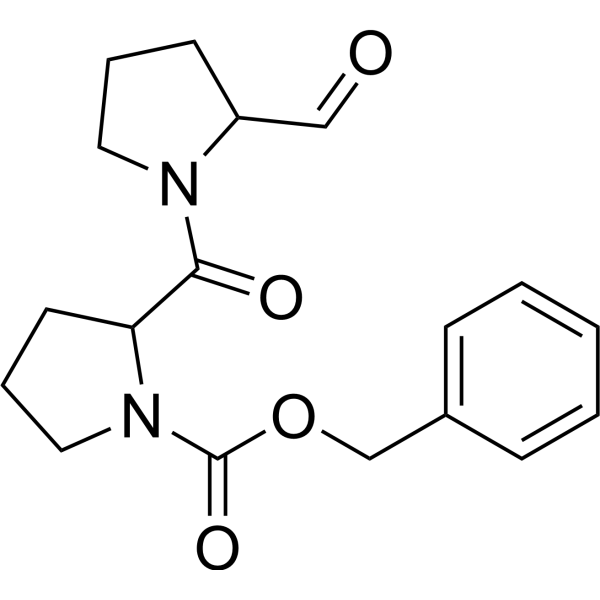
- Formula: C18H22N2O4
- Molecular Weight: 330.38
Z-Pro-Pro-CHO is a potent inhibitor of prolyl oligopeptidase (POP), with extremely high affinity for human prolyl oligopeptidase (HsPOP) (IC50=0.012 μM), and it also effectively inhibits the activity of Schistosoma mansoni prolyl oligopeptidase (SmPOP) (IC50=0.16 μM). Z-Pro-Pro-CHO does not block the phosphorylation of ERK or the production of TNF-α or IFN-γ in immune cells from presensitized mice, nor does it induce harmful phenotypes in cultured Schistosoma mansoni schistosomula. Z-Pro-Pro-CHO only partially inhibits epithelial cell wound healing at extremely high concentrations. Z-Pro-Pro-CHO finds wide application in studies related to schistosomiasis.

- Formula: C45H49N3O10
- Molecular Weight: 791.88
Milliamine D is a diterpenoid toxin of the ingenol ester class containing an anthraniloyl tripeptide, existing in the free base form and exhibiting molluscicidal activity. Milliamine D can be used in the study of schistosomiasis.

- Formula: C19H24O2
- Molecular Weight: 284.39
rel-Bornyl cinnamate is an anti-schistosomal agent. rel-Bornyl cinnamate induces round, dark morphological changes, followed by degeneration in Schistosoma mansoni schistosomula. rel-Bornyl cinnamate can be used for the research of schistosomiasis.

- Formula: C22H22N8
- Molecular Weight: 398.47

- Formula: C19H16F6N2O3
- Molecular Weight: 434.33
MMH409 is a selective HDAC8 inhibitor, with an IC50 value of 23 nM and a Kd value of 3.5 nM against human HDAC8, and an IC50 value of 11.64 μM against Schistosoma mansoni HDAC8. MMH409 reduces the viability of newly transformed schistosomula and adult worms of Schistosoma mansoni in vitro. MMH409 serves as a biological probe to investigate the pharmacological knockdown effect of HDAC8 in diseased cells. MMH409 can be used in studies related to neuroblastoma and schistosomiasis.

- Formula: C14H21N3O2
- Molecular Weight: 263.34
Desoxymansil is an anti-schistosomal agent. In mice, rabbits, dogs and monkeys, Desoxymansil undergoes oxidative metabolism via its isopropylaminomethyl side chain to produce a carboxylic acid metabolite, while this metabolic pathway is absent in rats. In rats, Desoxymansil undergoes α-carbon oxidation of the side chain to form an unstable aminomethanol that decomposes; the intermediate product is reduced to an alcohol metabolite, which is excreted in bile in the form of glucuronide. Desoxymansil can be used for the study of schistosomiasis.

- Formula: C28H41ClN2O
- Molecular Weight: 457.09
Teroxalene is a piperazine-based Schistosomicide. Teroxalene is used for the research of schistosomiasis.

- Formula: C13H18Cl2N2O2
- Molecular Weight: 305.20
MB4253 is an orally active aliphatic amide and schistosomicidal agent. MB4253 acts against Schistosoma mansoni. MB4253 can be used for the research of schistosomiasis.
- 1



