



Gibberellic acid, suitable for plant cell culture
Gibberellic acid, suitable for plant cell culture (GA3, suitable for plant cell culture) is a natural plant growth regulator with oral bioactivity. Gibberellic acid, suitable for plant cell culture governs multiple plant developmental events, including seed germination, cell elongation, floral organ formation, and rice spikelet fertility. Gibberellic acid, suitable for plant cell culture optimizes root morphology and secondary metabolite production in Echinacea purpurea hairy roots, and serves as a bioactive seed priming agent to improve chilling stress tolerance in chickpea. Gibberellic acid, suitable for plant cell culture mediates modulation of enzyme activity and secondary metabolism in plants and exerts tissue-specific regulatory effects on antioxidant systems and lipid peroxidation in rats. Gibberellic acid, suitable for plant cell culture can be used in studies of plant growth, metabolism, and abiotic stress responses.
For research use only. We do not sell to patients.
- CAS No.: 77-06-5
- Formula: C19H22O6
- Molecular Weight:346.37
-
Storage:
Please store the product under the recommended conditions in the Certificate of Analysis.


To place orders, for customer services and technical support, please contact: MedChemExpress USA
Tel: 609-228-6898 E-mail: [email protected] [email protected]


-
 Biological Activity
-
Chemical Information
- Purity & Documentation
- References
-
 Help & FAQs


-
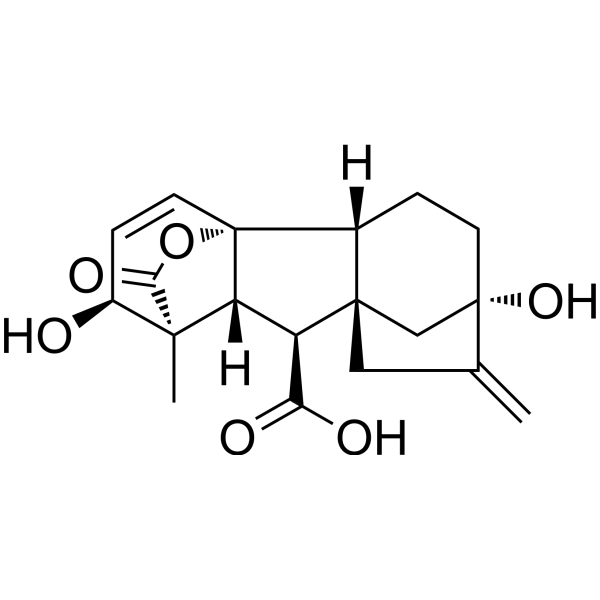
HY-N1964
Gibberellic acid -
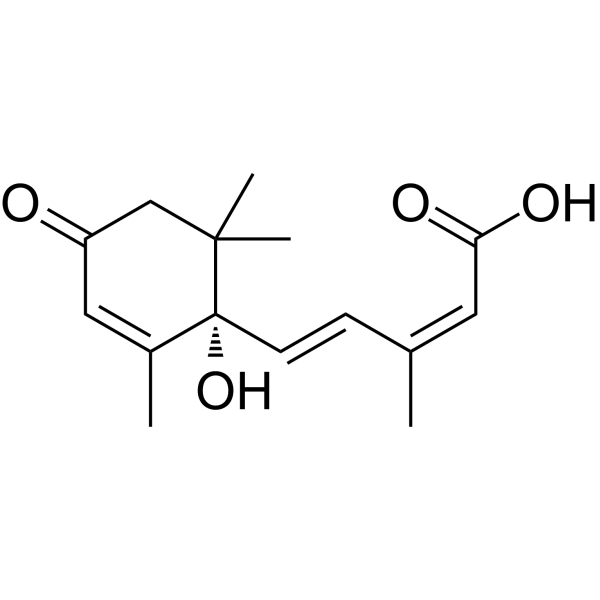
HY-100560
Abscisic acid -
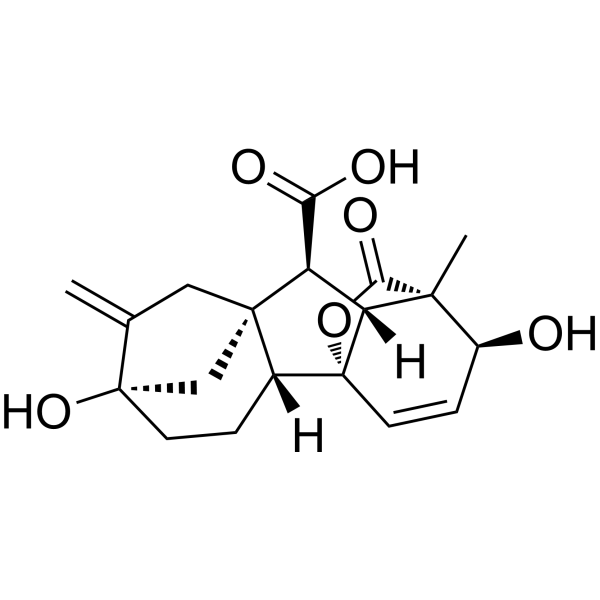
HY-N1964R
Gibberellic acid (Standard) -
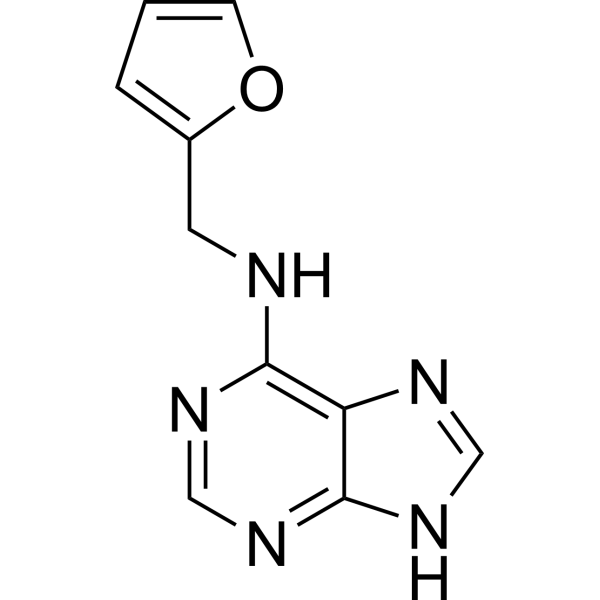
HY-N0160
Kinetin -
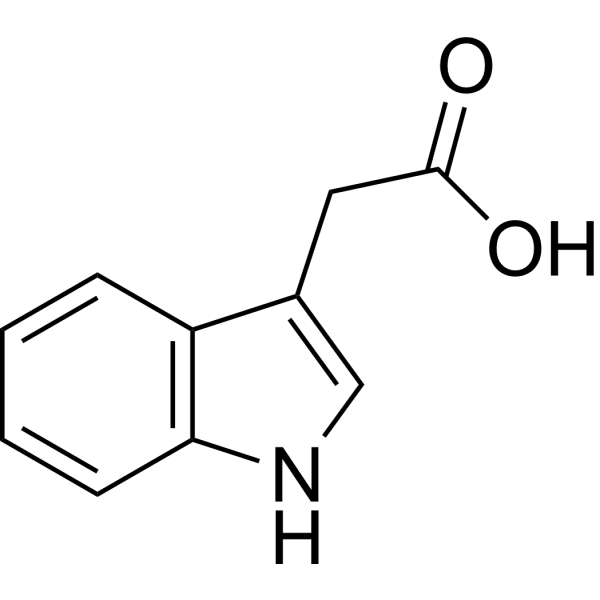
HY-18569
3-Indoleacetic acid -
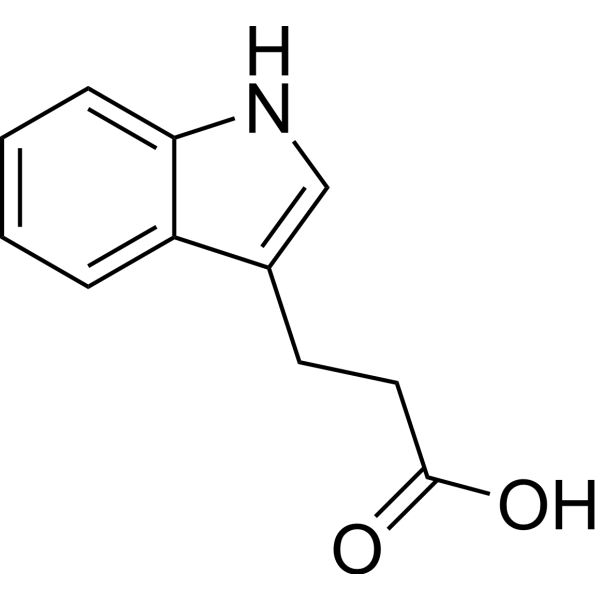
HY-W015229
3-Indolepropionic acid -
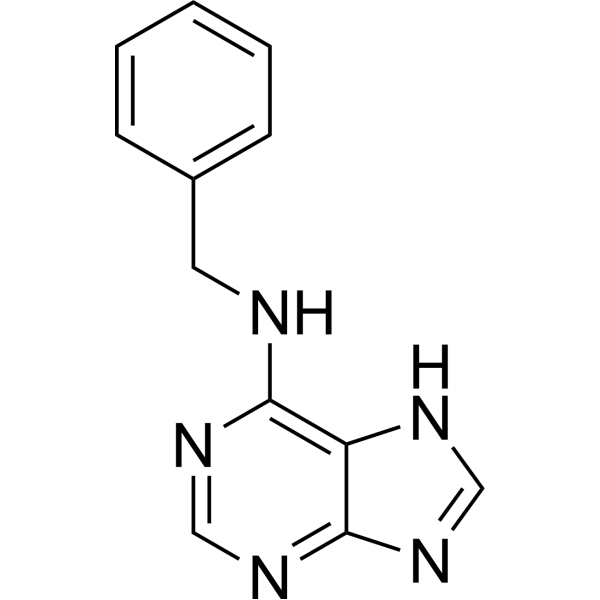
HY-B0941
6-Benzylaminopurine -
HY-N0186
Indole-3-butyric acid -
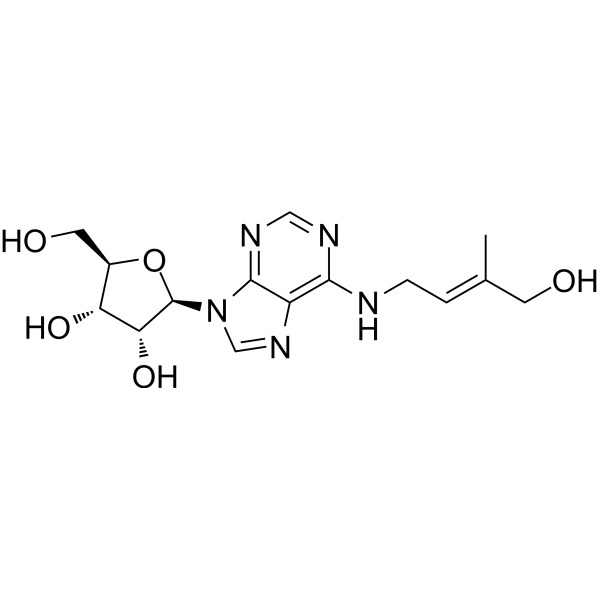
HY-W011151
trans-Zeatinriboside -
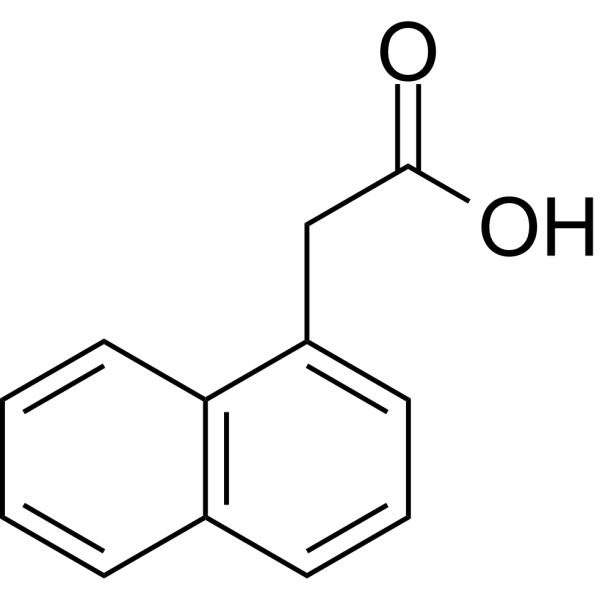
HY-18570
1-Naphthaleneacetic acid -

HY-18570B
1-Naphthaleneacetic acid,suitable for plant cell culture -
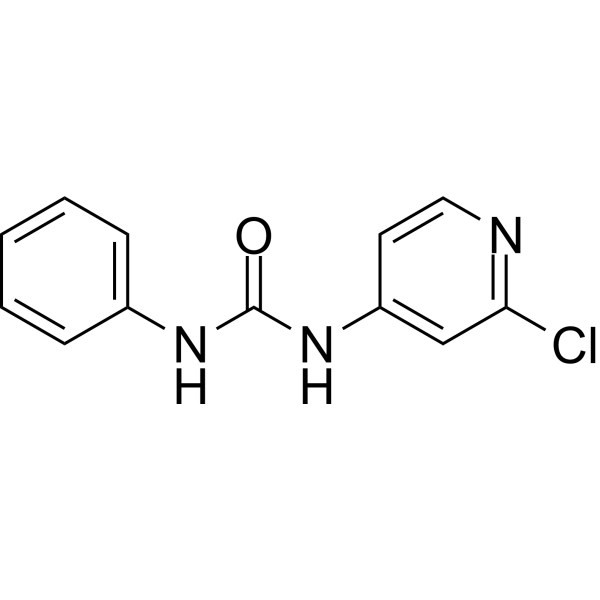
HY-B1841
Forchlorfenuron


Biological Activity
Description
Cellular Effect
|
Cell Line

|
Type | Value | Description | References |
|---|---|---|---|---|
| CA46 | IC50 |
>10 μM
Compound: JRA-001
|
Cytotoxicity against human CA46 cells assessed as reduction in cell viability measured after 24 hrs by CellTiter-Glo luminescent assay
Cytotoxicity against human CA46 cells assessed as reduction in cell viability measured after 24 hrs by CellTiter-Glo luminescent assay
|
[PMID: 33062173] |
| HCC1599 | IC50 |
>10 μM
Compound: JRA-001
|
Cytotoxicity against human HCC1599 cells assessed as reduction in cell viability measured after 24 hrs by CellTiter-Glo luminescent assay
Cytotoxicity against human HCC1599 cells assessed as reduction in cell viability measured after 24 hrs by CellTiter-Glo luminescent assay
|
[PMID: 33062173] |
| HEK-293T | IC50 |
>10 μM
Compound: JRA-001
|
Cytotoxicity against human HEK293T cells assessed as reduction in cell viability measured after 24 hrs by CellTiter-Glo luminescent assay
Cytotoxicity against human HEK293T cells assessed as reduction in cell viability measured after 24 hrs by CellTiter-Glo luminescent assay
|
[PMID: 33062173] |
| Hs-578T | IC50 |
>10 μM
Compound: JRA-001
|
Cytotoxicity against human Hs-578T cells assessed as reduction in cell viability measured after 24 hrs by CellTiter-Glo luminescent assay
Cytotoxicity against human Hs-578T cells assessed as reduction in cell viability measured after 24 hrs by CellTiter-Glo luminescent assay
|
[PMID: 33062173] |
| NCI-H446 | IC50 |
>10 μM
Compound: JRA-001
|
Cytotoxicity against human NCI-H446 cells assessed as reduction in cell viability measured after 24 hrs by CellTiter-Glo luminescent assay
Cytotoxicity against human NCI-H446 cells assessed as reduction in cell viability measured after 24 hrs by CellTiter-Glo luminescent assay
|
[PMID: 33062173] |
| PSN1 | IC50 |
>10 μM
Compound: JRA-001
|
Cytotoxicity against human PSN1 cells assessed as reduction in cell viability measured after 24 hrs by CellTiter-Glo luminescent assay
Cytotoxicity against human PSN1 cells assessed as reduction in cell viability measured after 24 hrs by CellTiter-Glo luminescent assay
|
[PMID: 33062173] |
| RCK8 | IC50 |
>10 μM
Compound: JRA-001
|
Cytotoxicity against human RC-K8 cells assessed as reduction in cell viability measured after 24 hrs by CellTiter-Glo luminescent assay
Cytotoxicity against human RC-K8 cells assessed as reduction in cell viability measured after 24 hrs by CellTiter-Glo luminescent assay
|
[PMID: 33062173] |
| SUD4 | IC50 |
>10 μM
Compound: JRA-001
|
Cytotoxicity against human SU-DHL-4 cells assessed as reduction in cell viability measured after 24 hrs by CellTiter-Glo luminescent assay
Cytotoxicity against human SU-DHL-4 cells assessed as reduction in cell viability measured after 24 hrs by CellTiter-Glo luminescent assay
|
[PMID: 33062173] |
In Vitro
Gibberellic acid, suitable for plant cell culture (GA3) (0.005-1.0 μM; 50 days) maximally enhances biomass, cell viability, secondary metabolite production (cichoric acid, caftaric acid, chlorogenic acid, lignin, anthocyanins), PAL activity, and free radical scavenging activity in light-grown Echinacea purpurea hairy root cultures, while 0.005 μM and 1.0 μM reduce these parameters relative to the 0.025 μM group[2].
Gibberellic acid, suitable for plant cell culture maintains rice spikelet fertility and anther/pollen development by mediating SLR1 repressor degradation to activate GAMYB and downstream male reproductive genes, while GA deficiency induced by low temperature or GA signaling mutation impairs pollen development and results in male sterility and reduced spikelet fertility in rice[3].
Gibberellic acid (5-20 μM; continuous low-temperature stress treatment), suitable for plant cell culture improves stand establishment, shoot/root growth, relative water content, chlorophyll retention, and flower/branch formation, and reduces electrolyte leakage in both chilling-tolerant Çağatay and chilling-sensitive Akçin chickpea cultivars under low-temperature stress[4].
MedChemExpress (MCE) has not independently confirmed the accuracy of these methods. They are for reference only.
In Vivo
MedChemExpress (MCE) has not independently confirmed the accuracy of these methods. They are for reference only.


Chemical Information
-
CAS No. 77-06-5
-
Molecular Weight 346.37
-
Formula C19H22O6
-
SMILES
OC([C@H]1[C@@]([C@]23C)([H])[C@@](OC2=O)(C=C[C@@H]3O)[C@@](CC4)([H])[C@]1(C5)C[C@]4(O)C5=C)=O
-
Shipping
Room temperature in continental US; may vary elsewhere.
-
Storage
Please store the product under the recommended conditions in the Certificate of Analysis.


Purity & Documentation
References
[1]. Celik I, et al. Abcisic acid and gibberellic acid cause increased lipid peroxidation and fluctuated antioxidant defense systems of various tissues in rats. J Hazard Mater. 2007;148(3):623-629. [Content Brief]
[2]. Abbasi BH, et al. Gibberellic acid increases secondary metabolite production in Echinacea purpurea hairy roots. Appl Biochem Biotechnol. 2012;168(7):2057-2066. [Content Brief]
[3]. Kwon CT, et al. Gibberellic Acid: A Key Phytohormone for Spikelet Fertility in Rice Grain Production. Int J Mol Sci. 2016;17(5):794. Published 2016 May 23. [Content Brief]

Calculators
Concentration (start) × Volume (start) = Concentration (final) × Volume (final)


Gibberellic acid, suitable for plant cell culture Related Classifications
HY-N1964A Related Classifications
 Powered by Bioz