



PKA Inhibitor Fragment (6-22) amide
Based on 5 publication(s) in Google Scholar
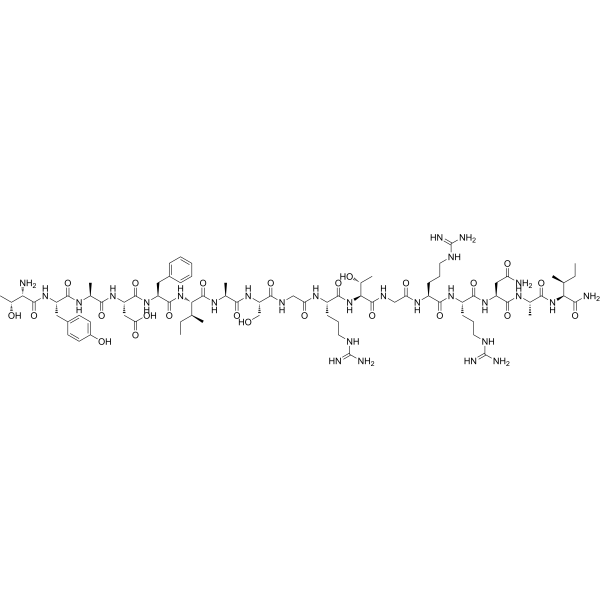
PKA Inhibitor Fragment (6-22) amide is a highly potent and specific competitive inhibitor of PKA, with Ki values of 1.7 nM and 1.6 nM against human and bovine PKA catalytic subunits, respectively. The IC50 of PKA Inhibitor Fragment (6-22) amide targeting bovine PKA is 8.6 nM. PKA Inhibitor Fragment (6-22) amide effectively abolishes PKA activity in mouse brain and spinal cord, and exerts in vivo efficacy via intracerebroventricular administration. PKA Inhibitor Fragment (6-22) amide significantly reverses low-dose morphine analgesic tolerance in mice and blocks photoaffinity labeling of cAMP-dependent protein kinase. PKA Inhibitor Fragment (6-22) amide can be applied to research in fields related to the mechanism of morphine analgesic tolerance and skin wound healing.
For research use only. We do not sell to patients.
- Purity : 98.00%
- CAS No.: 121932-06-7
- Formula: C80H130N28O24
- Molecular Weight:1868.06
-
Storage:
Sealed storage, away from moisture.
Powder -80°C, 2 years , -20°C, 1 year* In solvent : -80°C, 6 months; -20°C, 1 month (sealed storage, away from moisture)

To place orders, for customer services and technical support, please contact: MedChemExpress USA
Tel: 609-228-6898 E-mail: [email protected] [email protected]


-
 Biological Activity
-
Chemical Information
-
Solvent & Solubility
- Protocols
- Purity & Documentation
- References
-
 Help & FAQs


-
HY-P1291
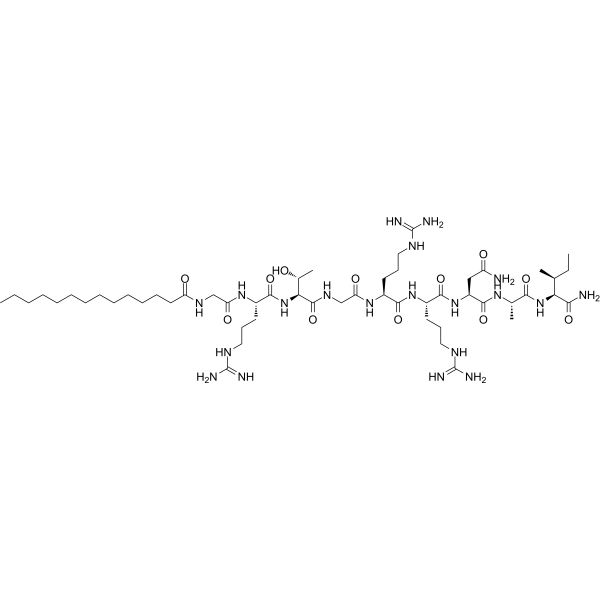
PKI 14-22 amide,myristoylatedPKA Inhibitor -
HY-N6789
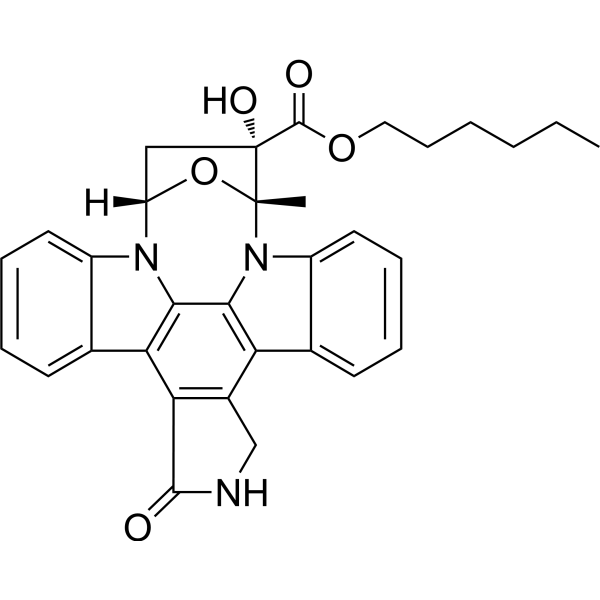
KT5720PKA Inhibitor -
HY-15979A
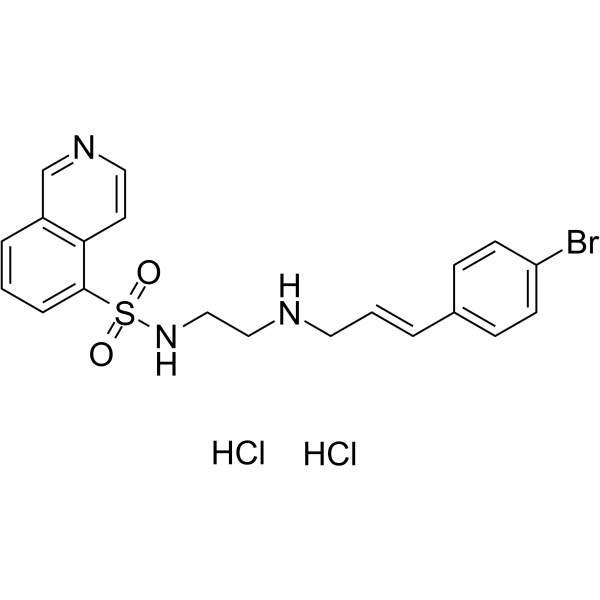
H-89 dihydrochloridePKA Inhibitor -
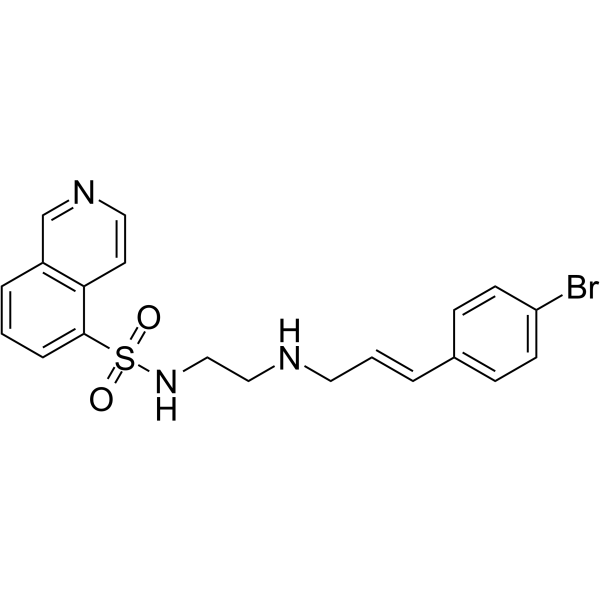
HY-15979
H-89PKA Inhibitor -
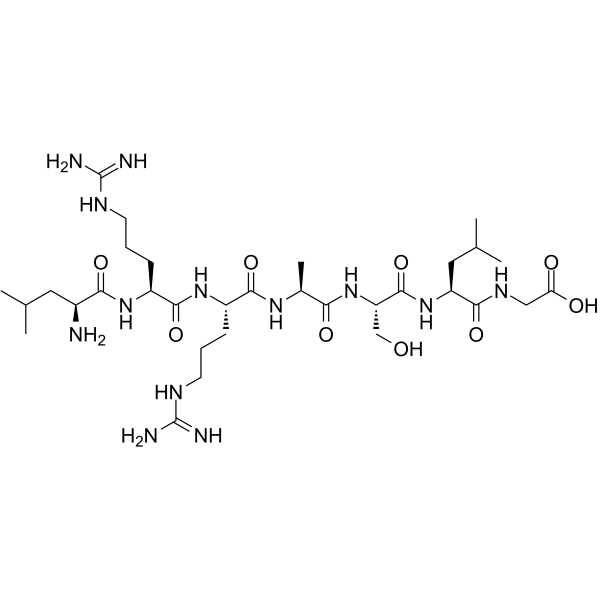
HY-P0248
KemptidePKA Substrate -
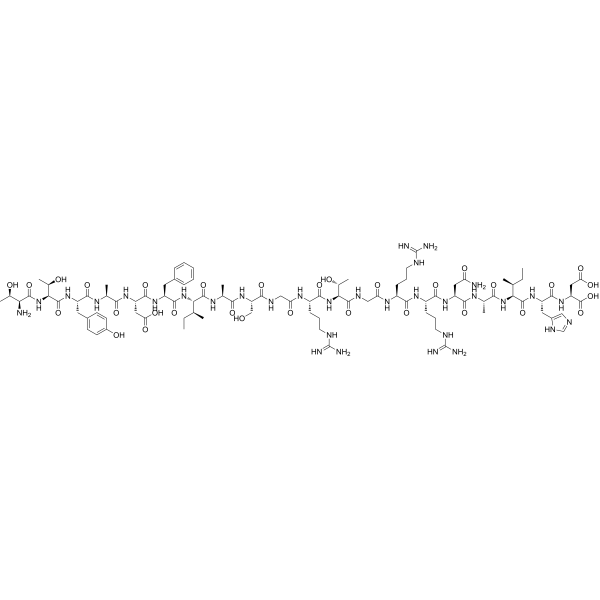
HY-P0222
PKI(5-24)PKA Inhibitor -
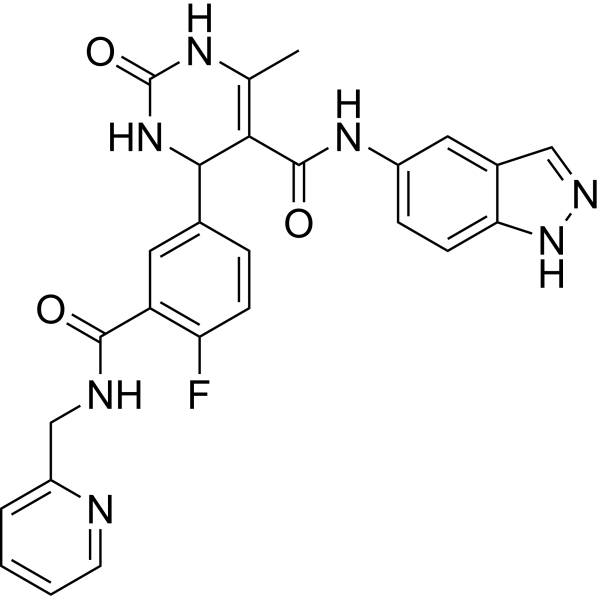
HY-18991
CCG215022GRK Inhibitor -
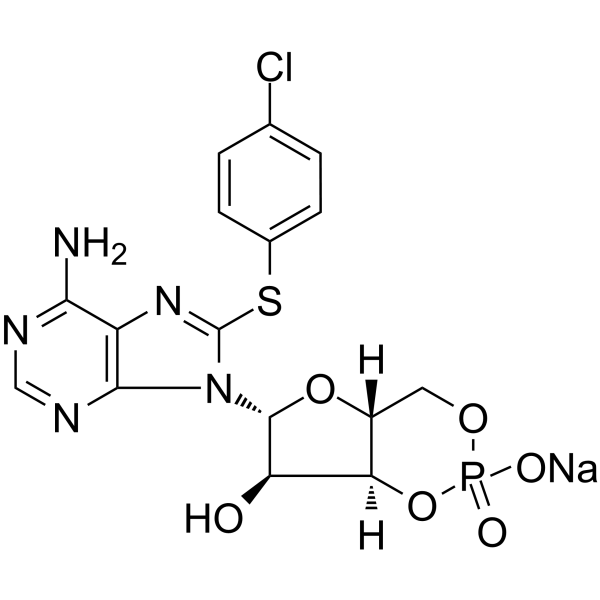
HY-111673
8-CPT-Cyclic AMP sodiumPKA Activator -
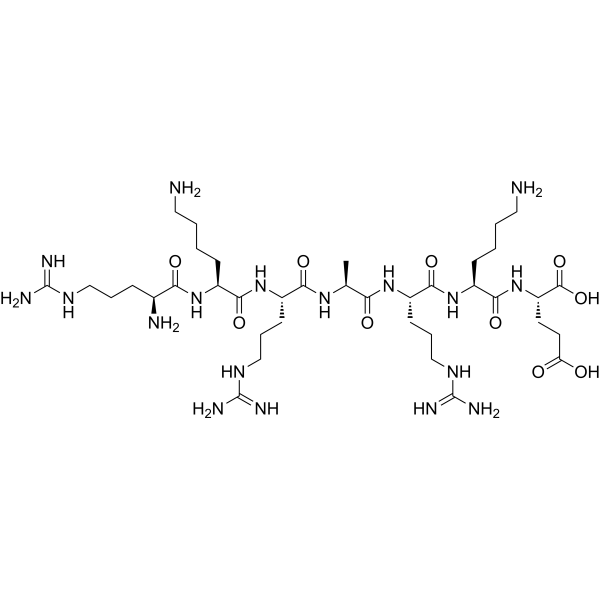
HY-P1292
PKG inhibitor peptidePKG Inhibitor -
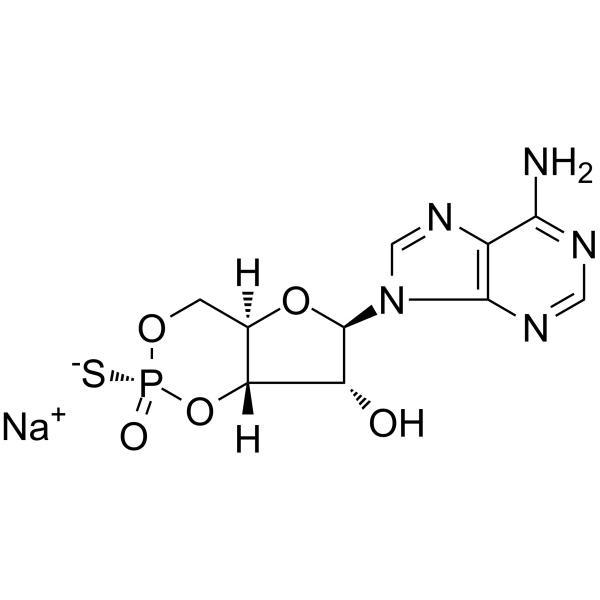
HY-100530D
Rp-cAMPS sodium saltPKA I/II Antagonist -
HY-111759
JaspamycinPKA Activator -
HY-100530C
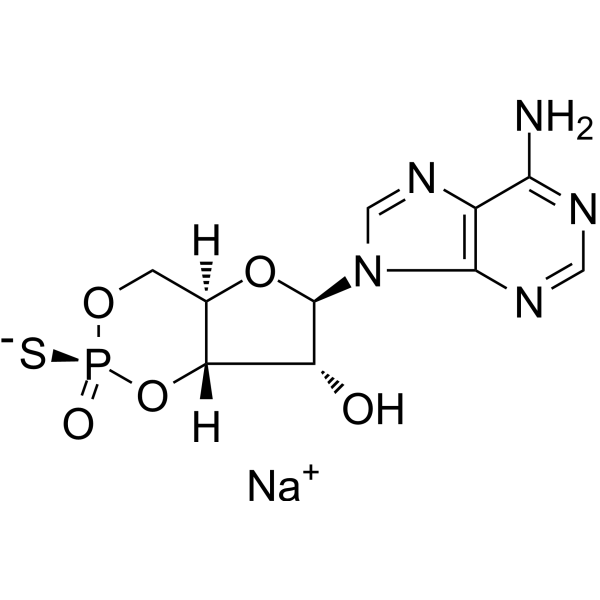
Sp-cAMPS sodium saltPKA I/PKA II Activator
Publications Citing Use of MedChemExpress (MCE) PKA Inhibitor Fragment (6-22) amide
More

Biological Activity
Description
IC50 & Target
|
PKA 2.8 nM (Ki) |
In Vitro
PKA Inhibitor Fragment (6-22) amide (10 μM; 20 min) potently inhibits nearly all basal and total cytosolic and particulate PKA activity in vitro in thalamus, PAG, medulla, and LSC fractions from drug-naïve mouse brain and spinal cord[1].
PKA Inhibitor Fragment (6-22) amide (500 μM; 10 min pre-incubation, 3 min UV irradiation) specifically binds to the active site of the bovine heart type II cAMP-dependent protein kinase catalytic subunit[2].
PKA Inhibitor Fragment (6-22) amide (10 µM; 1 h pre-incubation, 24 h co-incubation with uvaol) inhibits uvaol (HY-N1109)-induced migration of NIH3T3 fibroblasts by 25% in a scratch wound healing assay[3].
PKA Inhibitor Fragment (6-22) amide (10 µM; 1 h pre-incubation, 24 h co-incubation with uvaol) inhibits uvaol-induced migration of tEnd.1 endothelial cells by 27% in a scratch wound healing assay[3].
MedChemExpress (MCE) has not independently confirmed the accuracy of these methods. They are for reference only. Further protocols information, click here.
-
Cell Line:NIH3T3 fibroblast cell line, tEnd.1 endothelial cell line
-
Concentration:10 µM
-
Incubation Time:1 h (pre-incubation); 24 h (co-incubation with uvaol)
-
Result:Reduced uvaol-induced NIH3T3 fibroblast migration towards the scratched area by 25%.
Reduced uvaol-induced tEnd.1 endothelial cell migration towards the scratched area by 27%.
In Vivo
PKA Inhibitor Fragment (6-22) amide (3.75 nmol; i.c.v.; single dose) significantly inhibits cytosolic PKA activity in the thalamus, periaqueductal gray, and lumbar spinal cord of drug-naïve male Swiss Webster mice[1].
PKA Inhibitor Fragment (6-22) amide (3.75 nmol; i.c.v.; single dose) significantly inhibits total cytosolic PKA activity in the thalamus of morphine-tolerant male Swiss Webster mice[1].
MedChemExpress (MCE) has not independently confirmed the accuracy of these methods. They are for reference only.
-
Animal Model:Swiss Webster (male, 25-30 g, morphine pellet implantation for 72 h to induce tolerance)[1]
-
Dosage:2.5 nmol
-
Administration:i.c.v.; single dose
-
Result:Did not alter morphine antinociceptive potency in placebo-pelleted mice, with an ED50 of 4.0 mg/kg and a potency ratio of 1.0 vs. controls.
Reduced the morphine ED50 from 41.0 mg/kg to 9.2 mg/kg in morphine-pelleted tolerant mice, with a potency ratio of 2.4 vs. controls, but did not completely reverse morphine tolerance.
Reduced the morphine ED50 by ~78% in tolerant animals.


Chemical Information
-
CAS No. 121932-06-7
-
Appearance Solid
-
Molecular Weight 1868.06
-
Formula C80H130N28O24
-
Color White to off-white
-
Synonyms
PKI-(6-22)-amide
-
Sequence Shortening
TYADFIASGRTGRRNAI-NH2
-
Shipping
Room temperature in continental US; may vary elsewhere.
-
Storage
Sealed storage, away from moisture
Powder -80°C 2 years -20°C 1 year * In solvent : -80°C, 6 months; -20°C, 1 month (sealed storage, away from moisture)


Publications (5)
-
Journal Impact Factor
-
Most Recent
-
Cell Mol Immunol
Chaperone- and PTM-mediated activation of IRF1 tames radiation-induced cell death and the inflammatory response. [Abstract]2024 Aug;21(8):856-872. PMID: 38849539 -
Theranostics
Endogenous glutamate determines ferroptosis sensitivity via ADCY10-dependent YAP suppression in lung adenocarcinoma. [Abstract]2021 Mar 24;11(12):5650-5674. PMID: 33897873 -
Acta Pharmacol Sin
Endothelial Gsα deficiency promotes ferroptosis and exacerbates atherosclerosis in apolipoprotein E-deficient mice via the inhibition of NRF2 signaling. [Abstract]2025 May;46(5):1289-1302. PMID: 39806063 -
Chin Med
Grain-sized moxibustion activates dendritic cells to enhance the antitumor immunity of cancer vaccines. [Abstract]2025 May 27;20(1):73. PMID: 40426190 -
Elife
2023 Jan 16:12:e81438. PMID: 36645741


Solvent & Solubility
In Vitro
H2O
Peptide Solubility and Storage Guidelines:
1. Calculate the length of the peptide.
2. Calculate the overall charge of the entire peptide according to the following table:
| Contents | Assign value | |
|---|---|---|
| Acidic amino acid | Asp (D), Glu (E), and the C-terminal -COOH. | -1 |
| Basic amino acid | Arg (R), Lys (K), His (H), and the N-terminal -NH2 | +1 |
| Neutral amino acid | Gly (G), Ala (A), Leu (L), Ile (I), Val (V), Cys (C), Met (M), Thr (T), Ser (S), Phe (F), Tyr (Y), Trp (W), Pro (P), Asn (N), Gln (Q) | 0 |
3. Recommended solution:
| Overall charge of peptide | Details |
|---|---|
| Negative (<0) |
1. Try to dissolve the peptide in water first. 2. If water fails, add NH4OH (<50 μL). 3. If the peptide still does not dissolve, add DMSO (50-100 μL) to solubilize the peptide. |
| Positive (>0) |
1. Try to dissolve the peptide in water first. 2. If water fails, try dissolving the peptide in a 10%-30% acetic acid solution. 3. If the peptide still does not dissolve, try dissolving the peptide in a small amount of DMSO. |
| Zero (=0) |
1. Try to dissolve the peptide in organic solvent (acetonitrile, methanol, etc.) first. 2. For very hydrophobic peptides, try dissolving the peptide in a small amount of DMSO, and then dilute the solution with water to the desired concentration. |

Protocols
-
Cell Cytotoxicity Assay
Cytotoxicity assays are usually based on the assessment of cell membrane damage, which can also be indirectly detected by measuring cell viability. Detection methods include MTT assay, CKK-8 assay, LDH assay and ATP assay, etc.
-
Cell migration
Cell migration is a method that plays an important role in wound healing, cell differentiation, embryonic development, etc.
-
Cell-Exclusion Zone Migration Assay
The Cell-Exclusion Zone (CEZ) migration assay is an in vitro 2D cell migration method in which a defined cell-free area is created using removable physical barriers such as silicone stoppers, allowing cells to be seeded around the barrier and subsequently migrate into the cleared zone after barrier removal. This approach enables quantification of collective cell migration by monitoring repopulation of the initially cell-free region over time using microscopy-based imaging. Compared with scratch-based wound healing assays, barrier-based exclusion methods are designed to avoid mechanical damage to the extracellular matrix and reduce injury-induced effects on boundary cells, thereby improving interpretability of migration behavior in vitro. The assay readout is typically the progressive reduction in the cell-free area or the number of cells invading the exclusion zone, reflecting coordinated cell motility relevant to physiological processes such as wound healing, epithelial repair, and ca


Purity & Documentation
-
Data Sheet (266 KB)
-
SDS (252 KB)
- English - EN (252 KB)
- Français - FR (252 KB)
- Deutsch - DE (252 KB)
- Norwegian - NO (252 KB)
- Español - ES (252 KB)
- Swedish - SV (252 KB)
- Italian - IT (252 KB)
- Korean - KR (252 KB)
- Portuguese - PT (252 KB)
-
Handling Instructions (2659 KB)
References
[2]. Katz BM, et al. Synthesis, characterization and inhibitory activities of (4-N3[3,5-3H]Phe10)PKI(6-22)amide and its precursors: photoaffinity labeling peptides for the active site of cyclic AMP-dependent protein kinase. Int J Pept Protein Res. 1989;33(6):439-445. [Content Brief]
[3]. Carmo J, et al. Uvaol Improves the Functioning of Fibroblasts and Endothelial Cells and Accelerates the Healing of Cutaneous Wounds in Mice. Molecules. 2020;25(21):4982. Published 2020 Oct 28. [Content Brief]

Calculators
Concentration (start) × Volume (start) = Concentration (final) × Volume (final)


PKA Inhibitor Fragment (6-22) amide Related Classifications
HY-P1290 Related Classifications
 Powered by Bioz
Keywords
- PKA Inhibitor Fragment (6-22) amide
- 121932-06-7
- PKI-(6-22)-amide
- PKA
- protein kinase A
- tEnd.1 endothelial cells
- periaqueductal gray
- mouse brain
- cAMP-dependent protein kinase catalytic subunit
- bovine heart type II cAMP-dependent protein kinase
- mouse spinal cord
- NIH3T3 fibroblasts
- male Swiss Webster mice
- morphine antinociceptive tolerance
- Inhibitor
- inhibitor
- inhibit