



EGF Protein, Mouse
Based on 19 publication(s) in Google Scholar
EGF Protein, Mouse is a growth factor that stimulates the proliferation of the epidermis and several epithelial tissues.
- Species: Mouse
- Source: E. coli
-
보관:Stored at -20°C for 2 years from date of receipt. After reconstitution, it is stable at 4°C for 1 week or -20°C for longer (with carrier protein). It is recommended to freeze aliquots at -20°C or -80°C for extended storage.


To place orders, for customer services and technical support, please contact: MedChemExpress USA
Tel: 609-228-6898 E-mail: [email protected] [email protected]


-
 Biological Activity
-
Technical Parameters
-
Product Properties
- 각종 서류
- References
- Help & FAQs


-
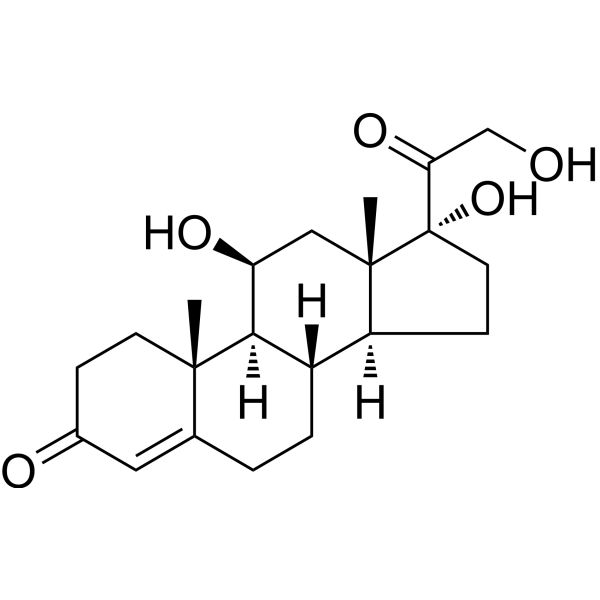
HY-N0583
HydrocortisoneGlucocorticoid Receptor Agonist -

HY-P7066
FGF-2 Protein, Mouse (145a.a) -
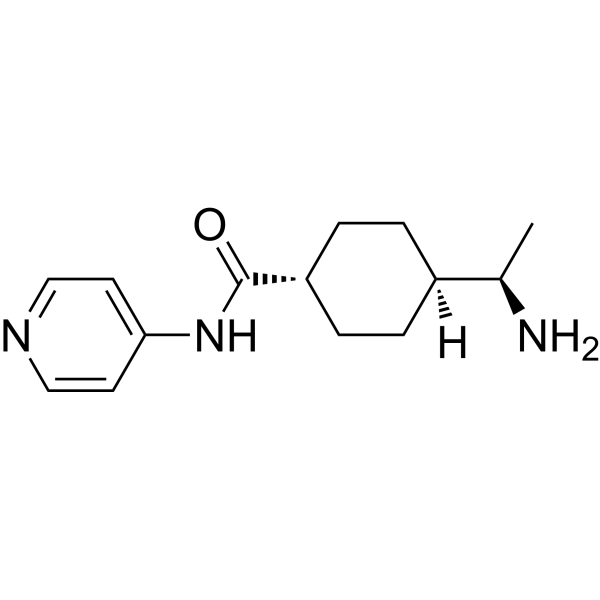
HY-10071
Y-27632ROCK Inhibitor -

HY-P0035
Insulin (human)Recombinant Human Insulin -
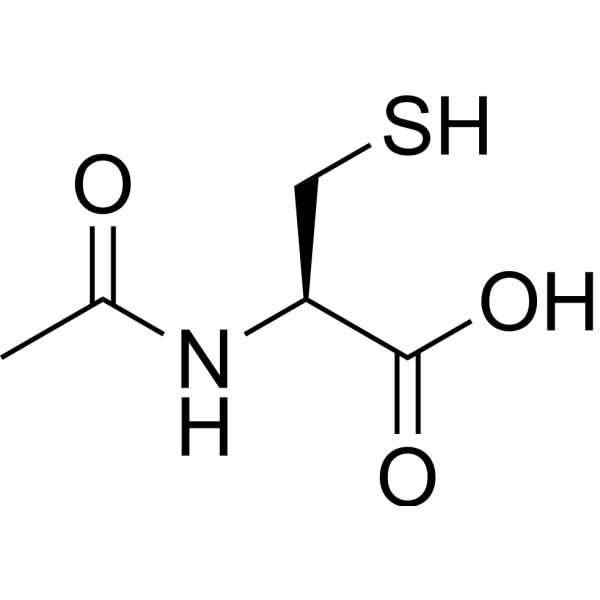
HY-B0215
AcetylcysteineMucolytic Agent -
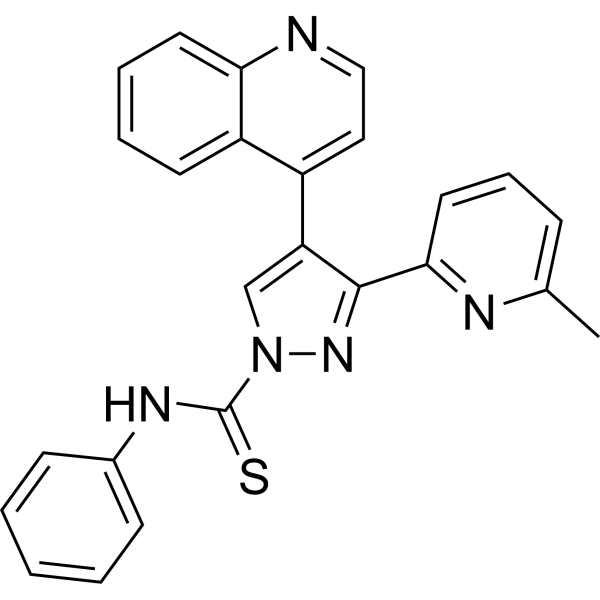
HY-10432
A 83-01ALK4/5/7 Inhibitor -

HY-P1156
Insulin(cattle)Recombinant Cattle Insulin -
HY-P7109
EGF Protein, Human -
HY-P7170
KGF-2/FGF-10 Protein, Mouse -
HY-P76012
RSPO1/R-spondin-1 Protein, Mouse (CHO, His) -
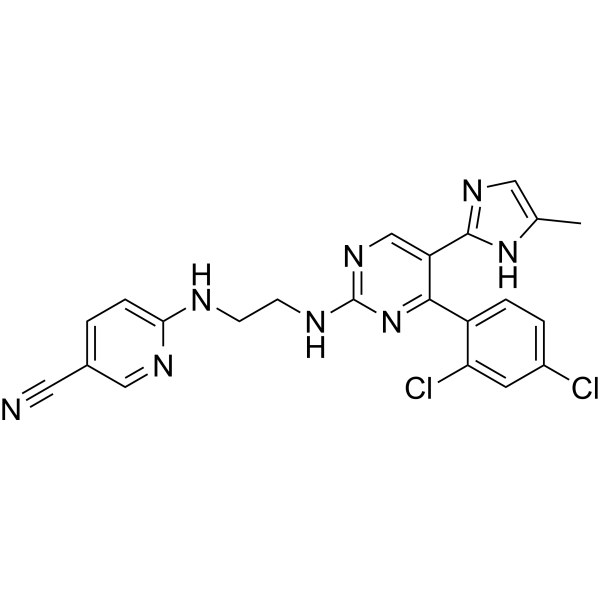
HY-10182
LaduviglusibGSK-3 Inhibitor -
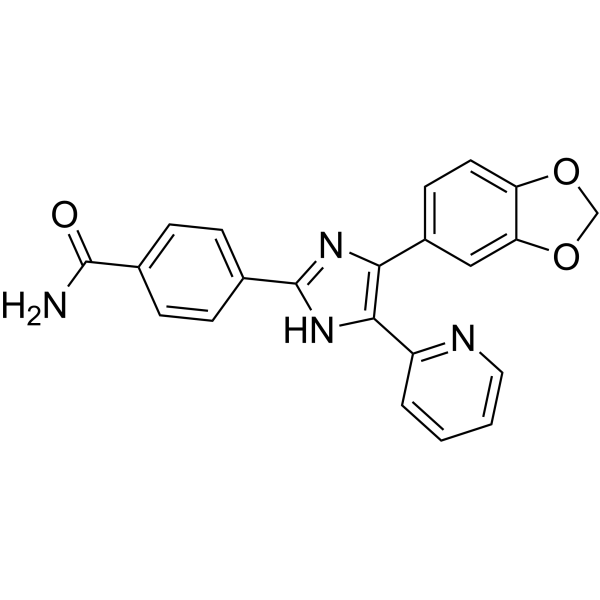
HY-10431
SB-431542TGF-β Receptor Kinase Inhibitor


Biological Activity
제품 설명
EGF Protein, Mouse is a growth factor that stimulates the proliferation of the epidermis and several epithelial tissues.
Background
Epidermal growth factor (EGF) binds to epidermal growth factor receptor and stimulates an intracellular signal transduction cascade, leading to activation of genes that regulate cell proliferation, angiogenesis, motility, and metastasis[1]. Epidermal growth factor (EGF) is initially synthesized as a large precursor of 1217 amino acids that is glycosylated and can be secreted by cells. Epidermal growth factor (EGF) mRNA and protein are expressed in a number of adult tissues, especially in epithelial cells in the gastrointestinal tract. Predominant sites of synthesis of this peptide are the submandibular glands, the Brunner glands in the small intestine and the kidney[2].
Verified Bioactivity
1. The ED50 is <0.1 ng/mL as measured by BALB/c 3T3 cells, corresponding to a specific activity of >1.0 × 10⁷ units/mg.
2. Mouse EGFR protein immobilized on CM5 Chip can bind Mouse EGF with an affinity constant of 15.2nM as determined in SPR assay.
MCE Validation Data
-
Purity - SDS-PAGE
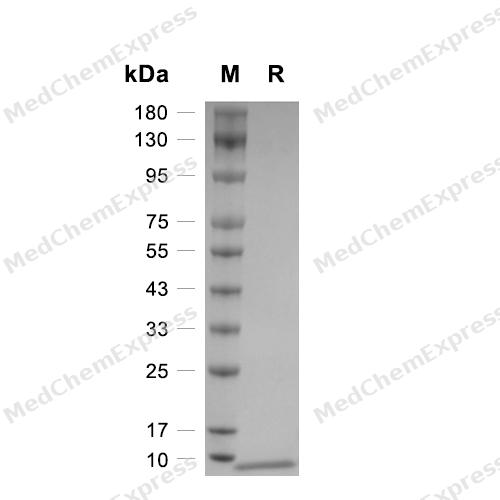
Purity - SDS-PAGE
-
Bioactivity - Cell-Based Assay
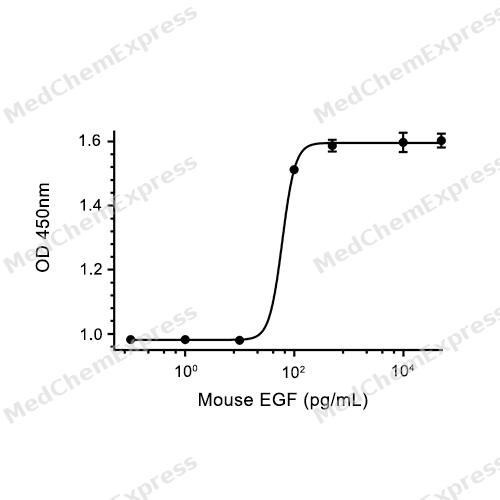
Bioactivity - Cell-Based Assay


Publications (19)
-
Journal Impact Factor
-
Most Recent
-
-
J Nanobiotechnology
Mesenchymal stem cell-derived apoptotic extracellular vesicles loaded with Prussian blue nanoparticles attenuate severe acute pancreatitis via neutrophil extracellular traps resolution and acinar-ductal metaplasia promotion. [Abstract]2025 Dec 25;23(1):804. PMID: 41449408 -
-
Adv Sci (Weinh)
Embryo-Derived Cathepsin B Promotes Implantation and Decidualization by Activating Pyroptosis. [Abstract]2024 Nov;11(43):e2402299. PMID: 39316370 -
Cell Death Differ
EGFR orchestrates neutrophil activation and NETosis via CEBPβ-dependent PGLYRP1 induction. [Abstract]2026 Jan 15. PMID: 41540251 -
J Control Release
Dual-phase nanoscissors disrupt vasculature-breast cancer stem cell crosstalk for breast cancer treatment. [Abstract]2024 Dec 5:377:781-793. PMID: 39603539 -
Cell Death Dis
2025 Dec 22;16(1):918. PMID: 41430036 -
Phytomedicine
A saponin from astragalus promotes pancreatic ductal organoids differentiation into insulin-producing cells. [Abstract]2022 May 18;102:154190. PMID: 35636173 -
Environ Int
Dynamic non-coding RNA biomarker reveals lung injury and repair induced by polystyrene nanoplastics. [Abstract]2025 Jan:195:109266. PMID: 39824028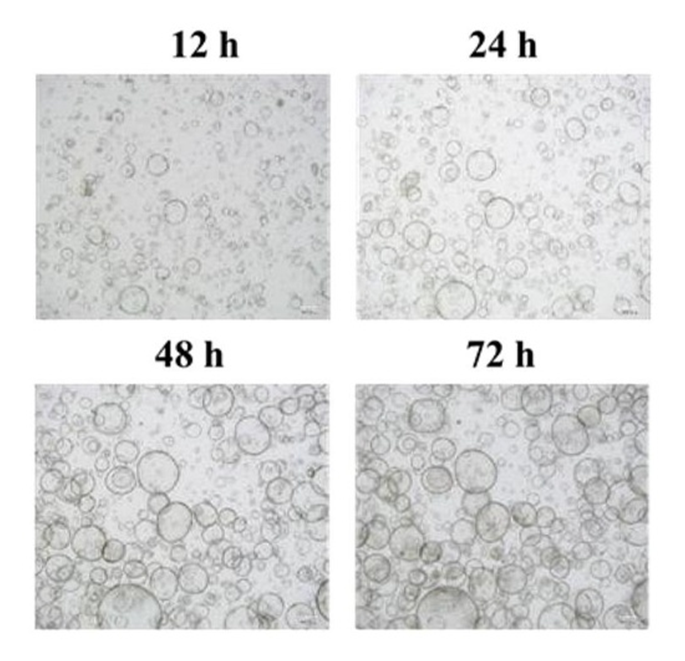
EGF Protein, Mouse purchased from MedChemExpress. Usage Cited in: Environ Int. 2025 Jan:195:109266. [Abstract]
Lung organoid cultured in lung organoid medium with 50 ng/mL EGF, 10 ng/mL FGF10, 500 ng/mL RSPO1, 100 ng/mL Noggin, 100 nM SB202190 and 10 μM Y-27632.
-
Int J Biol Macromol
Peroxisome Proliferator-Activated Receptor Gamma (PPARγ)-targeted Gel/Mg/Lip@Gigantol nanoplatform attenuates skin barrier disruption-associated aging in mice via NLRP3 suppression. [Abstract]2025 Sep 5;328(Pt 1):147464. PMID: 40915461 -
Ecotoxicol Environ Saf
Blue light pollution induces dry eye by damaging conjunctival stem cells through cAMP-PKA-Pax6 signaling pathway. [Abstract]2025 Sep 15:303:118984. PMID: 40912100 -
-
Cells
Upregulated Hexokinase-2 in Airway Epithelium Regulates Apoptosis and Drives Inflammation in Asthma via Peptidylprolyl Isomerase F. [Abstract]2025 Jul 1;14(13):1004. PMID: 40643524 -
Cancers (Basel)
Pepsinogen C Interacts with IQGAP1 to Inhibit the Metastasis of Gastric Cancer Cells by Suppressing Rho-GTPase Pathway. [Abstract]2024 May 8;16(10):1796. PMID: 38791874 -
J Inflamm Res
Salvianic Acid A Regulates Ferroptosis by Activating the Nrf2-GPX4 Pathway Through EGFR to Protect Myocardial Ischemia-Reperfusion Injury. [Abstract]2026 Jun 19:19:596461. PMID: 42345001 -
-
J Virol
Phospho-eIF4E stimulation regulates coronavirus entry by selective expression of cell membrane-residential factors. [Abstract]2024 Feb 20;98(2):e0194823. PMID: 38299843 -
Immun Inflamm Dis
2025 Aug;13(8):e70229. PMID: 40844079 -
Heliyon
MAD1 deficiency accelerates hepatocellular proliferation via suppressing TGF-β signaling. [Abstract]2024 May 15;10(10):e31312. PMID: 38813231


Technical Parameters
-
Species Mouse
-
Source E. coli
-
Tag Tag Free
-
Accession
P01132 (N977-R1029)
-
Molecular Construction
-
N-term
-
EGF (N977-R1029)
Accession # P01132 -
C-term
-
-
Protein Length
Full Length of EGF
-
Synonyms
EGF; Alternative Protein EGF; Epidermal Growth Factor; Beta-Urogastrone; Pro-Epidermal Growth Factor; HOMG4; Epidermal Growth Factor (Beta-Urogastrone); URG
-
AA Sequence
NSYPGCPSSYDGYCLNGGVCMHIESLDSYTCNCVIGYSGDRCQTRDLRWWELR
-
Predicted Molecular Mass
6 kDa
-
분자량
Approximately 6-8 kDa, based on SDS-PAGE under reducing conditions.
-
Purity
≥ 95%, as determined by reducing SDS-PAGE.


Product Properties
Lyophilized powder
1.Lyophilized from a 0.22 μm filtered solution of PBS.
2.Lyophilized from a 0.22 μm filtered solution of PBS, pH 7.4, 5% trehalose, 5% mannitol, 0.01% Tween 80.
3.Lyophilized from a 0.22 μm filtered solution of PBS, pH 7.4, 8% trehalose.
Please refer to the lot-specific COA for specific buffer information.
<0.2 EU/μg, determined by LAL method.
It is not recommended to reconstitute to a concentration less than 100 μg/mL in ddH2O. For long term storage it is recommended to add a carrier protein (0.1% BSA, 5% HSA, 10% FBS or 5% Trehalose).
Stored at -20°C for 2 years from date of receipt. After reconstitution, it is stable at 4°C for 1 week or -20°C for longer (with carrier protein). It is recommended to freeze aliquots at -20°C or -80°C for extended storage.
Room temperature in continental US; may vary elsewhere.


각종 서류
-
Data Sheet (261 KB)
-
SDS (252 KB)
- English - EN (252 KB)
- Français - FR (252 KB)
- Deutsch - DE (252 KB)
- Norwegian - NO (252 KB)
- Español - ES (252 KB)
- Swedish - SV (252 KB)
- Italian - IT (252 KB)
- Korean - KR (252 KB)
- Portuguese - PT (252 KB)
-
Handling Instructions (2659 KB)


References
[1]. Hynes NE, et al. ERBB receptors and cancer: the complexity of targeted inhibitors. Nat Rev Cancer. 2005 May;5(5):341-54. [Content Brief]
[2]. Salomon DS, et al. Epidermal growth factor-related peptides and their receptors in human malignancies. Crit Rev Oncol Hematol. 1995 Jul;19(3):183-232. [Content Brief]

Calculators
Concentration (start) × Volume (start) = Concentration (final) × Volume (final)


 Powered by Bioz

