



FGF-1 Protein, Human
Based on 3 publication(s) in Google Scholar
FGF-1 Protein, Human is a growth factor and signaling protein encoded by the FGF1 gene.
- Species: Human
- Source: E. coli
-
Storage:Stored at -20°C for 2 years from date of receipt. After reconstitution, it is stable at 4°C for 1 week or -20°C for longer (with carrier protein). It is recommended to freeze aliquots at -20°C or -80°C for extended storage.


To place orders, for customer services and technical support, please contact: MedChemExpress USA
Tel: 609-228-6898 E-mail: [email protected] [email protected]


-
 Biological Activity
-
Technical Parameters
-
Product Properties
- Documentation
- References
- Help & FAQs


-

HY-P7109
EGF Protein, Human -
HY-P7004
FGF basic/bFGF Protein, Human (146a.a) -
HY-P7018
IGF-I/IGF-1 Protein, Human (70a.a) -
HY-P7048
KGF-2/FGF-10 Protein, Human (169a.a) -
HY-P700065AF
Animal-Free FGF-3 Protein, Human (His) -
HY-P7121
HGF Protein, Human (CHO) -
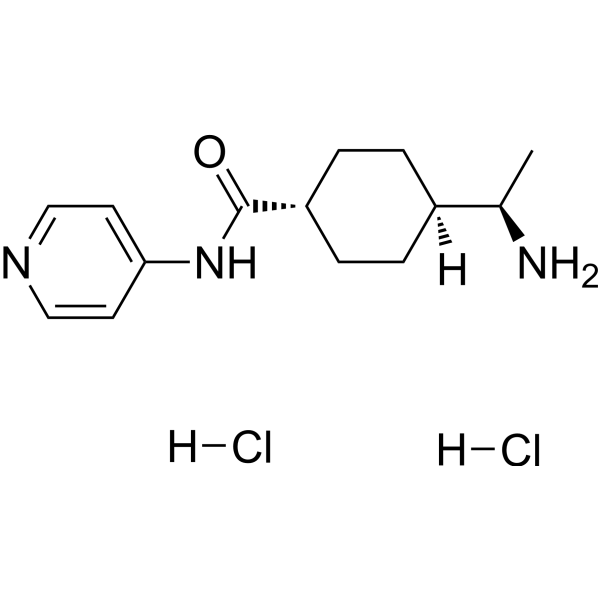
HY-10583
Y-27632 dihydrochloride -
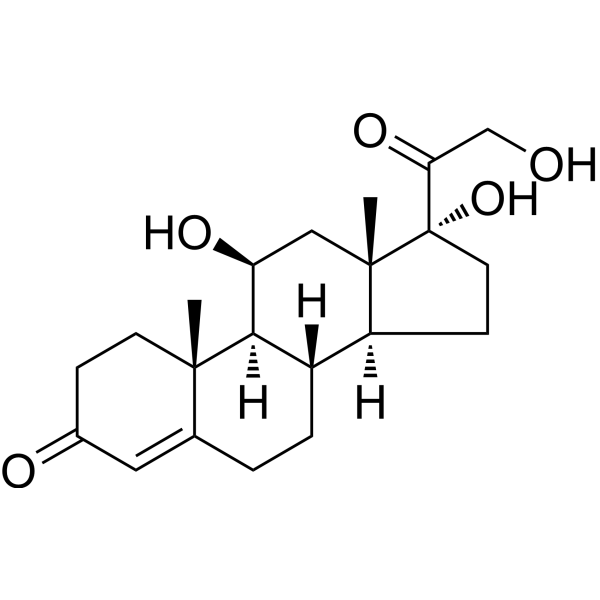
HY-N0583
Hydrocortisone -
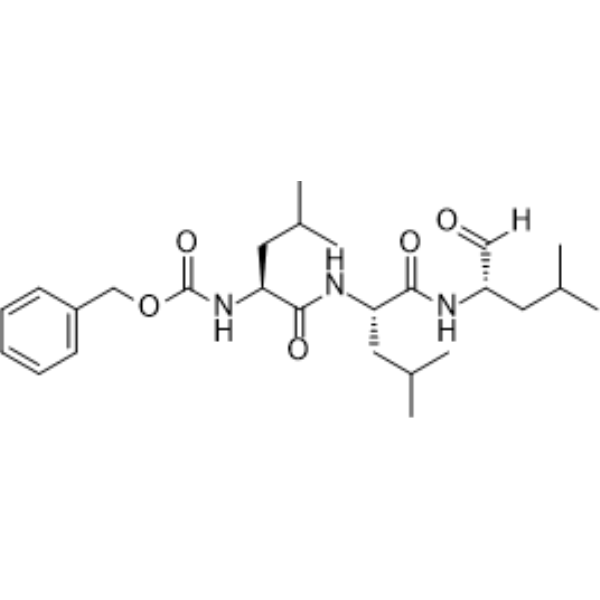
HY-13259
MG-132 -
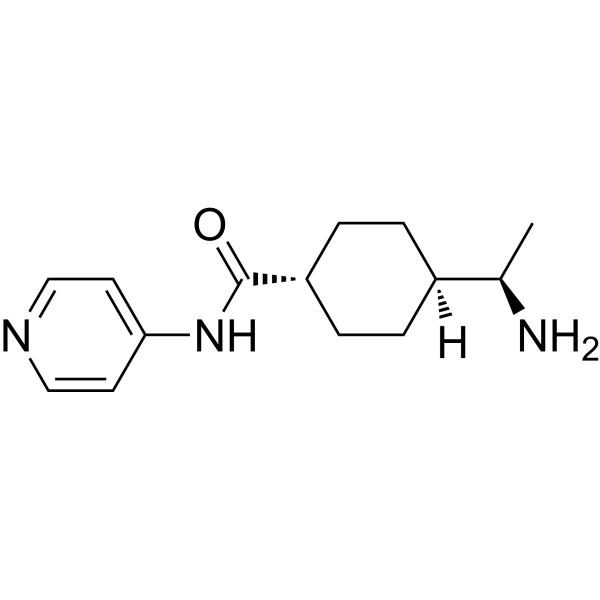
HY-10071
Y-27632 -
HY-10432
A 83-01 -
HY-10182
Laduviglusib


Biological Activity
Description
FGF-1 Protein, Human is a growth factor and signaling protein encoded by the FGF1 gene.
Background
Acidic Fibroblast Growth Factor is involved in a wide spectrum of biological functions including tissue development and repair, angiogenesis, proliferation of both epithelial and mesenchymal cells, and tumorigenesis. The biological activities of Acidic Fibroblast Growth Factor depend on binding to highly specific cell surface receptors, among which, fibroblast growth factor receptor 4 (FGFR4) is highly specific[1].
Verified Bioactivity
The ED50 is <0.3 ng/mL, measured by a cell proliferation assay of 3T3 Cells, corresponding to a specific activity of > 3.3 × 10⁶ IU/mg in the presence of 10.0 μg/ml of heparin.


Publications (3)
-
Journal Impact Factor
-
Most Recent
-
Cell Death Discov
FGF1-FGFR2 axis regulated by nuclear receptor RORγ represents an effective strategy in intrahepatic cholangiocarcinoma. [Abstract]2025 Dec 22;11(1):562. PMID: 41430037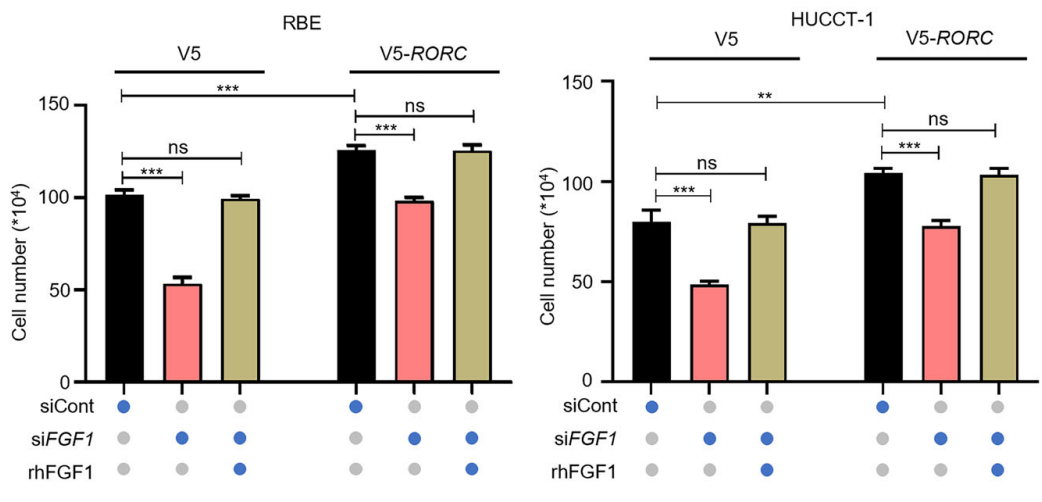
FGF-1 Protein, Human purchased from MedChemExpress. Usage Cited in: Cell Death Discov. 2025 Dec 22;11(1):562. [Abstract]
Transfection of FGF1 siRNAs or control into wild-type or RORγ-overexpressing RBE and HUCCT-1 cells, with or without 5 ng/mL human recombinant FGF1 (FGF-1 Protein, Human). Viable cells were counted after 4 days. The results showed that FGF-1 Protein, Human rescued the inhibitory effects of FGF1 silencing.
FGF-1 Protein, Human purchased from MedChemExpress. Usage Cited in: Cell Death Discov. 2025 Dec 22;11(1):562. [Abstract]
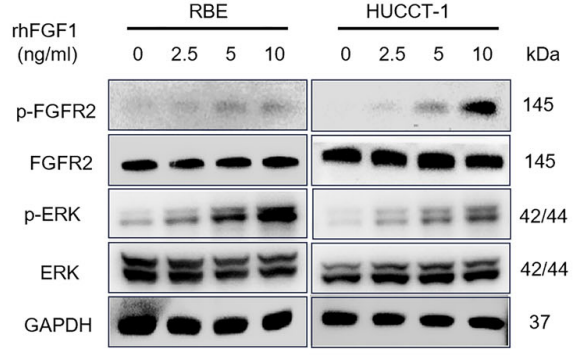
FGFR2, phosphorylated FGFR2 (p-FGFR2), and its downstream proteins were detected by immunoblotting in RBE and HUCCT-1 cells treated with recombinant human FGF1 (FGF-1 Protein, Human) at the specified concentrations for 20 min. The results showed that FGF-1 Protein, Human (rhFGF1) treatment induced FGFR2 phosphorylation and downstream ERK activation in a dose-dependent manner In both RBE and HUCCT-1 cells.
-
Apoptosis
PRELP inhibits colorectal cancer progression by suppressing epithelial-mesenchymal transition and angiogenesis via the inactivation of the FGF1/PI3K/AKT pathway. [Abstract]2025 Feb;30(1-2):16-34. PMID: 39242474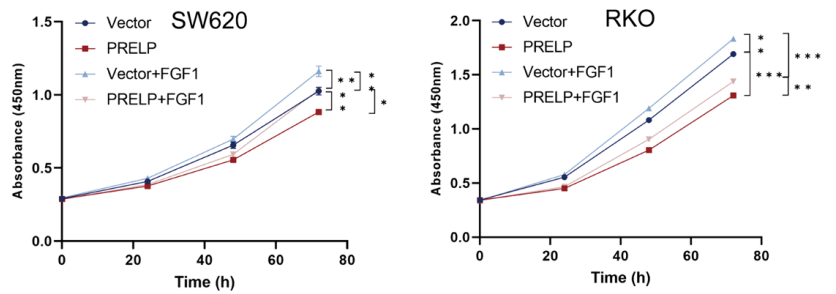
FGF-1 Protein, Human purchased from MedChemExpress. Usage Cited in: Apoptosis. 2025 Feb;30(1-2):16-34. [Abstract]
Cells stably expressing the vector and PRELP were treated with the recombinant FGF-1 Protein, Human (10 ng/mL) for 48 h and analyzed using a CCK-8 assay. The results revealed that FGF-1 Protein, Human partially rescued the inhibition of proliferation caused by PRELP.
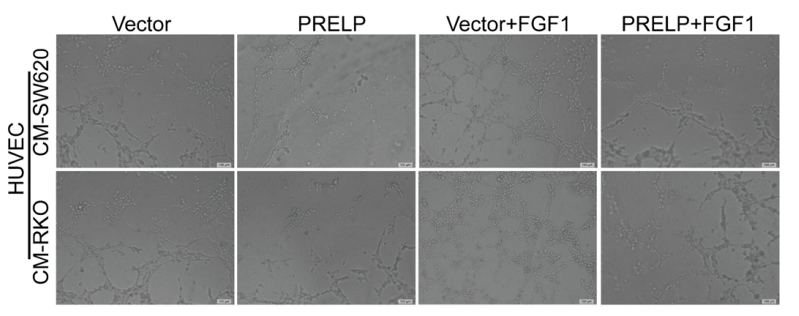
FGF-1 Protein, Human purchased from MedChemExpress. Usage Cited in: Apoptosis. 2025 Feb;30(1-2):16-34. [Abstract]
Cells stably expressing the vector and PRELP were treated with the recombinant FGF-1 Protein, Human (10 ng/mL) for 48 h and analyzed using a tube formation assay. The results showed that HUVECs were more likely to vascularize in the presence of FGF-1 Protein, Human.
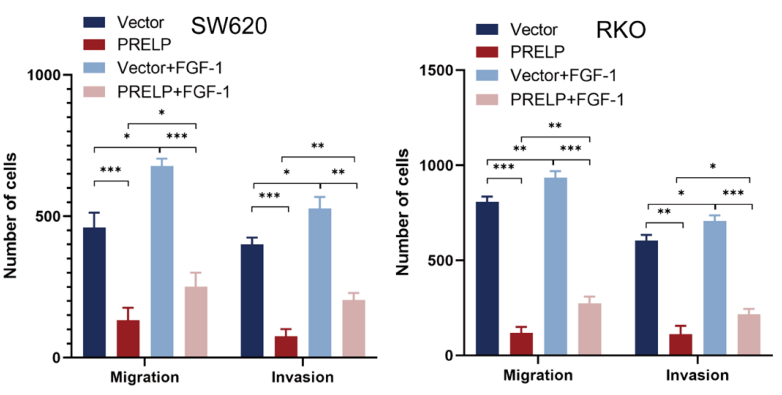
FGF-1 Protein, Human purchased from MedChemExpress. Usage Cited in: Apoptosis. 2025 Feb;30(1-2):16-34. [Abstract]
Cells stably expressing the vector and PRELP were treated with the recombinant FGF-1 Protein, Human (10 ng/mL) for 48 h and analyzed using a Transwell assay. The results confirmed that the migration and invasion abilities of SW620 and RKO cells were restored by the recombinant FGF-1 Protein, Human.
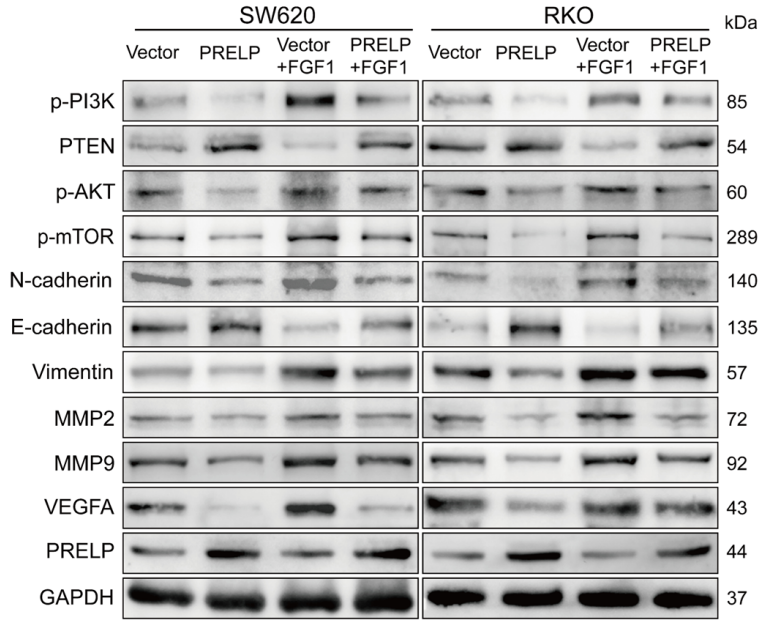
FGF-1 Protein, Human purchased from MedChemExpress. Usage Cited in: Apoptosis. 2025 Feb;30(1-2):16-34. [Abstract]
Cells stably expressing the vector and PRELP were treated with the recombinant FGF-1 Protein, Human (10 ng/mL) for 48 h and analyzed using a Western blot. The results indicated that FGF-1 Protein, Human could reactivate the PI3K/AKT/mTOR signaling pathway and promote the expression of VEGFA and EMT-related markers.
-


Technical Parameters
-
Species Human
-
Source E. coli
-
Tag Tag Free
-
Accession
P05230-1 (F16-D155)
-
Molecular Construction
-
N-term
-
FGF-1 (F16-D155)
Accession # P05230-1 -
C-term
-
-
Protein Length
Full Length of Isoform-1
-
Synonyms
FGF1; Endothelial Cell Growth Factor, Alpha; Prev. FGFA; Fibroblast Growth Factor 1 (Acidic); Heparin-Binding Growth Factor 1; Acidic Fibroblast Growth Factor; AFGF; HBGF-1; ECGF; FGF-1; ECGF-Beta; Beta-Endothelial Cell Growth Factor; FGF-Alpha; Endotheli
-
AA Sequence
FNLPPGNYKKPKLLYCSNGGHFLRILPDGTVDGTRDRSDQHIQLQLSAESVGEVYIKSTETGQYLAMDTDGLLYGSQTPNEECLFLERLEENHYNTYISKKHAEKNWFVGLKKNGSCKRGPRTHYGQKAILFLPLPVSSD
-
Predicted Molecular Mass
16 kDa
-
Molecular Weight
Approximately 16-16 kDa, based on SDS-PAGE under reducing conditions, due to the glycosylation.
-
Purity
≥ 95%, as determined by reducing SDS-PAGE.


Product Properties
Lyophilized powder
1.Lyophilized from a 0.22 μm filtered solution of PBS.
2.Lyophilized from a 0.22 μm filtered solution of 20 mM PB, 150 mM NaCl, pH 6.8.
3.Lyophilized from a 0.22 μm filtered solution of PBS, pH 6.8, 8% trehalose.
Please refer to the lot-specific COA for specific buffer information.
<1 EU/μg, determined by LAL method.
It is not recommended to reconstitute to a concentration less than 100 μg/mL in ddH2O. For long term storage it is recommended to add a carrier protein (0.1% BSA, 5% HSA, 10% FBS or 5% Trehalose).
Stored at -20°C for 2 years from date of receipt. After reconstitution, it is stable at 4°C for 1 week or -20°C for longer (with carrier protein). It is recommended to freeze aliquots at -20°C or -80°C for extended storage.
Room temperature in continental US; may vary elsewhere.


Documentation
-
Data Sheet (261 KB)
-
SDS (252 KB)
- English - EN (252 KB)
- Français - FR (252 KB)
- Deutsch - DE (252 KB)
- Norwegian - NO (252 KB)
- Español - ES (252 KB)
- Swedish - SV (252 KB)
- Italian - IT (252 KB)
- Korean - KR (252 KB)
- Portuguese - PT (252 KB)
-
Handling Instructions (2659 KB)


References

Calculators
Concentration (start) × Volume (start) = Concentration (final) × Volume (final)


 Powered by Bioz

