



FGF-21 Protein, Human (His)
Based on 4 publication(s) in Google Scholar
FGF-21 Proteinas influences glucose uptake in adipocytes by inducing SLC2A1/GLUT1 expression, particularly with KLB's presence. It plays a crucial role in systemic glucose homeostasis and insulin sensitivity, interacting directly with KLB through its C-terminus and engaging with FGFR4. The protein's molecular mechanisms involve a complex interplay, emphasizing its broad impact beyond localized effects. FGF-21 Protein, Human (His) is the recombinant human-derived FGF-21 protein, expressed by E. coli , with N-6*His labeled tag.
- Species: Human
- Source: E. coli
-
Storage:Stored at -20°C for 2 years from date of receipt. After reconstitution, it is stable at 4°C for 1 week or -20°C for longer (with carrier protein). It is recommended to freeze aliquots at -20°C or -80°C for extended storage.


To place orders, for customer services and technical support, please contact: MedChemExpress USA
Tel: 609-228-6898 E-mail: [email protected] [email protected]


-
 Biological Activity
-
Technical Parameters
-
Product Properties
- Documentation
- Help & FAQs


-
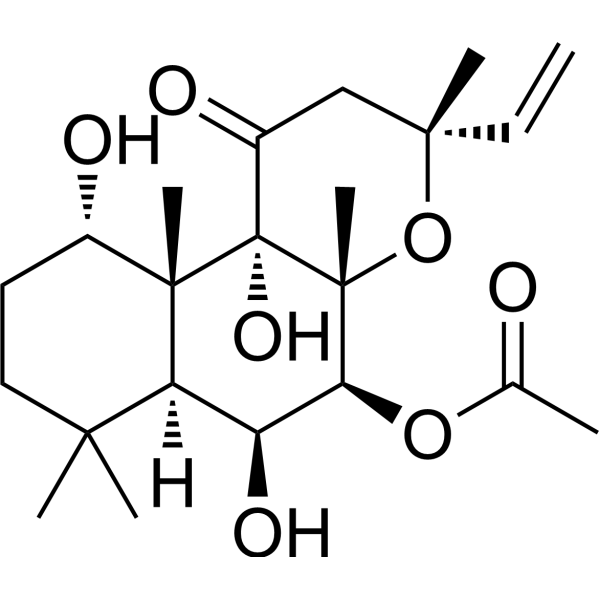
HY-15371
Forskolin -

HY-P7007
BMP-4 Protein, Human -
HY-P7110A
VEGF165 Protein, Human (HEK293) -
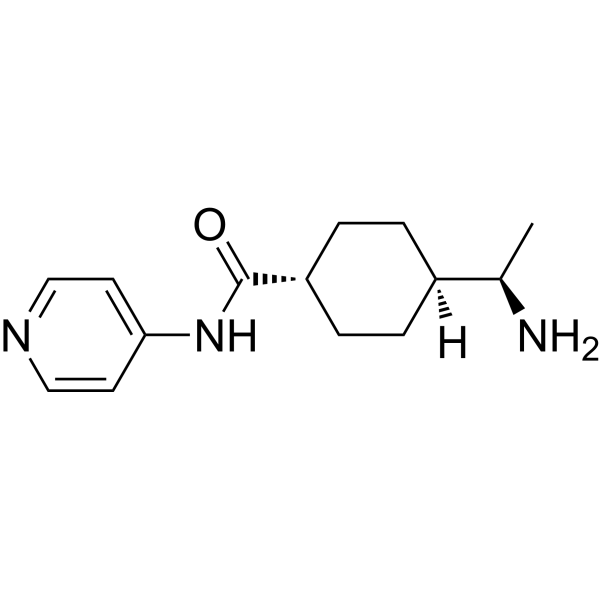
HY-10071
Y-27632 -
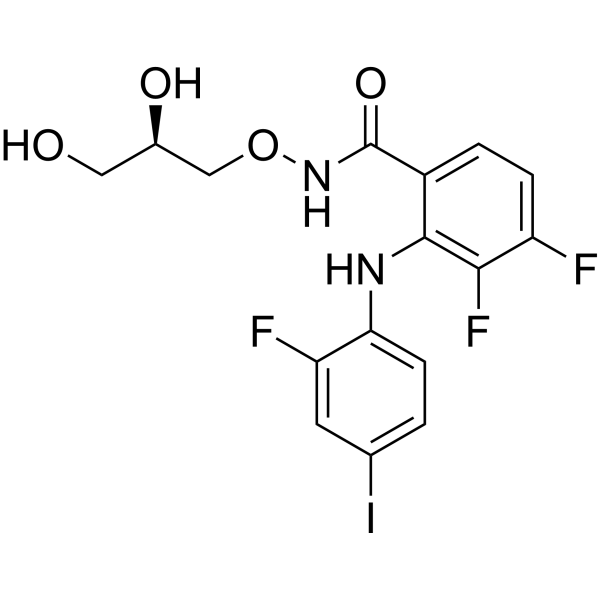
HY-10254
Mirdametinib -
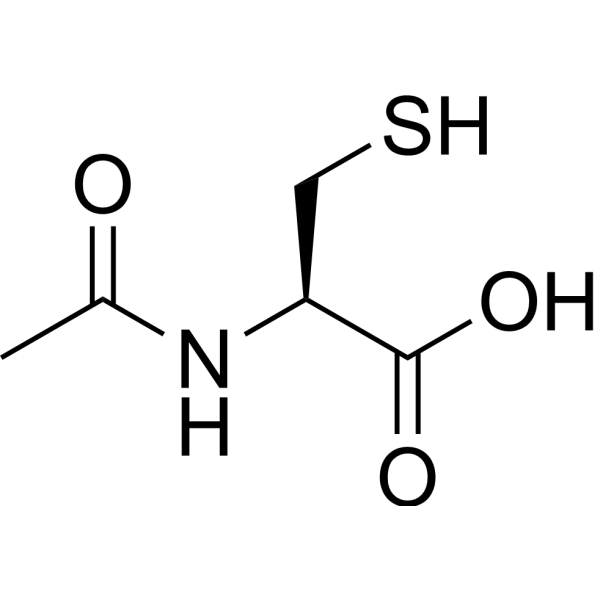
HY-B0215
Acetylcysteine -
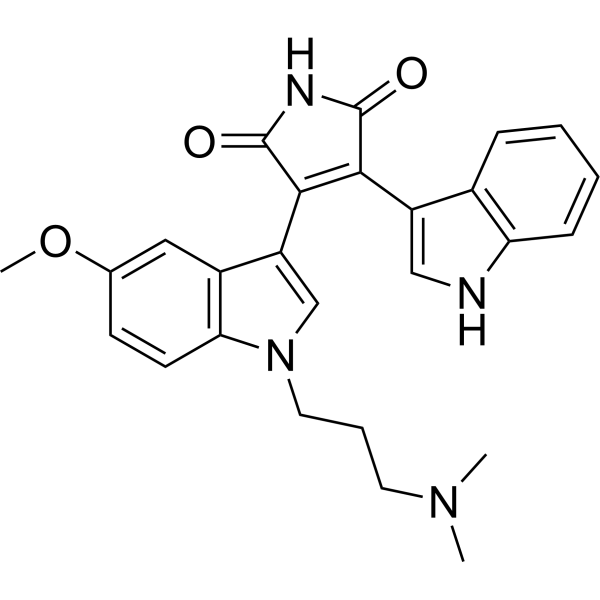
HY-13689
Go 6983 -
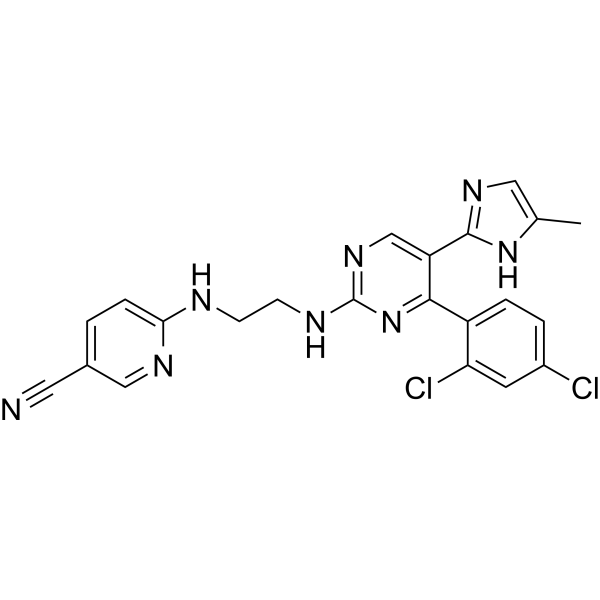
HY-10182
Laduviglusib -
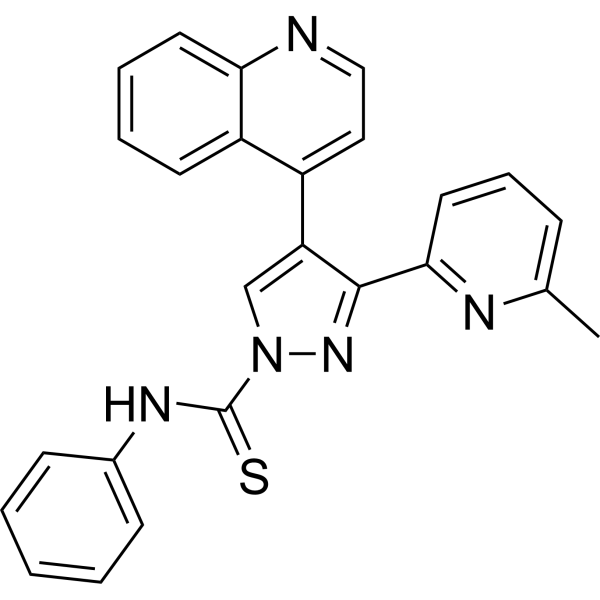
HY-10432
A 83-01 -

HY-P0035
Insulin (human) -
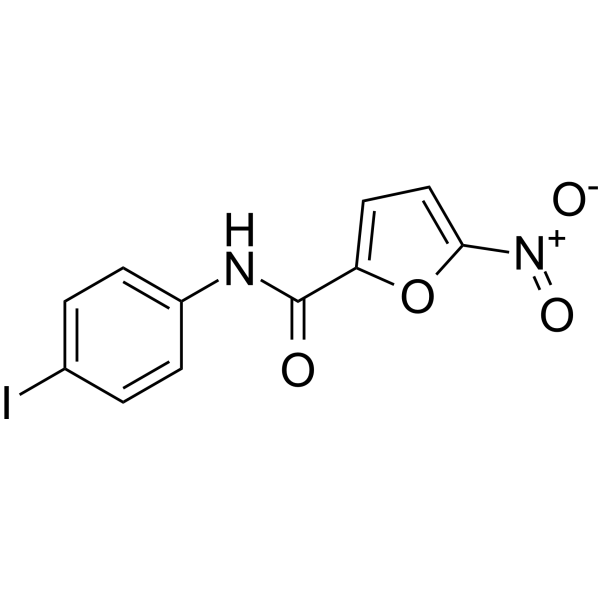
HY-112906
C-176 -
HY-P70311
Activin A Protein, Human/Mouse/Rat (HEK293)


Biological Activity
Description
FGF-21 Proteinas influences glucose uptake in adipocytes by inducing SLC2A1/GLUT1 expression, particularly with KLB's presence. It plays a crucial role in systemic glucose homeostasis and insulin sensitivity, interacting directly with KLB through its C-terminus and engaging with FGFR4. The protein's molecular mechanisms involve a complex interplay, emphasizing its broad impact beyond localized effects. FGF-21 Protein, Human (His) is the recombinant human-derived FGF-21 protein, expressed by E. coli , with N-6*His labeled tag.
Background
FGF-21 protein exerts its biological influence by promoting glucose uptake in differentiated adipocytes, primarily through inducing the expression of the glucose transporter SLC2A1/GLUT1, rather than SLC2A4/GLUT4. This activity is likely contingent on the presence of KLB. Beyond its localized effects, FGF-21 plays a crucial role in the regulation of systemic glucose homeostasis and insulin sensitivity. The protein interacts directly with KLB, facilitated by its C-terminus, and also engages with FGFR4, indicating a complex interplay in its molecular mechanisms.
Verified Bioactivity
Measured in a cell proliferation assay using NIH-3T3 mouse embryonic fibroblast cells. The ED50 for this effect is < 2.0 μg/mL in the presence of 1.25 μg/mL recombinant human Klotho beta.
MCE Validation Data
-
Purity - SDS-PAGE
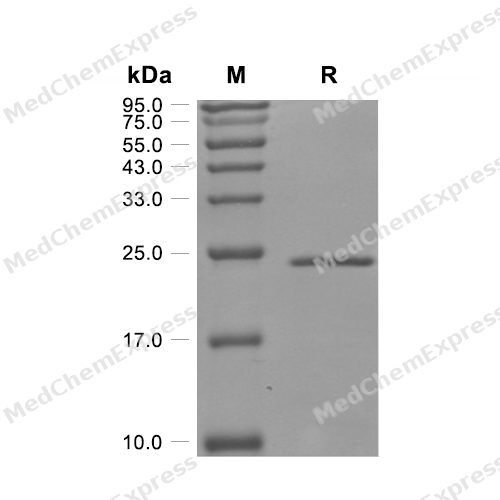
Purity - SDS-PAGE
-
Bioactivity - Cell-Based Assay
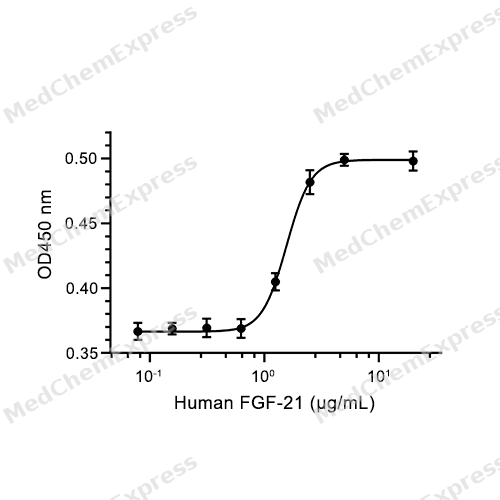
Bioactivity - Cell-Based Assay


Publications (4)
-
Journal Impact Factor
-
Most Recent
-
J Adv Res
FGF21-FGFR1 signaling protects against cardiac hypertrophy by regulating PINK1-mediated mitophagy pathway. [Abstract]2025 Oct 29:S2090-1232(25)00848-3. PMID: 41173187
FGF-21 Protein, Human (His) purchased from MedChemExpress. Usage Cited in: J Adv Res. 2025 Oct 29:S2090-1232(25)00848-3. [Abstract]
FGF-21 Protein, Human (His) (FGF21, 24 h). PINK1 protein level in lysates of cytosolic and mitochondrial fractions.

FGF-21 Protein, Human (His) purchased from MedChemExpress. Usage Cited in: J Adv Res. 2025 Oct 29:S2090-1232(25)00848-3. [Abstract]
si-NC and si-PINK1 NRCMs were infected with adenovirus encoding LC3 for 24 h, then subjected to 100 μM PE stimulation for 24 h, followed by vehicle or FGF-21 Protein, Human (His) (FGF21, 24 h). These cells were stained using MitoTracker Red dye, scale bar = 20 μm.

FGF-21 Protein, Human (His) purchased from MedChemExpress. Usage Cited in: J Adv Res. 2025 Oct 29:S2090-1232(25)00848-3. [Abstract]
Relative ANP mRNA level. The results showed that PINK1 knockdown significantly inhibited the FGF21 (FGF-21 Protein, Human (His), 24 h)-mediated decrease in ANP and BNP expression in PE-treated cells.
-

FGF-21 Protein, Human (His) purchased from MedChemExpress. Usage Cited in: Biomater Res. 2025 Dec 23.
qRT-PCR of M1-and M2-related gene expressions in RAW264.7 cells. The results showed that RAW264.7 cells treated with 100 ng/μL FGF-21 (FGF-21 Protein, Human (His) exhibited the most significant upregulation of M2-type genes and downregulation of M1-type genes.

FGF-21 Protein, Human (His) purchased from MedChemExpress. Usage Cited in: Biomater Res. 2025 Dec 23.
FGF-21 Protein, Human (His) (FGF-21, 5-100 ng/μL). Immunofluorescence staining of M1- and M2-related proteins in RAW264.7 cells.

FGF-21 Protein, Human (His) purchased from MedChemExpress. Usage Cited in: Biomater Res. 2025 Dec 23.
FGF-21 Protein, Human (His) (FGF-21, 5-100 ng/μL). Western blotting of M1-and M2-related protein expressions in RAW264.7 cells.

FGF-21 Protein, Human (His) purchased from MedChemExpress. Usage Cited in: Biomater Res. 2025 Dec 23.
Quantitative analysis of scratch assay in L929 cells stimulated with various concentrations of FGF-21 Protein, Human (His) (FGF-21, 5-100 ng/μL; 24-48 h).

FGF-21 Protein, Human (His) purchased from MedChemExpress. Usage Cited in: Biomater Res. 2025 Dec 23.
In vivo evaluation of FGF-21-loaded hydrogel in a full-thickness wound-healing model. Quantified wound closure rates over the 15-d observation period. G/C-CS@FGF-21 (topical application of hydrogel dressing to wound beds): Prepared by mixing FGF-21 (FGF-21 Protein, Human (His), 100 ng/mL) with the G/C-CS mixture.

FGF-21 Protein, Human (His) purchased from MedChemExpress. Usage Cited in: Biomater Res. 2025 Dec 23.
In vivo evaluation of FGF-21-loaded hydrogel in a full-thickness wound-healing model. Histological analysis via hematoxylin and eosin (H&E) staining on days 12 and 15. G/C-CS@FGF-21 (topical application of hydrogel dressing to wound beds): Prepared by mixing FGF-21 (FGF-21 Protein, Human (His), 100 ng/mL) with the G/C-CS mixture.
-
Biochim Biophys Acta Mol Basis Dis
Mitigation of gestational diabetes-induced endothelial dysfunction through FGF21-NRF2 pathway activation involving L-Cystine. [Abstract]2024 Oct;1870(7):167329. PMID: 38960053 -
J Cancer
Genetically Predicted 3-Methoxytyrosine Mediates the Causal Association between Fibroblast Growth Factor 21 and Glioblastoma Multiforme. [Abstract]2025 Jan 1;16(2):680-688. PMID: 39744501


Technical Parameters
-
Species Human
-
Source E. coli
-
Tag N-6*His
-
Accession
AAH18404.1 (H29-S209)
-
Molecular Construction
-
N-term
-
6*His
-
FGF-21 (H29-S209)
Accession # AAH18404.1 -
C-term
-
-
Protein Length
Full Length of Fibroblast growth factor 21 Chain
-
Synonyms
FGF21; FGF-21; Fibroblast Growth Factor 21; FGF; Fibroblast Growth Factor
-
AA Sequence
HPIPDSSPLLQFGGQVRQRYLYTDDAQQTEAHLEIREDGTVGGAADQSPESLLQLKALKPGVIQILGVKTSRFLCQRPDGALYGSLHFDPEACSFRELLLEDGYNVYQSEAHGLPLHLPGNKSPHRDPAPRGPARFLPLPGLPPAPPEPPGILAPQPPDVGSSDPLSMVGPSQGRSPSYAS
-
Predicted Molecular Mass
19.4 kDa
-
Molecular Weight
Approximately 23 kDa, based on SDS-PAGE under reducing conditions.
-
Purity
≥ 95%, as determined by reducing SDS-PAGE.


Product Properties
Lyophilized powder
1.Lyophilized from a 0.22 μm filtered solution of 20 mM Tris-HCl, 100 mM NaCl, 2 mM EDTA, pH 9.0.
2.Lyophilized from a 0.22 μm filtered solution of 50 mM Tris-HCl, 300 mM NaCl, pH 7.4.
3.Lyophilized from a 0.22 μm filtered solution of PBS, pH 7.4, 8% trehalose.
Please refer to the lot-specific COA for specific buffer information.
Note: For SPR assay, please replace the buffer. Primary amine components (e.g., Tris, imidazole) can affect protein-coupled chips.
<1 EU/μg, determined by LAL method.
It is not recommended to reconstitute to a concentration less than 100 μg/mL in ddH2O. For long term storage it is recommended to add a carrier protein (0.1% BSA, 5% HSA, 10% FBS or 5% Trehalose).
Stored at -20°C for 2 years from date of receipt. After reconstitution, it is stable at 4°C for 1 week or -20°C for longer (with carrier protein). It is recommended to freeze aliquots at -20°C or -80°C for extended storage.
Room temperature in continental US; may vary elsewhere.


Documentation
-
Data Sheet (236 KB)
-
SDS (251 KB)
- English - EN (251 KB)
- Français - FR (251 KB)
- Deutsch - DE (251 KB)
- Norwegian - NO (251 KB)
- Español - ES (251 KB)
- Swedish - SV (251 KB)
- Italian - IT (251 KB)
- Korean - KR (251 KB)
- Portuguese - PT (251 KB)
-
Handling Instructions (2659 KB)

Calculators
Concentration (start) × Volume (start) = Concentration (final) × Volume (final)


 Powered by Bioz

