



IL-4 Protein, Human
Based on 64 publication(s) in Google Scholar
IL-4 Protein is an endogenous agonist of IL-4 receptor (IL-4R), which works through the JAK1/JAK3-STAT6 signaling pathway. It can cooperate with SCF to promote the proliferation of human intestinal mast cells (ED50=100 pg/mL) and enhance the release of mediators such as histamine mediated by IgE receptor. IL-4 Protein can inhibit the production of IL-8 by human monocytes and regulate the secretion of endothelial cell factors. It is mainly used for IL-4R targeted therapy research of tumors (such as malignant pleural mesothelioma) and allergic diseases. IL-4 Protein, Human is a recombinant protein of human IL-4, expressed by E. coli, with tag free.
- Species: Human
- Source: E. coli
-
Storage:Stored at -20°C for 2 years from date of receipt. After reconstitution, it is stable at 4°C for 1 week or -20°C for longer (with carrier protein). It is recommended to freeze aliquots at -20°C or -80°C for extended storage.


To place orders, for customer services and technical support, please contact: MedChemExpress USA
Tel: 609-228-6898 E-mail: [email protected] [email protected]


-
 Biological Activity
-
Technical Parameters
-
Product Properties
- Documentation
- References
- Help & FAQs


-
HY-18739
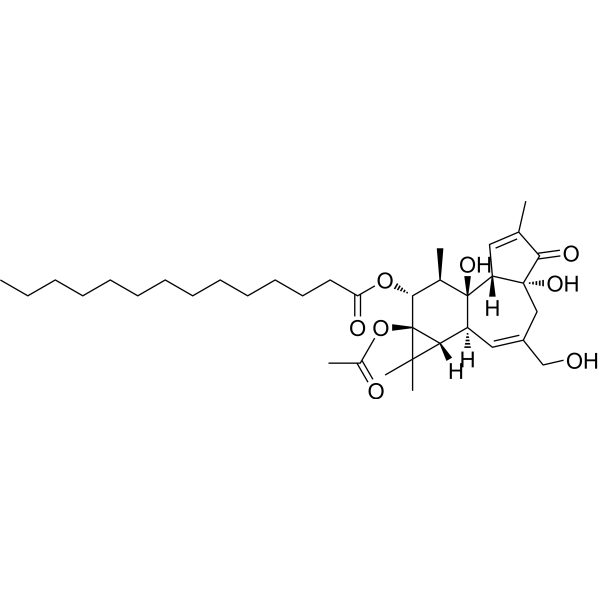
Phorbol 12-myristate 13-acetate -

HY-P70568
IL-13 Protein, Human (HEK293, His) -
HY-P72795
IL-13 Protein, Human -
HY-P7025
IFN-gamma Protein, Human -

HY-D1056
Lipopolysaccharides, from E. coli O55:B5 -
HY-P7016A
GM-CSF Protein, Human -
HY-P7058
TNF-alpha/TNFSF2 Protein, Human -
HY-P7050
M-CSF Protein, Human -
HY-P7044
IL-6 Protein, Human -
HY-P7071
IFN-gamma Protein, Mouse -
HY-P70460
IL-13 Protein, Mouse -
HY-P7080
IL-4 Protein, Mouse (CHO)


Biological Activity
Description
IL-4 Protein is an endogenous agonist of IL-4 receptor (IL-4R), which works through the JAK1/JAK3-STAT6 signaling pathway. It can cooperate with SCF to promote the proliferation of human intestinal mast cells (ED50=100 pg/mL) and enhance the release of mediators such as histamine mediated by IgE receptor. IL-4 Protein can inhibit the production of IL-8 by human monocytes and regulate the secretion of endothelial cell factors. It is mainly used for IL-4R targeted therapy research of tumors (such as malignant pleural mesothelioma) and allergic diseases. IL-4 Protein, Human is a recombinant protein of human IL-4, expressed by E. coli, with tag free.
Background
IL-4 Protein is a cytokine of the interleukin-4 family, a glycoprotein with an α-helical structure, and an endogenous agonist of the IL-4 receptor (IL-4R), binding to the IL-4Rα and γc chains. IL-4 Protein was originally called B cell growth factor BSF1 and was described in the supernatant of activated EL-4 thymoma cells to costimulate with subservient concentrations of anti-IgM. IL-4 Protein exerts biological activity through the JAK1/JAK3-STAT6 signaling pathway, and can promote the proliferation of human intestinal mast cells (ED50=100 pg/mL) in coordination with stem cell factor (SCF), enhance the release of histamine, leukotriene C4, and IL-5 mediated by IgE receptors, inhibit the secretion of IL-8 mRNA and protein by human monocytes stimulated by LPS/TNF-α/IL-1β, and selectively enhance the secretion of IL-6 and inhibit IL-8 by human umbilical vein endothelial cells. Its mechanism of action involves regulating the expression of cell membrane receptors and the activation of downstream transcription factors. It is mainly used in the study of immune regulation mechanisms and targeted therapy of allergic diseases (such as asthma) and tumors (such as malignant pleural mesothelioma), especially the application of IL-4R-targeted cytotoxin fusion proteins (such as IL-4-PE, cpIL-4-PE) in tumor ablation. IL-4 Protein plays an important role in regulating inflammation and immune response. IL-4 Protein induces naive helper T cells to differentiate into Th2 cells. While IL-4 Protein binds to the IL-4 receptor, the IL-4 receptor also binds to another cytokine, IL-13, which may explain the overlapping functions of IL-4 and IL-13[1][2][3][4][5].
Verified Bioactivity
The cell proliferation assay using TF-1 human erythroleukemic cells has an ED50 value of ≤450 pg/mL.
MCE Validation Data
-
Purity - SDS-PAGE
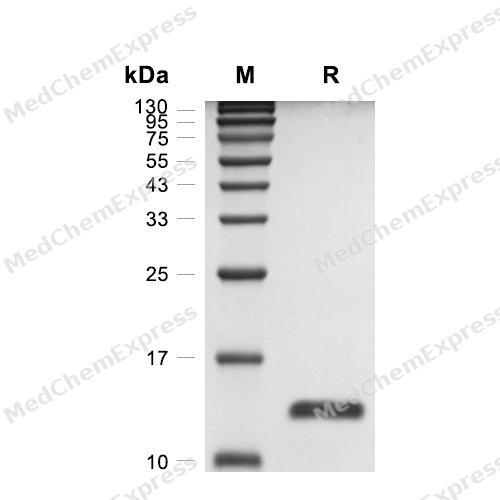
Purity - SDS-PAGE
-
Bioactivity - Cell-Based Assay
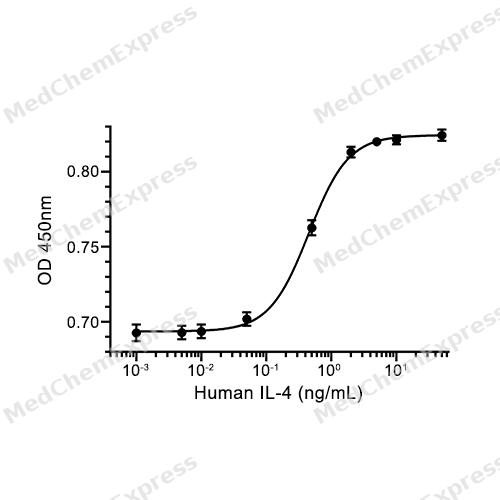
Bioactivity - Cell-Based Assay


Publications (64)
-
Journal Impact Factor
-
Most Recent
-
Mol Cancer
CircABCA1 promotes ccRCC by reprogramming cholesterol metabolism and facilitating M2 macrophage polarization through IGF2BP3-mediated stabilization of SCARB1 mRNA. [Abstract]2025 Jul 19;24(1):199. PMID: 40684174 -
-
ACS Nano
Harnessing Kupffer Cell Metabolic Rewiring: Rapamycin-Gliadin Nanoparticle as a Pivotal Strategy for Immune Tolerance in Celiac Disease. [Abstract]2025 Apr 30. PMID: 40302617 -
J Adv Res
Elevated lactate production exacerbates PM2.5-induced pulmonary fibrosis by stabilizing TGF-β1. [Abstract]2025 Aug 5:S2090-1232(25)00587-9. PMID: 40759348 -
J Nanobiotechnology
An ischemia-homing bioengineered nano-scavenger for specifically alleviating multiple pathogeneses in ischemic stroke. [Abstract]2022 Aug 31;20(1):397. PMID: 36045405 -
Theranostics
C-terminal Fragment Generated by HOIL-1 Cleavage Suppresses Inflammatory Responses of Myeloid Cells to Alleviate Colitis. [Abstract]2026 Feb 11;16(9):4580-4602. PMID: 41799187 -
Adv Sci (Weinh)
Integrin β8 Facilitates Macrophage Infiltration and Polarization by Regulating CCL5 to Promote LUAD Progression. [Abstract]2025 Jan;12(2):e2406865. PMID: 39535362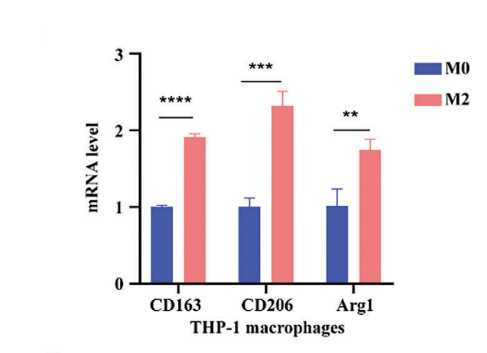
IL-4 Protein, Human purchased from MedChemExpress. Usage Cited in: Adv Sci (Weinh). 2025 Jan;12(2):e2406865. [Abstract]
M2‐like macrophage biomarkers were detected in THP‐1 macrophages treated with IL4 (30 ng/mL; 72 h) via qRT‐PCR.
-
Adv Sci (Weinh)
Versatile Nano-PROTAC-Induced Epigenetic Reader Degradation for Efficient Lung Cancer Therapy. [Abstract]2022 Oct;9(29):e2202039. PMID: 35988145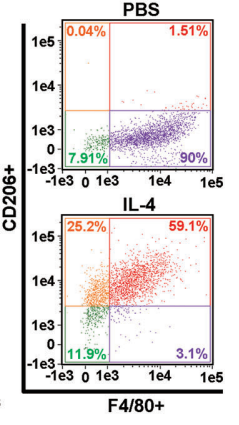
IL-4 Protein, Human purchased from MedChemExpress. Usage Cited in: Adv Sci (Weinh). 2022 Oct;9(29):e2202039. [Abstract]
FACS analysis of IL‐4‐induced (50 ng/mL; 48 h) M2‐like macrophages after incubation with anti‐F4/80 and anti‐CD206 antibodies.
-
Research (Wash D C)
NIR-Activated ICG-Loaded M2 Macrophage Exosomes Ameliorate Periodontitis via Targeting Infection Inflammation and Oxidative Stress. [Abstract]2026 Apr 27:9:1207. PMID: 42051363 -
Cell Death Dis
Circulating mitochondrial DNA promotes M2 polarization of tumor associated macrophages and HCC resistance to sorafenib. [Abstract]2025 Mar 4;16(1):153. PMID: 40038250 -
Cancer Lett
Targeting C/EBPβ/SCD1/C16:1 loop-driven macrophage M2 polarization by Bruceine D improves anti-PD-1 immunotherapy in colorectal cancer. [Abstract]2026 Sep 28:656:218655. PMID: 42250753 -
J Allergy Clin Immunol
Eosinophilic chronic rhinosinusitis with nasal polyps: Squamous metaplasia as an associated remodeling feature. [Abstract]2026 Feb 26:S0091-6749(26)00131-4. PMID: 41759748 -
Allergy
Acetylcholine From Solitary Chemosensory Cell, Not Neuron, Regulates Basal Cell Fate Driving Eosinophilic Chronic Rhinosinusitis With Nasal Polyps. [Abstract]2025 Sep 15. PMID: 40951952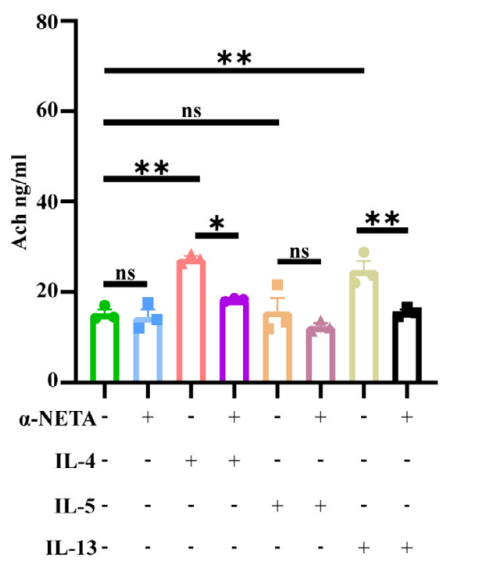
IL-4 Protein, Human purchased from MedChemExpress. Usage Cited in: Allergy. 2025 Sep 15. [Abstract]
Histogram showing Ach concentrations in the basolateral medium of ALI cultures under the following conditions: Untreated, α-NETA-treated, and IL-4 (5 ng/mL; 21 days) /IL-5/IL-13 treatment with or without α-NETA, as measured by ELISA.
-
Cancer Genet
2025 Nov:298-299:285-294. PMID: 41265012 -
Dev Cell
Vimentin intermediate filaments coordinate actin stress fibers and podosomes to determine the extracellular matrix degradation by macrophages. [Abstract]2025 Jun 23;60(12):1669-1685.e6. PMID: 39952241 -
-
Chin Med J (Engl)
IRAK1 promotes gastric cancer progression by activating the PI3K/AKT/mTOR pathway and inducing the M2 polarization of tumor-associated macrophages. [Abstract]2025 Dec 19. PMID: 41424035 -
Cell Chem Biol
2026 Jun 16:S2451-9456(26)00196-0. PMID: 42302779 -
Int J Surg
Single-cell transcriptomics uncovers malignant potential of gallbladder adenomyomatosis and identifies PRDX1+ immunosuppressive macrophages in gallbladder carcinoma. [Abstract]2026 Jan 23. PMID: 41570280 -
Apoptosis
Deciphering macrophage heterogeneity and factors driving M2 polarization in lung adenocarcinoma through single-cell RNA sequencing. [Abstract]2025 Oct 16. PMID: 41099999 -
Int J Biol Macromol
Bacterial cellulose membrane integrating phase-transited lysozyme nanofilm loaded with biguanides for dressing treatment of atopic dermatitis. [Abstract]2025 Aug 21;323(Pt 1):147047. PMID: 40848785 -
EMBO J
2025 Sep;44(17):4772-4802. PMID: 40721684 -
J Ethnopharmacol
Epimedium brevicornum Maxim and Ligustrum lucidum Ait enhance glucocorticoid-associated anti-inflammatory effects in asthma via the cAMP/PKA/CREB signaling pathway. [Abstract]2026 May 10:362:121259. PMID: 41690429 -
Biomater Adv
Engineering fast-acting anti-itching multifunctional dressing with quercetin-CD-MOF for atopic dermatitis. [Abstract]2026 Aug:185:214875. PMID: 41996740 -
Life Sci
Galectin-9 in human trophoblast cells: Implications for maternal-fetal immune balance and pregnancy complications. [Abstract]2026 Mar 1:388:124173. PMID: 41544754 -
Cells
Upregulated Hexokinase-2 in Airway Epithelium Regulates Apoptosis and Drives Inflammation in Asthma via Peptidylprolyl Isomerase F. [Abstract]2025 Jul 1;14(13):1004. PMID: 40643524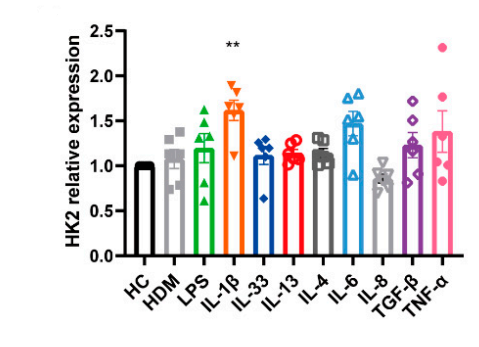
IL-4 Protein, Human purchased from MedChemExpress. Usage Cited in: Cells. 2025 Jul 1;14(13):1004. [Abstract]
HK2 mRNA levels were measured after 48 h of stimulation with IL-4.(20 μg/mL; 48 h)
-
Cells
TcpC Inhibits M1 but Promotes M2 Macrophage Polarization via Regulation of the MAPK/NF-κB and Akt/STAT6 Pathways in Urinary Tract Infection. [Abstract]2022 Aug 28;11(17):2674. PMID: 36078080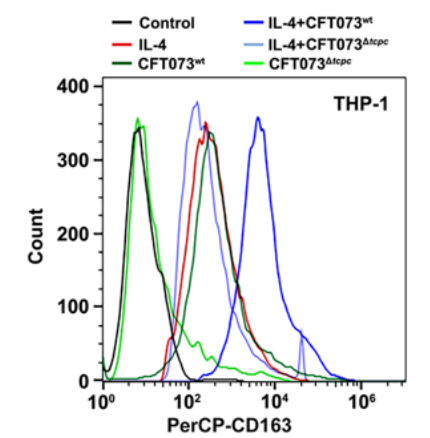
IL-4 Protein, Human purchased from MedChemExpress. Usage Cited in: Cells. 2022 Aug 28;11(17):2674. [Abstract]
IL-4 (20 ng/mL; 24 h) The expression of M2 surface markers CD163 in THP-1 was analyzed by flow cytometry.
-
Cancer Immunol Immunother
Integrating necroptosis and immune landscapes: a multi-omics-derived NecropImmScore stratifies prognosis and therapy in ovarian cancer. [Abstract]2025 Oct 15;74(11):340. PMID: 41094064 -
Commun Biol
Defining gastric cancer ecology: the crucial roles of TREM2+ macrophages and fibroblasts in tumor microenvironments. [Abstract]2025 Mar 28;8(1):514. PMID: 40155473 -
Int Immunopharmacol
Nicotinamide mononucleotide ameliorates hypertriglyceridemia pancreatitis via NAD+/SIRT1-mediated TXNIP suppression and NOTCH pathway for accelerated repair-associated processes. [Abstract]2025 May 16:155:114620. PMID: 40215777 -
Int Immunopharmacol
M2 Macrophage exosomal HOXC13-AS in laryngeal cancer immunity via targeting miR-485-5p/IGF2BP2/PD-L1. [Abstract]2024 Oct 25:140:112742. PMID: 39126735 -
Int Immunopharmacol
Berberine inhibits dendritic cells differentiation in DSS-induced colitis by promoting Bacteroides fragilis. [Abstract]2021 Dec;101(Pt A):108329. PMID: 34749293 -
Invest Ophthalmol Vis Sci
Adalimumab Reprograms M1 Macrophages to Attenuate Th1/Th17 Responses in Behçet's Uveitis and Vogt-Koyanagi-Harada Syndrome. [Abstract]2026 Jun 1;67(6):4. PMID: 42227805 -
Biol Direct
Prognostic and immunological implications of protein kinases in gastric cancer: a focus on hub gene ABL2 and its impact on the polarization of M2 macrophages. [Abstract]2025 Mar 24;20(1):35. PMID: 40128818 -
Arthritis Res Ther
Omentin-1 reduced synovial M1 macrophages through SIRT6 signaling pathway and alleviated knee osteoarthritis response in mice. [Abstract]2025 Nov 18;27(1):216. PMID: 41254811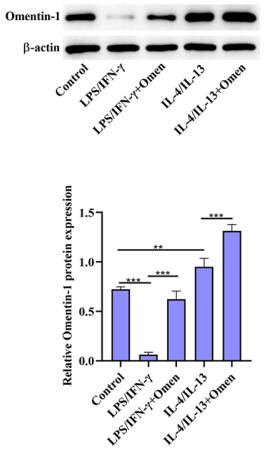
IL-4 Protein, Human purchased from MedChemExpress. Usage Cited in: Arthritis Res Ther. 2025 Nov 18;27(1):216. [Abstract]
Western blot was used to determine the relative expression of Omentin-1 protein in Raw264.7 cells. Omentin-1 promoted the transformation of Raw264.7 cells into the M2 phenotype while inhibiting the conversion to the M1 phenotype. Raw264.7 cells were induced to differentiate into M1 macrophages by LPS (10 pg/mL) and IFN-γ (IFN-gamma Protein, Human (CHO); 20 ng/mL) for 24 h, while they were induced to differentiate into M2 macrophages by IL-4 (20 ng/mL) and IL-13 (20 ng/mL). After 24 h, Omentin-1 was added to the cell culture medium, and the incubation was continued for an additional 24 h
-
Front Cell Dev Biol
Tumor Cell-Derived Exosomal miR-770 Inhibits M2 Macrophage Polarization via Targeting MAP3K1 to Inhibit the Invasion of Non-small Cell Lung Cancer Cells. [Abstract]2021 Jun 14:9:679658. PMID: 34195198 -
Mol Med Rep
MAGL regulates synovial macrophage polarization vis inhibition of mitophagy in osteoarthritic pain. [Abstract]2023 Jun;27(6):117. PMID: 37144506 -
Sci Rep
Transcriptome analysis combined with single-cell analysis identified that APOC1 influences cholesterol transport by macrophages in ccRCC. [Abstract]2025 Oct 6;15(1):34724. PMID: 41053280 -
Mol Cell Biochem
Integrative single-cell and spatial transcriptome analysis reveals the functions of TREM2high macrophages and infarct border dynamics post-myocardial infarction. [Abstract]2025 Aug 1. PMID: 40750734 -
Cell Signal
Single-cell analysis reveals that TCF7L2 facilitates the progression of ccRCC via tumor-associated macrophages. [Abstract]2024 Dec:124:111453. PMID: 39366533 -
Endocr Relat Cancer
2023 Apr 3;30(5):e230012. PMID: 36877531 -
J Trace Elem Med Biol
Iron dysregulation and ferroptosis are associated with pulmonary fibrosis: Insight from idiopathic pulmonary fibrosis, systemic sclerosis, and COVID-19 patients. [Abstract]2025 Oct:91:127728. PMID: 40857901 -
Clin Immunol
Interferon-α2a induces CD4+ T cell apoptosis and suppresses Th1/Th17 responses via upregulating IRF1-mediated PDL1 expression in dendritic cells from Behcet's uveitis. [Abstract]2023 May:250:109303. PMID: 36997038 -
Expert Rev Clin Immunol
AQP9 weakens the cytotoxicity of CD8+ T cells in colon adenocarcinoma by boosting M2 polarization of macrophages under hypoxia conditions. [Abstract]2025 Jun;21(6):803-814. PMID: 40329438 -
Breast Cancer (Dove Med Press)
IFI44 Orchestrates an IL-10-Driven M2 Macrophage Program in Breast Cancer: An Immune Prognostic Signature. [Abstract]2026 Apr 8:18:579301. PMID: 41982222 -
Exp Cell Res
Pseudane V alleviates ox-LDL-induced macrophage M1 polarization by inhibiting m6A modification of PPARGC1A. [Abstract]2025 Nov 25;454(2):114842. PMID: 41297622 -
Immun Inflamm Dis
PCSK9 promotes T helper 1 and T helper 17 cell differentiation by activating the nuclear factor-κB pathway in ankylosing spondylitis. [Abstract]2023 May;11(5):e870. PMID: 37249282 -
Biochem Biophys Rep
HMGB1 impairs nasal mucosa epithelial barrier function in allergic rhinitis by promoting BECN1-mediating autophagy. [Abstract]2025 Nov 11:44:102351. PMID: 41311371 -
Tissue Cell
Exosomes secreted from M2-polarized macrophages inhibit osteoclast differentiation via CYLD. [Abstract]2025 Apr:93:102645. PMID: 39671756 -
Tissue Cell
Bromodomain containing 4 inhibition combats gastric precancerous lesions via modulating macrophage polarization. [Abstract]2024 Dec:91:102580. PMID: 39396437 -
Biochim Biophys Acta Gen Subj
2026 Jan;1870(1):130881. PMID: 41197918 -
PLoS One
Tumor-associated M2 macrophages promote prostate cancer invasion through the M-CSF-PCLAF pathway. [Abstract]2026 Jun 22;21(6):e0351858. PMID: 42329914 -
Hum Cell
METTL14 knockdown augmented the polarization of M2-like macrophages to promote acute myeloid leukemia progression. [Abstract]2025 Sep 30;38(6):168. PMID: 41026373 -
Gene
Exosomes from polarized Microglia: Proteomic insights into potential mechanisms affecting intracerebral hemorrhage. [Abstract]2025 Jan 30:935:149080. PMID: 39510328 -
Biochem Biophys Res Commun
TPI1 promotes tumor progression and M2 macrophage polarization: Integrated pan-cancer and lung adenocarcinoma insights. [Abstract]2026 Jan 25:797:153099. PMID: 41447883 -
Hum Immunol
Gpx1 induces M2 polarization of macrophages, contributing to doxorubicin resistance in triple-negative breast cancer. [Abstract]2025 Aug 19;86(5):111566. PMID: 40834701 -
Anticancer Drugs
Thrombospondin-2 induces M2 macrophage polarization through fatty acid metabolism to drive lung adenocarcinoma proliferation. [Abstract]2025 Jul 1;36(6):459-467. PMID: 40053399 -
Folia Histochem Cytobiol
Exosomal Lnc-DLK1-35 reprograms microglia into a pro-tumorigenic phenotype via a non-canonical cytokine signature to promote glioblastoma progression and chemoresistance. [Abstract]2026;64(1):48-59. PMID: 41811084 -
Biochem Genet
Silencing THBS1 in M2 Macrophages Exerts an Inhibitory Effect on Tongue Squamous Cell Carcinoma by Suppressing TGF-β Pathway. [Abstract]2025 Jul 1. PMID: 40591142 -
Transl Androl Urol
Silencing SPP1 in M2 macrophages inhibits the progression of castration-resistant prostate cancer via the MMP9/TGFβ1 axis. [Abstract]2024 Jul 31;13(7):1239-1255. PMID: 39100821 -
-
-
-


Technical Parameters
-
Species Human
-
Source E. coli
-
Tag Tag Free
-
Accession
P05112-1 (H25-S153)
-
Molecular Construction
-
N-term
-
IL-4 (H25-S153)
Accession # P05112-1 -
C-term
-
-
Protein Length
Full Length of Isoform-1
-
Synonyms
IL4; B_cell Stimulatory Factor 1; Interleukin 4; B-Cell Stimulatory Factor 1; IL-4; B Cell Growth Factor 1; Lymphocyte Stimulatory Factor 1; Binetrakin; Interleukin-4; Pitrakinra; BCGF-1; MGC79402; BCGF1; BSF-1; BSF1
-
AA Sequence
HKCDITLQEIIKTLNSLTEQKTLCTELTVTDIFAASKNTTEKETFCRAATVLRQFYSHHEKDTRCLGATAQQFHRHKQLIRFLKRLDRNLWGLAGLNSCPVKEANQSTLENFLERLKTIMREKYSKCSS
-
Predicted Molecular Mass
15.1 kDa
-
Molecular Weight
Approximately 13-14 kDa, based on SDS-PAGE under reducing conditions.
-
Purity
≥ 95%, as determined by reducing SDS-PAGE.


Product Properties
Lyophilized powder
1.Lyophilized from a 0.22 μm filtered solution of 20 mM Tris-HCl, 150 mM NaCl, pH 7.2.
2.Lyophilized from a 0.22 μm filtered solution of 50 mM Tris-HCl, 300 mM NaCl, pH 8.0.
3.Lyophilized from a 0.22 μm filtered solution of 50 mM Tris-HCl, 300 mM NaCl, pH 8.0, 5% trehalose.
4.Lyophilized from a 0.22 μm filtered solution of PBS, pH 7.4, 8% trehalose.
Please refer to the lot-specific COA for specific buffer information.
Note: For SPR assay, please replace the buffer. Primary amine components (e.g., Tris, imidazole) can affect protein-coupled chips.
<1 EU/μg, determined by LAL method.
It is not recommended to reconstitute to a concentration less than 100 μg/mL in ddH2O. For long term storage it is recommended to add a carrier protein (0.1% BSA, 5% HSA, 10% FBS or 5% Trehalose).
Stored at -20°C for 2 years from date of receipt. After reconstitution, it is stable at 4°C for 1 week or -20°C for longer (with carrier protein). It is recommended to freeze aliquots at -20°C or -80°C for extended storage.
Room temperature in continental US; may vary elsewhere.


Documentation
-
Data Sheet (264 KB)
-
SDS (252 KB)
- English - EN (252 KB)
- Français - FR (252 KB)
- Deutsch - DE (252 KB)
- Norwegian - NO (252 KB)
- Español - ES (252 KB)
- Swedish - SV (252 KB)
- Italian - IT (252 KB)
- Korean - KR (252 KB)
- Portuguese - PT (252 KB)
-
Handling Instructions (2659 KB)


References
[1]. Bischoff SC, et al. IL-4 enhances proliferation and mediator release in mature human mast cells. Proc Natl Acad Sci U S A. 1999 Jul 6;96(14):8080-5. [Content Brief]
[2]. Standiford TJ, et al. IL-4 inhibits the expression of IL-8 from stimulated human monocytes. J Immunol. 1990 Sep 1;145(5):1435-9. [Content Brief]
[4]. Ishige K, et al. Potent in vitro and in vivo antitumor activity of interleukin-4-conjugated Pseudomonas exotoxin against human biliary tract carcinoma. Int J Cancer. 2008 Dec 15;123(12):2915-22. [Content Brief]
[5]. Beseth BD, et al. Interleukin-4 receptor cytotoxin as therapy for human malignant pleural mesothelioma xenografts. Ann Thorac Surg. 2004 Aug;78(2):436-43; discussion 436-43. [Content Brief]

Calculators
Concentration (start) × Volume (start) = Concentration (final) × Volume (final)


 Powered by Bioz

