



Glycosyl Donors
- 1
- 2
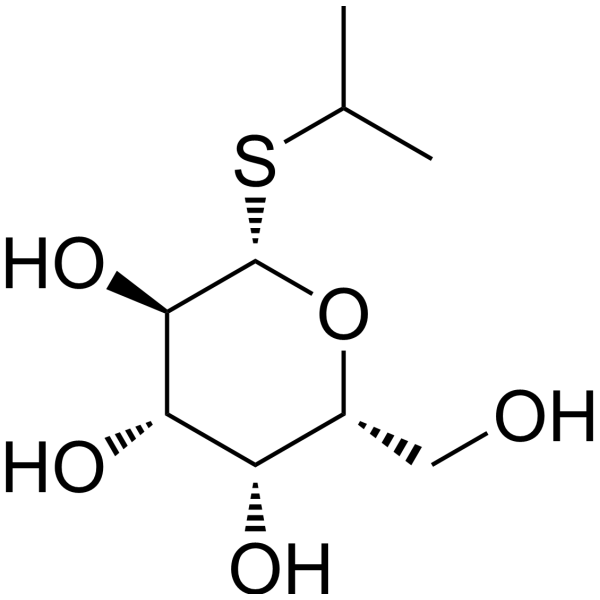
- Formula: C9H18O5S
- Molecular Weight: 238.30
IPTG is a molecular mimic of allolactose, a lactose metabolite that triggers transcription of the lac operon, and it is therefore used to induce protein expression where the gene is under the control of the lac operator.

- Formula: C13H17BrO9
- Molecular Weight: 397.17
Acetobromo-α-D-glucuronic acid methyl ester, 98% is a glucuronosyl donor. Acetobromo-α-D-glucuronic acid methyl ester, 98% is applicable to the synthesis of other compounds.
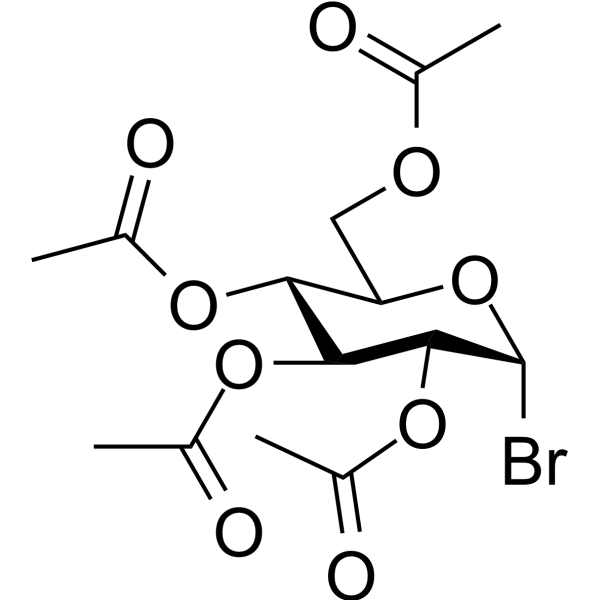
- Formula: C14H19BrO9
- Molecular Weight: 411.20
α-Acetobromoglucose, contains 1% CaCO3 as stabilizer (Acetobromo-α-D-glucose, contains 1% CaCO3 as stabilizer) is a glycosyl donor that can be used for the synthesis of other active compounds.

- Formula: C22H31NO14
- Molecular Weight: 533.48
N-Acetylneuraminic Acid Methyl Ester 2,4,7,8,9-Pentaacetate is a drug intermediate for synthesis of various active compounds.
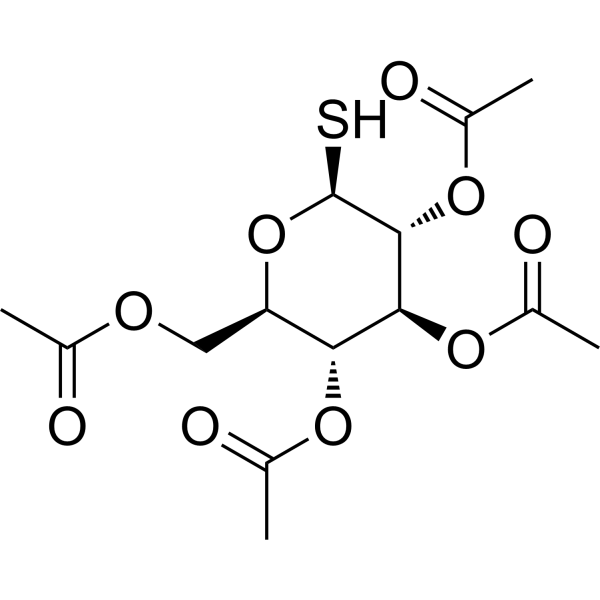
- Formula: C14H20O9S
- Molecular Weight: 364.37
1-Thio-beta-D-glucose tetraacetate exhibits cytotoxicity in cells HeLa and human ocular lens epithelium CECH with IC50s of >250 and >200 μM. 1-Thio-beta-D-glucose tetraacetate reveals moderate anticancer property.

- Formula: C16H23NO10
- Molecular Weight: 389.35
β-D-Glucopyranose,2-(acetylamino)-2-deoxy,1,3,4,6-tetraacetate is a class of biochemical reagents used in glycobiology research. Glycobiology studies the structure, synthesis, biology, and evolution of sugars. It involves carbohydrate chemistry, enzymology of glycan formation and degradation, protein-glycan recognition, and the role of glycans in biological systems. This field is closely related to basic research, biomedicine, and biotechnology.
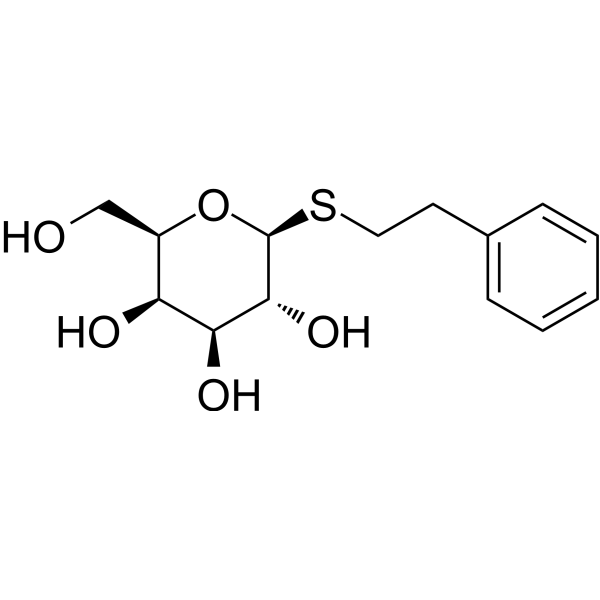
- Formula: C14H20O5S
- Molecular Weight: 300.37
2-Phenylethyl β-D-thiogalactoside is a biochemical reagent that can be used as a biological material or organic compound for life science related research.

- Formula: C14H22ClNO9
- Molecular Weight: 383.78
1,3,4,6-Tetra-O-acetyl-2-amino-2-desoxy-β-D-glucopyranose (hydrochloride) is a class of biochemical reagents used in glycobiology research. Glycobiology studies the structure, synthesis, biology, and evolution of sugars. It involves carbohydrate chemistry, enzymology of glycan formation and degradation, protein-glycan recognition, and the role of glycans in biological systems. This field is closely related to basic research, biomedicine, and biotechnology.

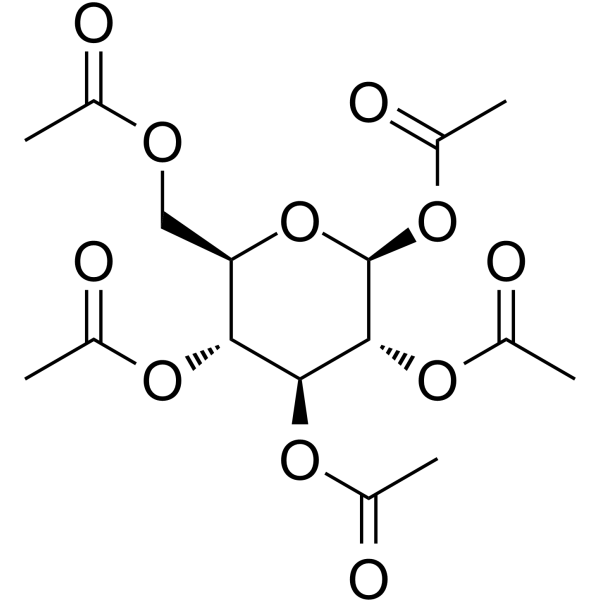
- Formula: C14H20O10
- Molecular Weight: 348.30
1,2,3,4-Tetra-O-acetyl-β-D-glucopyranose, 96% (1,2,3,4-Tetra-O-acetyl-beta-D-glucopyranose, 96%) can be used in glycobiology research to study glycosylation mechanisms, glycosidic bond formation, and stereochemistry.

- Formula: C16H22O11
- Molecular Weight: 390.34
α-D-Galactose pentaacetate (Pentaacetyl-α-D-galactopyranose) is a biochemical reagent that can be used as a biological material or organic compound for life science related research.

- Formula: C14H20ClNO8
- Molecular Weight: 365.76
Chloro 2-acetamido-2-deoxy-3,4,6-tri-O-acetyl-α-D-glucopyranose is a class of biochemical reagents used in glycobiology research. Glycobiology studies the structure, synthesis, biology, and evolution of sugars. It involves carbohydrate chemistry, enzymology of glycan formation and degradation, protein-glycan recognition, and the role of glycans in biological systems. This field is closely related to basic research, biomedicine, and biotechnology.

- Formula: C16H22O11
- Molecular Weight: 390.34
α-D-Glucose pentaacetate (Penta-O-acetyl-α-D-glucopyranose) is a synthetic sugar compound.
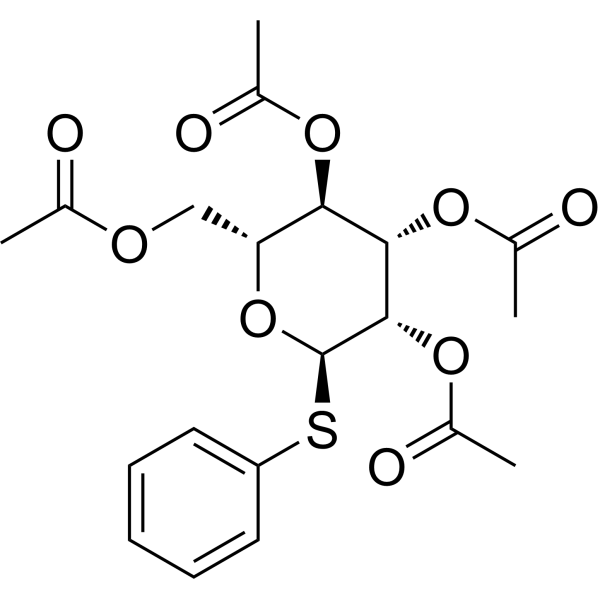
- Formula: C20H24O9S
- Molecular Weight: 440.46
Phenyl 1-thio-α-D-mannopyranoside 2,3,4,6-tetraacetate is a biochemical reagent that can be used as a biological material or organic compound for life science related research.

- Formula: C21H26O8S
- Molecular Weight: 438.49
Phenyl 2,4, 6-tri-o-acetyl-3-o-allyl-β-d-Thiogalactopyranoside (Gal[246Ac,3All]-β-SPh) is a class of biochemical reagents used for glycobiology research. Glycobiology studies the structure, synthesis, biology, and evolution of sugars. It deals with carbohydrate chemistry, glycan formation and degradation enzymology, protein-glycan recognition, and the role of glycans in biological systems. The field is closely related to basic research, biomedicine and biotechnology.

- Formula: C35H36O6S
- Molecular Weight: 584.72
Phenyl 2-O-acetyl-3,4,6-tri-O-benzyl-1-thio-bD-galactopyranoside is a class of biochemical reagents used in glycobiology research. Glycobiology studies the structure, synthesis, biology and evolution of sugars. It involves carbohydrate chemistry, enzymology of glycan formation and degradation, protein-Glycan recognition and the role of glycans in biological systems. This field is closely related to basic research, biomedicine and biotechnology.

- Formula: C21H23NO9S
- Molecular Weight: 465.47
Methyl 3,4,6-tri-O-acetyl-2-deoxy-2-phthalimido-1-thio-β-D-glucopyranoside is a class of biochemical reagents used in glycobiology research. Glycobiology studies the structure, synthesis, biology, and evolution of sugars. It involves carbohydrate chemistry, enzymology of glycan formation and degradation, protein-glycan recognition, and the role of glycans in biological systems. This field is closely related to basic research, biomedicine, and biotechnology.

- Formula: C16H20Cl3NO10
- Molecular Weight: 492.69
2,3,4,6-Tetra-O-acetyl-α-D-mannopyranosyl trichloroacetimidate is a class of biochemical reagents used in glycobiology research. Glycobiology studies the structure, synthesis, biology, and evolution of sugars. It involves carbohydrate chemistry, enzymology of glycan formation and degradation, protein-glycan recognition, and the role of glycans in biological systems. This field is closely related to basic research, biomedicine, and biotechnology.

- Formula: C21H26O8S
- Molecular Weight: 438.49
Phenyl 2,4,6-tri-O-acetyl-3-O-allyl-1-thio-β-D-glucopyranoside is a class of biochemical reagents used in glycobiology research. Glycobiology studies the structure, synthesis, biology, and evolution of sugars. It involves carbohydrate chemistry, enzymology of glycan formation and degradation, protein-glycan recognition, and the role of glycans in biological systems. This field is closely related to basic research, biomedicine, and biotechnology.

- Formula: C19H22O9S
- Molecular Weight: 426.44
Methyl (phenyl 2,3,4-Tri-O-acetyl-1-thio-β-D-glucopyranosid)uronate is a class of biochemical reagents used in glycobiology research. Glycobiology studies the structure, synthesis, biology, and evolution of sugars. It involves carbohydrate chemistry, enzymology of glycan formation and degradation, protein-glycan recognition, and the role of glycans in biological systems. This field is closely related to basic research, biomedicine, and biotechnology.
- 1
- 2



