1. Search Result
Search Result
Results for "

Aβ oligomer toxicity

" in MedChemExpress (MCE) Product Catalog:

20

Inhibitors & Agonists

6

Peptides

1

Inhibitory Antibodies

3

Natural
Products

2

Isotope-Labeled Compounds

Targets Recommended:
Cat. No. Product Name Target Research Areas Chemical Structure
  • HY-P1363
    β-Amyloid (1-42), human TFA
    Maximum Cited Publications
    24 Publications Verification

    Amyloid β-peptide (1-42) (human) TFA

    Amyloid-β Neurological Disease
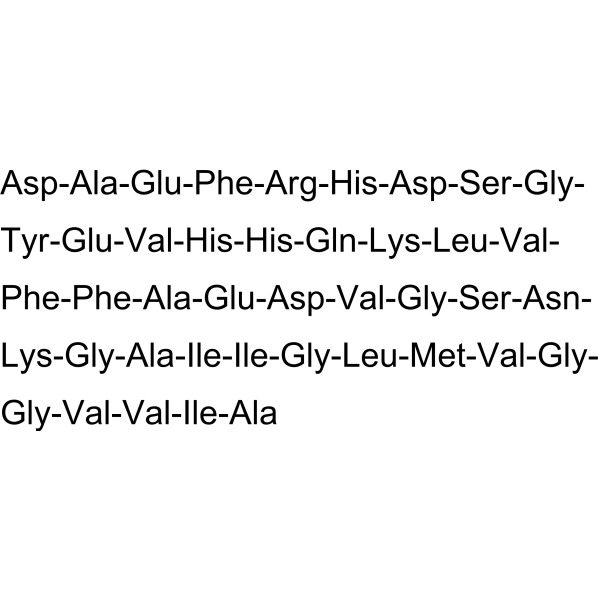
    β-Amyloid (1-42) (Amyloid β-peptide (1-42), human TFA, a 42-amino acid peptide that has not been treated with HFIP, is a brain-penetrant amyloid protein fragment, which can be used in research on Alzheimer's disease and Down’s syndrome. β-Amyloid (1-42), human TFA remaining as a monomer exhibits antioxidant and neuroprotective effects. β-Amyloid (1-42), human TFA, after being monomericized by HFIP and dissolved in DMSO to form the stock solution, on the one hand, can form soluble oligomers (AβOs) when incubated at 4 °C, which have synaptic toxicity and neurotoxicity; on the other hand, it can be incubated at 37 °C to form insoluble fibrils, with lower neurotoxicity, and participating in the oxidative damage process. Aβ42 oligomers bind to various neuronal surface receptors (such as PrPc, mGluR5, NMDA receptors, etc.), triggering oxidative stress, calcium homeostasis imbalance, and synaptic toxicity via activating downstream signaling pathways, leading to neuronal dysfunction and death .
    β-Amyloid (1-42), human TFA
  • HY-P1363A
    β-Amyloid (1-42), human
    Maximum Cited Publications
    24 Publications Verification

    Amyloid β-peptide (1-42) (human)

    Amyloid-β Neurological Disease
    β-Amyloid (1-42) (Amyloid β-peptide (1-42)), human, a 42-amino acid peptide that has not been treated with HFIP, is a brain-penetrant amyloid protein fragment, which can be used in research on Alzheimer's disease and Down’s syndrome. β-Amyloid (1-42), human remaining as a monomer exhibits antioxidant and neuroprotective effects. β-Amyloid (1-42), human, after being monomericized by HFIP and dissolved in DMSO to form the stock solution, on the one hand, can form soluble oligomers (AβOs) when incubated at 4 °C, which have synaptic toxicity and neurotoxicity; on the other hand, it can be incubated at 37 °C to form insoluble fibrils, with lower neurotoxicity, and participating in the oxidative damage process. Aβ42 oligomers bind to various neuronal surface receptors (such as PrPc, mGluR5, NMDA receptors, etc.), triggering oxidative stress, calcium homeostasis imbalance, and synaptic toxicity via activating downstream signaling pathways, leading to neuronal dysfunction and death .
    β-Amyloid (1-42), human
  • HY-P1363B
    β-Amyloid (1-42), human, HFIP-treated
    Maximum Cited Publications
    24 Publications Verification

    Amyloid-β Neurological Disease
    β-Amyloid (1-42), human, HFIP-treated, a 42-amino acid peptide that has been treated with HFIP from β-Amyloid (1-42), human (HY-P1363A), is a brain-penetrant amyloid protein fragment, which can be used in research on Alzheimer's disease and Down’s syndrome. β-Amyloid (1-42), human, HFIP-treated remaining as a monomer exhibits antioxidant and neuroprotective effects. β-Amyloid (1-42), human, HFIP-treated, after being dissolved in DMSO to form the stock solution, on the one hand, can form soluble oligomers (AβOs) when incubated at 4°C, which have synaptic toxicity and neurotoxicity; on the other hand, it can be incubated at 37°C to form insoluble fibrils, with lower neurotoxicity, and participating in the oxidative damage process. Aβ42 oligomers bind to various neuronal surface receptors (such as PrPc, mGluR5, NMDA receptors, etc.), triggering oxidative stress, calcium homeostasis imbalance, and synaptic toxicity via activating downstream signaling pathways, leading to neuronal dysfunction and death .
    β-Amyloid (1-42), human, HFIP-treated
  • HY-101855

    Anle138b

    Amyloid-β Neurological Disease
    Emrusolmin (Anle138b), an oligomeric aggregation inhibitor, blocks the formation of pathological aggregates of prion protein (PrPSc) and of α-synuclein (α-syn). Emrusolmin strongly inhibits oligomer accumulation, neuronal degeneration, and disease progression in vivo. Emrusolmin has low toxicity and an excellent oral bioavailability and blood-brain-barrier penetration. Emrusolmin blocks Aβ channels and rescues disease phenotypes in a mouse model for amyloid pathology .
    Emrusolmin
  • HY-W143216

    Monomethylthionine

    Amyloid-β Tau Protein Neurological Disease
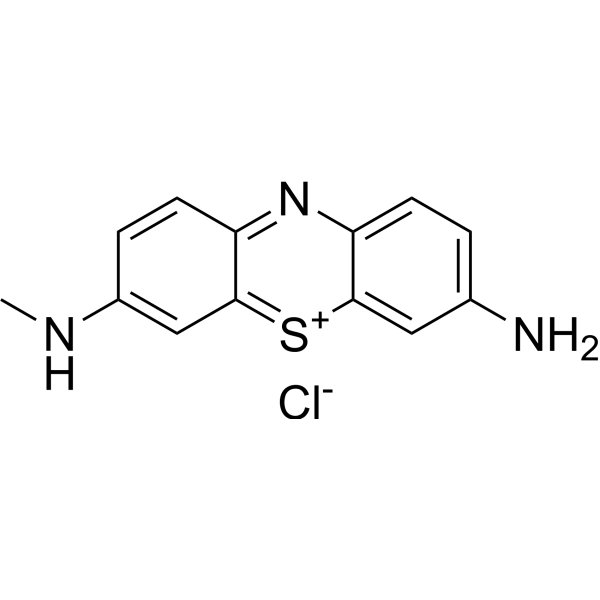
    Azure C acts as a tau oligomer modulator and Aβ42 oligomerization inhibitor. It regulates hsp70 ATPase activity, thereby mediating the clearance of tau protein. Azure C reduces the levels of toxic tau oligomers by promoting the formation of non-toxic tau aggregates, rescues neuroblastoma cells from tau oligomer-induced toxicity, and binds to and inhibits Aβ42 oligomerization without suppressing its fibrillization. Azure C is generated via sequential oxidation of methylene blue or Azure B through a horseradish peroxidase-mediated reaction, and accumulates in HRP reaction media. Azure C can be used in studies related to tauopathies, including Alzheimer's disease .
    Azure C
  • HY-W010041

    α-synuclein Amyloid-β Neurological Disease
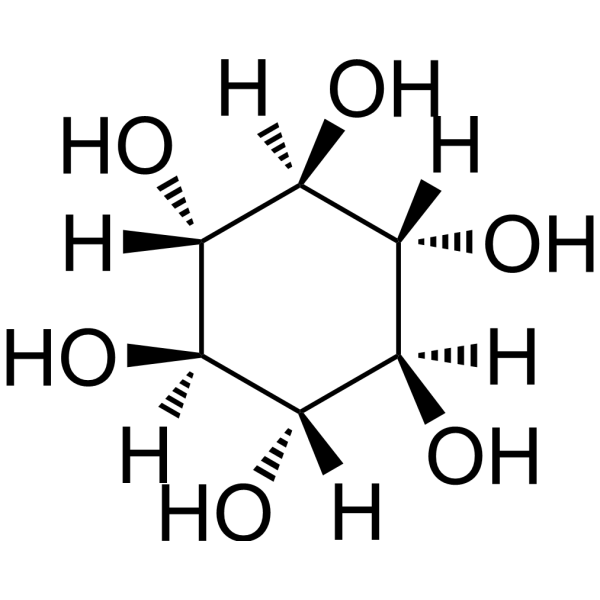
    Scyllo-Inositol is an inhibitor that targets the aggregation of misfolded proteins (such as α-synuclein and Amyloid-β), is orally effective, and can cross the blood-brain barrier. Scyllo-Inositol can selectively bind to and stabilize non-toxic oligomers, preventing them from converting into toxic fibers, exerting protein homeostasis regulation and neuroprotective activity. Scyllo-Inositol binds to the hydrophobic region of pathogenic proteins, inhibits protein aggregation, and promotes lysosome- and proteasome-mediated degradation pathways, thereby reducing neurotoxicity. Scyllo-Inositol can be used in the study of neurodegenerative diseases such as Parkinson's disease, Alzheimer's disease, and Huntington's disease .
    Scyllo-Inositol
  • HY-148913

    CaMK Neurological Disease
    CS587 is a specific inhibitor of CaMK1D with neurocytotoxicity at 10 μM. CS587 modulates the sensitivity of neuronal cells to Aβ oligomer toxicity .
    CS587
  • HY-P10578

    Amyloid-β Neurological Disease
    SEN 304 is an Aβ aggregation inhibitor. SEN 304 can bind directly to Aβ(1-42), delay β-sheet formation and promote aggregation of toxic oligomers into a nontoxic form. SEN 304 can be used for research of Alzheimer’s disease .
    SEN 304
  • HY-177906

    Fluorescent Dye Amyloid-β Neurological Disease
    h-FTAA is a luminescent conjugated oligothiophene (LCO) probe. h-FTAA can selectively bind to amyloid protein aggregates (such as plaques) and distinguish different conformations of the protein aggregates through changes in fluorescence signals. h-FTAA significantly reduces the neurotoxicity of Aβ1-42 and the Arctic mutant Aβ (AβArc), thereby protecting SH-SY5Y neuroblastoma cells. h-FTAA can be used to dynamically track the formation and maturation process of Aβ plaques .
    h-FTAA
  • HY-174305

    Amyloid-β Neurological Disease
    Aβ42-IN-7 (Compound CT-01) is a brain-penetrant and selective amyloid-β42 (Aβ42) inhibitor. Aβ42-IN-7 inhibits Aβ42’s assembly into neurotoxic soluble oligomers and extracellular fibrillary aggregates. Aβ42-IN-7 exerts neuroprotective effects by reducing amyloid-mediated neuronal toxicity. Aβ42-IN-7 can be used in research on Alzheimer’s disease (AD) .
    Aβ42-IN-7
  • HY-P1363S1

    Isotope-Labeled Compounds Amyloid-β Neurological Disease
    β-Amyloid (1-42), human, Ala( 13C3, 15N) TFA is the 13C and 15N-labeled β-Amyloid (1-42), human (HY-P1363A). β-Amyloid (1-42) (Amyloid β-peptide (1-42)), human, a 42-amino acid peptide that has not been treated with HFIP, is a brain-penetrant amyloid protein fragment, which can be used in research on Alzheimer's disease and Down’s syndrome. β-Amyloid (1-42), human remaining as a monomer exhibits antioxidant and neuroprotective effects. β-Amyloid (1-42), human, after being monomericized by HFIP and dissolved in DMSO to form the stock solution, on the one hand, can form soluble oligomers (AβOs) when incubated at 4 °C, which have synaptic toxicity and neurotoxicity; on the other hand, it can be incubated at 37 °C to form insoluble fibrils, with lower neurotoxicity, and participating in the oxidative damage process. Aβ42 oligomers bind to various neuronal surface receptors (such as PrPc, mGluR5, NMDA receptors, etc.), triggering oxidative stress, calcium homeostasis imbalance, and synaptic toxicity via activating downstream signaling pathways, leading to neuronal dysfunction and death .
    β-Amyloid (1-42), human, Ala(13C3,15N) TFA
  • HY-N6640

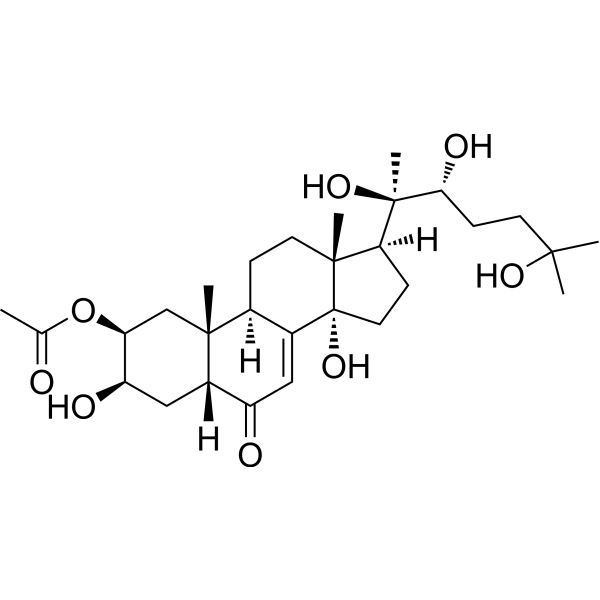
    20-Hydroxyeedysone 2-acetate

    Amyloid-β Neurological Disease
    2-O-Acetyl-20-hydroxyecdysone, an ecdysterones in insects and terrestrial plants, inhibits amyloid-β42 (Aβ42)-induced cytotoxicity. 2-O-Acetyl-20-hydroxyecdysone could decrease Aβ oligomer formation through promotion of fibrogenesis, transforming Aβ oligomers to the low-toxicity fibrils .
    2-O-Acetyl-20-hydroxyecdysone
  • HY-13325

    Drug Derivative Amyloid-β Neurological Disease
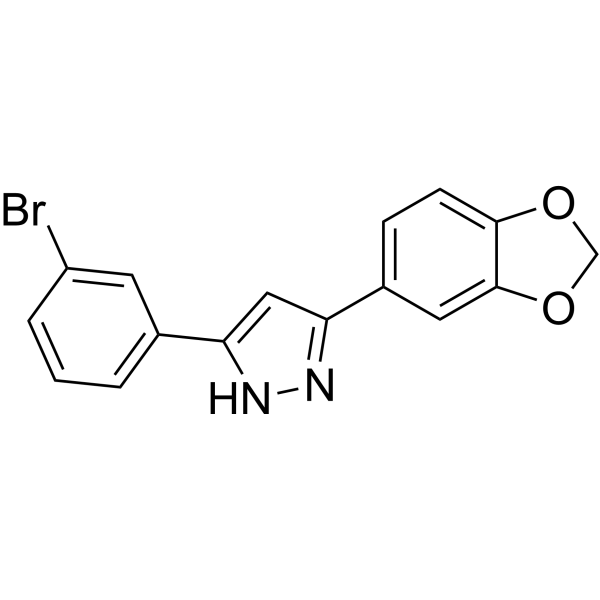
    Aβ aggregation modulator-1 is a stimulator of amyloid-β (Aβ) fibrillogenesis. Aβ aggregation modulator-1 binds hydrophobic residues in Aβ peptides and stabilizes β-sheet-rich protofibrils and fibrils. Aβ aggregation modulator-1 accelerates Aβ polymerization and reduces concentrations of small, toxic Aβ oligomers in heterogeneous aggregation reactions. Aβ aggregation modulator-1 suppresses long-term potentiation (LTP) inhibition by Aβ oligomers in hippocampal brain slices. Aβ aggregation modulator-1 can be used for the study of Alzheimer's disease (AD) .
    Aβ aggregation modulator-1
  • HY-168052

    Amyloid-β Cholinesterase (ChE) Neurological Disease
    hAChE-IN-9 (compound 7i) is a selective inhibitor of human acetylcholinesterase (hAChE) with IC50 of 0.05 μM and 2.85 μM for AChE and BChE, respectively. hAChE-IN-9 modulates toxic Aβ oligomer forms into non-toxic ones and has antioxidant and neuroprotective effects against Aβ-induced toxicity. hAChE-IN-9 can be used for the study of Alzheimer's disease .
    hAChE-IN-9
  • HY-P991073

    Amyloid-β Neurological Disease
    MEDI-1814 is a fully human IgG1 antibody that targets the C terminus of Aβ42. MEDI-1814 binds to and sweeps away the circulated Aβ peptides, hence, restricting them from aggregating into toxic oligomers. MEDI-1814 can be used for the study of Alzheimer's diseases. The isotype control for MEDI-1814 can refer to Human IgG1 kappa, Isotype Control (HY-P99001) .
    MEDI-1814
  • HY-118243

    Amyloid-β Others
    KMS88009 is a potent small molecule that directly interferes with the formation of amyloid-β oligomers, thereby preserving cognitive behavior when used preventively and reversing cognitive behavior decline when used therapeutically. Oral administration of KMS88009 around the onset of Alzheimer's disease symptoms significantly reduced the assembly of amyloid-β oligomers and improved cognitive behavior in the APP/PS1 double transgenic mouse model. This unique dual mode of action suggests that KMS88009 may be a powerful therapeutic candidate for the treatment of Alzheimer's disease. In an evaluation, the physicochemical properties, pharmacokinetics and toxicity of this anti-amyloidogenic small molecule KMS88009 were studied, as well as post-mortem analysis of APP/PS1 TG mice after behavioral testing.
    KMS88009
  • HY-W010041R

    Reference Standards α-synuclein Amyloid-β Neurological Disease
    Scyllo-Inositol is an inhibitor that targets the aggregation of misfolded proteins (such as α-synuclein and Amyloid-β), is orally effective, and can cross the blood-brain barrier. Scyllo-Inositol can selectively bind to and stabilize non-toxic oligomers, preventing them from converting into toxic fibers, exerting protein homeostasis regulation and neuroprotective activity. Scyllo-Inositol binds to the hydrophobic region of pathogenic proteins, inhibits protein aggregation, and promotes lysosome- and proteasome-mediated degradation pathways, thereby reducing neurotoxicity. Scyllo-Inositol can be used in the study of neurodegenerative diseases such as Parkinson's disease, Alzheimer's disease, and Huntington's disease .
    Scyllo-Inositol (Standard)
  • HY-W707693

    Isotope-Labeled Compounds Amyloid-β α-synuclein Neurological Disease
    Scyllo-Inositol-d6 is the deuterium labeled Scyllo-Inositol (HY-W010041). Scyllo-Inositol is an inhibitor that targets the aggregation of misfolded proteins (such as α-synuclein and Amyloid-β), is orally effective, and can cross the blood-brain barrier. Scyllo-Inositol can selectively bind to and stabilize non-toxic oligomers, preventing them from converting into toxic fibers, exerting protein homeostasis regulation and neuroprotective activity. Scyllo-Inositol binds to the hydrophobic region of pathogenic proteins, inhibits protein aggregation, and promotes lysosome- and proteasome-mediated degradation pathways, thereby reducing neurotoxicity. Scyllo-Inositol can be used in the study of neurodegenerative diseases such as Parkinson's disease, Alzheimer's disease, and Huntington's disease .
    Scyllo-Inositol-d6
  • HY-114613

    Amyloid-β α-synuclein CGRP Receptor Amylin Receptor Neurological Disease Inflammation/Immunology
    D-Trp-Aib is a dipeptide and amyloid-β inhibitor with a Kd of 29.6 nM. D-Trp-Aib triggers formation of non-toxic, non-β-sheet, amorphous amyloid β clusters from misfolded amyloid β monomers and toxic amyloid β oligomers, and reduces toxic amyloid β1-42 deposits. D-Trp-Aib inhibits amyloid fibril formation of α‑synuclein, IAPP and calcitonin. D-Trp-Aib can be used for the research of Alzheimer's disease .
    D-Trp-Aib
  • HY-101855R

    Anle138b (Standard)

    Reference Standards Amyloid-β Neurological Disease
    Emrusolmin (Standard) (Anle138b (Standard)) is the analytical standard of Emrusolmin (HY-101855). This product is intended for research and analytical applications. Emrusolmin (Anle138b), an oligomeric aggregation inhibitor, blocks the formation of pathological aggregates of prion protein (PrPSc) and of α-synuclein (α-syn). Emrusolmin strongly inhibits oligomer accumulation, neuronal degeneration, and disease progression in vivo. Emrusolmin has low toxicity and an excellent oral bioavailability and blood-brain-barrier penetration. Emrusolmin blocks Aβ channels and rescues disease phenotypes in a mouse model for amyloid pathology .
    Emrusolmin (Standard)

Inquiry Online

Your information is safe with us. * Required Fields.

Salutation


Country or Region *

Applicant Name *


Organization Name *

Department *


Email Address *


Product Name *

Cat. No.


Requested quantity *

Phone Number *


Remarks

Inquiry Online

Inquiry Information

Product Name:
Cat. No.:
Quantity:
MCE Japan Authorized Agent:

