1. Search Result
Search Result
Results for "

Diet-induced mice model

" in MedChemExpress (MCE) Product Catalog:

10

Inhibitors & Agonists

2

Peptides

3

Natural
Products

Cat. No. Product Name Target Research Areas Chemical Structure
  • HY-128850

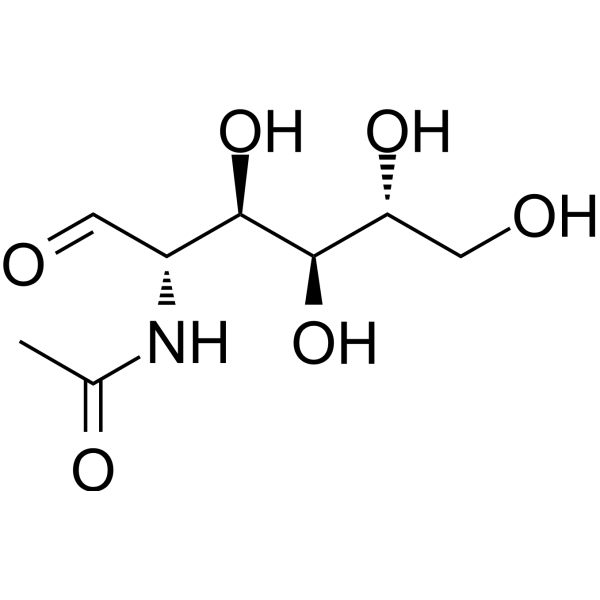
    N-Acetylmannosamine; ManNAc

    Endogenous Metabolite Cardiovascular Disease Neurological Disease
    N-Acetyl-D-mannosamine (ManNAc) is an oral active sialic acid precursor that can prevent hypertension by increasing sialylation of IgG, making it a promising candidate for cardiovascular disease research. Additionally, N-Acetyl-D-mannosamine can activate hypocretin (HCRT) gene expression in orexin neurons and improve neurodegeneration caused by aging, offering potential avenues for research in neurological disorders .
    N-Acetyl-D-mannosamine
  • HY-172371

    Hemoglobin Neurological Disease Metabolic Disease Inflammation/Immunology
    Hypoxystat is an orally active hypoxia mimetic. HypoxyStat increases Hemoglobin’s oxygen affinity, limiting oxygen offloading to the tissues and inducing local tissue hypoxia. Hypoxystat reduces Iba1 + cells. HypoxyStat causes systemic hypoxia. Hypoxystat effectively rescues hyperglycemia in mouse models of type 1 and type 2 diabetes. HypoxyStat not only extends lifespan but also rescues key neuropathological and behavioral deficits in the premier mouse model of Leigh syndrome .
    Hypoxystat
  • HY-12443

    Casein Kinase Neurological Disease
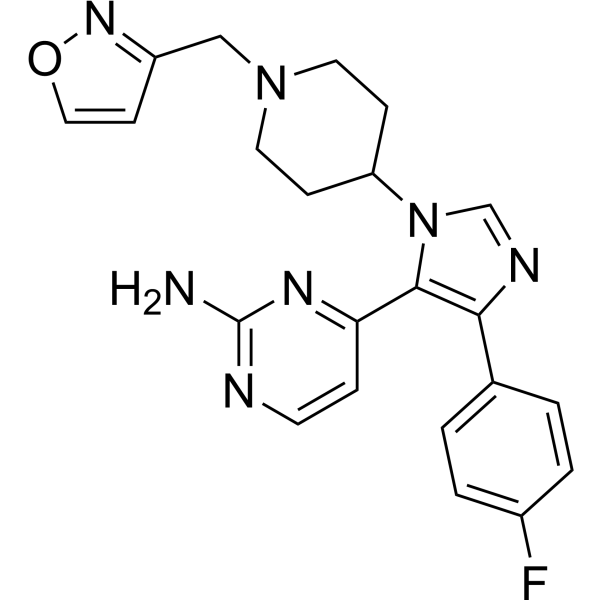
    PF-5006739 is a potent and selective inhibitor of CK1δ/ε with IC50s of 3.9 nM and 17.0 nM, respectively. PF-5006739 is a potential therapeutic agent for a range of psychiatric disorders with low nanomolar in vitro potency for CK1δ/ε and high kinome selectivity. PF-5006739 attenuats opioid agent-seeking behavior in a rodent operant reinstatement model in animals in a dose-dependent manner . PF-5006739 improves glucose tolerance in both diet-induced obesity (DIO) and genetic (ob/ob) mice models of obesity .
    PF-5006739
  • HY-168894

    Ferroptosis JAK STAT p38 MAPK AMPK GSK-3 Apoptosis HSP TNF Receptor Cardiovascular Disease Neurological Disease Metabolic Disease Cancer
    CT-1 is a secreted protein belonging to the IL-6 cytokine family. Overexpression of CT-1 enhances cell proliferation, migration and angiogenesis via the ADMA/DDAH pathway. CT-1 inhibits the growth of triple-negative breast cancer cells by simultaneously inducing Ferroptosis in N2-type tumor-associated neutrophils and cancer cells. CT-1 activates the Jak/STAT-3, p42/p44 MAPK and AMPK pathways, and inhibits GSK-3β activity through phosphorylation to induce cardiomyocyte hypertrophy. CT-1 enhances the viability of cardiomyocytes and neurons, reduces cell Apoptosis, induces the expression of heat shock proteins (HSP) and BNP, and inhibits TNF levels. CT-1 exerts anti-tumor activity in mouse models of triple-negative breast cancer. CT-1 improves cognitive impairment in mice. CT-1 is applicable to the research of ischemic heart disease, triple-negative breast cancer, myocardial hypertrophy, Parkinson's disease, hypertensive heart disease, myocardial infarction, acute Chagas cardiomyopathy, high-fat diet-induced cognitive impairment and diabetes-related cognitive impairment .
    CT-1
  • HY-N7394

    (3S)-Zuonin A

    AMPK Metabolic Disease Cancer
    Galbacin ((3S)-Zuonin A), the epimer of (-)-Zuonin A (HY-N7394A), is a AMPK activator. Galbacin can be isolated from Myristica fragrans (nutmeg). Galbacin stimulates AMPK enzyme in differentiated C2C12 cells. Galbacin also has anticancer activity, and inhibits the proliferation of lymphocyte and tumor cells. Galbacin prevents weight gain in diet-induced mice model. Galbacin can be used for metabolic syndrome (including obesity and type-2 diabetes) and caners research .
    Galbacin
  • HY-103327

    Cannabinoid Receptor Metabolic Disease
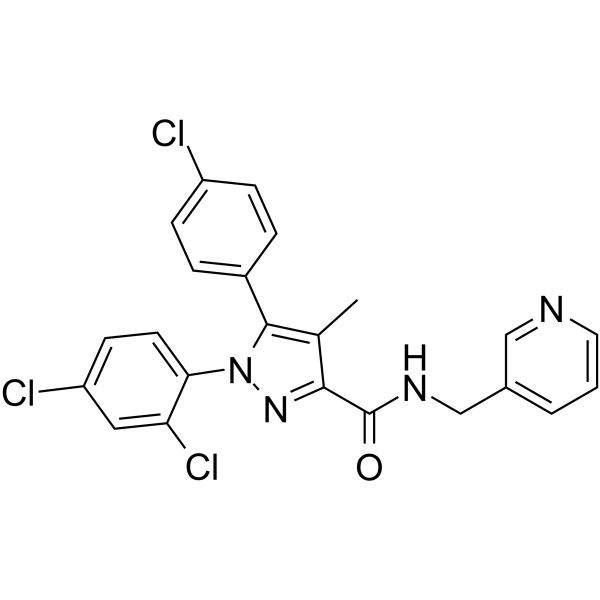
    MJ15 is a potent and selective CB1 receptor antagonist with a Ki of 27.2 pM and an IC50 of 118.9 pM for rat CB1 receptors. MJ15 exhibits potency in obesity and hyperlipidemia models. MJ15 inhibits food intake and increases in body weight in diet-induced obese rats and mice .
    MJ15
  • HY-P11262

    GLP Receptor Metabolic Disease
    GUB021794 is a potent and highly selective glucagon-like peptide-1 receptor (GLP-1R) agonist developed using the streaMLine platform with an EC50 value of 18 pM. GUB021794 has a very weak activity against SCTR, with an EC50 value of 190 nM. GUB021794 can significantly reduce the body weight, food intake, and total fat mass of mice in a diet-induced obesity (DIO) model. GUB021794 can be used for research on obesity/diabetes .
    GUB021794
  • HY-P11075

    Neurokinin Receptor Metabolic Disease
    [Lys5,Tyr6,mLeu9,Nle10]-Neurokinin A (4-10) (ID 305) is a selective NK2R agonist with an EC50 of 3.7  nM for hNK2R. [Lys5,Tyr6,mLeu9,Nle10]-Neurokinin A (4-10) significantly inhibits weight loss in diet-induced obese (DIO) mice model and improves Loperamide (HY-156131)-induced dysfunctional voiding in wild-type mice. [Lys5,Tyr6,mLeu9,Nle10]-Neurokinin A (4-10) can be used for neurokinin receptor mediated disorders, such as obesity, insulin resistance and type 2 diabetes research .
    [Lys5,Tyr6,mLeu9,Nle10]-Neurokinin A (4-10)
  • HY-128850R

    N-Acetylmannosamine (Standard); ManNAc (Standard)

    Reference Standards Endogenous Metabolite Cardiovascular Disease Neurological Disease
    N-Acetyl-D-mannosamine (Standard) is an analytical standard for N-Acetyl-D-mannosamine. This product is intended for research and analytical applications. N-Acetyl-D-mannosamine (ManNAc) is an orally active sialic acid (Sialic Acid) precursor that can prevent hypertension by increasing sialylation of IgG and has potential for use in cardiovascular disease research. N-Acetyl-D-mannosamine activates hypocretin (HCRT) gene expression and alters
    N-Acetyl-D-mannosamine (Standard)
  • HY-103327R

    Reference Standards Cannabinoid Receptor Metabolic Disease
    MJ15 (Standard) is the analytical standard of MJ15 (HY-103327). This product is intended for research and analytical applications. MJ15 is a potent and selective CB1 receptor antagonist with a Ki of 27.2 pM and an IC50 of 118.9 pM for rat CB1 receptors. MJ15 exhibits potency in obesity and hyperlipidemia models. MJ15 inhibits food intake and increases in body weight in diet-induced obese rats and mice .
    MJ15 (Standard)

Inquiry Online

Your information is safe with us. * Required Fields.

Salutation


Country or Region *

Applicant Name *


Organization Name *

Department *


Email Address *


Product Name *

Cat. No.


Requested quantity *

Phone Number *


Remarks

Inquiry Online

Inquiry Information

Product Name:
Cat. No.:
Quantity:
MCE Japan Authorized Agent:

