1. Search Result
Search Result
Results for "

Indazole derivatives

" in MedChemExpress (MCE) Product Catalog:

10

Inhibitors & Agonists

1

Biochemical Assay Reagents

Targets Recommended:
Cat. No. Product Name Target Research Areas Chemical Structure
  • HY-40294

    Monoamine Oxidase GSK-3 LRRK2 Cardiovascular Disease Neurological Disease Cancer
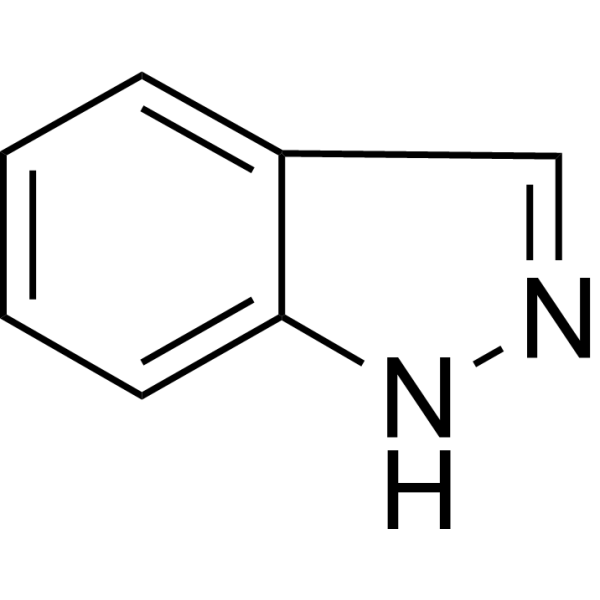
    Indazole, also called isoindazole, a heterocyclic aromatic organic compound. Its derivatives display a broad variety of biological activities including anti-inflammatory, antibacterial, anti-HIV, antiarrhythmic, antifungal and antitumour properties. Indazole and its derivatives can be used for research of cancer, neurological disorders, cardiovascular diseases, gastrointestinal diseases .
    Indazole
  • HY-50097

    Drug Intermediate Others
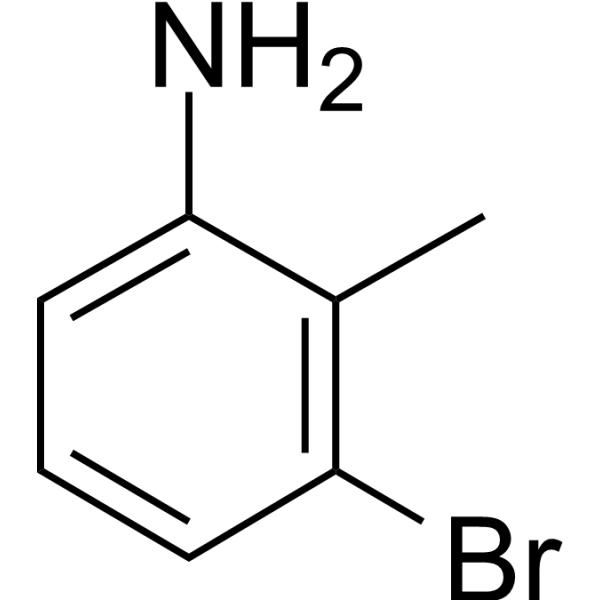
    3-Bromo-2-methylaniline is an aromatic amine compound and aniline derivative that serves as a starting material and synthetic precursor. 3-Bromo-2-methylaniline acts as a starting material for the synthesis of 4-bromo-1H-indazole and racemic 3,9-dibromo-4,10-dimethyl-6H,12H-5,11-methanodibenzodiazocine. It also serves as a precursor for the regioselective bromination and subsequent deamination to synthesize 1,2-dibromo-3-methylbenzene .
    3-Bromo-2-methylaniline
  • HY-176734

    Polo-like Kinase (PLK) Cancer
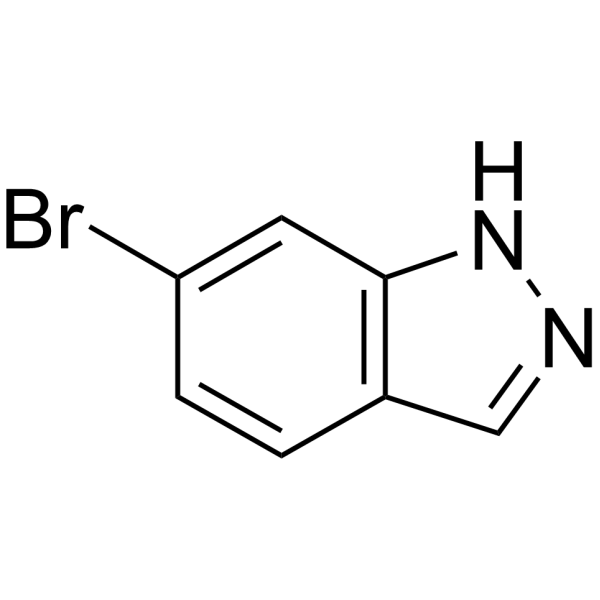
    CZL-S092 is a PLK4 inhibitor with an IC50 value of 0.9 nM and excellent selectivity over other PLK4 family members (PLK1, PLK2, and PLK3). CZL-S092 exhibits anti-neuroblastoma activity in vitro (IMR-32 cells, IC50 = 1.143 μM). CZL-S092 inhibits cell migration and halts the cell cycle and induces apoptosis. CZL-S092 can be used in studies of various cancers including neuroblastoma cancer .
    CZL-S092
  • HY-40294R

    Monoamine Oxidase GSK-3 LRRK2 Cardiovascular Disease Neurological Disease Cancer
    Indazole (Standard) is the analytical standard of Indazole. This product is intended for research and analytical applications. Indazole, also called isoindazole, a heterocyclic aromatic organic compound. Its derivatives display a broad variety of biological activities including anti-inflammatory, antibacterial, anti-HIV, antiarrhythmic, antifungal and antitumour properties. Indazole and its derivatives can be used for research of cancer, neurological disorders, cardiovascular diseases, gastrointestinal diseases .
    Indazole (Standard)
  • HY-146366

    Microtubule/Tubulin Cancer
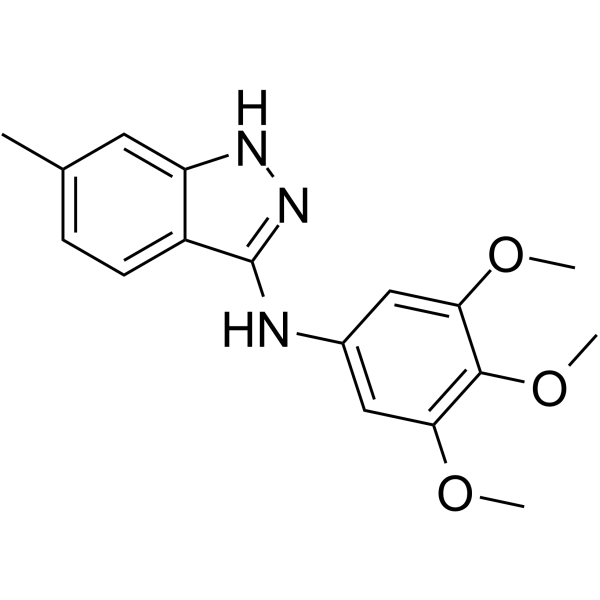
    Tubulin inhibitor 26 (compound 3c) is a potent inhibitor of tubulin. Tubulin inhibitor 26 is an indazole derivative compound. Tubulin inhibitor 26 shows noteworthy low nanomolar potency against HepG2, HCT116, SW620, HT29 and A549 cancer cell lines. Tubulin inhibitor 26 arrests tumor cell in G2/M phase and induced cell apoptosis. Tubulin inhibitor 26 suppresses tumor growth in vivo without affecting the mice body weight .
    Tubulin inhibitor 26
  • HY-100194

    Others Cardiovascular Disease Inflammation/Immunology
    FKK is an indazole derivative and also a novel bronchodilator.
    FKK
  • HY-118245

    Cannabinoid Receptor
    APP-FUBINACA is a cannabinoid receptor agonist and a derivative of phenylalaninamide-based indazole-3-carboxamide. APP-FUBINACA exhibits neurostimulatory effects .
    APP-FUBINACA
  • HY-155362

    Microtubule/Tubulin Apoptosis Cancer
    Tubulin polymerization-IN-56 (compound 8l), an indazole derivative, is a potent tubulin polymerization inhibitor through interacting with the colchicine site, resulting in cell cycle arrest and cellular apoptosis. polymerization-IN-56 reduces cell migration and leads to more potent inhibition of tumor growth in vivo .
    Tubulin polymerization-IN-56
  • HY-179507

    MDM-2/p53 Apoptosis Cancer
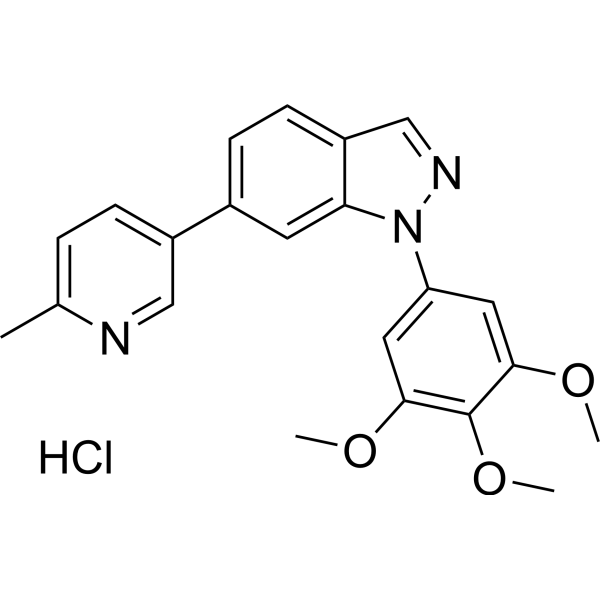
    p53 Activator 17 is a p53-Y220C activator. p53 Activator 17 exhibits selective cytotoxicity and pro-apoptotic activity in p53-Y220C mutant cancer cell lines, with minimal effects in wild-type or p53-null cells. p53 Activator 17 induces a mutant-to-wild-type conformational shift in cellular p53-Y220C, accompanied by transcriptional activation of canonical p53 target genes, including BBC3 (PUMA) and MDM2. p53 Activator 17 can be used for the study of hepatocellular carcinoma and breast cancer .
    p53 Activator 17
  • HY-179506

    MDM-2/p53 Apoptosis Cancer
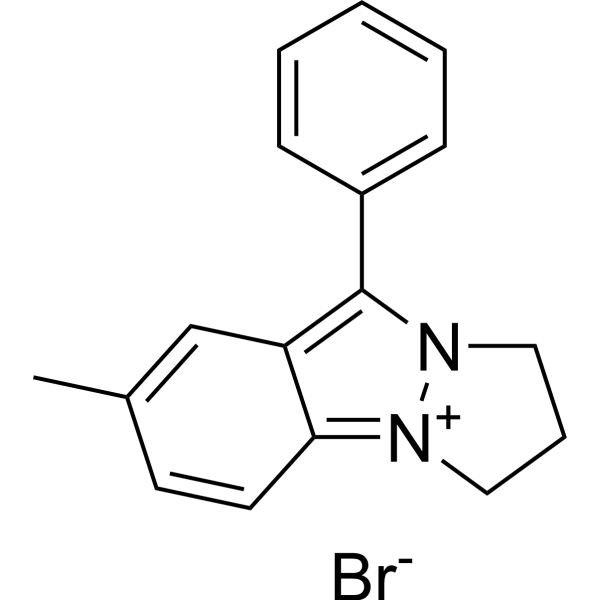
    P53 Activator 16 (Compound JC16) is a p53 activator. P53 Activator 16 exhibits selective cytotoxicity and pro-apoptotic (apoptosis) activity towards p53-Y220C mutant cancer cells, while having little effect on wild-type or P53-deficient cells. P53 Activator 16 induces the conformational transition of cell p53-Y220C from the mutant form to the wild-type form, accompanied by the transcriptional activation of p53 target genes, without increasing the overall level of p53 protein. P53 Activator 16 can be used for the study of p53 mutant cancers .
    p53 Activator 16

Inquiry Online

Your information is safe with us. * Required Fields.

Salutation


Country or Region *

Applicant Name *


Organization Name *

Department *


Email Address *


Product Name *

Cat. No.


Requested quantity *

Phone Number *


Remarks

Inquiry Online

Inquiry Information

Product Name:
Cat. No.:
Quantity:
MCE Japan Authorized Agent:

