1. Search Result
Search Result
Pathways Recommended: Stem Cell/Wnt Cell Cycle/DNA Damage
Results for "

SH-SY5Y cell line

" in MedChemExpress (MCE) Product Catalog:

6

Inhibitors & Agonists

1

Inhibitory Antibodies

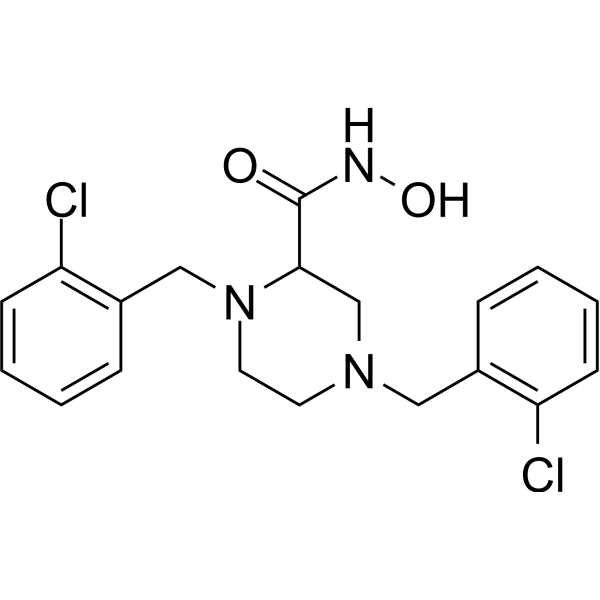
Cat. No. Product Name Target Research Areas Chemical Structure
  • HY-14374

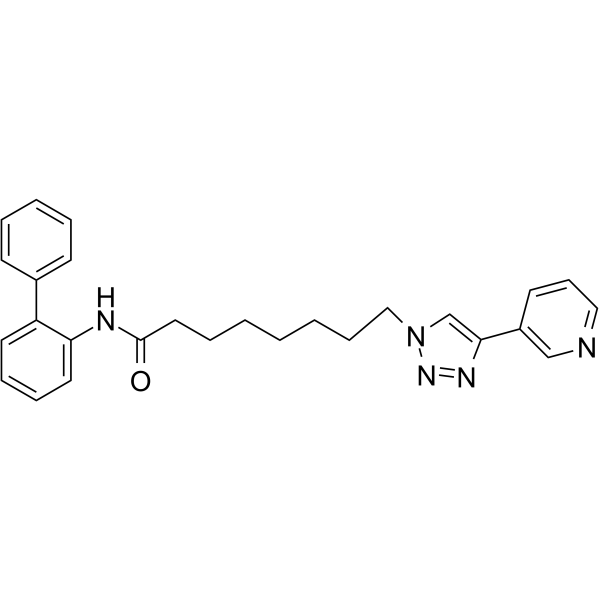
    CAY10618

    NAMPT Autophagy Inflammation/Immunology Cancer
    GPP78 (CAY10618) is a potent Nampt inhibitor with an IC50 of 3.0 nM for nicotinamide adenine dinucleotide (NAD) depletion. GPP78 is cytotoxic to neuroblastoma cell line SH-SY5Y cells with an IC50 of 3.8 nM by inducing autophagy. GPP78 has anti-cancer and anti-inflammatory effects .
    GPP78
  • HY-179177

    DYRK CDK Tau Protein Amyloid-β Neurological Disease
    AO-365/43472821 is a selective, brain-penetrant Dual-specificity tyrosine phosphorylation-regulated kinase 1A (DYRK1A) inhibitor (IC50 = 0.29 μM) and shows a significant inhibitory effect on (CDC-like kinase 1) CLK1 (IC50 = 0.08 μM). AO-365/43472821 could protect the human neuroblastoma cell line SH-SY5Y from Okadaic acid (HY-N6785) (OA)-induced injury. AO-365/43472821 decreased tau (pSer396)/tau and Aβ1-42 protein expression. AO-365/43472821 can be used for the study of Alzheimer's disease .
    AO-365/43472821
  • HY-161156

    Cholinesterase (ChE) Neurological Disease Cancer
    BChE-IN-26 (Compound 7b) is a selective AChE and BChE inhibitor with Ki value of 35 μM and 1.6 μM. BChE-IN-26 has cytotoxicity to human neuroblastoma (SH-SY5Y) cell line. BChE-IN-26 can be used for the research of Alzheimer’s disease .
    BChE-IN-26
  • HY-159492

    5-HT Receptor Neurological Disease
    5-HT7 receptor ligand 2 (compound 32) is an arylpiperazinehydrazine ligand for 5-HT7R (Ki=178 nM). 5-HT7 receptor ligand 2 has good membrane permeability, low hepatotoxicity and cardiotoxicity, and high plasma protein binding. 5-HT7 receptor ligand 2 shows neuroprotective effects in SH-SY5Y cells and can be used for the study of central nervous system related diseases .
    5-HT7 receptor ligand 2
  • HY-P992057

    Tau Protein Neurological Disease
    Armanezumab is a pathological tau protein inhibitor that specifically binds to the N-terminal domain exposed by pathological tau protein (epitope covering amino acids 4-8: PRQEF). Armanezumab is applicable to research related to Alzheimer's disease, frontotemporal dementia, and Pick's disease .
    Armanezumab
  • HY-186073

    HDAC Neurological Disease
    HDAC1 activator-1 is a specific HDAC1 activator with orally activity, exerting no significant effects on other HDAC family members. HDAC1 activator-1 exhibits neuroprotective activity, ameliorates cognitive and motor function deficits by reducing neuronal loss and gliosis. HDAC1 activator-1 specifically activates HDAC1 in SH-SY5Y cells and exerts regulatory effects on aberrant cell cycle and DNA damage. HDAC1 activator-1 can be used for the research of TDP-43 proteinopat1-related neurodegenerative diseases including Amyotrophic Lateral Sclerosis (ALS) and cerebral ischemia-related neurological injury .
    HDAC1 activator-1

Inquiry Online

Your information is safe with us. * Required Fields.

Salutation


Country or Region *

Applicant Name *


Organization Name *

Department *


Email Address *


Product Name *

Cat. No.


Requested quantity *

Phone Number *


Remarks

Inquiry Online

Inquiry Information

Product Name:
Cat. No.:
Quantity:
MCE Japan Authorized Agent:

