9 Results for "

dermal fibrosis

" in MedChemExpress (MCE) Product Catalog:
Products (9)

9 Results for "dermal fibrosis" in MCE Product Catalog:

  • Targets Recommended:
3
3 Cited Publications
Cat. No.: HY-110126
CAS No.: 216657-60-2
Purity:  98.27%
Target:  

P2Y Receptor

Research Areas:  

Inflammation/Immunology Cancer

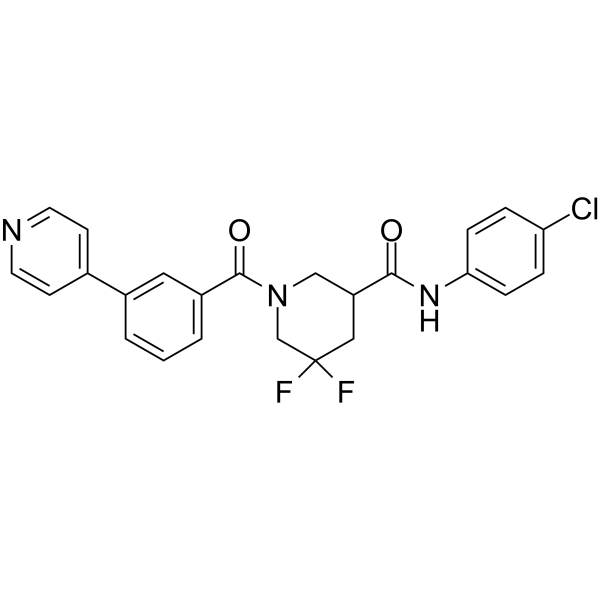
AR-C118925XX is a selective P2Y2 receptor antagonist. AR-C118925XX inhibits ATP-induced IL-6 production and phosphorylation of p38. AR-C118925XX also inhibits Bleomycin (HY-108345)-induced dermal fibrosis in mice. AR-C118925XX also inhibits ATP-induced tumor growth .
loading...
    loading...
1
1 Cited Publications
Cat. No.: HY-18620
CAS No.: 33231-14-0
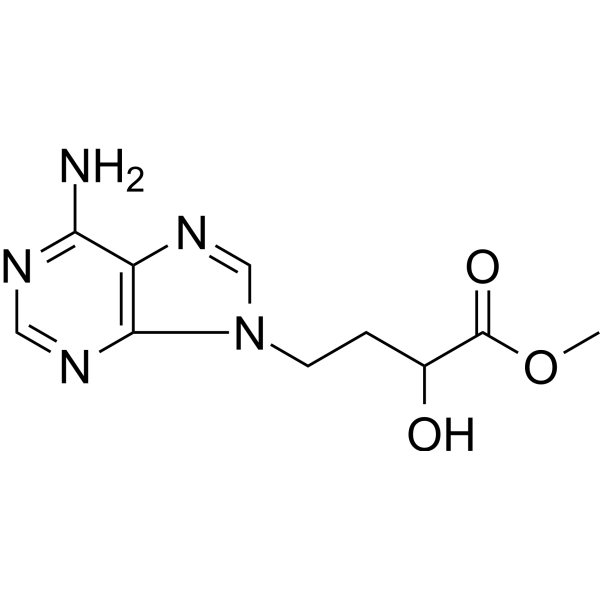
DZ2002 is an orally active, reversible and low-cytotoxic type III SAHH inhibitor (Ki=17.9 nM), with good immunosuppressive activity. DZ2002 prevents the development of experimental dermal fibrosis by reversing the profibrotic phenotype of various cell types. DZ2002 can be used in studies of autoimmune diseases such as lupus syndrome and systemic sclerosis .
loading...
    loading...
Cat. No.: HY-111432
CAS No.: 1922099-21-5
Purity:  99.00%
Target:  

Ras

Research Areas:  

Others

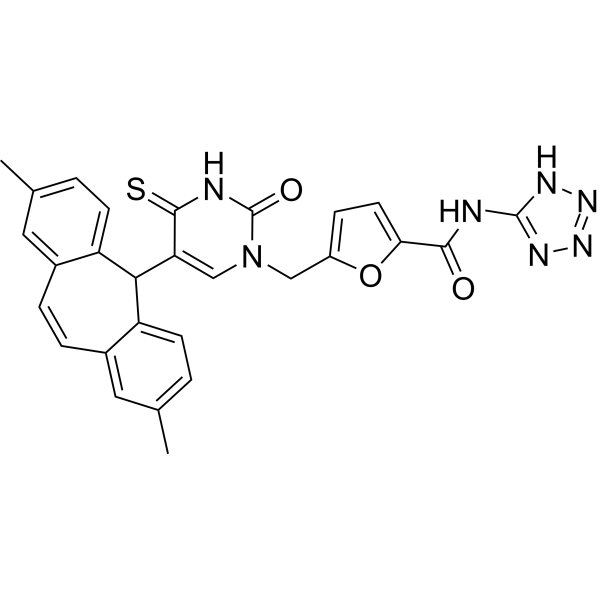
CCG-232601 (compound 8f) is a potent and orally active Rho/MRTF/SRF transcriptional pathway inhibitor. CCG-232601 inhibits the development of Bleomycin-induced dermal fibrosis in mice. CCG-232601 has the potential for the research of antifibrotic for systemic scleroderma .
loading...
    loading...
Cat. No.: HY-P991267

Target:  

Interleukin Related

Research Areas:  

Inflammation/Immunology

CAN10 is is a humanized monoclonal antibody inhibitor targeting interleukin 1RAP (IL1RAP). CAN10 blocks IL-1, IL-33, and IL-36 signalling by targeting IL1RAP, preventing downstream proinflammatory and profibrotic responses. CAN10 reduces dermal and pulmonary fibrosis. CAN10 can be used for the research of immune system diseases, such as systemic sclerosis .
loading...
    loading...
Cat. No.: HY-178231
CAS No.: 2766583-86-0
Synonyms: ALK5-IN-85
Target:  

TGF-β Receptor

Research Areas:  

Inflammation/Immunology Cancer

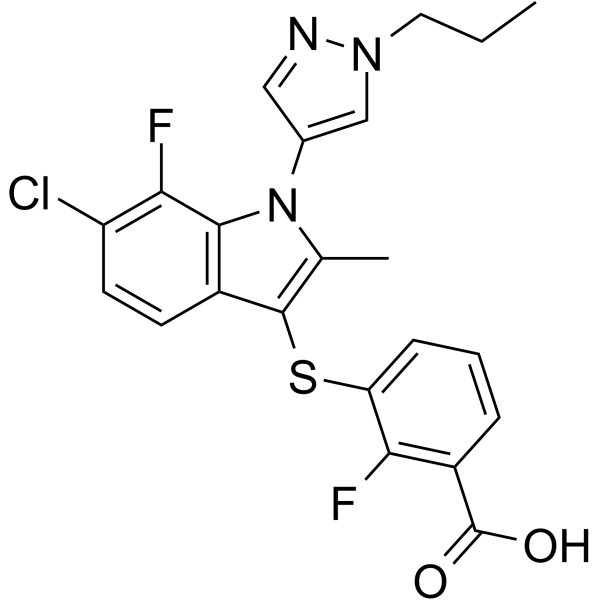
Finbosertib (ALK5-IN-85) (Compound 19) is a TGFβRI (ALK5) inhibitor with an IC50 of <100 nM. Finbosertib can be used for respiratory diseases including idiopathic pulmonary fibrosis, asthma, COPD and lumg cancer, and dermal and ocular fibrotic conditions research .
loading...
    loading...
Cat. No.: HY-123522
CAS No.: 1359983-15-5
Research Areas:  

Inflammation/Immunology

PAT-048 is a potent, selective and orally active autotaxin inhibitor, inhibits IL-6 mRNA expression, but shows no effect on autotaxin protein and pulmonary lysophosphatidic acid (LPA) production in lung fibrosis model. PAT-048 shows an IC50 and IC90 of 20 nM and 200 nM for autotaxin in mouse plasma. PAT-048 reduces dermal fibrosis in vivo .
loading...
    loading...
Cat. No.: HY-18620R
CAS No.: 33231-14-0
DZ2002 (Standard) is the analytical standard of DZ2002. This product is intended for research and analytical applications. DZ2002 is an orally active, reversible and low-cytotoxic type III SAHH inhibitor (Ki=17.9 nM), with good immunosuppressive activity. DZ2002 prevents the development of experimental dermal fibrosis by reversing the profibrotic phenotype of various cell types. DZ2002 can be used in studies of autoimmune diseases such as lupus syndrome and systemic sclerosis .
loading...
    loading...
Cat. No.: HY-181431
CAS No.: 1253691-50-7
Target:  

TGF-beta/Smad

Research Areas:  

Inflammation/Immunology

PXS 64, a mannose-6-phosphate (M6P) analogue. a lipophilic prodrug of PXS 25 (HY-181430). PXS 64 is an effective anti-fibrotic agent by inhibiting the activation of latent TGF-β1. PXS64, inhibits fibrosis via TGF-β1 pathway in human lung fibroblasts. PXS 64 reduces TGFβ-mediated collagen IV, fibronectin, MCP-1, and phospho-smad2 expression in kidney cells. PXS 64 reduces collagen deposition in dermal scar fibroblasts. PXS 64 can be used for the research of chronic kidney disease, idiopathic pulmonary fibrosis, scarring .
loading...
    loading...
Cat. No.: HY-P11797
Research Areas:  

Cardiovascular Disease

EP9 is a peptide targeting CD63. EP9 binds specifically to the extracellular region of CD63, including a groove in the large extracellular loop (EC2) or the extracellular end of CD63’s central cavity, triggering endocytosis of decorated nanoemulsions/liposomes into cells. EP9 promotes cellular uptake of decorated nanoemulsions/liposomes into activated cardiac fibroblasts and epicardial stromal cells via caveolae and/or clathrin-coated pits. EP9 can be used for the research of myocardial infarction, cardiac fibrosis .
loading...
    loading...

