Search Result
Results for "
glucagon degradation inhibitor
" in MedChemExpress (MCE) Product Catalog:
1
Biochemical Assay Reagents
4
Isotope-Labeled Compounds
| Cat. No. |
Product Name |
Target |
Research Areas |
Chemical Structure |
-
- HY-13749
-
Sitagliptin
Maximum Cited Publications
30 Publications Verification
MK-0431
|
Dipeptidyl Peptidase
GLP Receptor
Endogenous Metabolite
PKA
ERK
|
Metabolic Disease
|
|
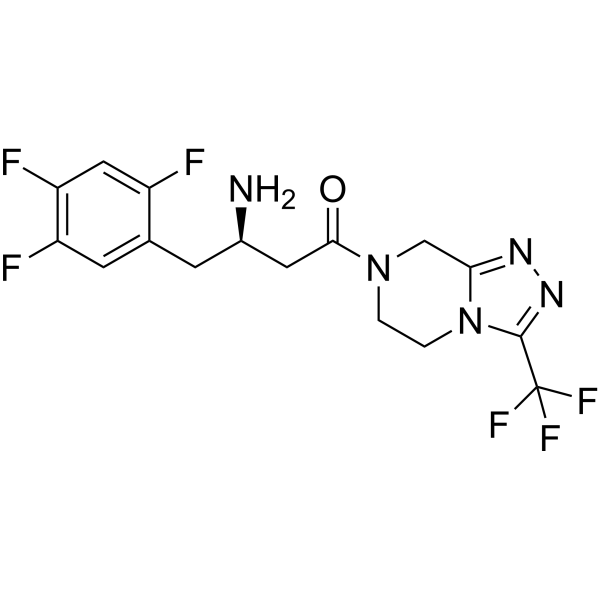
Sitagliptin (MK-0431) is an orally active and highly selective DPP4 inhibitor with an IC50 value of 19 nM. Sitagliptin blocks the degradation of glucagon-like peptide-1 (GLP-1) and glucose-dependent insulinotropic peptide (GIP) by competing inhibition mechanism (Kᵢ = 1 nM), thereby increasing the level of active incretin. Sitagliptin can also directly stimulate the secretion of GLP-1 by intestinal L cells by activating the cAMP/PKA and ERK1/2 pathways, and this effect is independent of DPP-4. Sitagliptin shows protective effects on pancreatic islet grafts in 1-type diabetes models. Sitagliptin can be used for the study of 1-type and 2-type diabetes .
|
-
-
- HY-W018781
-
|
|
Ser/Thr Protease
|
Cancer
|
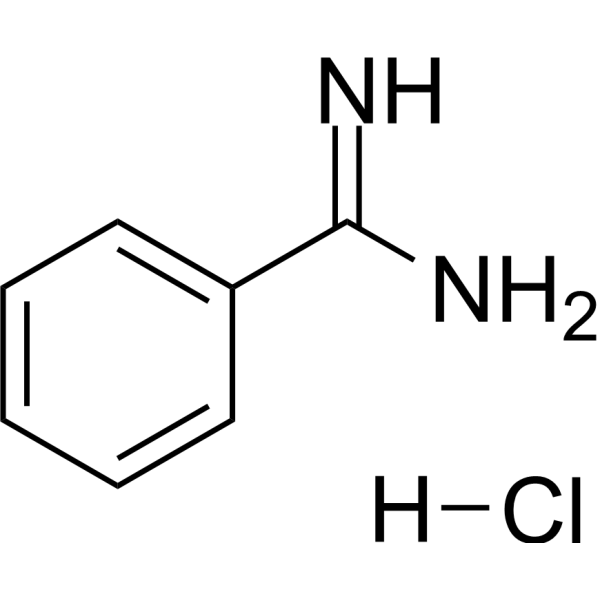
Benzamidine hydrochloride is a competitive protease inhibitor that blocks the hydrolytic cleavage of glucagon by plasmin, trypsin and thrombin. Benzamidine hydrochloride effectively inhibits the degradation of glucagon by relevant proteases during the collection, storage and analysis of human plasma and blood samples. During in vivo metabolism, Benzamidine hydrochloride undergoes N-hydroxylation and produces multiple metabolites, exhibiting characteristics of delayed excretion or biphasic elimination. Benzamidine hydrochloride only induces slight single-strand DNA breaks at high concentrations and shows no significant genotoxic potential overall. Benzamidine hydrochloride may interfere with the detection of some glucagon antisera, but does not affect key antigen-antibody affinity at specific concentrations. Benzamidine hydrochloride can be used as a stabilizer in glucagon radioimmunoassays to ensure the accuracy and recovery rate of detection results .
|
-
-
- HY-13749A
-
|
MK-0431 phosphate
|
Dipeptidyl Peptidase
GLP Receptor
Endogenous Metabolite
PKA
ERK
|
Metabolic Disease
|
|
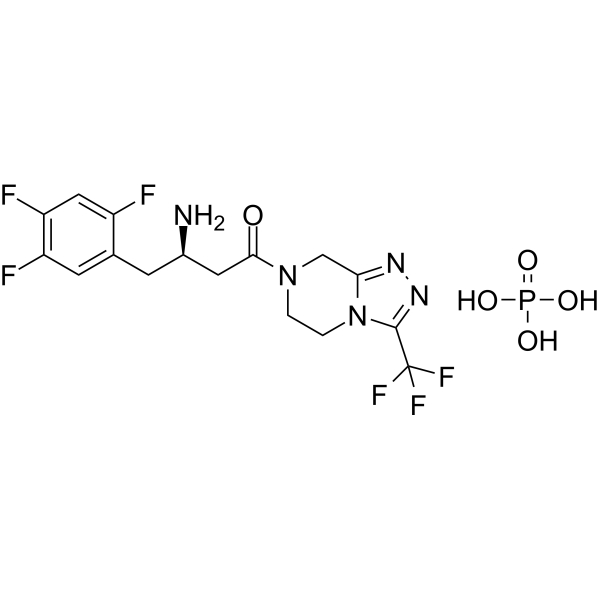
Sitagliptin (MK-0431) phosphate is an orally active and highly selective DPP4 inhibitor with an IC50 value of 19 nM. Sitagliptin phosphate blocks the degradation of glucagon-like peptide-1 (GLP-1) and glucose-dependent insulinotropic peptide (GIP) by competing inhibition mechanism (Kᵢ = 1 nM), thereby increasing the level of active incretin. Sitagliptin phosphate can also directly stimulate the secretion of GLP-1 by intestinal L cells by activating the cAMP/PKA and ERK1/2 pathways, and this effect is independent of DPP-4. Sitagliptin phosphate shows protective effects on pancreatic islet grafts in 1-type diabetes models. Sitagliptin phosphate can be used for the study of 1-type and 2-type diabetes .
|
-
-
- HY-13749B
-
|
MK-0431 phosphate monohydrate
|
Dipeptidyl Peptidase
GLP Receptor
Endogenous Metabolite
PKA
ERK
|
Metabolic Disease
|
|
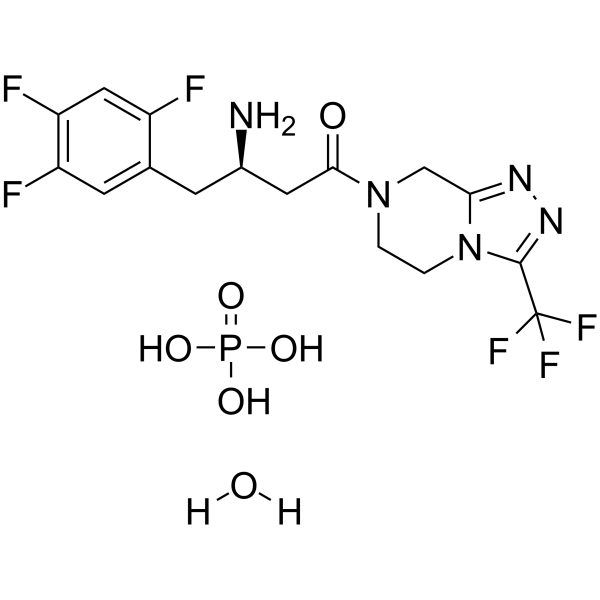
Sitagliptin (MK-0431) phosphate monohydrate is an orally active and highly selective DPP4 inhibitor with an IC50 value of 19 nM. Sitagliptin phosphate monohydrate blocks the degradation of glucagon-like peptide-1 (GLP-1) and glucose-dependent insulinotropic peptide (GIP) by competing inhibition mechanism (Kᵢ = 1 nM), thereby increasing the level of active incretin. Sitagliptin phosphate monohydrate can also directly stimulate the secretion of GLP-1 by intestinal L cells by activating the cAMP/PKA and ERK1/2 pathways, and this effect is independent of DPP-4. Sitagliptin phosphate monohydrate shows protective effects on pancreatic islet grafts in 1-type diabetes models. Sitagliptin phosphate monohydrate can be used for the study of 1-type and 2-type diabetes .
|
-
-
- HY-125913
-
|
|
Ser/Thr Protease
|
Inflammation/Immunology
|
Benzamidine is a competitive protease inhibitor that blocks the hydrolytic cleavage of glucagon by plasmin, trypsin and thrombin. Benzamidine effectively inhibits the degradation of glucagon by relevant proteases during the collection, storage and analysis of human plasma and blood samples. During in vivo metabolism, Benzamidine undergoes N-hydroxylation and produces multiple metabolites, exhibiting characteristics of delayed excretion or biphasic elimination. Benzamidine only induces slight single-strand DNA breaks at high concentrations and shows no significant genotoxic potential overall. Benzamidine may interfere with the detection of some glucagon antisera, but does not affect key antigen-antibody affinity at specific concentrations. Benzamidine can be used as a stabilizer in glucagon radioimmunoassays to ensure the accuracy and recovery rate of detection results .
|
-

-
- HY-110197
-
6bK TFA
2 Publications Verification
|
IDE
|
Metabolic Disease
|
|
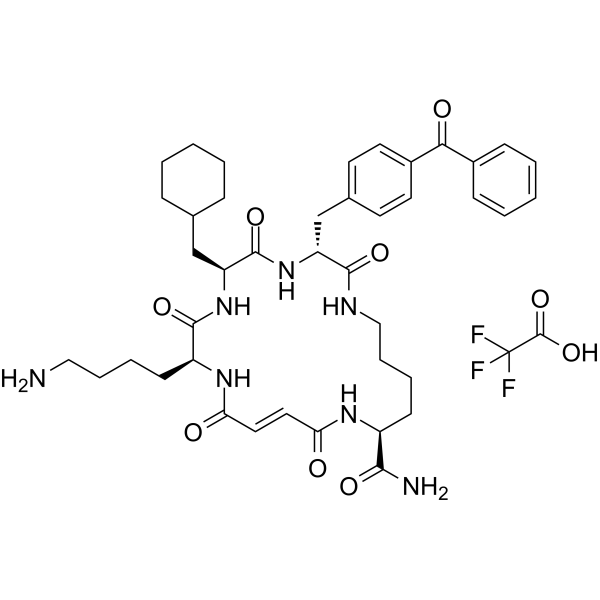
6bK TFA is a selective insulin-degrading enzyme (IDE) inhibitor with an IC50 of 50 nM. 6bK TFA binds to the distal pocket of IDE, thereby blocking substrate binding, peptide unfolding and cleavage processes, and reducing the degradation of insulin, glucagon and amylin. 6bK TFA improves oral glucose tolerance but impairs intraperitoneal glucose tolerance. 6bK TFA can be used in research related to type 2 diabetes .
|
-
-
- HY-13749AS
-
|
MK-0431-d4 phosphate
|
Dipeptidyl Peptidase
GLP Receptor
Endogenous Metabolite
PKA
ERK
|
Metabolic Disease
|
|
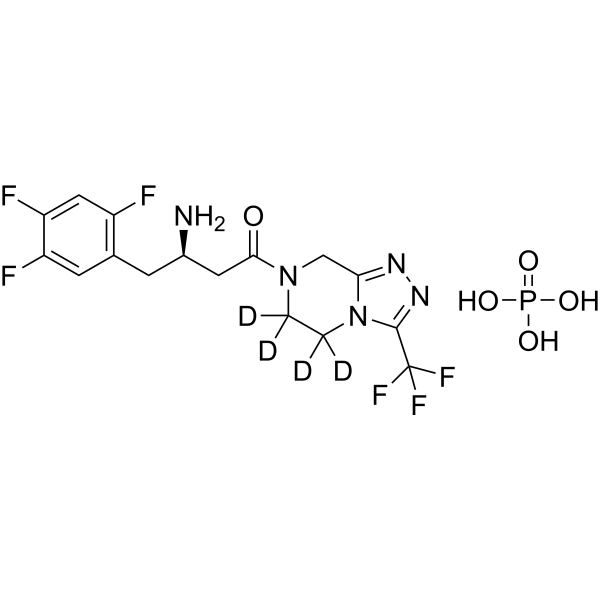
Sitagliptin-d4 phosphate (MK-0431-d4) is the deuterium labeled Sitagliptin phosphate (HY-13749A). Sitagliptin phosphate is an orally active and highly selective DPP4 inhibitor with an IC50 value of 19 nM. Sitagliptin phosphate blocks the degradation of glucagon-like peptide-1 (GLP-1) and glucose-dependent insulinotropic peptide (GIP) by competing inhibition mechanism (Kᵢ = 1 nM), thereby increasing the level of active incretin. Sitagliptin phosphate can also directly stimulate the secretion of GLP-1 by intestinal L cells by activating the cAMP/PKA and ERK1/2 pathways, and this effect is independent of DPP-4. Sitagliptin phosphate shows protective effects on pancreatic islet grafts in 1-type diabetes models. Sitagliptin phosphate can be used for the study of 1-type and 2-type diabetes.
|
-
-
- HY-W087937
-
|
Benzenecarboximidamide hydrochloride hydrate
|
Ser/Thr Protease
|
Cancer
|
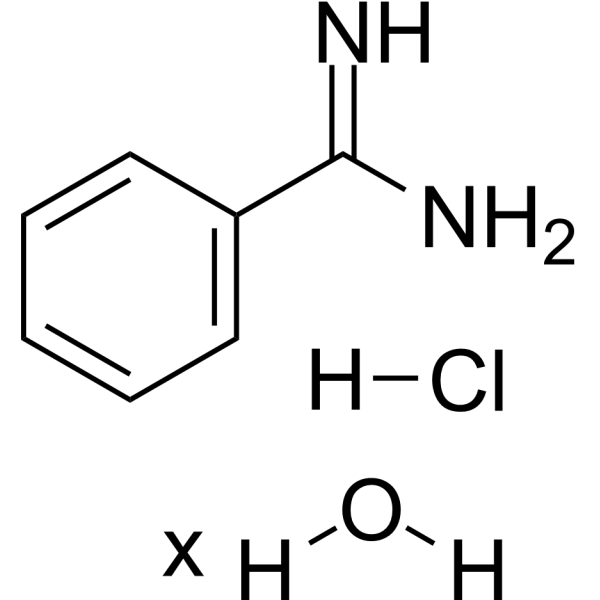
Benzamidine (Benzenecarboximidamide) hydrochloride hydrate is a competitive protease inhibitor that blocks the hydrolytic cleavage of glucagon by plasmin, trypsin and thrombin. Benzamidine hydrochloride hydrate effectively inhibits the degradation of glucagon by relevant proteases during the collection, storage and analysis of human plasma and blood samples. During in vivo metabolism, Benzamidine hydrochloride hydrate undergoes N-hydroxylation and produces multiple metabolites, exhibiting characteristics of delayed excretion or biphasic elimination. Benzamidine hydrochloride hydrate only induces slight single-strand DNA breaks at high concentrations and shows no significant genotoxic potential overall. Benzamidine hydrochloride hydrate may interfere with the detection of some glucagon antisera, but does not affect key antigen-antibody affinity at specific concentrations. Benzamidine hydrochloride hydrate can be used as a stabilizer in glucagon radioimmunoassays to ensure the accuracy and recovery rate of detection results .
|
-
-
- HY-13749S1
-
|
MK-0431-d4 hydrochloride
|
Isotope-Labeled Compounds
Dipeptidyl Peptidase
GLP Receptor
Endogenous Metabolite
PKA
ERK
|
Metabolic Disease
|
|
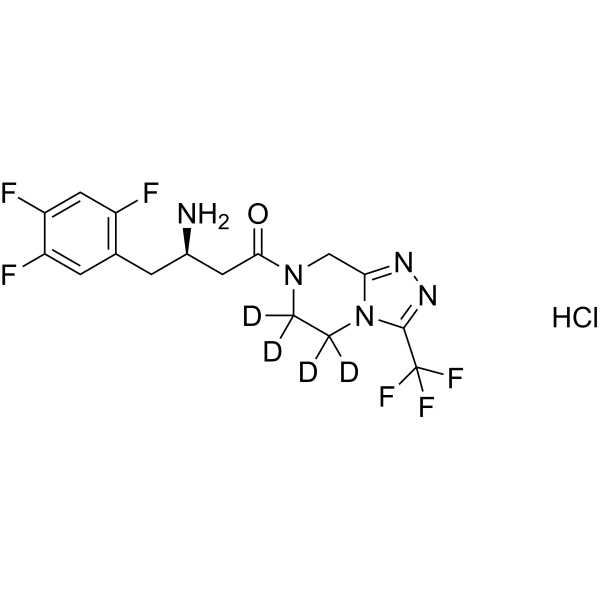
Sitagliptin-d4 hydrochloride is the deuterium labeled Sitagliptin hydrochloride (HY-13749E). Sitagliptin hydrochloride is an orally active and highly selective DPP4 inhibitor with an IC50 value of 19 nM. Sitagliptin hydrochloride blocks the degradation of glucagon-like peptide-1 (GLP-1) and glucose-dependent insulinotropic peptide (GIP) by competing inhibition mechanism (Kᵢ = 1 nM), thereby increasing the level of active incretin. Sitagliptin hydrochloride can also directly stimulate the secretion of GLP-1 by intestinal L cells by activating the cAMP/PKA and ERK1/2 pathways, and this effect is independent of DPP-4. Sitagliptin hydrochloride shows protective effects on pancreatic islet grafts in 1-type diabetes models. Sitagliptin hydrochloride can be used for the study of 1-type and 2-type diabetes.
|
-
-
- HY-14292
-
|
|
Dipeptidyl Peptidase
|
Metabolic Disease
|
|
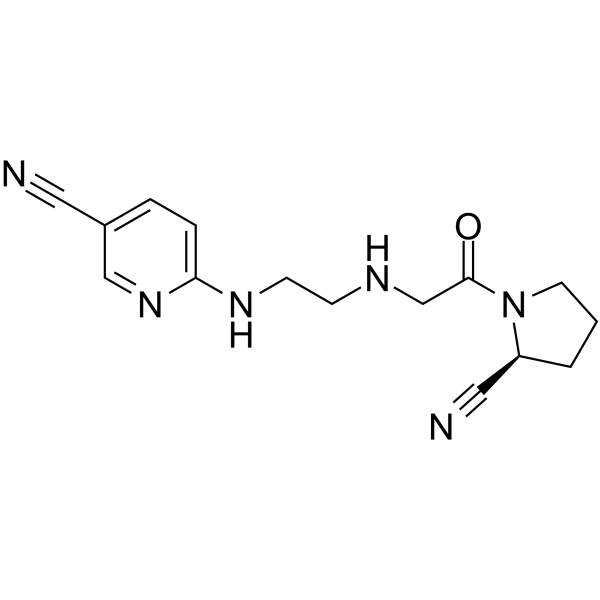
NVP-DPP728 is a potent, reversible and nitrile-dependent dipeptidyl peptidase IV (DPP-IV) inhibitor. NVP-DPP728 can inhibit human DPP-IV amidolytic activity with a Ki of 11 nM. NVP-DPP728 inhibits degradation of glucagon-like peptide-1 (GLP-1) and thereby potentiates insulin release in response to glucose intake. NVP-DPP728 can be used for researching diabetes .
|
-
-
- HY-13749E
-
|
MK-0431 hydrochloride
|
Dipeptidyl Peptidase
GLP Receptor
Endogenous Metabolite
PKA
ERK
|
Metabolic Disease
|
|
Sitagliptin (MK-0431) hydrochloride is an orally active and highly selective DPP4 inhibitor with an IC50 value of 19 nM. Sitagliptin hydrochloride blocks the degradation of glucagon-like peptide-1 (GLP-1) and glucose-dependent insulinotropic peptide (GIP) by competing inhibition mechanism (Kᵢ = 1 nM), thereby increasing the level of active incretin. Sitagliptin hydrochloride can also directly stimulate the secretion of GLP-1 by intestinal L cells by activating the cAMP/PKA and ERK1/2 pathways, and this effect is independent of DPP-4. Sitagliptin hydrochloride shows protective effects on pancreatic islet grafts in 1-type diabetes models. Sitagliptin hydrochloride can be used for the study of 1-type and 2-type diabetes .
|
-

-
- HY-Z1764
-
|
Sitagliptin impurity 3
|
Dipeptidyl Peptidase
|
Metabolic Disease
|
|
DPP-4-IN-18 (Sitagliptin impurity 3) (Compound 4) impurity 3 is a potent, selective and orally active DPP-4 inhibitor with an IC50 of 27 nM. DPP-4-IN-18 can effectively prevent DPP-4 from degrading glucagon-like peptide 1 (GLP-1), thereby increasing the level of active GLP-1. DPP-4-IN-18 can be used for the research of type 2 diabetes .
|
-

-
- HY-13749R
-
|
MK-0431 (Standard)
|
Reference Standards
Dipeptidyl Peptidase
GLP Receptor
Endogenous Metabolite
PKA
ERK
|
Metabolic Disease
|
|
Sitagliptin (Standard) is the analytical standard of Sitagliptin (HY-13749). This product is intended for research and analytical applications. Sitagliptin is an orally active and highly selective DPP4 inhibitor with an IC50 value of 19 nM. Sitagliptin blocks the degradation of glucagon-like peptide-1 (GLP-1) and glucose-dependent insulinotropic peptide (GIP) by competing inhibition mechanism (Kᵢ = 1 nM), thereby increasing the level of active incretin. Sitagliptin can also directly stimulate the secretion of GLP-1 by intestinal L cells by activating the cAMP/PKA and ERK1/2 pathways, and this effect is independent of DPP-4. Sitagliptin shows protective effects on pancreatic islet grafts in 1-type diabetes models. Sitagliptin can be used for the study of 1-type and 2-type diabetes.
|
-

-
- HY-W018781R
-
|
|
Reference Standards
Ser/Thr Protease
|
Cancer
|
|
Benzamidine hydrochloride (Standard) is the analytical standard of Benzamidine (hydrochloride). This product is intended for research and analytical applications. Benzamidine hydrochloride is a competitive protease inhibitor that blocks the hydrolytic cleavage of glucagon by plasmin, trypsin and thrombin. Benzamidine hydrochloride effectively inhibits the degradation of glucagon by relevant proteases during the collection, storage and analysis of human plasma and blood samples. During in vivo metabolism, Benzamidine hydrochloride undergoes N-hydroxylation and produces multiple metabolites, exhibiting characteristics of delayed excretion or biphasic elimination. Benzamidine hydrochloride only induces slight single-strand DNA breaks at high concentrations and shows no significant genotoxic potential overall. Benzamidine hydrochloride may interfere with the detection of some glucagon antisera, but does not affect key antigen-antibody affinity at specific concentrations. Benzamidine hydrochloride can be used as a stabilizer in glucagon radioimmunoassays to ensure the accuracy and recovery rate of detection results .
|
-

-
- HY-13749AR
-
|
MK-0431 phosphate (Standard)
|
Reference Standards
Dipeptidyl Peptidase
GLP Receptor
Endogenous Metabolite
PKA
ERK
|
Metabolic Disease
|
|
Sitagliptin (MK-0431) phosphate (Standard) is the analytical standard of Sitagliptin phosphate (HY-13749A). This product is intended for research and analytical applications. Sitagliptin phosphate is an orally active and highly selective DPP4 inhibitor with an IC50 value of 19 nM. Sitagliptin phosphate blocks the degradation of glucagon-like peptide-1 (GLP-1) and glucose-dependent insulinotropic peptide (GIP) by competing inhibition mechanism (Kᵢ = 1 nM), thereby increasing the level of active incretin. Sitagliptin phosphate can also directly stimulate the secretion of GLP-1 by intestinal L cells by activating the cAMP/PKA and ERK1/2 pathways, and this effect is independent of DPP-4. Sitagliptin phosphate shows protective effects on pancreatic islet grafts in 1-type diabetes models. Sitagliptin phosphate can be used for the study of 1-type and 2-type diabetes.
|
-

-
- HY-13749S3
-
|
MK-0431-d6
|
Isotope-Labeled Compounds
Dipeptidyl Peptidase
GLP Receptor
Endogenous Metabolite
PKA
ERK
|
Metabolic Disease
|
|
Sitagliptin-d6 (MK-0431-d6) is deuterium labeled Sitagliptin (HY-13749). Sitagliptin is an orally active and highly selective DPP4 inhibitor with an IC50 value of 19 nM. Sitagliptin blocks the degradation of glucagon-like peptide-1 (GLP-1) and glucose-dependent insulinotropic peptide (GIP) by competing inhibition mechanism (Kᵢ = 1 nM), thereby increasing the level of active incretin. Sitagliptin can also directly stimulate the secretion of GLP-1 by intestinal L cells by activating the cAMP/PKA and ERK1/2 pathways, and this effect is independent of DPP-4. Sitagliptin shows protective effects on pancreatic islet grafts in 1-type diabetes models. Sitagliptin can be used for the study of 1-type and 2-type diabetes.
|
-

-
- HY-13749S2
-
|
MK-0431-d4
|
Isotope-Labeled Compounds
Dipeptidyl Peptidase
GLP Receptor
Endogenous Metabolite
PKA
ERK
|
Metabolic Disease
|
|
Sitagliptin-d4 (MK-0431-d4) is deuterium labeled Sitagliptin (HY-13749). Sitagliptin is an orally active and highly selective DPP4 inhibitor with an IC50 value of 19 nM. Sitagliptin blocks the degradation of glucagon-like peptide-1 (GLP-1) and glucose-dependent insulinotropic peptide (GIP) by competing inhibition mechanism (Kᵢ = 1 nM), thereby increasing the level of active incretin. Sitagliptin can also directly stimulate the secretion of GLP-1 by intestinal L cells by activating the cAMP/PKA and ERK1/2 pathways, and this effect is independent of DPP-4. Sitagliptin shows protective effects on pancreatic islet grafts in 1-type diabetes models. Sitagliptin can be used for the study of 1-type and 2-type diabetes.
|
-

-
- HY-13749BR
-
|
MK-0431 phosphate monohydrate (Standard)
|
Reference Standards
Dipeptidyl Peptidase
GLP Receptor
Endogenous Metabolite
PKA
ERK
|
Metabolic Disease
|
|
Sitagliptin (MK-0431) phosphate monohydrate (Standard) is the analytical standard of Sitagliptin phosphate monohydrate (HY-13749B). This product is intended for research and analytical applications. Sitagliptin phosphate monohydrate is an orally active and highly selective DPP4 inhibitor with an IC50 value of 19 nM. Sitagliptin phosphate monohydrate blocks the degradation of glucagon-like peptide-1 (GLP-1) and glucose-dependent insulinotropic peptide (GIP) by competing inhibition mechanism (Kᵢ = 1 nM), thereby increasing the level of active incretin. Sitagliptin phosphate monohydrate can also directly stimulate the secretion of GLP-1 by intestinal L cells by activating the cAMP/PKA and ERK1/2 pathways, and this effect is independent of DPP-4. Sitagliptin phosphate monohydrate shows protective effects on pancreatic islet grafts in 1-type diabetes models. Sitagliptin phosphate monohydrate can be used for the study of 1-type and 2-type diabetes.
|
-

| Cat. No. |
Product Name |
Type |
-
- HY-W087937
-
|
Benzenecarboximidamide hydrochloride hydrate
|
Biochemical Assay Reagents
|
Benzamidine (Benzenecarboximidamide) hydrochloride hydrate is a competitive protease inhibitor that blocks the hydrolytic cleavage of glucagon by plasmin, trypsin and thrombin. Benzamidine hydrochloride hydrate effectively inhibits the degradation of glucagon by relevant proteases during the collection, storage and analysis of human plasma and blood samples. During in vivo metabolism, Benzamidine hydrochloride hydrate undergoes N-hydroxylation and produces multiple metabolites, exhibiting characteristics of delayed excretion or biphasic elimination. Benzamidine hydrochloride hydrate only induces slight single-strand DNA breaks at high concentrations and shows no significant genotoxic potential overall. Benzamidine hydrochloride hydrate may interfere with the detection of some glucagon antisera, but does not affect key antigen-antibody affinity at specific concentrations. Benzamidine hydrochloride hydrate can be used as a stabilizer in glucagon radioimmunoassays to ensure the accuracy and recovery rate of detection results .
|
| Cat. No. |
Product Name |
Chemical Structure |
-
- HY-13749AS
-
|
|
|
Sitagliptin-d4 phosphate (MK-0431-d4) is the deuterium labeled Sitagliptin phosphate (HY-13749A). Sitagliptin phosphate is an orally active and highly selective DPP4 inhibitor with an IC50 value of 19 nM. Sitagliptin phosphate blocks the degradation of glucagon-like peptide-1 (GLP-1) and glucose-dependent insulinotropic peptide (GIP) by competing inhibition mechanism (Kᵢ = 1 nM), thereby increasing the level of active incretin. Sitagliptin phosphate can also directly stimulate the secretion of GLP-1 by intestinal L cells by activating the cAMP/PKA and ERK1/2 pathways, and this effect is independent of DPP-4. Sitagliptin phosphate shows protective effects on pancreatic islet grafts in 1-type diabetes models. Sitagliptin phosphate can be used for the study of 1-type and 2-type diabetes.
|
-
-
- HY-13749S1
-
|
|
|
Sitagliptin-d4 hydrochloride is the deuterium labeled Sitagliptin hydrochloride (HY-13749E). Sitagliptin hydrochloride is an orally active and highly selective DPP4 inhibitor with an IC50 value of 19 nM. Sitagliptin hydrochloride blocks the degradation of glucagon-like peptide-1 (GLP-1) and glucose-dependent insulinotropic peptide (GIP) by competing inhibition mechanism (Kᵢ = 1 nM), thereby increasing the level of active incretin. Sitagliptin hydrochloride can also directly stimulate the secretion of GLP-1 by intestinal L cells by activating the cAMP/PKA and ERK1/2 pathways, and this effect is independent of DPP-4. Sitagliptin hydrochloride shows protective effects on pancreatic islet grafts in 1-type diabetes models. Sitagliptin hydrochloride can be used for the study of 1-type and 2-type diabetes.
|
-
-
- HY-13749S3
-
|
|
|
Sitagliptin-d6 (MK-0431-d6) is deuterium labeled Sitagliptin (HY-13749). Sitagliptin is an orally active and highly selective DPP4 inhibitor with an IC50 value of 19 nM. Sitagliptin blocks the degradation of glucagon-like peptide-1 (GLP-1) and glucose-dependent insulinotropic peptide (GIP) by competing inhibition mechanism (Kᵢ = 1 nM), thereby increasing the level of active incretin. Sitagliptin can also directly stimulate the secretion of GLP-1 by intestinal L cells by activating the cAMP/PKA and ERK1/2 pathways, and this effect is independent of DPP-4. Sitagliptin shows protective effects on pancreatic islet grafts in 1-type diabetes models. Sitagliptin can be used for the study of 1-type and 2-type diabetes.
|
-
-
- HY-13749S2
-
|
|
|
Sitagliptin-d4 (MK-0431-d4) is deuterium labeled Sitagliptin (HY-13749). Sitagliptin is an orally active and highly selective DPP4 inhibitor with an IC50 value of 19 nM. Sitagliptin blocks the degradation of glucagon-like peptide-1 (GLP-1) and glucose-dependent insulinotropic peptide (GIP) by competing inhibition mechanism (Kᵢ = 1 nM), thereby increasing the level of active incretin. Sitagliptin can also directly stimulate the secretion of GLP-1 by intestinal L cells by activating the cAMP/PKA and ERK1/2 pathways, and this effect is independent of DPP-4. Sitagliptin shows protective effects on pancreatic islet grafts in 1-type diabetes models. Sitagliptin can be used for the study of 1-type and 2-type diabetes.
|
-
Your information is safe with us. * Required Fields.
Inquiry Information
- Product Name:
- Cat. No.:
- Quantity:
- MCE Japan Authorized Agent:








