8 Results for "

intratumoral regulatory T cells

" in MedChemExpress (MCE) Product Catalog:
Products (8)

8 Results for "intratumoral regulatory T cells" in MCE Product Catalog:

Cat. No.: HY-162275
CAS No.: 861224-48-8
Research Areas:  

Cancer

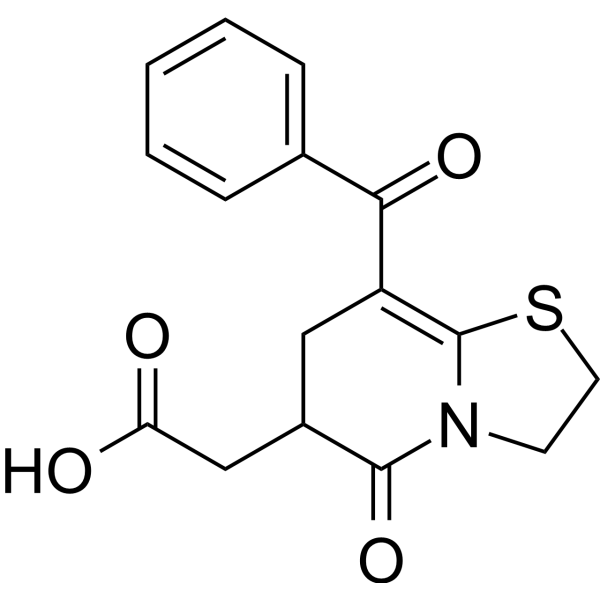
JMJD1C-IN-1 is an orally active and selective inhibitor of JMJD1C (IC50 = 0.59 μM, Kd = 1.96 μM). JMJD1C-IN-1 inhibits the binding of JMJD1C to H3K9me2 peptide substrate in the HTRF assay (IC50 = 1.47 μM). JMJD1C-IN-1 disrupts intratumoral regulatory T (Treg) cell fitness by dual mechanisms: promoting H3K9me2 accumulation to downregulate PD1 expression and reducing STAT3 demethylation to enhance STAT3 activation. JMJD1C-IN-1 demonstrates dose-dependent antitumor efficacy in multiple mouse tumor models (MCA205 fibrosarcoma, B16-F10 melanoma, LLC lung cancer, Hepa1-6 hepatocellular carcinoma, CT26 colorectal cancer). JMJD1C-IN-1 can be used for the study of tumor immunotherapy by selectively targeting intratumoral Treg cells .
loading...
    loading...
Cat. No.: HY-P991061
CAS No.: 3024486-14-1
Synonyms: CHS-114; SRF-114
Target:  

CCR

Research Areas:  

Cancer

Tagmokitug (CHS-114; SRF-114) is a fully human IgG1 antibody targeting CCR8. Tagmokitug selectively binds to human CCR8 (Kd = 502 pM) and mediates the death of CCR8-expressing cells via antibody-dependent cellular cytotoxicity and antibody-dependent cellular phagocytosis. Tagmokitug selectively eliminates intratumoral regulatory T cells, induces tumor growth inhibition, remodels the tumor immune microenvironment, and promotes the differentiation of cytotoxic CD8 + T cell subsets. Tagmokitug can be used for the research of solid tumors .
loading...
    loading...
Cat. No.: HY-P10862
Target:  

Exosomes Virus Protease

Research Areas:  

Infection Cancer

AH-D peptide is a brain-penetrant antiviral agent disrupting highly curved lipid membranes. AH-D peptide exhibits broad-spectrum antiviral activity against ZIKV, Dengue virus, Chikungunya virus, yellow fever virus and Japanese encephalitis virus, with
IC50
values of 11.9, 12.5, 35.7, 206 and 136 nM, respectively. AH-D peptide reduces the viral load in the brain, suppresses inflammation, protects neurons, and does not damage the blood brain barrier. AH-D peptide restores antitumor immunity by decreasing circulating PD-L1 + exosomes, reducing intratumoral immunosuppressive cells (regulatory T cells, myeloid-derived suppressor cells), and enhancing T cell function. AH-D peptide inhibits membrane-enveloped viruses and cancer cell metastasis in vivo. AH-D peptide exhibits no immunogenicity and has negligible effects on normal tissues. AH-D peptide can be used for research in Zika virus and other mosquito-borne viruses, cancer immunotherapy and metastasis .
loading...
    loading...
Cat. No.: HY-P991582

Research Areas:  

Cancer

BI-1607 is a humanized monoclonal antibody targeting FcγRIIB/CD32b. BI-1607 selectively blocks inhibitory FcγRIIB signaling, abrogates its inhibitory function, redirects tumor cell-bound antibodies to activating FcγRs, and its modified Fc region prevents the binding of its own Fc segment to FcγRs. BI-1607 reduces αPD-1 trogocytosis, enhances the effector functions of anti-tumor antibodies (including ADCP and ADCC, promotes intratumoral regulatory T cell (Treg) depletion, myeloid cell reprogramming, induction of interferon-γ (IFN-γ) and CXCL10, and increases the number of activated effector CD8 + T cells. BI-1607 can be used in research related to colorectal cancer, HER2-positive advanced solid tumors, HER2-positive locally advanced or metastatic breast cancer, and HER2-positive metastatic gastric cancer .
loading...
    loading...
Cat. No.: HY-P991334

Research Areas:  

Cancer

INCAGN1949 is a human IgG1 monoclonal antibody (mAb) targeting TNFRSF4/OX40/CD134. INCAGN1949 selectively deplete intratumoral regulatory T cells .
loading...
    loading...
Cat. No.: HY-P992395
Synonyms: JNJ-711

Target:  

TNF Receptor NF-κB

Research Areas:  

Cancer

JNJ-64164711 (JNJ-711) is a bifunctional antibody that simultaneously targets human GITR/TNFRSF18 and FcγRIIIa. JNJ-64164711 binds to the GITR domain to activate the NF-κB signaling pathway, while binding to FcγRIIIa to support antibody-dependent cellular cytotoxicity (ADCC). JNJ-64164711 can specifically eliminate GITR-positive hematological tumor cells, activated T cells and intratumoral regulatory T cells through the ADCC mechanism, thereby significantly enhancing the body's anti-tumor immune response. JNJ-64164711 can be used in research related to non-small cell lung cancer, colorectal cancer, prostate cancer, renal cell carcinoma and hematological tumors .
loading...
    loading...
Cat. No.: HY-P991911

Research Areas:  

Cancer

PLT012 is a humanized IgG4 antibody targeting CD36. PLT012 inhibits the lipid-binding domain of CD36. PLT012 blocks CD36-mediated metabolic adaptation in regulatory T cells (Tregs) and CD8 + tumor-infiltrating lymphocytes (TILs), thereby inhibiting tumor growth and shifting the tumor microenvironment from immunosuppressive to immunosupportive. PLT012 reduces intratumoral Tregs, enhances CD8 + T cell infiltration and cytotoxic function, and increases the abundance of progenitor-exhausted T cells. PLT012 exerts robust antitumor activity and synergizes with anti-PD-L1 or standard-of-care regimens (anti-VEGF + anti-PD-L1). PLT012 can be used for hepatocellular carcinoma, colorectal cancer and solid tumor research .
loading...
    loading...
Cat. No.: HY-P991944

Target:  

CCR

Research Areas:  

Cancer

ZL-1218 is a selective humanized IgG1 antibody, targeting CCR8. ZL-1218 induces antibody-dependent cellular cytotoxicity (ADCC), leading to NK cell-mediated depletion of CCR8-expressing regulatory T cells (Tregs). ZL-1218 blocks the binding of the CCR8 ligand CCL1 to CCR8 and reduces Treg recruitment by inhibiting the chemotaxis of CCR8 + cells. ZL-1218 reduces intratumoral Treg levels in a dose-dependent manner. ZL-1218 exerts enhanced antitumor activity when combined with the anti-PD-1 antibody. ZL-1218 can be used for solid tumour research .
loading...
    loading...

