
12 Results for "

ligand-binding site

" in MedChemExpress (MCE) Product Catalog:
Products (12)

12 Results for "ligand-binding site" in MCE Product Catalog:

  • Targets Recommended:
7
7 Cited Publications
Cat. No.: HY-N0010
CAS No.: 27741-01-1
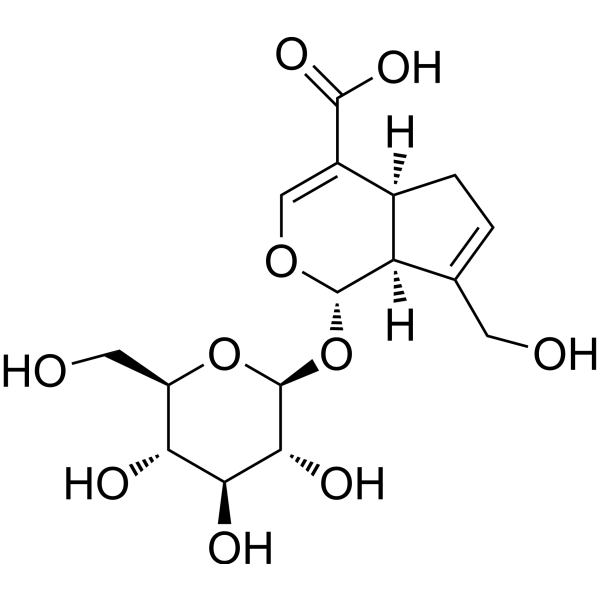
Geniposidic acid is an orally active FXR modulator and SIRT6 activator. Geniposidic acid binds to the Ser332 and His447 sites on the FXR ligand-binding domain, thereby driving nuclear translocation, coactivator recruitment, and transcription of downstream bile acid and cholesterol metabolism-related genes. Geniposidic acid improves metabolic dysfunction-related fatty liver disease by activating the SIRT6 signaling pathway. Geniposidic acid inhibits inflammation and modulates gut microbiota to alleviate colitis. Geniposidic acid can be used in research on drug-induced liver injury, inflammatory bowel disease, metabolic dysfunction-related fatty liver disease, and metabolic dysfunction-related steatohepatitis .
loading...
    loading...
Cat. No.: HY-P9964
CAS No.: 906805-06-9
Synonyms: 11F8; IMC-11F8; LY3012211

Target:  

EGFR

Research Areas:  

Cancer

Necitumumab (11F8; IMC-11F8; LY3012211) is a human IgG monoclonal antibody directed against EGFR. Necitumumab binds to the EGF binding site of EGFR, blocks ligand binding, neutralizes ligand-induced EGFR phosphorylation and downstream signaling, induces EGFR internalization and degradation, and mediates antibody-dependent cellular cytotoxicity (ADCC) in EGFR-expressing cells. Necitumumab enhances antitumour activity in combination with Gemcitabine (HY-17026) and Cisplatin (HY-17394) in murine non-small-cell lung cancer xenograft models. Necitumumab can be used in research on cancers such as non-small cell lung cancer and colorectal cancer .
loading...
    loading...
Cat. No.: HY-P991224

Target:  

CCR

Research Areas:  

Inflammation/Immunology Cancer

CAP-100 is a monoclonal antibody that targets CCR7. CAP-100 neutralizes the ligand-binding site and signaling of CCR7. CAP-100 strongly inhibits CCR7-induced migration, extravasation, homing, and survival in chronic lymphocytic leukemia (CLL) samples. CAP-100 triggers potent tumor cell killing, mediated by host immune mechanism. CAP-100 shows a favorable toxicity profile on relevant hematopoietic subsets. CAP-100 is involved in research on anti-tumor and disease such as CLL .
loading...
    loading...
Cat. No.: HY-B1403
CAS No.: 84-17-3
Target:  

Estrogen Receptor/ERR

Research Areas:  

Endocrinology

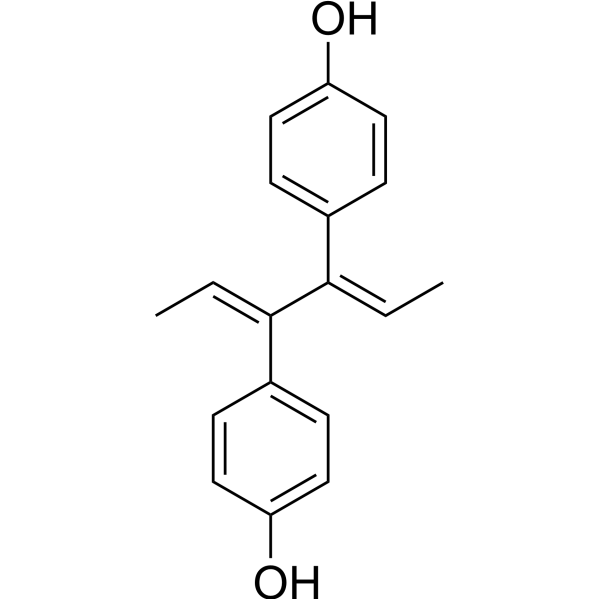
Dienestrol is an orally active nonsteroidal estrogen. Dienestrol prevents the formation of implantation swellings in the uterus by inhibiting ovum discharge .
loading...
    loading...
Cat. No.: HY-160250
CAS No.: 2097024-37-6
Target:  

Fluorescent Dye UGT

Research Areas:  

Metabolic Disease

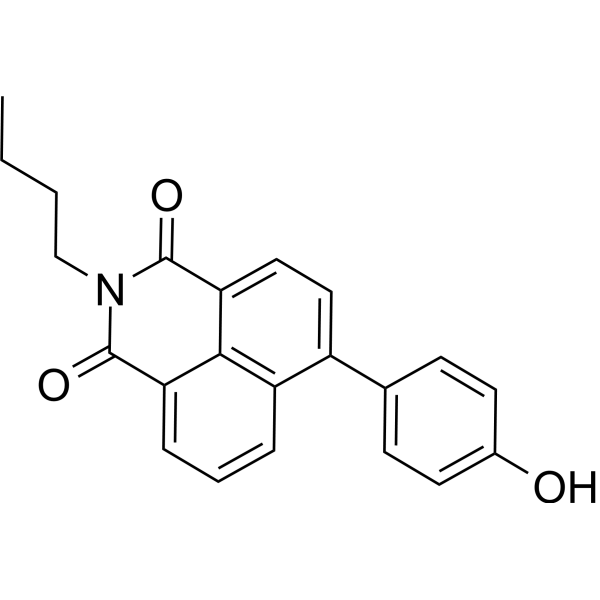
UGT1A1-IN-1 is a UGT1A1 inhibitor and fluorescent probe (Ex=370 nm, Em=520 nm), with an IC50 of 1.33 μM and a Ki of 5.02 μM. UGT1A1-IN-1 is selectively glucuronidated by UGT1A1 at the bilirubin homologous binding site, and its PET effect is blocked along with this reaction, triggering fluorescence changes. UGT1A1-IN-1 can serve as a substitute for bilirubin to detect UGT1A1 activity and perform high-throughput screening of UGT1A1 modulators .
loading...
    loading...
Cat. No.: HY-P991553

Target:  

TNF Receptor Apoptosis

Research Areas:  

Inflammation/Immunology Cancer

HeFi-1 is a mouse anti-CD30 IgG1 monoclonal antibody. HeFi-1 recognizes the ligand-binding site on CD30. HeFi-1 can inhibit the growth of tumor cells with high expression of CD30. HeFi-1 can induce eosinophil apoptosis. HeFi-1 can be used for researches on cancer or inflammation conditions such as anaplastic large-cell lymphoma (ALCL) and asthma .
loading...
    loading...
Cat. No.: HY-D2857
NBD-Stearic acid is a stearic acid labeled with a nitrobenzoxadiazole (NBD) fluorophore. NBD-Stearic acid can be used as a probe for fatty acid uptake or the the ligand binding sites of fatty acid and sterol carrier proteins (FABP)
loading...
    loading...
Cat. No.: HY-141551
CAS No.: 2369048-69-9
Purity:  98.00%
Target:  

Estrogen Receptor/ERR

Research Areas:  

Cancer

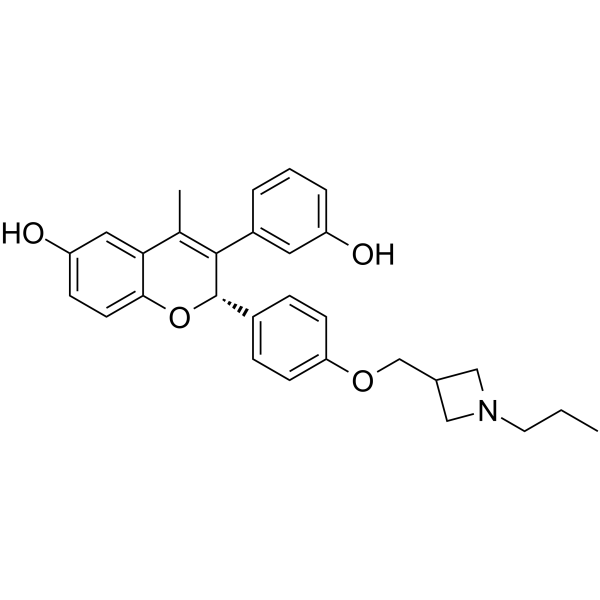
GNE-274 is a structural analog of the ER degrader GDC-0927 and is a non-degrader. GNE-274 does not induce conversion of ER in breast cancer cell lines and functions as a partial ER agonist (partial ER agonist). GNE-274 increases the chromatin accessibility of ER-DNA binding sites, whereas GDC-0927 does not. GNE-274 is an effective ER ligand binding domain (LBD) inhibitor. GNE-274 can be used in cancer research.
loading...
    loading...
Cat. No.: HY-180554
CAS No.: 300587-89-7
Research Areas:  

Neurological Disease

UCB1244283 is a synaptic vesicle glycoprotein 2A (SV2A) allosteric modulator. UCB1244283 binds to a secondary ligand-binding site in SV2A and enhances orthosteric ligand engagement when the orthosteric site is occupied, by stabilizing the occluded state and slowing ligand dissociation. UCB1244283 shows a clear protective effect against both tonic and clonic convulsions in sound-sensitive mice. UCB1244283 can be used for epilepsy research .
loading...
    loading...
Cat. No.: HY-183602
Target:  

DNA/RNA Synthesis

Research Areas:  

Cancer

FRC-303 is a CHD1 inhibitor with a Kd of 0.14 μM and an IC50 of 0.18 μM. FRC-303 binds to the H3K4me3 binding site of CHD1 tandem chromodomain, forms aromatic cage interactions and extended ligand contacts, acts as a methyl-lysine mimic, and occupies natural peptide ligand-binding regions. FRC-303 can be used for the research of prostate cancer .
loading...
    loading...
Cat. No.: HY-181020
Research Areas:  

Cancer

Deltafluorine is a phosphodiesterase delta (PDEδ) inhibitor with an IC50 of 27 nM, a KD of 148 nM. Deltafluorine covalently modifies the specific glutamate residue p.E88 in the ligand binding site of PDEδ, interfering with its chaperone function. Deltafluorine inhibits signaling through the MAPK and Akt-mTOR pathway, reduces ERK1/2 expression. Deltafluorine reduces tumor volume in an autochthonous mouse model of Kras-driven lung adenocarcinoma. Deltafluorine can be used for the research of lung adenocarcinoma .
loading...
    loading...
Cat. No.: HY-P12012
CAS No.: 870274-84-3
Research Areas:  

Inflammation/Immunology

PP1 peptide is an antagonist that specifically binds to scavenger receptor AI (SR-AI), with an IC50 of 29 μM against bovine SR-AI. By recognizing SR-AI which is highly expressed on macrophages, PP1 peptide enables precise targeting and internalization of inflammatory regions within atherosclerotic plaques. PP1 peptide can be used in research related to atherosclerosis .
loading...
    loading...
  • 1

