1. Search Result
Search Result
Pathways Recommended: PROTAC
Results for "

peptide PROTACs

" in MedChemExpress (MCE) Product Catalog:

20

Inhibitors & Agonists

6

Peptides

1

Click Chemistry

Cat. No. Product Name Target Research Areas Chemical Structure
  • HY-111866
    PROTAC RIPK degrader-2
    1 Publications Verification

    PROTACs RIP kinase Metabolic Disease Cancer
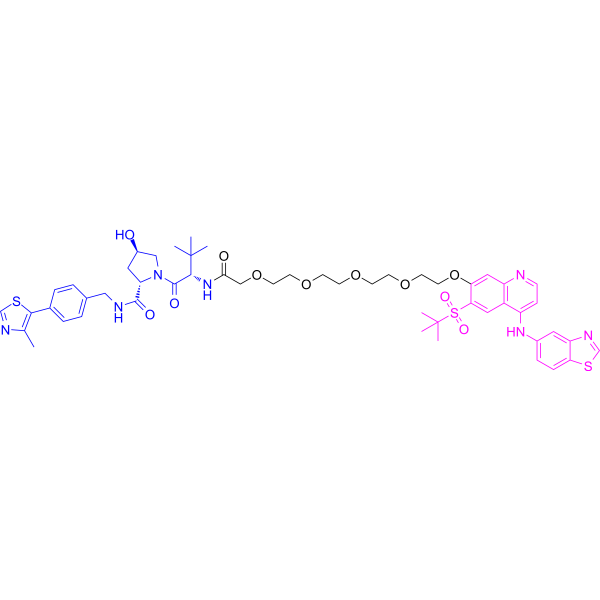
    PROTAC RIPK degraders -2 is a non-peptide PROTAC based on von Hippel-Lindau and targets serine-threonine kinase RIPK2, which is highly selective to the degradation of RIPK2. PROTAC RIPK degrader-2 acts as an activator to increase cell death and activate ion channels in cancer cells. PROTAC RIPK degrader-2 also can inhibit protein interactions, such as receptors and ligands, involved in a variety of diseases, such as cancer and diabetes .
    PROTAC RIPK degrader-2
  • HY-149845

    PROTACs GSK-3 Neurological Disease
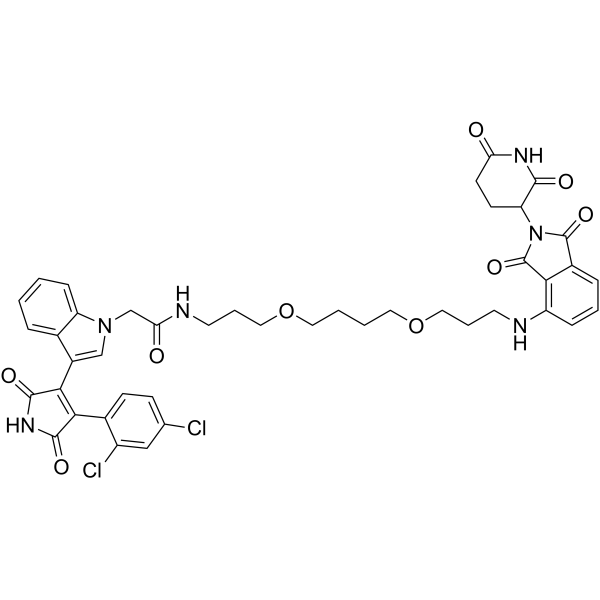
    PROTAC GSK-3β Degrader-1 (compound 1) is a degrader targets GSK-3β degradation with an IC50 value of 833 nM. PROTAC GSK-3β Degrader-1 contains SB-216763 (a GSK-3β inhibitor), a PEG linker and a CRBN (E3 ligase liand). PROTAC GSK-3β Degrader-1 reduces the neurotoxicity induced by Aβ25-35 peptide and CuSO4. PROTAC GSK-3β Degrader-1 can be used to research in Alzheimer's disease .
    PROTAC GSK-3β Degrader-1
  • HY-P11228

    PROTACs Apoptosis DNA/RNA Synthesis Cancer
    FPP29 is a potent peptide-based FOXM1 PROTAC degrader. FPP29 induces ubiquitination and degradation of FOXM1. FPP29 inhibits FOXM1 via the ubiquitin-proteasome degradation pathway. FPP29 induces Apoptosis. FPP29 suppresses tumor growth in hepatocellular carcinoma xenograft models. FPP29 can be used in the research of hepatocellular carcinoma (cell-penetrating peptide: (HY-P0133); VHL ligase ligand: (HY-P11493); linker: (HY-W013664); FOXM1 ligand: (HY-P11494)) .
    FPP29
  • HY-P10446

    Epigenetic Reader Domain PROTACs Cancer
    TAT-PiET-PROTAC is a proteolysis-targeting chimera (PROTAC)-modified TAT-PiET (HY-P10445), which is a cell-penetrating peptide targeting the extra-terminal (ET) domain of BRD4. TAT-PiET-PROTAC can reduce BRD4 and JMJD6 levels and inhibit cell proliferation. TAT-PiET-PROTAC also resists the endocrine resistance of ERα-positive breast cancer cells. TAT-PiET-PROTAC can be used for the research of cancer, such as breast cancer .
    TAT-PiET-PROTAC
  • HY-162946

    Ligands for Target Protein for PROTAC Cancer
    Alkyne-P60 is a potent 15-mer peptide inhibitor of Foxp3. Alkyne-P60 can bind with Foxp3, hinder its nuclear translocation, and diminish Foxp3-mediated inhibition of NFKB and NFAT functions. Alkyne-P60 is a ligand for target protein for PROTAC (HY-162943).
    Alkyne-P60
  • HY-45669

    PROTAC Linkers Cancer
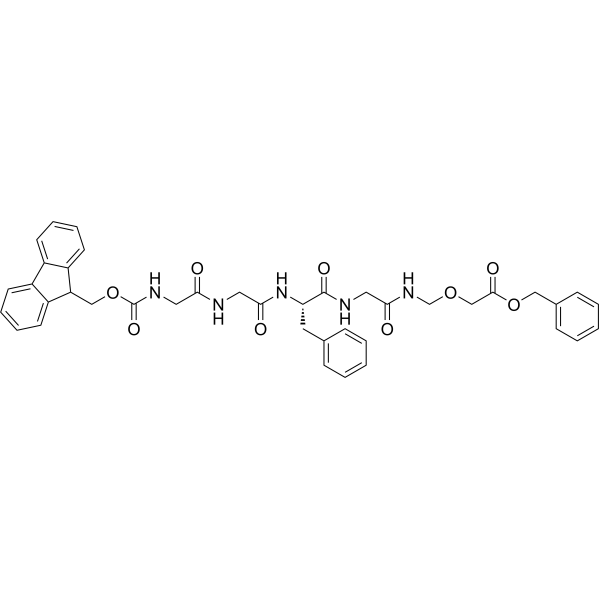
    Fmoc-Gly-Gly-Phe-Gly-CH2-O-CH2-Cbz is a PROTAC linker and a maleimide-GGFG peptide linker. Fmoc-Gly-Gly-Phe-Gly-CH2-O-CH2-Cbz can be used in the synthesis of the Deruxtecan .
    Fmoc-Gly-Gly-Phe-Gly-CH2-O-CH2-Cbz
  • HY-46346

    PROTAC Linkers Cancer
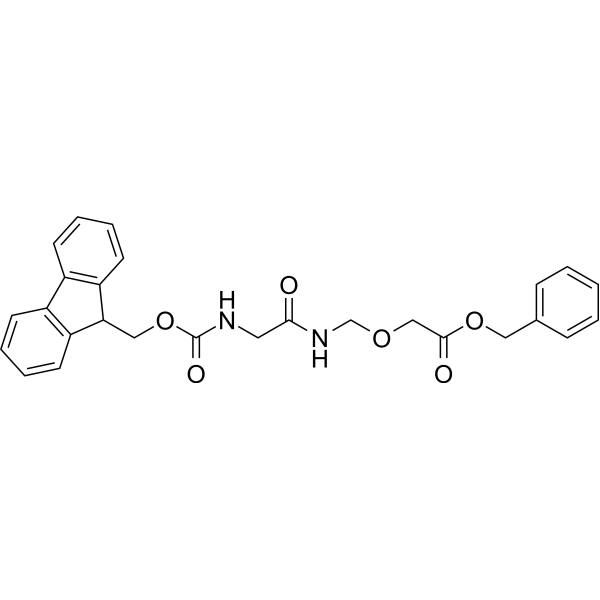
    Fmoc-Gly-NH-CH2-O-CH2-Cbz is a PROTAC linker and a maleimide-GGFG peptide linker. Fmoc-Gly-NH-CH2-O-CH2-Cbz can be used in the synthesis of the Deruxtecan .
    Fmoc-Gly-NH-CH2-O-CH2-Cbz
  • HY-P10981

    PI3K Ligands for E3 Ligase Cancer
    ErbB2 peptide is a peptide ligand of E3 ubiquitin ligase targeting PI3K for peptide PROTACs .
    ErbB2 peptide
  • HY-46398

    PROTAC Linkers Cancer
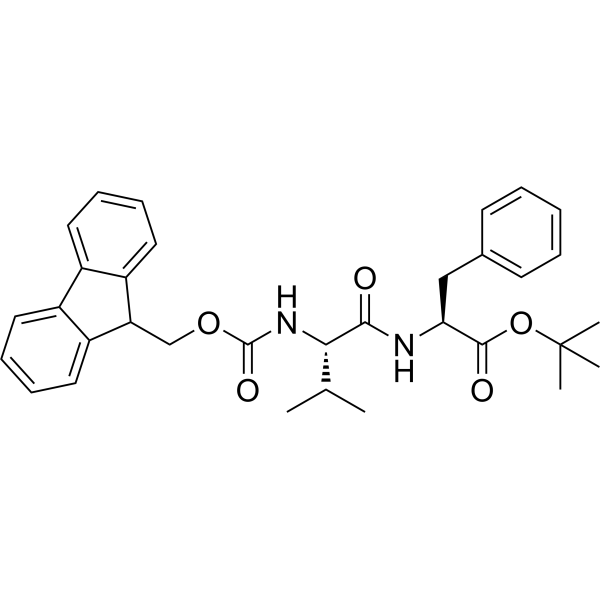
    Fmoc-Val-Phe-Boc is a PROTAC linker and a maleimide-GGFG peptide linker. Fmoc-Val-Phe-Boc can be used in the synthesis of the Deruxtecan .
    Fmoc-Val-Phe-Boc
  • HY-161394

    Ligands for Target Protein for PROTAC Cancer
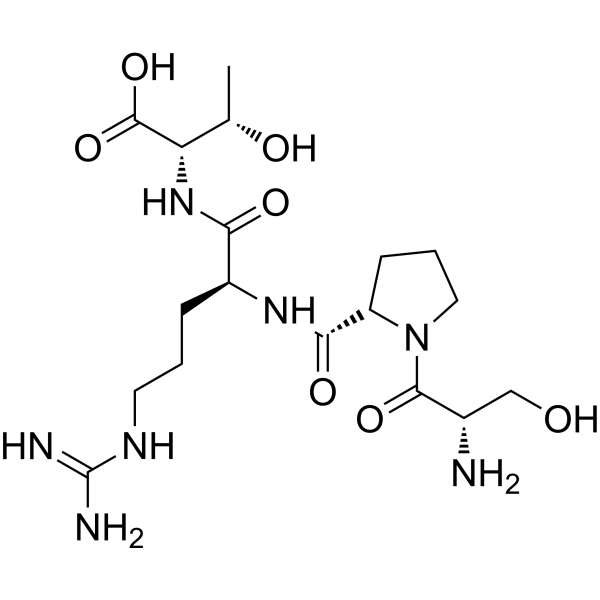
    SPRT is a short peptide of RB transcriptional corepressor 1 (RB), serving as a fragment of RB-CO-PEG5-C2-CO-VH032 (HY-161393) for the synthesis of PROTAC .
    SPRT
  • HY-156388

    PROTAC Linkers Cancer
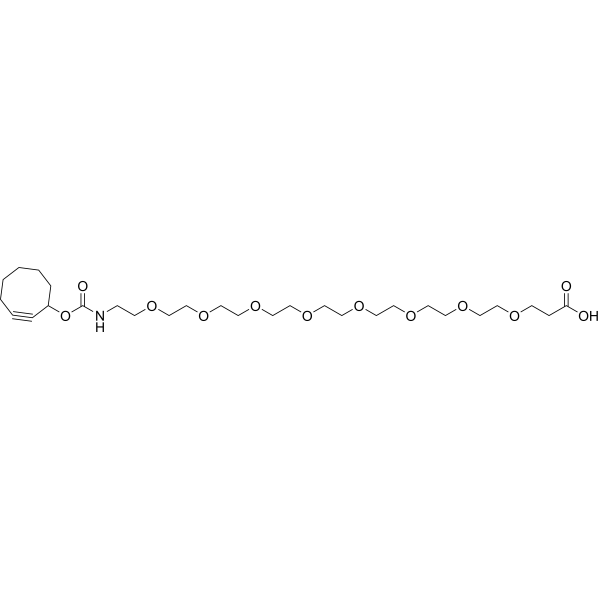
    SCO-PEG8-COOH is a PROTAC linker and belongs to the PEG class. SCO-PEG8-COOH contains SCO and COOH that can be covalently combined with amino groups, respectively. SCO is often used to react with amino acid residues of proteins or peptides, particularly lysine.
    SCO-PEG8-COOH
  • HY-156387

    PROTAC Linkers Cancer
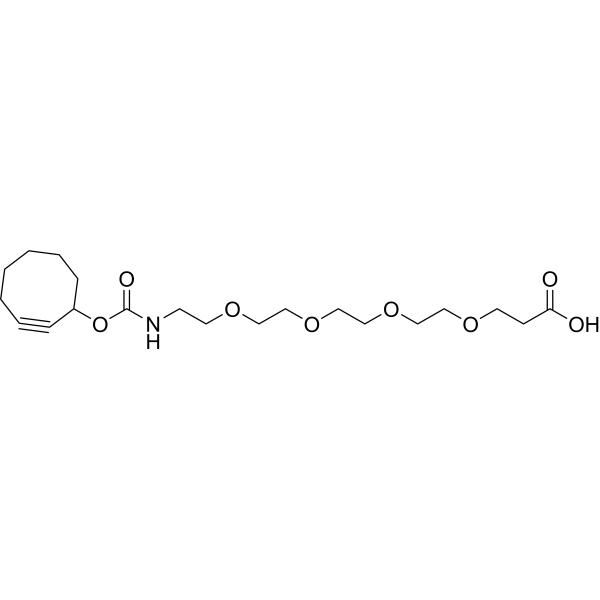
    SCO-PEG4-COOH is a PROTAC linker and belongs to the PEG class. SCO-PEG4-COOH contains SCO and COOH that can be covalently combined with amino groups, respectively. SCO is often used to react with amino acid residues of proteins or peptides, particularly lysine.
    SCO-PEG4-COOH
  • HY-156386

    PROTAC Linkers Cancer
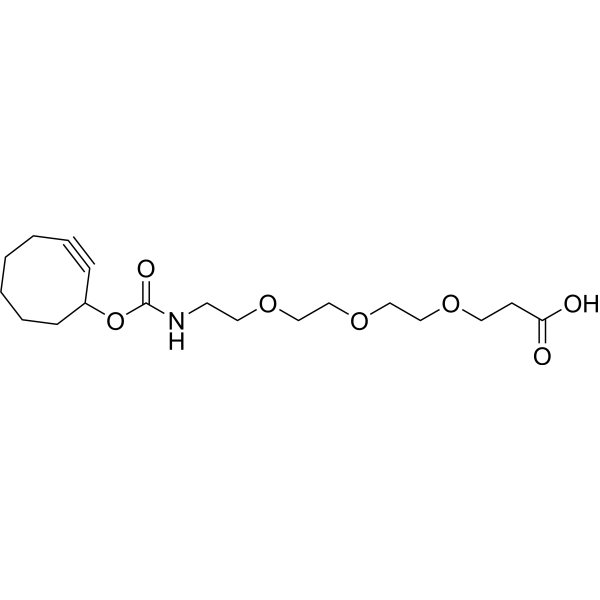
    SCO-PEG3-COOH is a PROTAC linker and belongs to the PEG class. SCO-PEG3-COOH contains SCO and COOH that can be covalently combined with amino groups respectively. SCO is often used to react with amino acid residues of proteins or peptides, particularly lysine.
    SCO-PEG3-COOH
  • HY-156385

    PROTAC Linkers Cancer
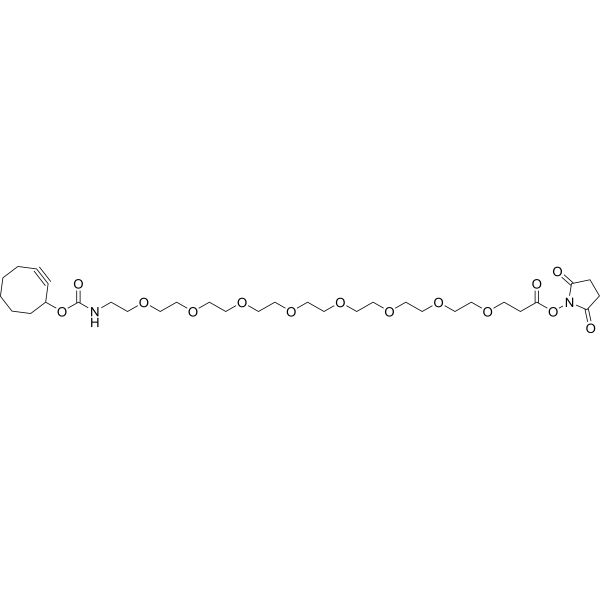
    SCO-PEG8-NHS SCO is a PROTAC linker and belongs to the PEG class. SCO-PEG8-NHS SCO contains SCO and NHS esters that can be covalently bound to amino groups, respectively. SCO is often used to react with amino acid residues of proteins or peptides, particularly lysine.
    SCO-PEG8-NHS
  • HY-49453

    PROTAC Linkers Cancer
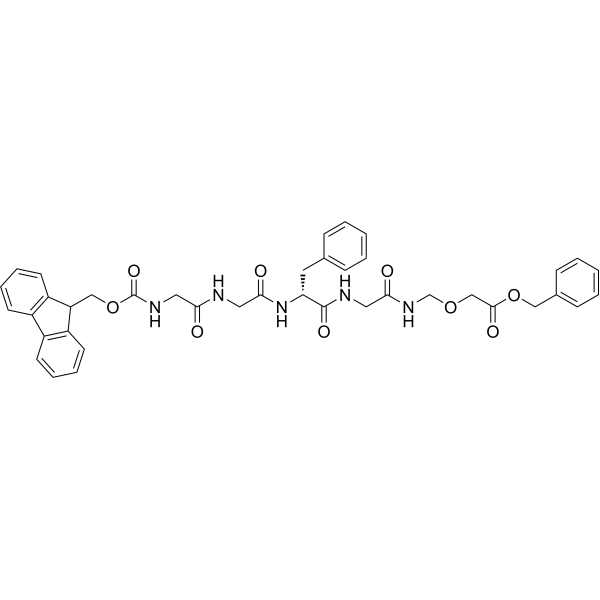
    Fmoc-Gly-Gly-(D-Phe)-Gly-CH2-O-CH2-Cbz is a PROTAC linker and a maleimide-GGFG peptide linker. Fmoc-Gly-Gly-(D-Phe)-Gly-CH2-O-CH2-Cbz can be used in the synthesis of the Deruxtecan .
    Fmoc-Gly-Gly-(D-Phe)-Gly-CH2-O-CH2-Cbz
  • HY-P11631

    Ligands for E3 Ligase Cancer
    Arg12, a 12-amino acid peptide sequence, is an E3 ubiquitin ligase ligand. Arg12 can be used to synthesize PROTACs, such as PROTAC PLK1 Degrader-2 (HY-180989). Arg12 can also act as a cell transmembrane peptide (CPP), facilitating the entire molecule to enter the cell .
    Arg12
  • HY-180990

    Ligands for Target Protein for PROTAC Polo-like Kinase (PLK) Cancer
    POI ligand-3 (Compound 4j) is a type of peptide-based PLK1 PBD inhibitor. POI ligand-3 can act as a target protein ligand and be used for the synthesis of PROTACs, such as PROTAC PLK1 Degrader-2 (HY-180989) .
    POI ligand-3
  • HY-181164

    PROTACs Epigenetic Reader Domain HIV Infection
    PROTAC BRD4 Degrader-43 is a BRD4 PROTAC degrader. PROTAC BRD4 Degrader-43 recruits the DCAF1-DDB1-Cul4A E3 ligase complex via a Vpr-derived peptide moiety to induce BRD4 ubiquitination and degradation through the ubiquitin-proteasome system. PROTAC BRD4 Degrader-43 exhibits potent HIV latency-reversing activity. PROTAC BRD4 Degrader-43 can be used for the research of HIV-1 latent infection . (Pink: BRD4 ligand (HY-13030); Blue: Cul4A-DDB1-DCAF1 ligand (HY-P11640); Black: conjugate of PEG linker + cell-penetrating peptide (HY-P2483))
    PROTAC BRD4 Degrader-43
  • HY-182336

    PROTACs Dipeptidyl Peptidase GLP Receptor Inflammation/Immunology Cancer
    DeDPP4 is a DPP-4 PROTAC degrader. DeDPP4 induces sustained elevation of glucagon-like peptide-1 (GLP-1), enhances glucose tolerance, causes persistent reduction of blood glucose, and achieves long-term blood glucose regulation in animal models of type 2 diabetes. DeDPP4 mediates dose-dependent DPP-4 depletion in cancer cells, and also targets and degrades DPP-4 in the liver and adipose tissues of animal models with type 2 diabetes. DeDPP4 can be used for the research of type 2 diabetes and non-small cell lung cancer .
    DeDPP4
  • HY-182983

    Ligands for E3 Ligase Others
    DDB1 ligand-1 is a DNA damage-binding protein 1 (DDB1) ligand. DDB1 ligand-1 binds to a unique pocket on the β propeller C (BPC) domain of DDB1, induces conformational changes, and blocks the canonical DCAF/HBx peptide binding site of DDB1. DDB1 ligand-1 engages full-length DDB1 in cellular settings and supports PROTAC development research .
    DDB1 ligand-1

Inquiry Online

Your information is safe with us. * Required Fields.

Salutation


Country or Region *

Applicant Name *


Organization Name *

Department *


Email Address *


Product Name *

Cat. No.


Requested quantity *

Phone Number *


Remarks

Inquiry Online

Inquiry Information

Product Name:
Cat. No.:
Quantity:
MCE Japan Authorized Agent:

