



PROTAC RIPK degrader-2
Based on 1 publication(s) in Google Scholar
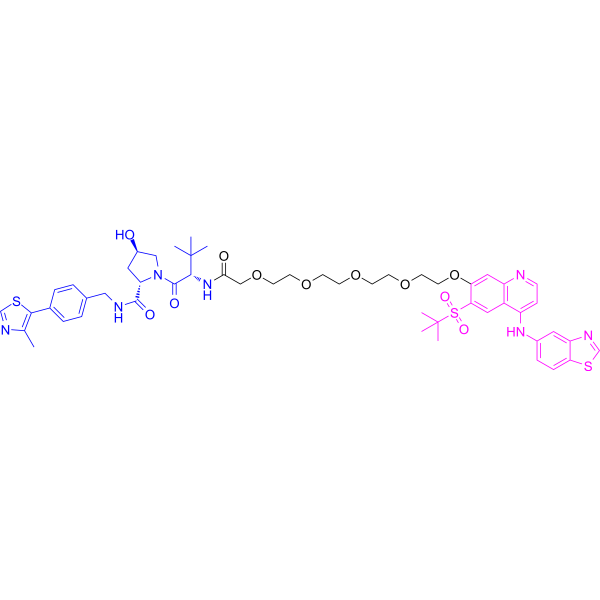
PROTAC RIPK degrader-2 is a non-peptidic PROTAC degrader targeting RIPK2, with a DC50 of 1.5 nM. PROTAC RIPK degrader-2 recruits VHL or cereblon E3 ubiquitin ligases, induces ubiquitination and proteasomal degradation of RIPK2, acts via substoichiometric catalysis, and inhibits downstream pro-inflammatory signaling pathways. PROTAC RIPK degrader-2 inhibits the NOD2/RIPK2 pathway and suppresses MDP (HY-127090)-stimulated TNFα release in human whole blood. PROTAC RIPK degrader-2 can be used in studies related to acute monocytic leukemia and glucose metabolism.
(Pink: RIPK2 ligand (HY-43784); Blue: VHL ligand (HY-125845); Black: linker).
For research use only. We do not sell to patients.
- Purity : 99.89%
- CAS No.: 1801547-16-9
- Formula: C52H65N7O11S3
- Molecular Weight:1060.31
-
Storage:Powder -20°C, 3 years , 4°C, 2 years ; In solvent -80°C, 2 years , -20°C, 1 year

To place orders, for customer services and technical support, please contact: MedChemExpress USA
Tel: 609-228-6898 E-mail: [email protected] [email protected]


-
 Biological Activity
-
Chemical Information
-
Solvent & Solubility
- Protocols
- Purity & Documentation
- References
-
 Help & FAQs


-
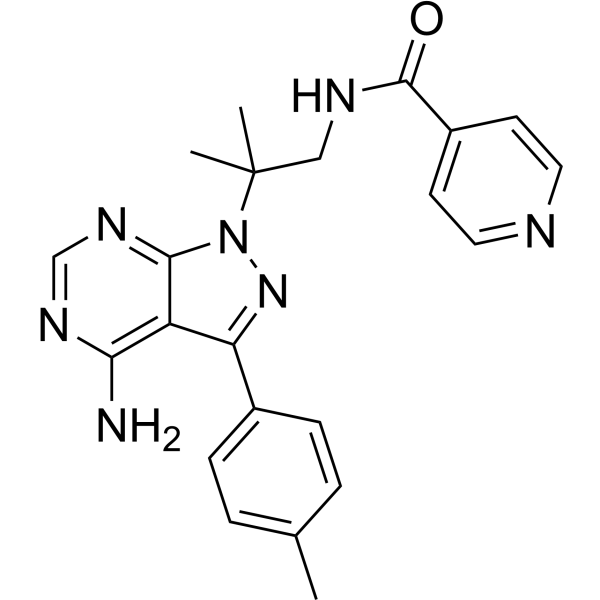
HY-18937
WEHI-345RIPK2 Inhibitor -
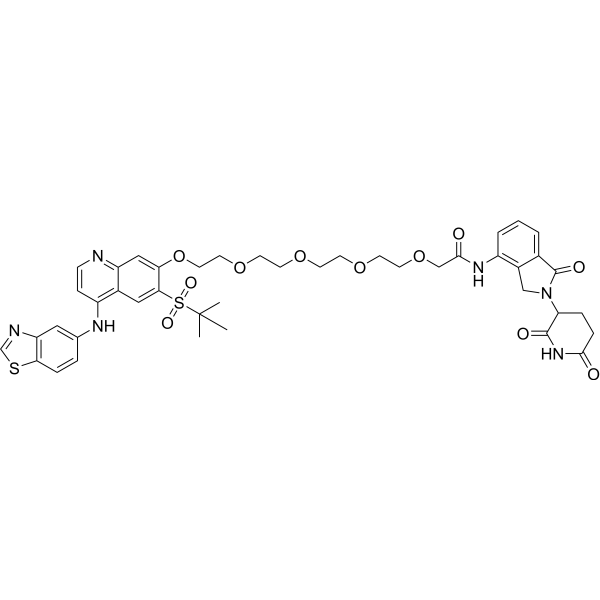
HY-111870
PROTAC RIPK degrader-6RIPK2 PROTAC Degrader -
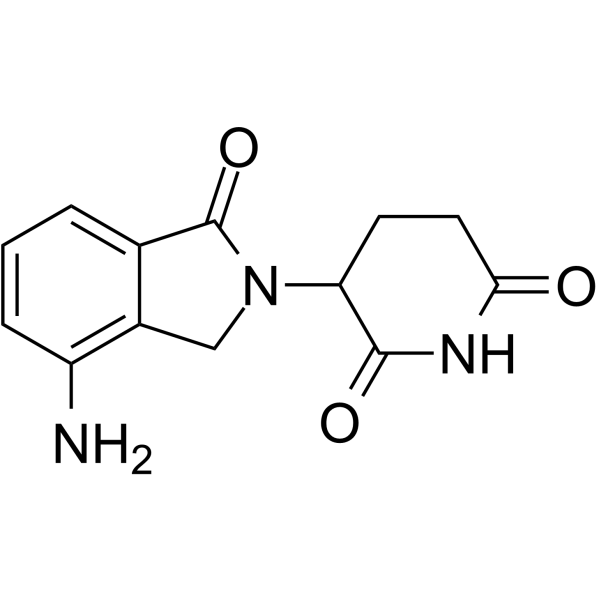
HY-A0003
LenalidomideImmunomodulator -
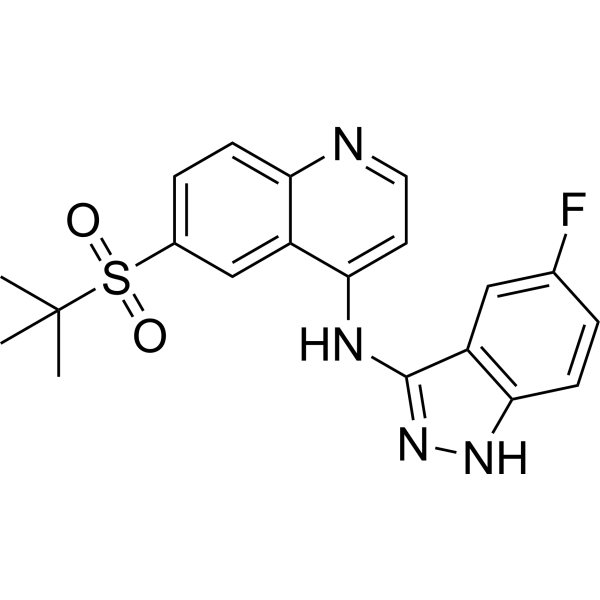
HY-100339
GSK583RIPK2 Inhibitor -
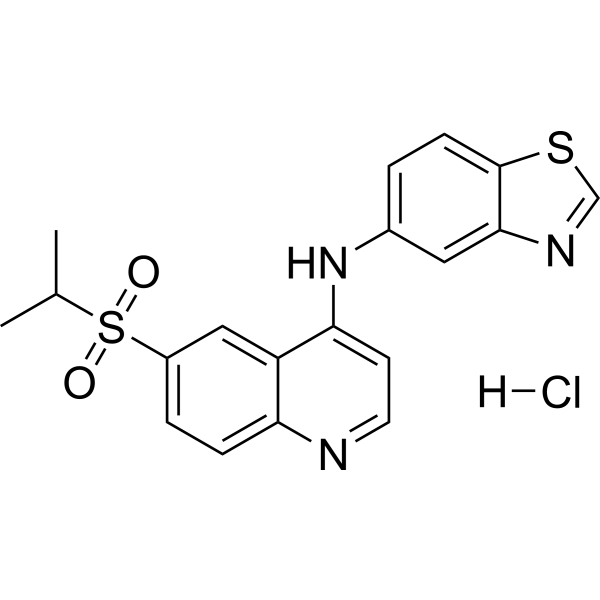
HY-101872A
GSK-872 hydrochlorideRIPK3 Inhibitor -
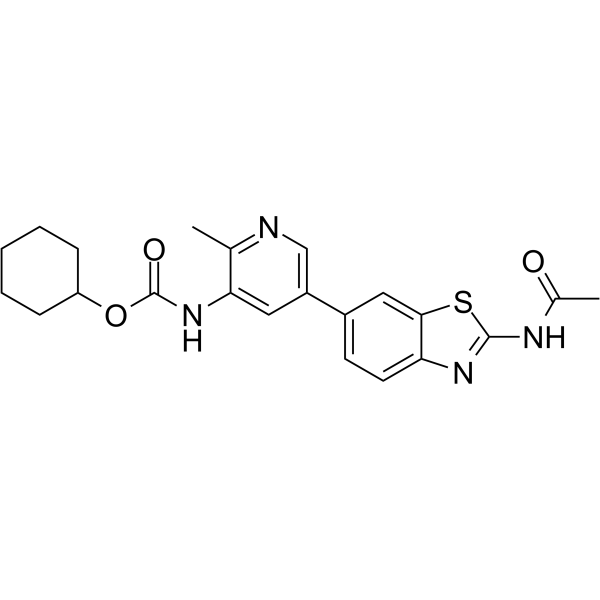
HY-128348
PK68RIPK1 Inhibitor -
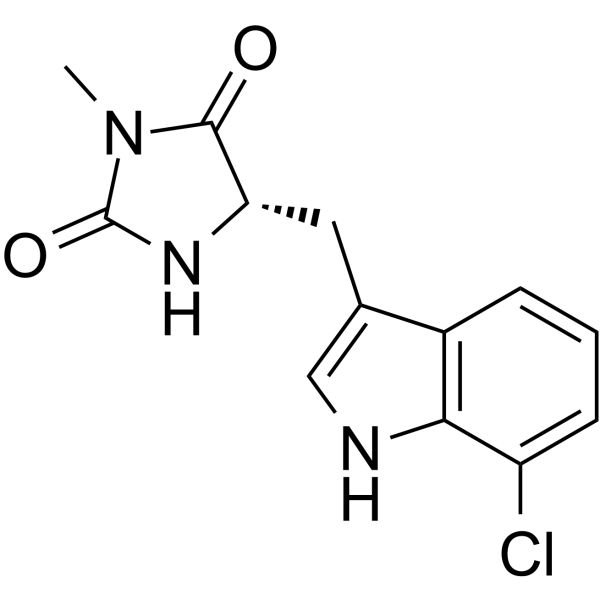
HY-14622B
Necrostatin 2 (S enantiomer)Necrostatin Isomer -
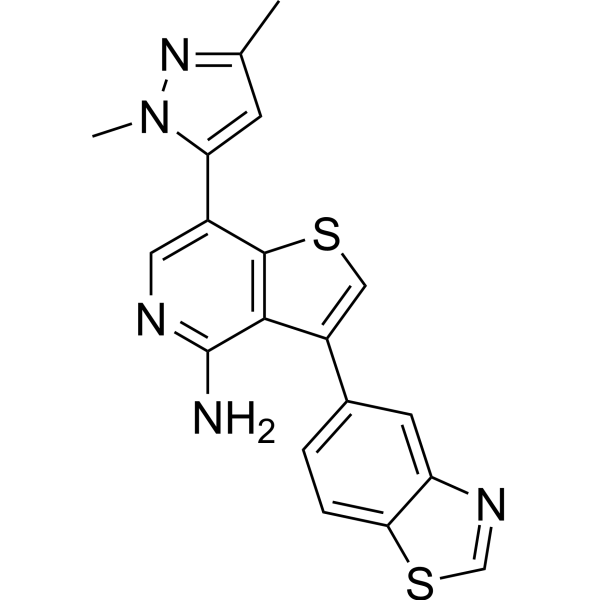
HY-125402
GSK-843RIP3 Inhibitor -
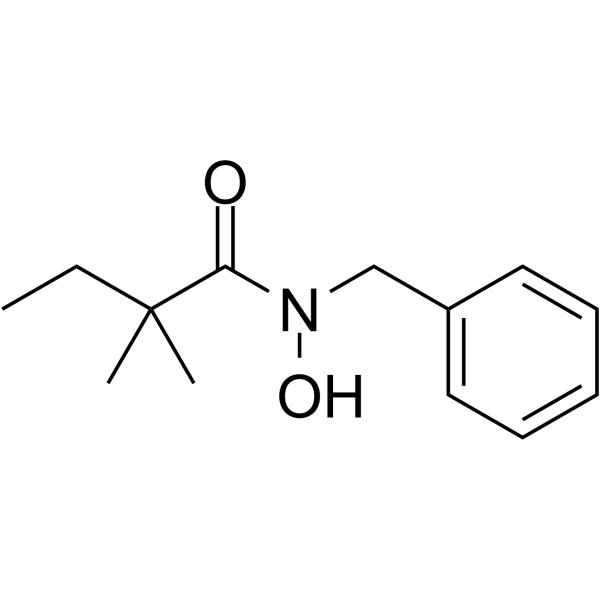
HY-101032
RIPA-56RIP1 Inhibitor -
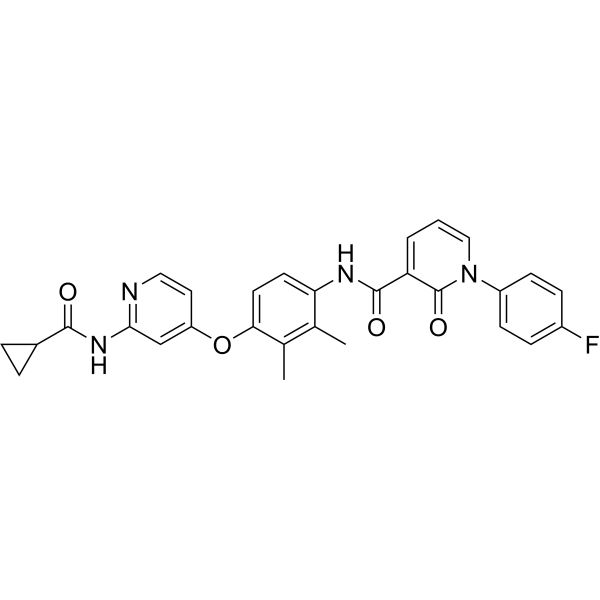
HY-131064
RIPK3-IN-1RIPK3 Inhibitor -
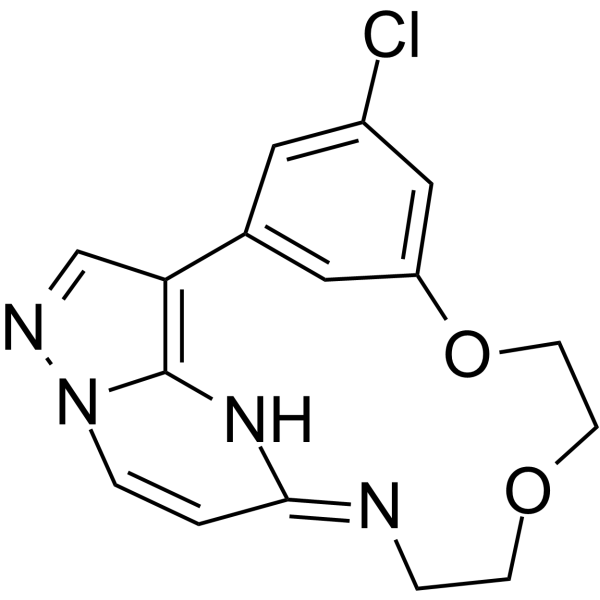
HY-19628
OD36RIPK2/ALK2 Inhibitor -
HY-100131
GSK481RIP1 Kinase Inhibitor
Publications Citing Use of MedChemExpress (MCE) PROTAC RIPK degrader-2
MoreAll PROTACs Isoforms
More

Biological Activity
Description
|
RIPK2 1.5 nM (DC50) |
TNFα 7.0 (pIC50) |
VHL |
Cellular Effect
|
Cell Line

|
Type | Value | Description | References |
|---|---|---|---|---|
| THP-1 | DC50 |
1.5 nM
|
RIPK2 protein degradation in human THP-1 cells assessed via automated capillary immunoblotting following 18 h incubation at 37 °C with 5% CO2.
RIPK2 protein degradation in human THP-1 cells assessed via automated capillary immunoblotting following 18 h incubation at 37 °C with 5% CO2.
|
34432979 |
In Vitro
PROTAC RIPK degrader-2 (compound 1) (18 h) potently degrades RIPK2 in THP-1 cells, with a DC50 of 1.5 nM[1].
PROTAC RIPK degrader-2 (0-30 μM, 16 h) downregulates RIPK protein levels in THP-1 cells in a dose-dependent manner[2].
PROTAC RIPK degrader-2 inhibits TNFα production in human whole blood with a pIC50 of 7.0[1].
MedChemExpress (MCE) has not independently confirmed the accuracy of these methods. They are for reference only. Further protocols information, click here.
-
Cell Line:THP-1 cells
-
Concentration:0, 0.3, 1, 3, 10 and 30 μM
-
Incubation Time:16 h
-
Result:Reduced ERRα levels by 50% and RIPK protein levels by ~20% in THP-1 cells.


Chemical Information
-
CAS No. 1801547-16-9
-
Appearance Solid
-
Molecular Weight 1060.31
-
Formula C52H65N7O11S3
-
Color Light yellow to yellow
-
SMILES
CC1=C(SC=N1)C2=CC=C(CNC([C@H]3N(C([C@H](C(C)(C)C)NC(COCCOCCOCCOCCOC4=CC5=C(C(NC6=CC=C(SC=N7)C7=C6)=CC=N5)C=C4S(C(C)(C)C)(=O)=O)=O)=O)C[C@H](O)C3)=O)C=C2
-
Shipping
Room temperature in continental US; may vary elsewhere.
-
Storage
Powder -20°C 3 years 4°C 2 years In solvent -80°C 2 years -20°C 1 year


Publications (1)
-
Journal Impact Factor
-
Most Recent
-
Sci Rep
Unraveling chain specific ubiquitination in cells using tandem ubiquitin binding entities. [Abstract]2025 Jul 2;15(1):22961. PMID: 40595035


Solvent & Solubility
In Vitro:
DMSO : 150 mg/mL (141.47 mM; Need ultrasonic; Hygroscopic DMSO has a significant impact on the solubility of product, please use newly opened DMSO)
Please refer to the solubility information to select the appropriate solvent. Once prepared, please aliquot and store the solution to prevent product inactivation from repeated freeze-thaw cycles.
Storage method and period of stock solution: -80°C, 2 years; -20°C, 1 year. When stored at -80°C, please use it within 2 years. When stored at -20°C, please use it within 1 year.
Please refer to the solubility information to select the appropriate solvent. Once prepared, please aliquot and store the solution to prevent product inactivation from repeated freeze-thaw cycles.
Storage method and period of stock solution: -80°C, 2 years; -20°C, 1 year. When stored at -80°C, please use it within 2 years. When stored at -20°C, please use it within 1 year.
Concentration (start) × Volume (start) = Concentration (final) × Volume (final)
In Vivo:
Select the appropriate dissolution method based on your experimental animal and administration route.
- For the following dissolution methods, please ensure to first prepare a clear stock solution using an In Vitro approach and then sequentially add co-solvents:
- To ensure reliable experimental results, the clarified stock solution can be appropriately stored based on storage conditions. As for the working solution for In Vivo experiments, it is recommended to prepare freshly and use it on the same day.
- The percentages shown for the solvents indicate their volumetric ratio in the final prepared solution. If precipitation or phase separation occurs during preparation, heat and/or sonication can be used to aid dissolution.
Add each solvent one by one: 10% DMSO 40% PEG300 5% Tween-80 45% Saline
Solubility: ≥ 7.5 mg/mL (7.07 mM); Clear solution
This protocol yields a clear solution of ≥ 7.5 mg/mL (saturation unknown).
Taking 1 mL working solution as an example, add 100 μL DMSO stock solution (75.0 mg/mL) to 400 μL PEG300, and mix evenly; then add 50 μL Tween-80 and mix evenly; then add 450 μL Saline to adjust the volume to 1 mL.
Preparation of Saline: Dissolve 0.9 g sodium chloride in ddH₂O and dilute to 100 mL to obtain a clear Saline solution.
Add each solvent one by one: 10% DMSO 90% (20% SBE-β-CD in Saline)
Solubility: 7.5 mg/mL (7.07 mM); Suspended solution; Need ultrasonic
This protocol yields a suspended solution of 7.5 mg/mL. Suspended solution can be used for oral and intraperitoneal injection.
Taking 1 mL working solution as an example, add 100 μL DMSO stock solution (75.0 mg/mL) to 900 μL 20% SBE-β-CD in Saline, and mix evenly.
Preparation of 20% SBE-β-CD in Saline (4°C, storage for one week): 2 g SBE-β-CD powder is dissolved in 10 mL Saline, completely dissolve until clear.
In Vivo Dissolution Calculator
Please enter the basic information of animal experiments:
-
-
-
-
Recommended: Prepare an additional quantity of animals to account for potential losses during experiments.
Please enter your animal formula composition:
-
%DMSO +
Recommended: Keep the proportion of DMSO in working solution below 2% if your animal is weak.
-
%+
-
+%Tween-80 + +
-
%Saline +
The co-solvents required include: DMSO, . All of co-solvents are available by MedChemExpress (MCE). , Tween 80. All of co-solvents are available by MedChemExpress (MCE).
Working solution concentration: 0.22 mg/mL
Method for preparing stock solution: mg drug dissolved in μL DMSO. Stock solution concentration: mg/mL.
1. Take μL DMSO stock solution;
2. Add μL .
μL , mix evenly;
3. Then add μL Tween 80, mix evenly;
4. Then add μL
Please ensure that the stock solution in the first step is dissolved to a clear state, and add co-solvents in sequence. You can use ultrasonic heating (ultrasonic cleaner, recommended frequency 20-40 kHz), vortexing, etc. to assist dissolution.

Protocols
-
Research Protocol for Inflammation-related Diseases
The NLRP3 inflammasome is a cytosolic innate immune signaling platform that integrates priming signals and danger-signal activation to promote caspase-1 activation, maturation of IL-1β and IL-18, and gasdermin D-mediated pyroptotic cell death. The core experimental logic is to determine whether inflammatory disease phenotypes are driven by increased NLRP3 expression, ASC-containing inflammasome assembly, caspase-1 cleavage, GSDMD cleavage, and extracellular release of IL-1β/IL-18 rather than by nonspecific cell injury alone. The pathway is strongly linked to inflammation-related disease phenotypes because monosodium urate crystals activate NALP3/NLRP3 inflammasome signaling in gout-like crystal inflammation, cholesterol crystals activate NLRP3 inflammasomes in atherogenesis models, and DSS-induced intestinal inflammation has been reported to involve NLRP3 inflammasome activity. However, experimental colitis studies also show context-dependent protective effects of NLRP3 inflammasome co


Purity & Documentation
-
Data Sheet (278 KB)
-
SDS (393 KB)
- English - EN (393 KB)
- Français - FR (393 KB)
- Deutsch - DE (393 KB)
- Norwegian - NO (393 KB)
- Español - ES (393 KB)
- Swedish - SV (393 KB)
- Italian - IT (393 KB)
- Korean - KR (393 KB)
- Portuguese - PT (393 KB)
-
Handling Instructions (2659 KB)
References


Complete Stock Solution Preparation Table
Please refer to the solubility information to select the appropriate solvent. Once prepared, please aliquot and store the solution to prevent product inactivation from repeated freeze-thaw cycles.
Storage method and period of stock solution: -80°C, 2 years; -20°C, 1 year. When stored at -80°C, please use it within 2 years. When stored at -20°C, please use it within 1 year.
| Optional Solvent | Concentration Solvent Mass | 1 mg | 5 mg | 10 mg | 25 mg |
|---|---|---|---|---|---|
| DMSO | 1 mM | 0.9431 mL | 4.7156 mL | 9.4312 mL | 23.5780 mL |
| 5 mM | 0.1886 mL | 0.9431 mL | 1.8862 mL | 4.7156 mL | |
| 10 mM | 0.0943 mL | 0.4716 mL | 0.9431 mL | 2.3578 mL | |
| 15 mM | 0.0629 mL | 0.3144 mL | 0.6287 mL | 1.5719 mL | |
| 20 mM | 0.0472 mL | 0.2358 mL | 0.4716 mL | 1.1789 mL | |
| 25 mM | 0.0377 mL | 0.1886 mL | 0.3772 mL | 0.9431 mL | |
| 30 mM | 0.0314 mL | 0.1572 mL | 0.3144 mL | 0.7859 mL | |
| 40 mM | 0.0236 mL | 0.1179 mL | 0.2358 mL | 0.5895 mL | |
| 50 mM | 0.0189 mL | 0.0943 mL | 0.1886 mL | 0.4716 mL | |
| 60 mM | 0.0157 mL | 0.0786 mL | 0.1572 mL | 0.3930 mL | |
| 80 mM | 0.0118 mL | 0.0589 mL | 0.1179 mL | 0.2947 mL | |
| 100 mM | 0.0094 mL | 0.0472 mL | 0.0943 mL | 0.2358 mL |


PROTAC RIPK degrader-2 Related Classifications
HY-111866 Related Classifications
 Powered by Bioz