



MDM2
Murine double minute 2 (MDM2) is an E3 ubiquitin ligase that functions as a primary negative regulator of the tumor suppressor p53[1][2]. Mechanistically, MDM2 ubiquitinates p53, targeting it for proteasomal degradation, while also regulating additional transcription factors and post-transcriptional processes independently of p53[1][2][3]. MDM2 interacts with its homolog MDM4 (MDMX) through RING domain heterodimers, modulating protein stability and p53 activity[1][4]. Compared with MDM4, MDM2 possesses intrinsic E3 ligase activity and can degrade p53 even in the absence of MDM4, whereas MDM4 stabilizes the heterodimer complex without ubiquitin ligase function[1][4][5]. Dysregulation of MDM2 contributes to oncogenesis across multiple malignancies, including leukemia, neuroblastoma, breast cancer, and Theileria parva-induced lymphoproliferative disorders[4][6][7][8][9]. In experimental models, inhibition of MDM2 with small molecules such as RG7112, MI-63, CGM097, or XR-2 stabilizes p53, induces apoptosis, and can synergize with other pathway modulators to enhance anti-tumor activity[6][9][10][11][12]. Recent strategies exploit protein-protein interfaces, such as the MDM2-CK1α interaction, to induce targeted protein modifications and p53 activation independently of p53 status, providing tools for mechanistic studies and therapeutic design[13][14]. MDM2 inhibitors and dual MDM2/MDM4-targeting agents demonstrate isoform-specific effects, highlighting the importance of distinguishing functional contributions of MDM2 versus MDM4 in both experimental and therapeutic contexts[15][16][17].
Verweise:
- [1]. Zhu IY, et al. Structure and function of MDM2 and MDM4 in health and disease. Biochem J. 2025 Feb 17;482(4):BCJ20240757. [Content Brief]
- [2]. Biderman L, et al. Mdm2 and MdmX as Regulators of Gene Expression. Genes Cancer. 2012 Mar;3(3-4):264-73. [Content Brief]
- [3]. Thomasova D, et al. p53-independent roles of MDM2 in NF-κB signaling: implications for cancer therapy, wound healing, and autoimmune diseases. Neoplasia. 2012 Dec;14(12):1097-101. [Content Brief]
- [4]. Lama R, et al. Small molecule MMRi62 targets MDM4 for degradation and induces leukemic cell apoptosis regardless of p53 status. Front Oncol. 2022 Aug 5;12:933446. [Content Brief]
- [5]. Strachan GD, et al. A transcriptionally inactive E2F-1 targets the MDM family of proteins for proteolytic degradation. J Biol Chem. 2001 Dec 7;276(49):45677-85. [Content Brief]
- [6]. Mitobe Y, et al. Antagonizing MDM2 Overexpression Induced by MDM4 Inhibitor CEP-1347 Effectively Reactivates Wild-Type p53 in Malignant Brain Tumor Cells. Cancers (Basel). 2023 Aug 30;15(17):4326. [Content Brief]
- [7]. Hayashida K, et al. MDM2 regulates a novel form of incomplete neoplastic transformation of Theileria parva infected lymphocytes. Exp Mol Pathol. 2013 Feb;94(1):228-38. [Content Brief]
- [8]. Qin JJ, et al. Experimental Therapy of Advanced Breast Cancer: Targeting NFAT1-MDM2-p53 Pathway. Prog Mol Biol Transl Sci. 2017;151:195-216. [Content Brief]
- [9]. Maser T, et al. The MDM2 inhibitor CGM097 combined with the BET inhibitor OTX015 induces cell death and inhibits tumor growth in models of neuroblastoma. Cancer Med. 2020 Nov;9(21):8144-8158. [Content Brief]
- [10]. Daniele S, et al. Long lasting inhibition of Mdm2-p53 interaction potentiates mesenchymal stem cell differentiation into osteoblasts. Biochim Biophys Acta Mol Cell Res. 2019 May;1866(5):737-749. [Content Brief]
- [11]. Li Y, et al. Nonsense-mediated mRNA decay inhibition synergizes with MDM2 inhibition to suppress TP53 wild-type cancer cells in p53 isoform-dependent manner. Cell Death Discov. 2022;8(1):402. [Content Brief]
- [12]. Gu D, et al. Inhibition of the MDM2 E3 Ligase induces apoptosis and autophagy in wild-type and mutant p53 models of multiple myeloma, and acts synergistically with ABT-737. PLoS One. 2014 Sep 2;9(9):e103015. [Content Brief]
- [13]. Huart AS, et al. Exploiting the MDM2-CK1 alpha protein-protein interface to develop novel biologics that induce UBL-kinase-modification and inhibit cell growth. PLoS One. 2012;7:e51426.
- [14]. Huart AS, et al. Exploiting the MDM2-CK1α protein-protein interface to develop novel biologics that induce UBL-kinase-modification and inhibit cell growth. PLoS One. 2012;7(8):e43391. [Content Brief]
- [15]. Surmiak E, et al. A Unique Mdm2-Binding Mode of the 3-Pyrrolin-2-one- and 2-Furanone-Based Antagonists of the p53-Mdm2 Interaction. ACS Chem Biol. 2016 Dec 16;11(12):3310-3318. [Content Brief]
- [16]. Mitobe Y, et al. 10014-CBMS-2 Concurrent targeting of MDM4 and MDM2 using CEP-1347 as an effective therapeutic strategy for p53 wild-type malignant brain tumors. Neuro-Oncology Advances. 2023;5(Supplement_5):v2-v3.
- [17]. Jiang L, et al. Protoporphyrin IX is a dual inhibitor of p53/MDM2 and p53/MDM4 interactions and induces apoptosis in B-cell chronic lymphocytic leukemia cells. Cell Death Discov. 2019 Mar 11;5:77. [Content Brief]
-
MDM2 Verwandte Produkte (20)
Verwandte Produkte (20)

- 1
-
MD-224
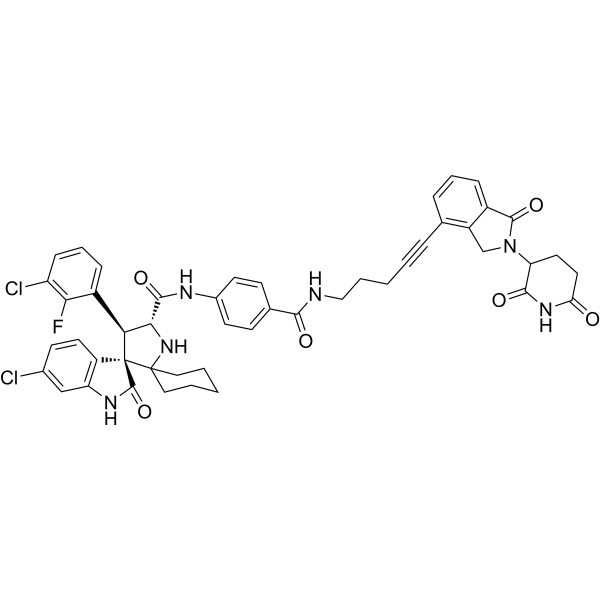 0 ImagesMD-224 is a first-in-class and highly potent small-molecule human murine double minute 2 (MDM2) degrader based on the proteolysistargeting chimera (PROTAC) concept. MD-224 consists of ligands for Cereblon and MDM2. MD-224 induces rapid degradation of MDM2 at concentrations <1 nM in human leukemia cells, and achieves an IC50 value of 1.5 nM in inhibition of growth of RS4;11 cells. MD-224 has the potential to be a new class of anticancer agent. MD-224 is a click chemistry reagent, it contains an Alkyne group and can undergo copper-catalyzed azide-alkyne cycloaddition (CuAAc) with molecules containing Azide groups.
-
Seldegamadlin
 0 ImagesSynonyms: KT-253Seldegamadlin (KT-253) is a cereblon-recruiting PROTAC degrader of MDM2, with a DC50 of 0.4 nM. Seldegamadlin catalyzes the ubiquitination and proteasomal degradation of MDM2, disrupts the MDM2/p53 autoregulatory feedback loop, induces apoptosis, caspase activation and p53 target gene expression, and inhibits the growth of wild-type p53 hematologic tumor cells and solid tumor cells. Seldegamadlin is applicable for the research of acute myeloid leukemia, acute lymphoblastic leukemia, diffuse large B-cell lymphoma and wild-type p53 solid tumors.
-
A1874
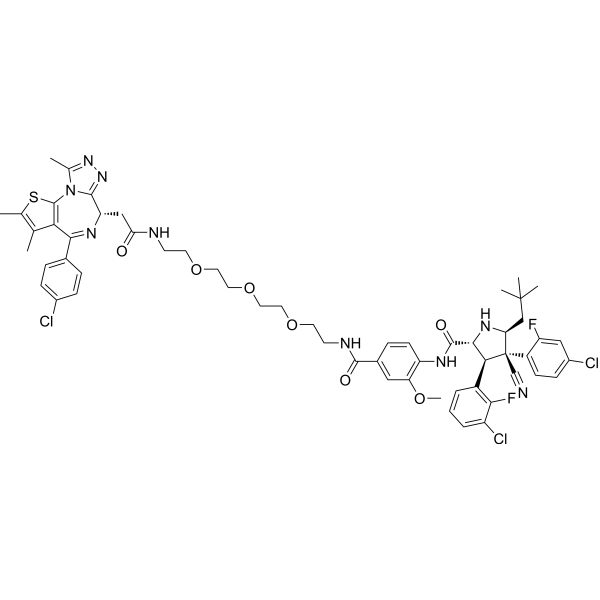 0 ImagesA1874 is an orally active BRD4 PROTAC degrader with a DC50 of 32 nM. A1874 degrades BRD4 via the ubiquitin-proteasome system by recruiting the MDM2 E3 ligase, while disrupting the MDM2-p53 interaction to stabilize p53 and upregulate p21, thereby inducing cell cycle arrest and apoptosis. A1874 exhibits selectivity for wild-type p53 cells and MDM2-amplified tumors, and it can be used in research on breast cancer, colorectal cancer, melanoma, lung cancer, lymphoma, myeloid leukemia, osteosarcoma, and glioblastoma.
-
MS4322
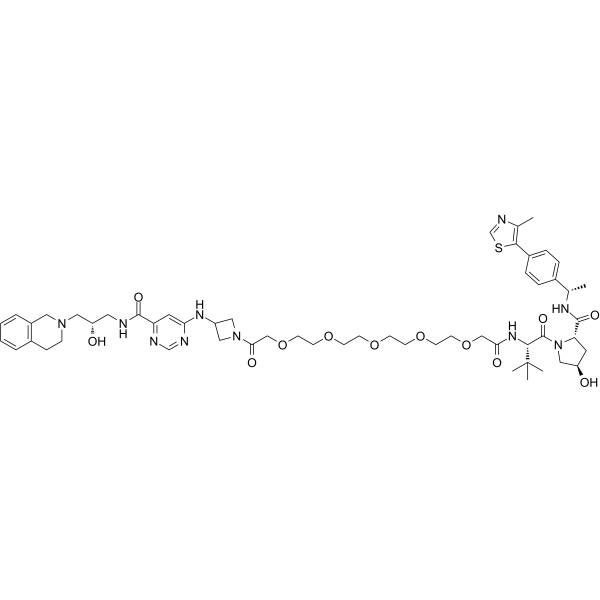 0 ImagesSynonyms: YS43-22MS4322 (YS43-22) is a specific PRMT5 PROTAC degrader. MS4322 reduces the PRMT5 protein level with a DC50 of 1.1 μM in MCF-7 cells. MS4322 inhibits the methyltransferase activity of PRMT5 with an IC50 of 18 nM. MS4322 promotes ubiquitination and degradation of PRMT5. MS4322 can be used for the research of breast cancer, lung cancer, and hepatocellular cancer. (Pink: PRMT5 ligand (HY-173092); Blue: E3 ligase ligand HY-112078); Black: linker (HY-124780); E3+linker (HY-173093 )).
-
PROTAC EZH2 Degrader-2
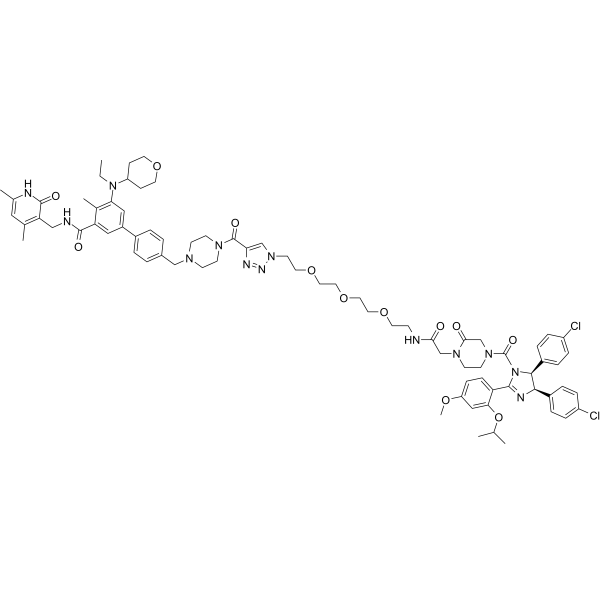 0 ImagesPROTAC EZH2 Degrader-2 is a PROTAC EZH2 inhibitor. PROTAC EZH2 Degrader-2 degrades EZH2 in SU-DHL-6 cells in a dose-dependent manner. PROTAC EZH2 Degrader-2 induces apoptosis and reduces mitochondrial membrane potential in SU-DHL-6 cells. PROTAC EZH2 Degrader-2 has anti-cancer and anti-proliferative activity.
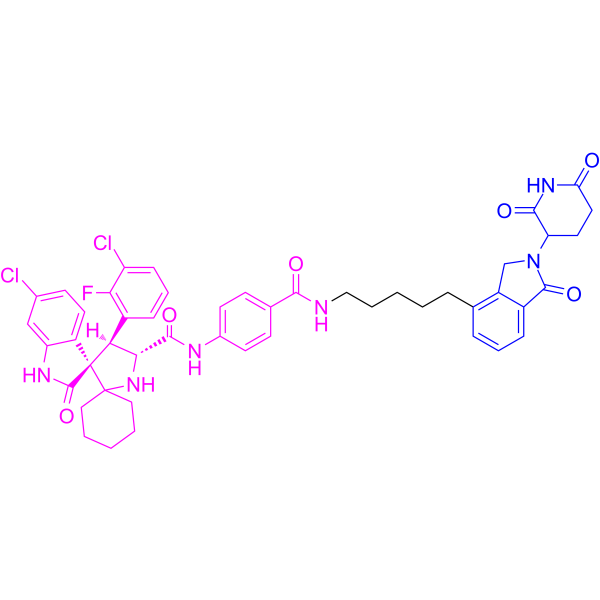
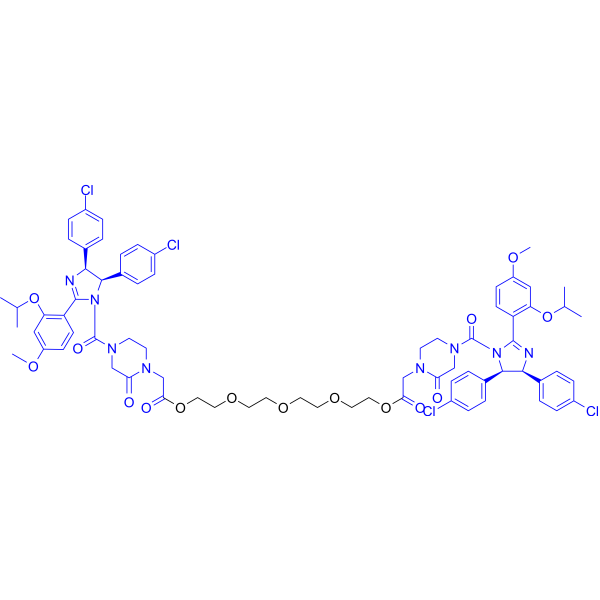
-
PROTAC MDM2 Degrader-2
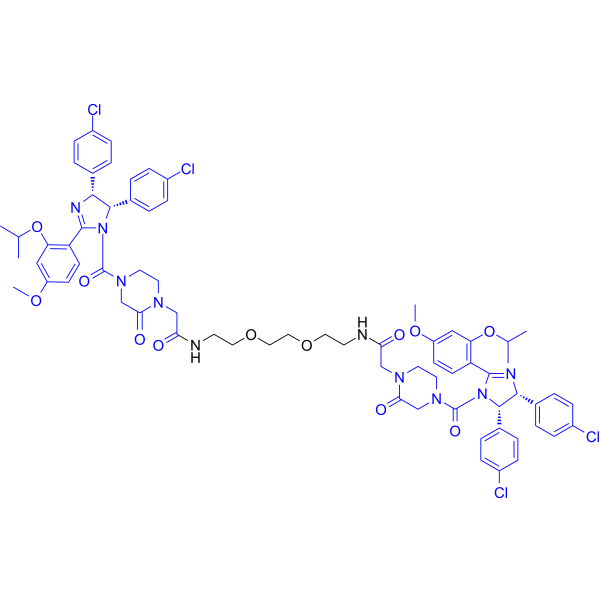 0 ImagesArt. -Nr.: HY-128841CAS. Nr.: 2249944-99-6
-
YX-02-030
 0 ImagesYX-02-030 is a VHL-dependent MDM2 PROTAC degrader with a Kd of 35 nM. YX-02-030 recruits the VHL E3 ligase to form a ternary complex, leading to ubiquitination and proteasome-mediated degradation of MDM2. YX-02-030 inhibits MDM2-p53 and VHL-HIF1α binding with IC50 values of 63 and 1350 nM. YX-02-030 activates TAp73, upregulates p53 family target genes and induces apoptosis. YX-02-030 demonstrates on-target efficacy in TNBC xenograft-bearing mice, extending survival without normal cell toxicity.
-
MS4322 (isomer)
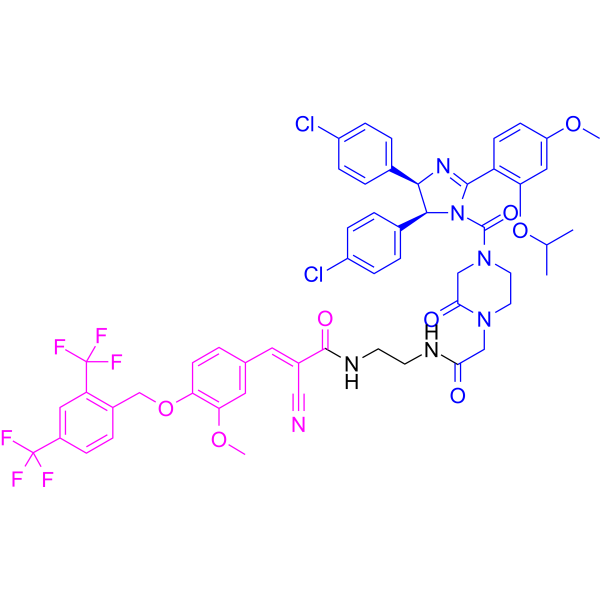
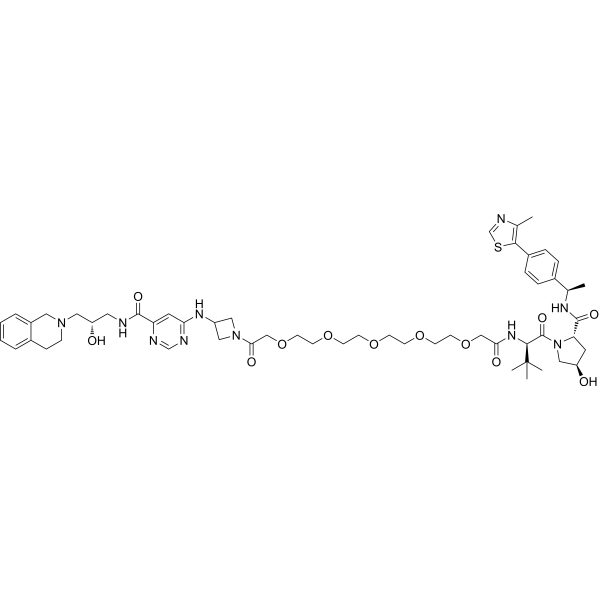 0 ImagesSynonyms: YS43-22 (isomer)MS4322 (YS43-22) isomer is an isomer of MS4322. MS4322 is a specific PRMT5 PROTAC degrader. MS4322 reduces the PRMT5 protein level with a DC50 of 1.1 μM in MCF-7 cells. MS4322 inhibits the methyltransferase activity of PRMT5 with an IC50 of 18 nM. MS4322 promotes ubiquitination and degradation of PRMT5. MS4322 can be used for the research of breast cancer, lung cancer, and hepatocellular cancer.
-
PROTAC DAPK1 Degrader-1
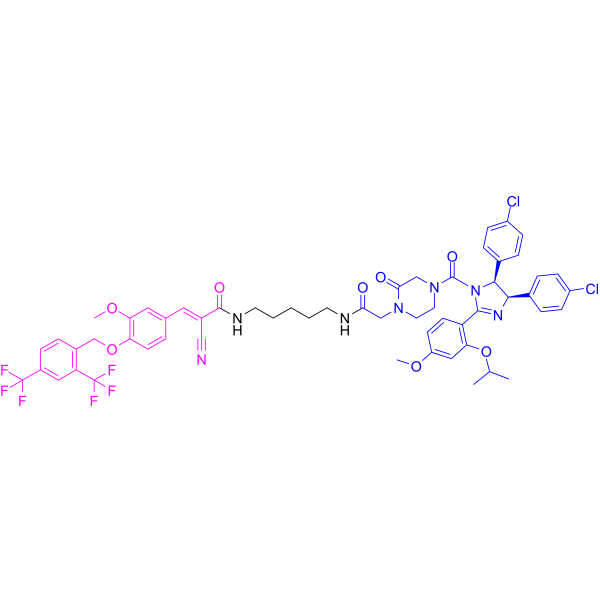
 0 ImagesArt. -Nr.: HY-179055CAS. Nr.: 3063030-38-3PROTAC DAPK1 Degrader-1 is a death-associated protein kinase 1 (DAPK1) degrader with a DC50 of 119.6 nM. PROTAC DAPK1 Degrader-1 significantly increases MDM2 protein levels and inhibits neuronal apoptosis in ceramide-induced cells. PROTAC DAPK1 Degrader-1 can be used to study neurological disorders such as cerebral ischemia and traumatic brain injury.
-
PROTAC MDM2 Degrader-1
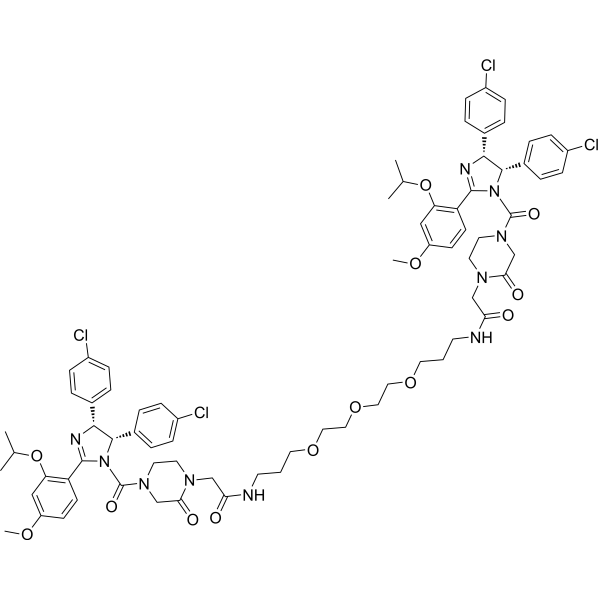 0 ImagesPROTAC MDM2 Degrader-1 (Compound 15a) is a MDM2 PROTAC degrader. The structures of both Linker ends of PROTAC MDM2 Degrader-1 are MDM2 ligands. PROTAC MDM2 Degrader-1 can not only block the binding of p53-MDM2, but also degrade the target MDM2 protein by utilizing the function of the E3 ligase of MDM2 itself, thus exerting an anti-tumor effect.
-
MD-4251
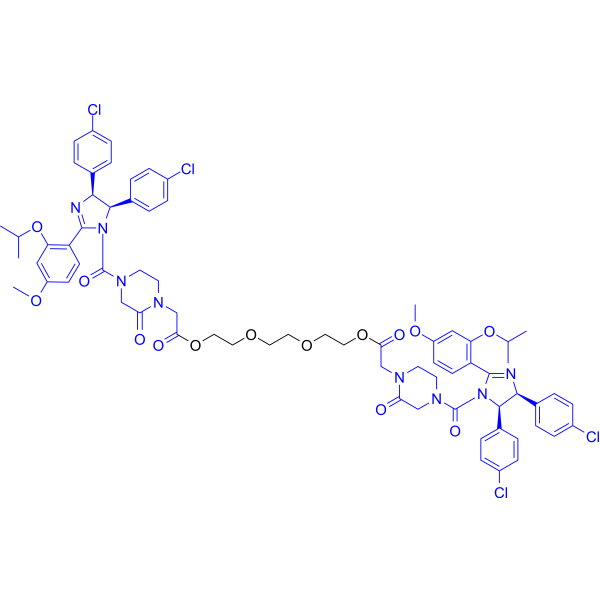
 0 ImagesArt. -Nr.: HY-174458MD-4251 is an orally active MDM2 PROTAC degrader with a DC50 of 0.2 nM in RS4;11 cells. MD-4251 induces cereblon-dependent depletion and degradation of MDM2 protein, elevates p53 protein levels and activates p53. MD-4251 inhibits the proliferation of wild-type p53 acute leukemia cells, induces complete and durable tumor regression in xenograft models, and upregulates the protein levels of DSC1, NBEA and CASP14. MD-4251 can be used in studies related to acute leukemia.
-
PROTAC PRMT3 degrader 1
 0 ImagesArt. -Nr.: HY-159728PROTAC PRMT3 degrader 1 is a selective PRMT3 PROTAC degrader with a DC50 of 2.566 μM. PROTAC PRMT3 degrader 1 forms a ternary complex with MDM2 E3 ubiquitin ligase to induce proteasomal and neddylation-dependent degradation of PRMT3. PROTAC PRMT3 degrader 1 activates intrinsic apoptosis, endoplasmic reticulum stress signaling pathways. PROTAC PRMT3 degrader 1 downregulates E2F, MYC, oxidative phosphorylation pathways. PROTAC PRMT3 degrader 1 reduces cellular asymmetric dimethylarginine (ADMA) levels. PROTAC PRMT3 degrader 1 inhibits acute leukemia cell growth. PROTAC PRMT3 degrader 1 acts with glycolysis inhibitor 2-DG to reduce ATP production, induce intrinsic apoptosis, drive synergistic antiproliferative effects. PROTAC PRMT3 degrader 1 can be used for the research of acute leukemia.
-
MD-265
 0 ImagesMD-265 is a PROTAC degrader targeting MDM2, which activates p53 in cancer cells carrying wild-type p53. MD-265 induces MDM2 degradation by recruiting the CRL4-CRBN ligase complex via the ubiquitination and proteasomal degradation pathway. MD-265 upregulates p53 target genes, induces apoptosis, reduces Mcl-1 levels, increases caspase-3 cleavage, and inhibits colony formation of wild-type p53 leukemia stem cells. MD-265 can be used in research related to leukemia and acute myeloid leukemia.
-
WB156
 0 ImagesArt. -Nr.: HY-174266CAS. Nr.: 2368944-44-7WB156 is a dual MDM2 and GSPT1 PROTAC degrader with a DC50 of 23 nM against MDM2. WB156 induces the degradation of MDM2 and GSPT1 via the ubiquitin-proteasome system. WB156 upregulates the levels of p53 and p21, and triggers Apoptosis through the cleavage of PARP and Caspase-3. WB156 can be used in leukemia-related research.
-
PROTAC MDM2 Degrader-8
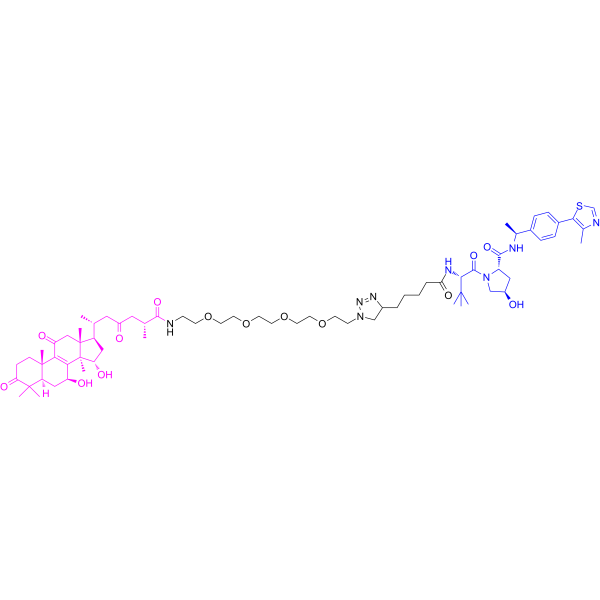 0 ImagesArt. -Nr.: HY-162450PROTAC MDM2 Degrader-8 is a PROTAC degrader that induces the degradation of the MDM2 protein by recruiting VHL. PROTAC MDM2 Degrader-8 directly binds to MDM2 with a KD of 38.2 μM; the proteasome inhibitor MG-132 (HY-13259) reverses this degradation effect, supporting that it induces MDM2 degradation via the ubiquitin-proteasome system. PROTAC MDM2 Degrader-8 also upregulates p21, induces apoptosis and cell cycle arrest, and inhibits the migration of MDA-MB-231 cells. PROTAC MDM2 Degrader-8 can be used in studies related to MDM2-targeted protein degradation and triple-negative breast cancer.
- 1



