1. Search Result
Search Result
Results for "

rat myocardial ischemia/reperfusion models

" in MedChemExpress (MCE) Product Catalog:

6

Inhibitors & Agonists

2

Natural
Products

Cat. No. Product Name Target Research Areas Chemical Structure
  • HY-N0430

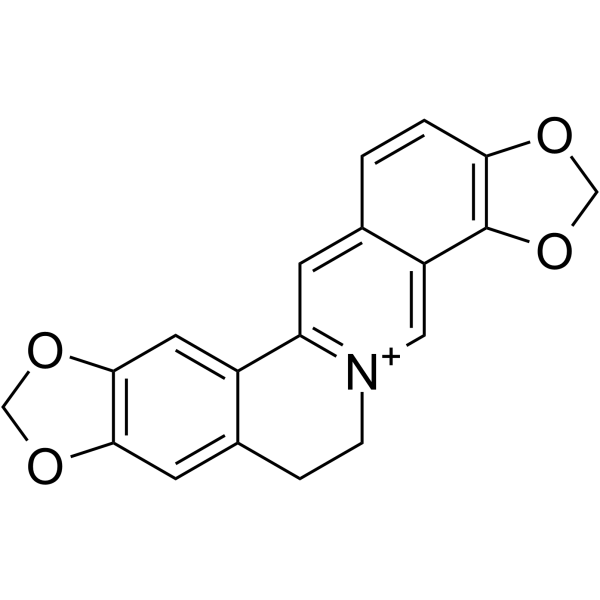
    Coptisin

    Indoleamine 2,3-Dioxygenase (IDO) NF-κB p38 MAPK PI3K Akt Apoptosis Reactive Oxygen Species (ROS) Mitochondrial Metabolism DNA/RNA Synthesis ROCK LDLR Cardiovascular Disease Neurological Disease Metabolic Disease Inflammation/Immunology Cancer
    Coptisine is an orally active and brain-penetrant alkaloid found in Coptis chinensis. Coptisine is a reversible, uncompetitive IDO inhibitor with a Ki of 5.8 μM and an IC50 of 6.3 μM. Coptisine suppresses neuroinflammation, reduces Aβ plaque burden and shows neuroprotective activity. Coptisine shows anti-inflammation activity by blocking NF-κB, MAPK, and PI3K/Akt activation. Coptisine inhibits cancer cells proliferation, induces DNA damage, G2/M phase cell cycle arrest, apoptosis, ROS production and mitochondrial dysfunction. Coptisine inhibits Rho/ROCK pathway activation, reduces arrhythmia, limits cardiac injury marker release, reduces infarct size, and preserves cardiac function in rat myocardial ischemia/reperfusion models. Coptisine downregulates HMGCR and upregulates LDLR and CYP7A1 to modulate cholesterol metabolism, reduces abnormal serum lipid levels, and promotes fecal bile acid excretion. Coptisine can be used for the research of cancer, hypercholesterolemia, Alzheimer’s disease, inflammatory disorders and cardiovascular disease .
    Coptisine
  • HY-N0430A
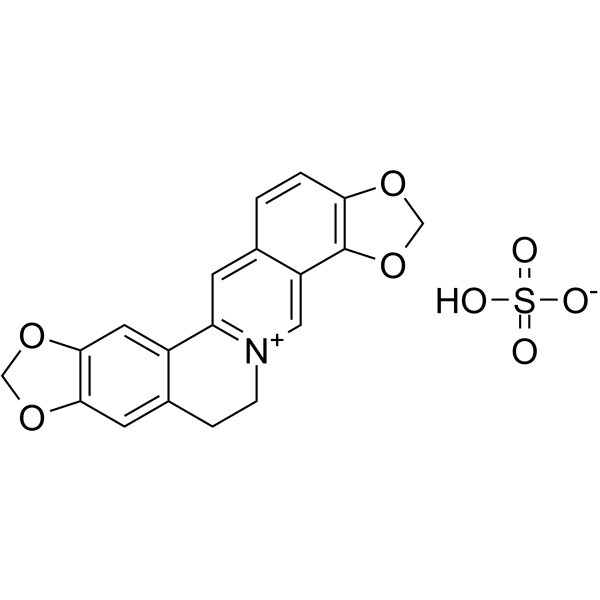
    Coptisine Sulfate
    5 Publications Verification

    Indoleamine 2,3-Dioxygenase (IDO) NF-κB p38 MAPK PI3K Akt Apoptosis Reactive Oxygen Species (ROS) Mitochondrial Metabolism DNA/RNA Synthesis ROCK LDLR Cardiovascular Disease Neurological Disease Metabolic Disease Inflammation/Immunology Cancer
    Coptisine Sulfate is an orally active and brain-penetrant alkaloid found in Coptis chinensis. Coptisine Sulfate is a reversible, uncompetitive IDO inhibitor with a Ki of 5.8 μM and an IC50 of 6.3 μM. Coptisine Sulfate suppresses neuroinflammation, reduces Aβ plaque burden and shows neuroprotective activity. Coptisine Sulfate shows anti-inflammation activity by blocking NF-κB, MAPK, and PI3K/Akt activation. Coptisine Sulfate inhibits cancer cells proliferation, induces DNA damage, G2/M phase cell cycle arrest, apoptosis, ROS production and mitochondrial dysfunction. Coptisine Sulfate inhibits Rho/ROCK pathway activation, reduces arrhythmia, limits cardiac injury marker release, reduces infarct size, and preserves cardiac function in rat myocardial ischemia/reperfusion models. Coptisine Sulfate downregulates HMGCR and upregulates LDLR and CYP7A1 to modulate cholesterol metabolism, reduces abnormal serum lipid levels, and promotes fecal bile acid excretion. Coptisine Sulfate be used for the research of cancer, hypercholesterolemia, Alzheimer’s disease, inflammatory disorders and cardiovascular disease .
    Coptisine Sulfate
  • HY-105362

    Endothelin Receptor Cardiovascular Disease
    PD 155080 is a selective endothelin A receptor (ETA receptor) antagonist. PD 155080 reduces coronary resistance in the isolated rat heart model. PD 155080 improves myocardial systolic function and diastolic function in the ischemia/reperfusion model. PD 155080 can be used for the study of cardiovascular diseases .
    PD 155080
  • HY-A0113

    Ro 31-3113

    Angiotensin-converting Enzyme (ACE) Cardiovascular Disease
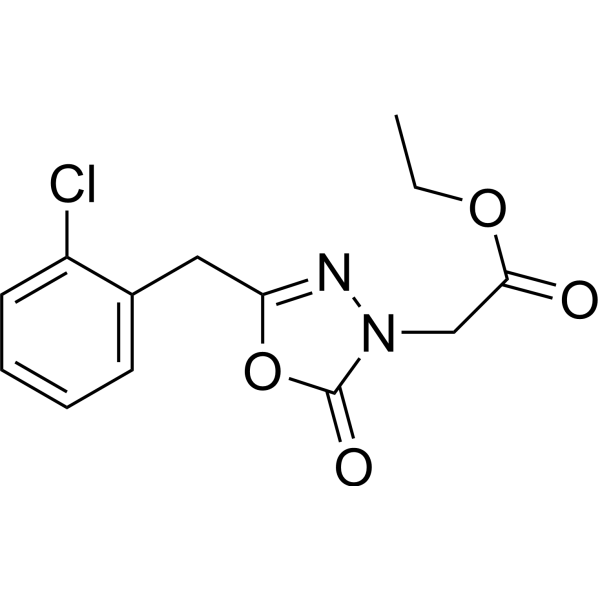
    Cilazaprilat is an inhibitor of angiotensin-converting enzyme (ACE; IC50=0.7 nM for the rat enzyme) and an active metabolite of Cilazapril (HY-A0043). It decreases creatine kinase release in primary neonatal rat cardiac myocytes in an in vitro model of ischemia-reperfusion injury induced by hypoxia and reoxygenation when used at a concentration of 10 μM.3 Intra-arterial administration of cilazaprilat (3 μg/kg per minute) increases coronary blood flow and fractional shortening in a dog model of coronary hypoperfusion-induced myocardial ischemia.
    Cilazaprilat
  • HY-155517

    NOD-like Receptor (NLR) Pyroptosis Inflammation/Immunology
    INF200 (compound 5) is a sulfonylurea-based inhibitor of NLRP3 and NLRP3-mediated pyroptosis. INF200 has beneficial cardiometabolic effects in rat model of high-fat diet (HFD)-induced metaflammation,and shows anti-inflammatory activity to (10 μM) decreases IL-1β release in human macrophages. INF200 improves glucose and lipid profiles,and attenuates systemic inflammation and biomarkers of cardiac dysfunction (particularly BNP). INF200 also improves myocardial damage-dependent ischemia/reperfusion injury (IRI) in hemodynamic evaluation .
    INF200
  • HY-W783623

    DG(22:6/0:0/22:6); 1,3-Didocosahexaenoin

    Biochemical Assay Reagents Cardiovascular Disease
    1,3-Didocosahexaenoyl glycerol (DG(22:6/0:0/22:6); 1,3-Didocosahexaenoin) is an ω-3 polyunsaturated fatty acid, which exhibits cardioprotective effects in rat myocardial ischemia/reperfusion (I/R) injury model through conjugation with Poly-l-glutamic acid (PGA) .
    1,3-Didocosahexaenoyl glycerol

Inquiry Online

Your information is safe with us. * Required Fields.

Salutation


Country or Region *

Applicant Name *


Organization Name *

Department *


Email Address *


Product Name *

Cat. No.


Requested quantity *

Phone Number *


Remarks

Inquiry Online

Inquiry Information

Product Name:
Cat. No.:
Quantity:
MCE Japan Authorized Agent:

