7 Results for "

withdrawal syndrome

" in MedChemExpress (MCE) Product Catalog:
Products (7)

7 Results for "withdrawal syndrome" in MCE Product Catalog:

22
22 Cited Publications
Cat. No.: HY-14538
CAS No.: 52-86-8
Purity:  99.73%
Target:  

Dopamine Receptor

Research Areas:  

Neurological Disease Cancer

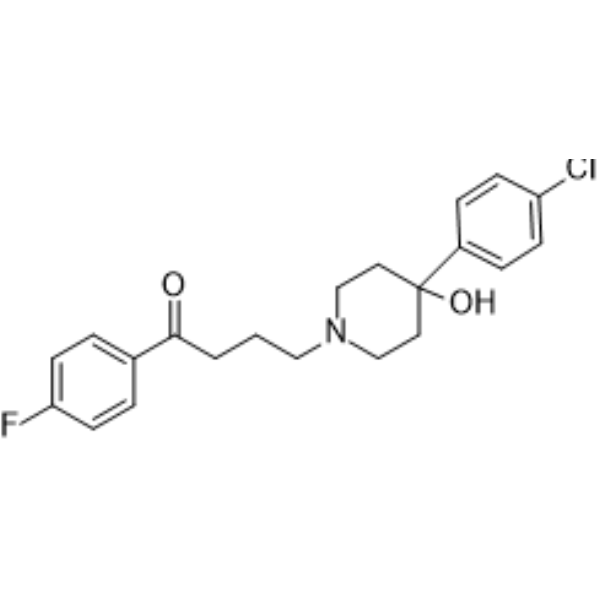
Haloperidol is a potent dopamine D2 receptor antagonist, widely used as an antipsychotic agent. Haloperidol can be used in the study of schizophrenia, tics in Tourette syndrome, mania in bipolar disorder, delirium, agitation, acute psychosis, and hallucinations from alcohol withdrawal.
loading...
    loading...
22
22 Cited Publications
Cat. No.: HY-14538A
CAS No.: 1511-16-6
Target:  

Dopamine Receptor

Research Areas:  

Neurological Disease Cancer

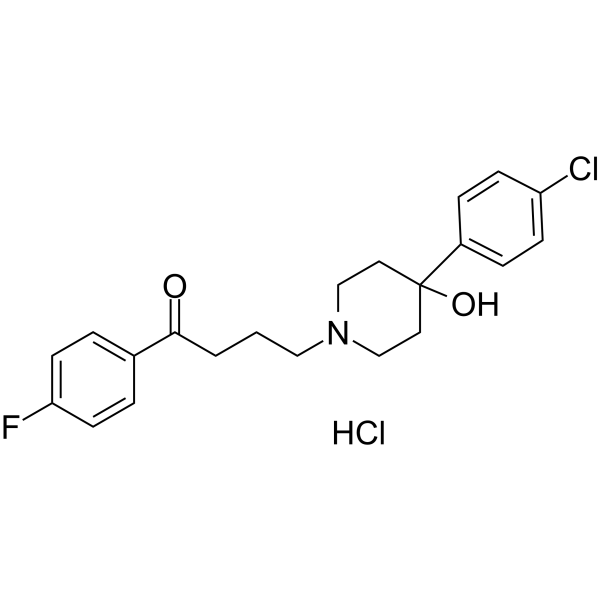
Haloperidol hydrochloride is a potent dopamine D2 receptor antagonist, widely used as an antipsychotic agent. Haloperidol hydrochloride can be used in the study of schizophrenia, tics in Tourette syndrome, mania in bipolar disorder, delirium, agitation, acute psychosis, and hallucinations from alcohol withdrawal.
loading...
    loading...
Cat. No.: HY-12783A
CAS No.: 733717-87-8
Purity:  ≥98.0%
Target:  

GABA Receptor

Research Areas:  

Neurological Disease

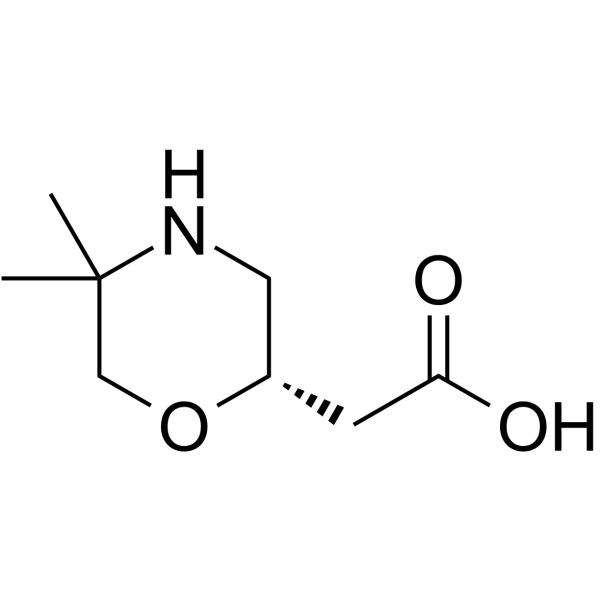
SCH 50911 is a selective, orally active, blood-brain barrier permeable GABA-B receptor (GABA-B Receptor) antagonist with an IC50 of 1.1 μM in rats. SCH 50911 blocks baclofen-induced antitussive effects, regulates neuronal firing and GABA release. SCH 50911 promotes spontaneous seizures during withdrawal in ethanol-dependent rats, alters reward-related neurotransmission, and reduces or suppresses lever responding and self-administration behaviors of alcohol and sucrose in rats. SCH 50911 is applicable to research related to ethanol withdrawal syndrome, absence epilepsy and alcohol use disorder .
loading...
    loading...
Cat. No.: HY-P10394
CAS No.: 2376306-14-6
DP32 is a bifunctional compound that contains an opioid receptor (MOP) agonist and a neuropeptide FF receptor (NPFFR) antagonist. DP32 can be used in analgesia-related research .
loading...
    loading...
Cat. No.: HY-122125
CAS No.: 6701-66-2
Target:  

Drug Derivative

Research Areas:  

Neurological Disease

RX 336M is a dihydrocodeinone analogue. RX 336M induces behaviors consisting of consisting of behavioral activation, rapid forepaw movements, excessive grooming, and whole body "wet-dog" shakes (WDS) (rapid twisting of the head and trunk with the forepaws leaving the ground). RX 336M can be used for the study of neurological disease .
loading...
    loading...
Cat. No.: HY-12783
CAS No.: 160415-07-6
Target:  

GABA Receptor

Research Areas:  

Neurological Disease

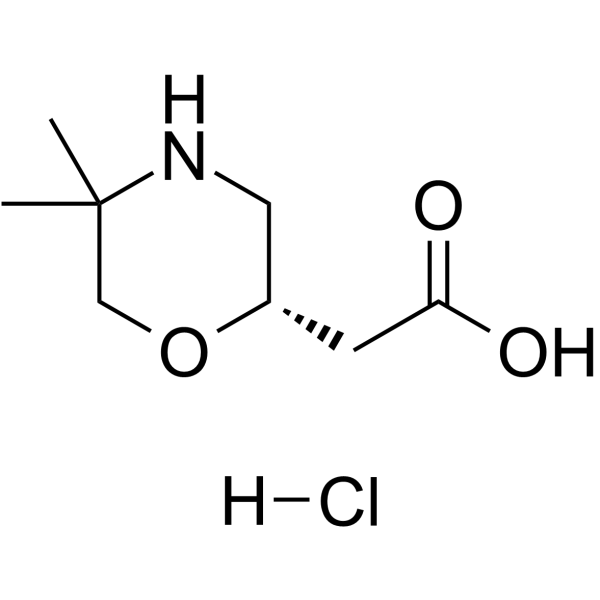
SCH 50911 dihydrochloride is a selective, orally active, blood-brain barrier permeable GABA-B receptor (GABA-B Receptor) antagonist with an IC50 of 1.1 μM in rats. SCH 50911 dihydrochloride blocks baclofen-induced antitussive effects, regulates neuronal firing and GABA release. SCH 50911 dihydrochloride promotes spontaneous seizures during withdrawal in ethanol-dependent rats, alters reward-related neurotransmission, and reduces or suppresses lever responding and self-administration behaviors of alcohol and sucrose in rats. SCH 50911 dihydrochloride is applicable to research related to ethanol withdrawal syndrome, absence epilepsy and alcohol use disorder .
loading...
    loading...
Cat. No.: HY-15026
CAS No.: 915798-75-3
Target:  

Endogenous Metabolite

Research Areas:  

Inflammation/Immunology

ATB-429, a novel H2S-releasing derivative of mesalamine, demonstrates significant anti-nociceptive and anti-inflammatory effects in models of irritable bowel syndrome (IBS). By releasing hydrogen sulfide (H2S), ATB-429 modulates colorectal distension-induced hypersensitivity in both healthy and postcolitic rats. It attenuates abdominal withdrawal responses and suppresses spinal c-Fos mRNA expression, indicating its potential to alleviate pain associated with gastrointestinal inflammation. Moreover, ATB-429 down-regulates colonic cyclooxygenase-2 and interleukin-1β mRNA expression, effects not observed with mesalamine alone. The mechanism involves ATP-sensitive K+ (KATP) channels, as evidenced by reversal of ATB-429's effects with glibenclamide. These findings suggest ATB-429 could offer therapeutic benefits for managing painful intestinal disorders linked to inflammation .
loading...
    loading...

