



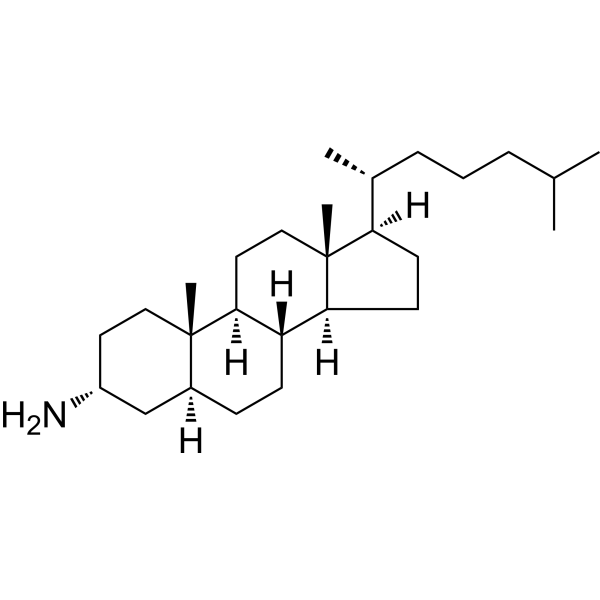
3α-Aminocholestane
Based on 8 publication(s) in Google Scholar
3α-Aminocholestane is a selective SH2 domain-containing inositol-5′-phosphatase 1 (SHIP1) inhibitor with an IC50 of ~2.5 μM.
For research use only. We do not sell to patients.
- Purity : 98.0%
- CAS No.: 2206-20-4
- Formula: C27H49N
- Molecular Weight:387.68
-
Storage:Powder -20°C, 3 years , 4°C, 2 years ; In solvent -80°C, 2 years , -20°C, 1 year

To place orders, for customer services and technical support, please contact: MedChemExpress USA
Tel: 609-228-6898 E-mail: [email protected] [email protected]


-
 Biological Activity
-
Chemical Information
-
Solvent & Solubility
- Purity & Documentation
- References
-
 Help & FAQs


-
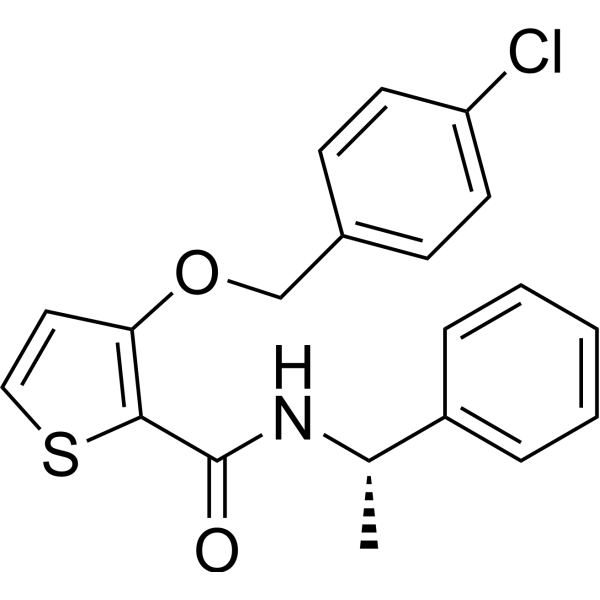
HY-18686
AS1949490SHIP2 Phosphatase Inhibitor -
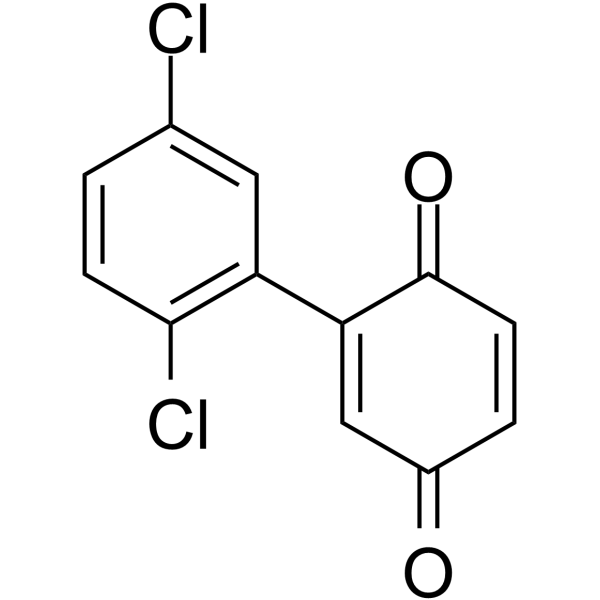
HY-100463
TPI-1SHP-1 Inhibitor -
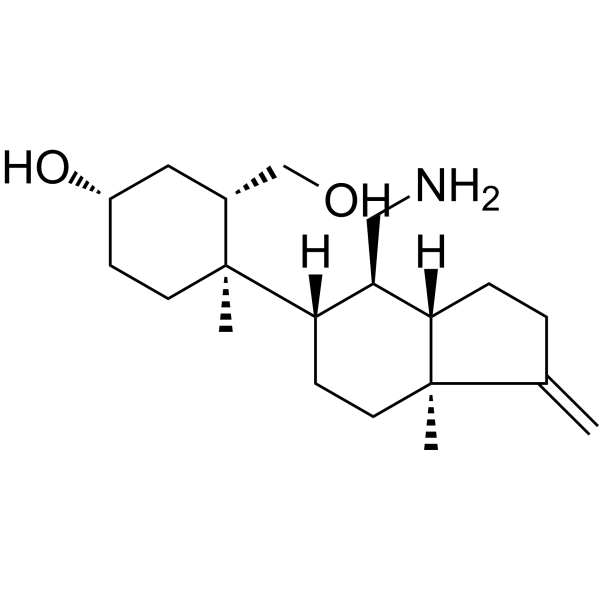
HY-109011
RosiptorSHIP1 Activator -
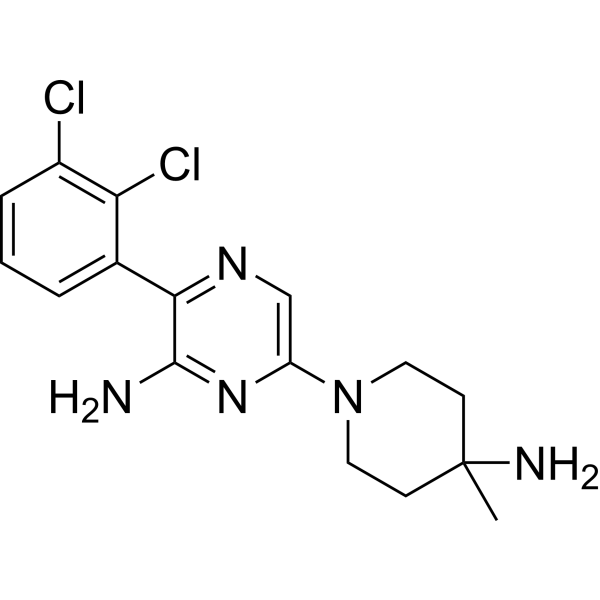
HY-100388
SHP099SHP2 Inhibitor -
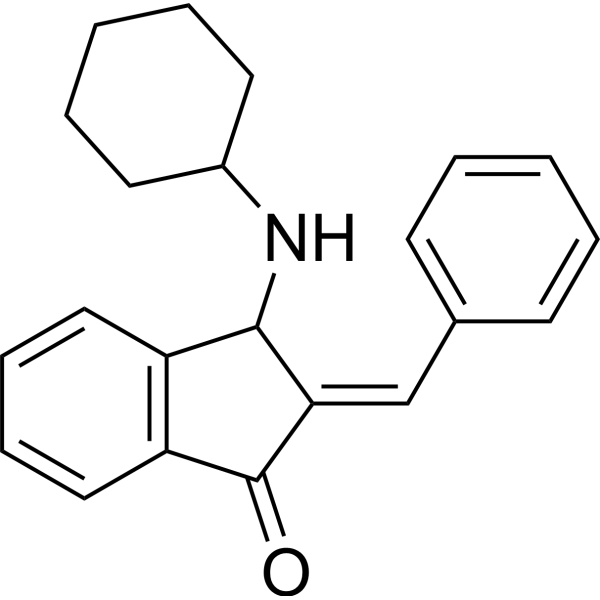
HY-115502
BCIDUSP6 Inhibitor -
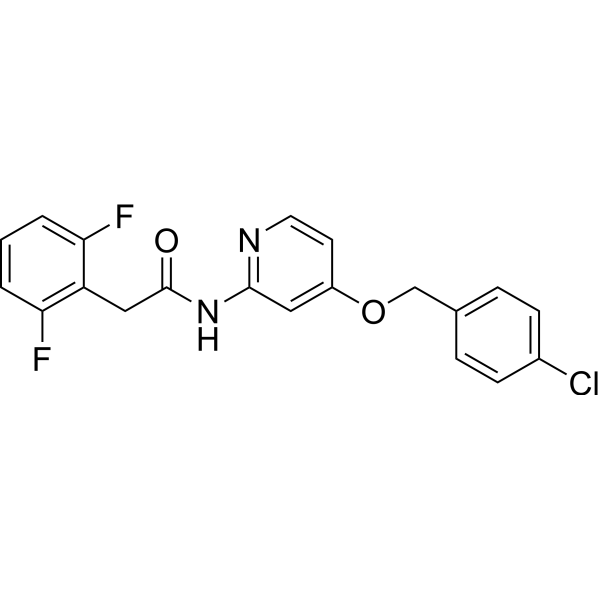
HY-18685
CPDASHIP2 Inhibitor -
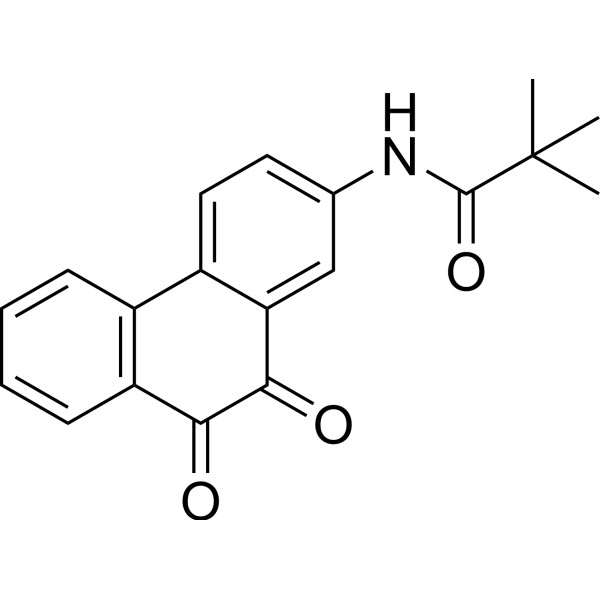
HY-15842
SF1670PTEN Inhibitor -
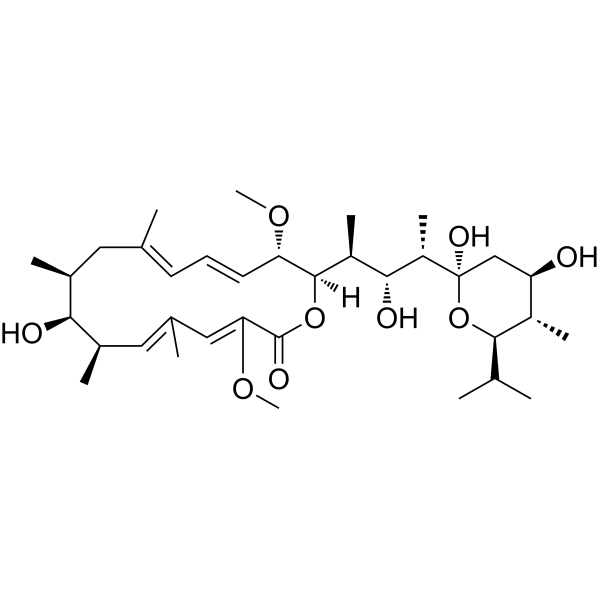
HY-100558
Bafilomycin A1V-ATPase Inhibitor -
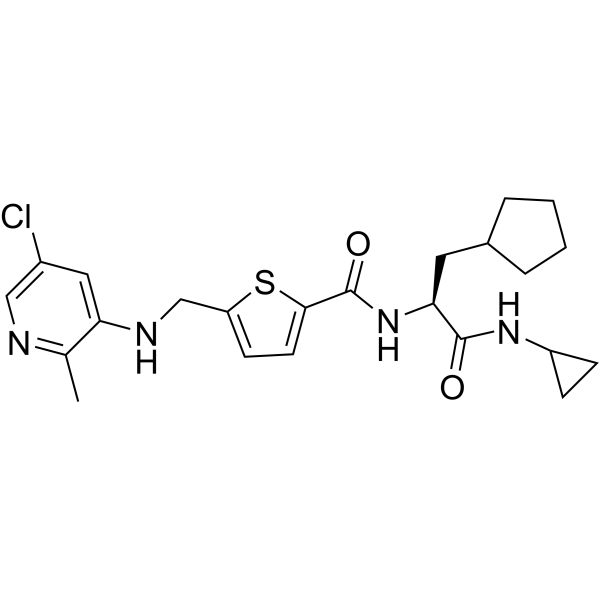
HY-15832
GSK 2830371Wip1 Phosphatase Inhibitor -
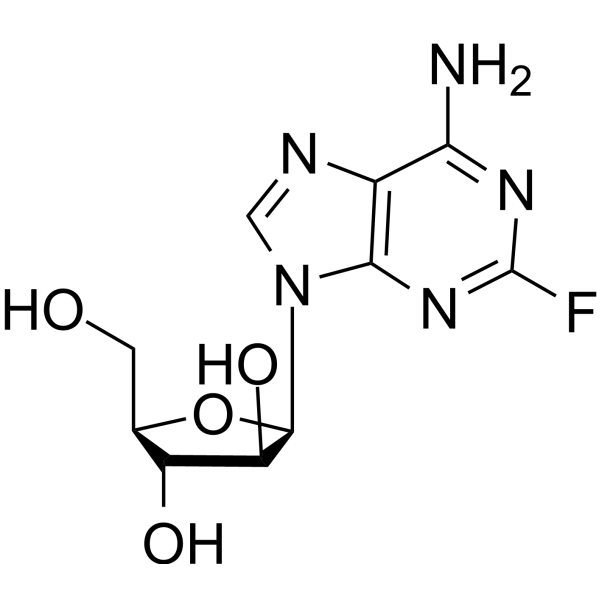
HY-B0069
FludarabineDNA Synthesis Inhibitor -
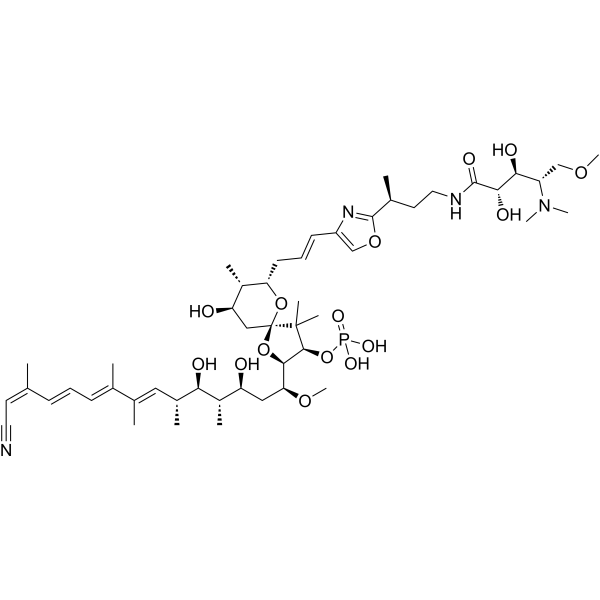
HY-18983
Calyculin APhosphatase Inhibitor -
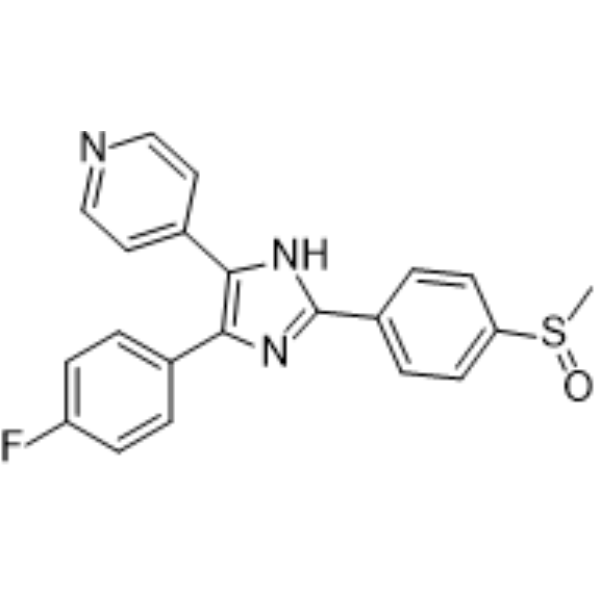
HY-10256
Adezmapimodp38 MAPK Inhibitor
Publications Citing Use of MedChemExpress (MCE) 3α-Aminocholestane
More- Cancer Res. 2022 May 16;82(10):1991-2002. [Abstract]
- EMBO J. 2025 Oct 29. [Abstract]
- Cell Biosci. 2025 Jan 25;15(1):10. [Abstract]
- Commun Biol. 2022 Apr 8;5(1):339. [Abstract]
- Cell Biol Int. 2021 Apr;45(4):785-794. [Abstract]
- J Leukoc Biol. 2026 Jun 27:qiag090. [Abstract]
- bioRxiv. 2026 Apr 27:2026.04.24.720540. [Abstract]
- Oxid Med Cell Longev. 2019 Apr 28:2019:6527638. [Abstract]
 Customer Validation & Images

-
WB

-
Flow Cytometry

-
WB

-
RT-PCR

-
Others


Biological Activity
Description
IC50 & Target
IC50: 2.5 μM (SHIP1)[1]
Cellular Effect
|
Cell Line

|
Type | Value | Description | References |
|---|---|---|---|---|
| MDCK-II | IC50 |
1.9 μM
Compound: 1b
|
Antiviral activity against Influenza A/PR8/34 (H1N1) virus infected in MDCK2 cells assessed as inhibition of virus reproduction by ELISA
Antiviral activity against Influenza A/PR8/34 (H1N1) virus infected in MDCK2 cells assessed as inhibition of virus reproduction by ELISA
|
[PMID: 23916260] |
In Vitro
OPM2 cell viability is effectively reduced by 3α-Aminocholestane (3AC) treatment. RPMI8226 and U266 cells show significantly less sensitivity to 3α-Aminocholestane treatment when compare with OPM2 cells, although viability is decreased significantly at concentrations of ≥12.5 μM. Treatment with 3α-Aminocholestane for 36 h severely reduces the percentage of cells in the S phase, which is accompanied by an increase of cells in the G2/M phase. In contrast, in the less proliferative RPMI8226 and U266 cells, cell cycle progression is blocked in the G0/G1 phase upon 3α-Aminocholestane treatment, in conjunction with a reduced percentage of cells undergoing the S phase[2].
MedChemExpress (MCE) has not independently confirmed the accuracy of these methods. They are for reference only. .
In Vivo
MedChemExpress (MCE) has not independently confirmed the accuracy of these methods. They are for reference only.


Chemical Information
-
CAS No. 2206-20-4
-
Appearance Solid
-
Molecular Weight 387.68
-
Formula C27H49N
-
Color White to off-white
-
SMILES
CC(C)CCC[C@@H](C)[C@@]1([H])CC[C@@]2([H])[C@]3([H])CC[C@@]4([H])C[C@H](N)CC[C@]4(C)[C@@]3([H])CC[C@@]21C
-
Shipping
Room temperature in continental US; may vary elsewhere.
-
Storage
Powder -20°C 3 years 4°C 2 years In solvent -80°C 2 years -20°C 1 year


Publications (8)
-
Journal Impact Factor
-
Most Recent
-
Cancer Res
Thymosin α-1 Reverses M2 Polarization of Tumor-Associated Macrophages during Efferocytosis. [Abstract]2022 May 16;82(10):1991-2002. PMID: 35364609 -
EMBO J
DNGR-1 signalling limits dendritic cell activation for optimal antigen cross-presentation. [Abstract]2025 Oct 29. PMID: 41162754
3α-Aminocholestane purchased from MedChemExpress. Usage Cited in: EMBO J. 2025 Oct 29. [Abstract]
Flow cytometric analysis of surface protein MFIs from C9 KO MuTuDCs reconstituted with C9 or (I6G) MuTuDCs stimulated ± 12.5 nM DNGR-1L alone or in the presence of SHIP1 inhibitor 3AC (3α-Aminocholestane) or SHP-2 inhibitor RMC-4550 overnight.
-
Cell Biosci
Amelioration of premature aging in Werner syndrome stem cells by targeting SHIP/AKT pathway. [Abstract]2025 Jan 25;15(1):10. PMID: 39863890
3α-Aminocholestane purchased from MedChemExpress. Usage Cited in: Cell Biosci. 2025 Jan 25;15(1):10. [Abstract]
Treatments with either 1 μM of S1 (3α-Aminocholestane) or 2 μM of S2 or both activated phosphorylations of AKT (Ser473 and Thr308) and the downstream target mTORC1.
3α-Aminocholestane purchased from MedChemExpress. Usage Cited in: Cell Biosci. 2025 Jan 25;15(1):10. [Abstract]
HGF expression in WRN-KO MSCs after treatment with (3α-Aminocholestane: 1 μM) and S2 for 6 days.
-
Commun Biol
Suppression of trabecular meshwork phagocytosis by norepinephrine is associated with nocturnal increase in intraocular pressure in mice. [Abstract]2022 Apr 8;5(1):339. PMID: 35396348
3α-Aminocholestane purchased from MedChemExpress. Usage Cited in: Commun Biol. 2022 Apr 8;5(1):339. [Abstract]
PIP3 levels after 6 h exposure to dobutamine with several antagonists in iHTMC. Dobutamine (1 µM) decreased PIP3, which was improved by KT5720 and ESI09. In addition, bpV (pic) (PTEN inhibitor) and 3AC (3α-Aminocholestane) also improved it.
-
Cell Biol Int
Effective inhibition of miR-330/SHIP1/NF-κB signaling pathway via miR-330 sponge repolarizes microglia differentiation. [Abstract]2021 Apr;45(4):785-794. PMID: 33325083 -
J Leukoc Biol
2026 Jun 27:qiag090. PMID: 42364103
3α-Aminocholestane purchased from MedChemExpress. Usage Cited in: J Leukoc Biol. 2026 Jun 27:qiag090. [Abstract]
MCSF-induced BMDM cells were starved in serum-free medium for 4 hours, and then treated with either a solvent control (0.1% ethanol) or 3AC (3α-Aminocholestane: 20 μM) for the last 30 minutes. Afterward, the cells were cultured in complete medium containing MCSF for 30 minutes, followed by cell lysis. The expression level of phosphorylated AKT (pAKT) was detected by Western blotting.
-
bioRxiv
Ubiquitylation by the GID/CTLH complex regulates the metabolic and innate immune response of macrophages to infection by Mycobacterium tuberculosis. [Abstract]2026 Apr 27:2026.04.24.720540. PMID: 42094500 -
Oxid Med Cell Longev
Triptolide Inhibits Preformed Fibril-Induced Microglial Activation by Targeting the MicroRNA155-5p/SHIP1 Pathway. [Abstract]2019 Apr 28:2019:6527638. PMID: 31182996


Solvent & Solubility
In Vitro:
Ethanol : 50 mg/mL (128.97 mM; Need ultrasonic)
DMSO : < 1 mg/mL (insoluble or slightly soluble)
Please refer to the solubility information to select the appropriate solvent. Once prepared, please aliquot and store the solution to prevent product inactivation from repeated freeze-thaw cycles.
Storage method and period of stock solution: -80°C, 2 years; -20°C, 1 year. When stored at -80°C, please use it within 2 years. When stored at -20°C, please use it within 1 year.
Please refer to the solubility information to select the appropriate solvent. Once prepared, please aliquot and store the solution to prevent product inactivation from repeated freeze-thaw cycles.
Storage method and period of stock solution: -80°C, 2 years; -20°C, 1 year. When stored at -80°C, please use it within 2 years. When stored at -20°C, please use it within 1 year.
Concentration (start) × Volume (start) = Concentration (final) × Volume (final)
In Vivo:
Select the appropriate dissolution method based on your experimental animal and administration route.
- For the following dissolution methods, please ensure to first prepare a clear stock solution using an In Vitro approach and then sequentially add co-solvents:
- To ensure reliable experimental results, the clarified stock solution can be appropriately stored based on storage conditions. As for the working solution for In Vivo experiments, it is recommended to prepare freshly and use it on the same day.
- The percentages shown for the solvents indicate their volumetric ratio in the final prepared solution. If precipitation or phase separation occurs during preparation, heat and/or sonication can be used to aid dissolution.
Add each solvent one by one: 10% EtOH 40% PEG300 5% Tween-80 45% Saline
Solubility: ≥ 3.25 mg/mL (8.38 mM); Clear solution
This protocol yields a clear solution of ≥ 3.25 mg/mL (saturation unknown).
Taking 1 mL working solution as an example, add 100 μL EtOH stock solution (32.5 mg/mL) to 400 μL PEG300, and mix evenly; then add 50 μL Tween-80 and mix evenly; then add 450 μL Saline to adjust the volume to 1 mL.
Preparation of Saline: Dissolve 0.9 g sodium chloride in ddH₂O and dilute to 100 mL to obtain a clear Saline solution.
Add each solvent one by one: 10% EtOH 90% Corn Oil
Solubility: ≥ 3.25 mg/mL (8.38 mM); Clear solution
This protocol yields a clear solution of ≥ 3.25 mg/mL (saturation unknown). If the continuous dosing period exceeds half a month, please choose this protocol carefully.
Taking 1 mL working solution as an example, add 100 μL EtOH stock solution (32.5 mg/mL) to 900 μL Corn oil, and mix evenly.
In Vivo Dissolution Calculator
Please enter the basic information of animal experiments:
-
-
-
-
Recommended: Prepare an additional quantity of animals to account for potential losses during experiments.
Working solution concentration: 0.22 mg/mL


Purity & Documentation
-
Data Sheet (278 KB)
-
SDS (252 KB)
- English - EN (252 KB)
- Français - FR (252 KB)
- Deutsch - DE (252 KB)
- Norwegian - NO (252 KB)
- Español - ES (252 KB)
- Swedish - SV (252 KB)
- Italian - IT (252 KB)
- Korean - KR (252 KB)
- Portuguese - PT (252 KB)
-
Handling Instructions (2659 KB)
References


Complete Stock Solution Preparation Table
Please refer to the solubility information to select the appropriate solvent. Once prepared, please aliquot and store the solution to prevent product inactivation from repeated freeze-thaw cycles.
Storage method and period of stock solution: -80°C, 2 years; -20°C, 1 year. When stored at -80°C, please use it within 2 years. When stored at -20°C, please use it within 1 year.
| Optional Solvent | Concentration Solvent Mass | 1 mg | 5 mg | 10 mg | 25 mg |
|---|---|---|---|---|---|
| Ethanol | 1 mM | 2.5794 mL | 12.8972 mL | 25.7945 mL | 64.4862 mL |
| 5 mM | 0.5159 mL | 2.5794 mL | 5.1589 mL | 12.8972 mL | |
| 10 mM | 0.2579 mL | 1.2897 mL | 2.5794 mL | 6.4486 mL | |
| 15 mM | 0.1720 mL | 0.8598 mL | 1.7196 mL | 4.2991 mL | |
| 20 mM | 0.1290 mL | 0.6449 mL | 1.2897 mL | 3.2243 mL | |
| 25 mM | 0.1032 mL | 0.5159 mL | 1.0318 mL | 2.5794 mL | |
| 30 mM | 0.0860 mL | 0.4299 mL | 0.8598 mL | 2.1495 mL | |
| 40 mM | 0.0645 mL | 0.3224 mL | 0.6449 mL | 1.6122 mL | |
| 50 mM | 0.0516 mL | 0.2579 mL | 0.5159 mL | 1.2897 mL | |
| 60 mM | 0.0430 mL | 0.2150 mL | 0.4299 mL | 1.0748 mL | |
| 80 mM | 0.0322 mL | 0.1612 mL | 0.3224 mL | 0.8061 mL | |
| 100 mM | 0.0258 mL | 0.1290 mL | 0.2579 mL | 0.6449 mL |


3α-Aminocholestane Related Classifications
HY-19776 Related Classifications
 Powered by Bioz