



Iniparib
Based on 6 publication(s) in Google Scholar
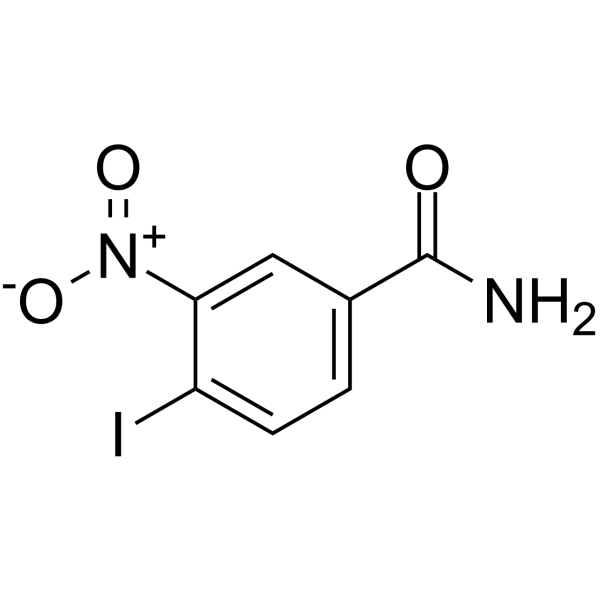
Iniparib (BSI-201) is an irreversible inhibitor of PARP1, used in the research of triple negative breast cancer.
商品は「研究用試薬」です。人や動物の医療用・臨床診断用・食品用の製品ではありません。
研究用途以外に使用した場合、当社は一切の責任を負いかねます。
- 純度 : 99.74%
- CAS 番号: 160003-66-7
- 分子式: C7H5IN2O3
- 分子量:292.03
-
保管条件:Powder -20°C, 3 years , 4°C, 2 years ; In solvent -80°C, 2 years , -20°C, 1 year

To place orders, for customer services and technical support, please contact: MedChemExpress USA
Tel: 609-228-6898 E-mail: [email protected] [email protected]


-
 生物活性
生物活性
-
化学情報
-
溶剤 & 溶解度
- プロトコル
- 純度とドキュメンテーション
- 参考文献
-
 Help & FAQs


-
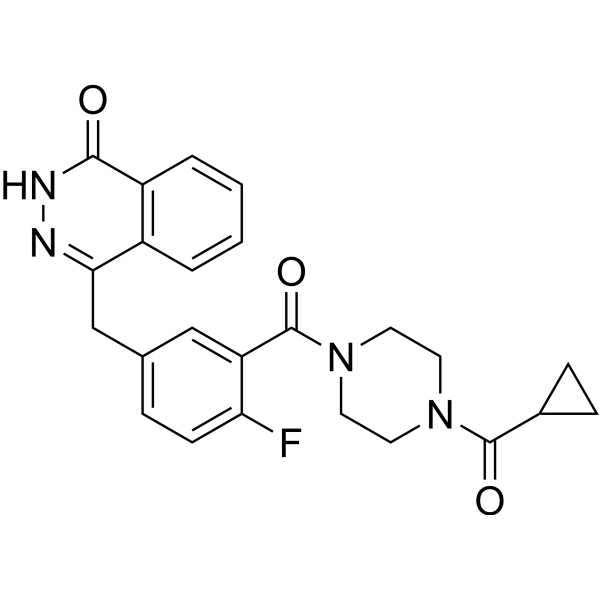
HY-10162
OlaparibPARP Inhibitor -
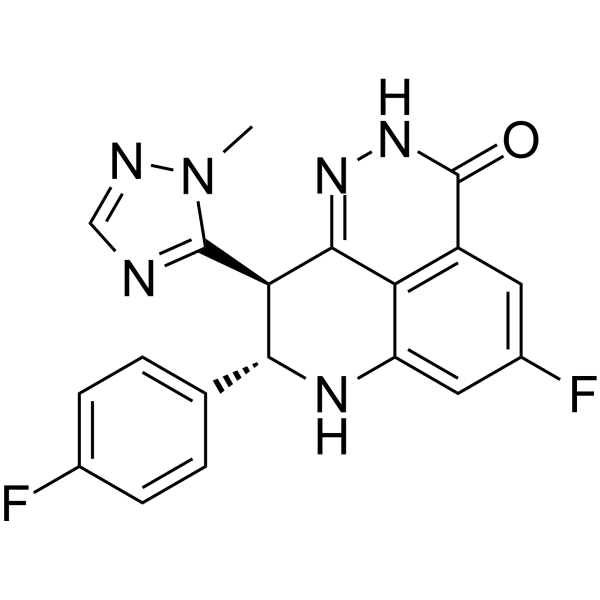
HY-16106
TalazoparibPARP Inhibitor -
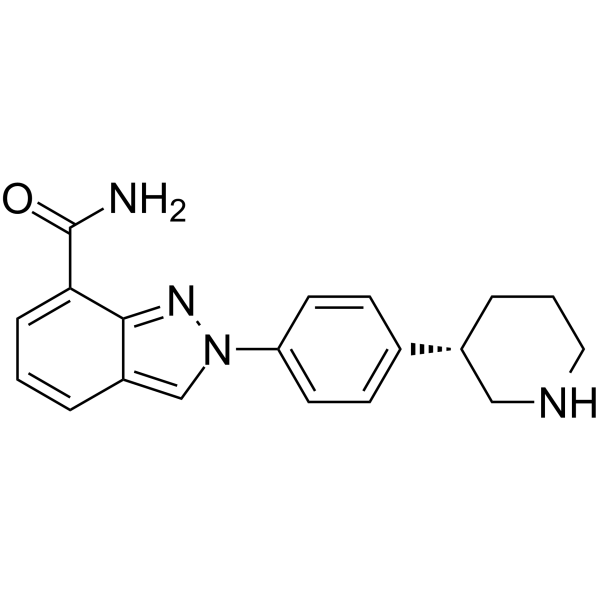
HY-10619
NiraparibPARP Inhibitor -
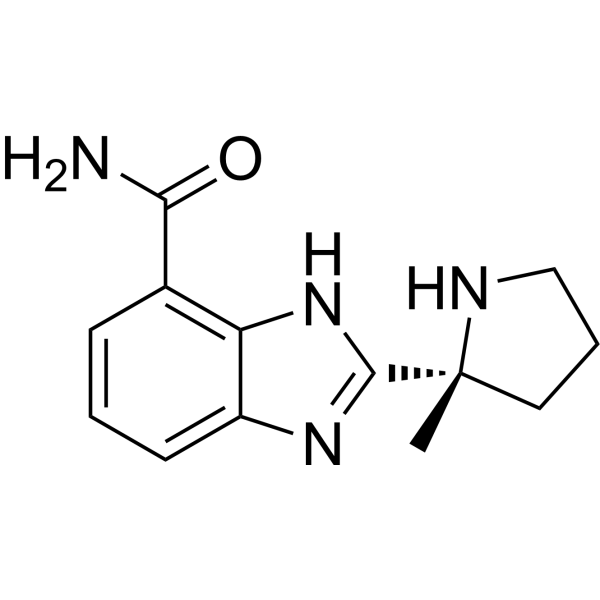
HY-10129
VeliparibPARP Inhibitor -
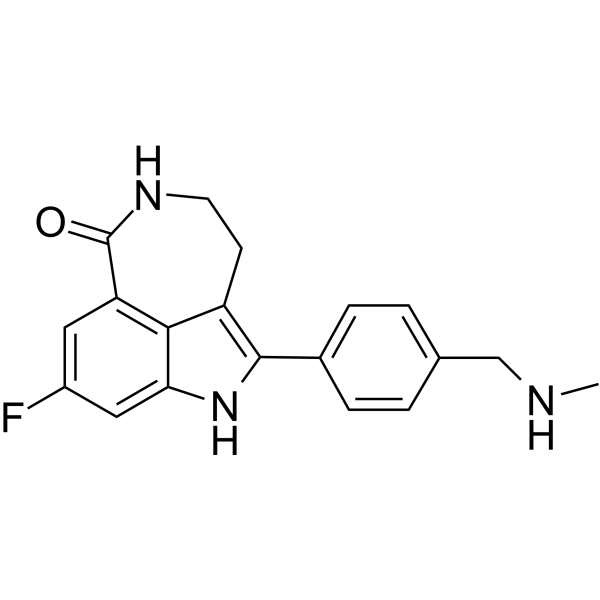
HY-10617A
RucaparibPARP Inhibitor -
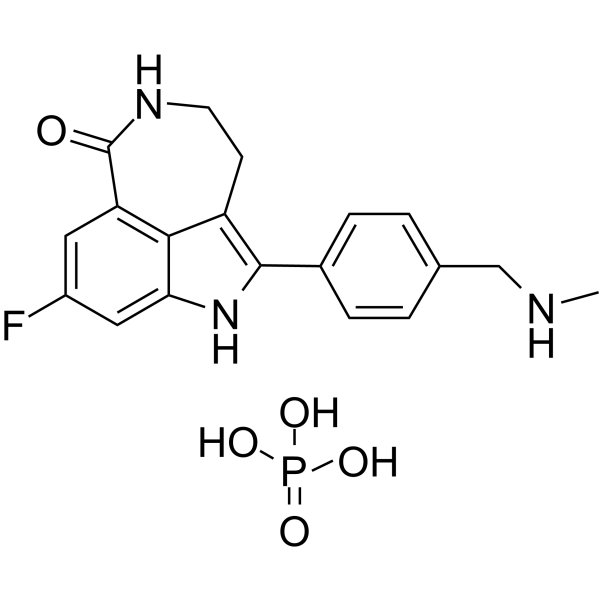
HY-10617
Rucaparib phosphatePARP Inhibitor -
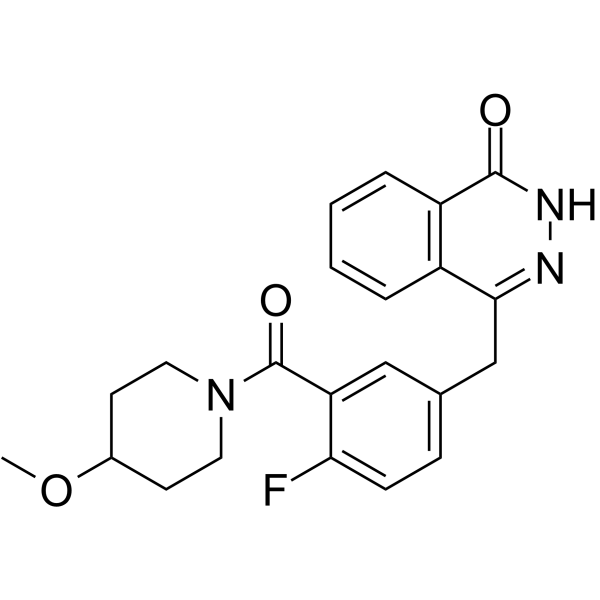
HY-13536
AZD-2461PARP Inhibitor -
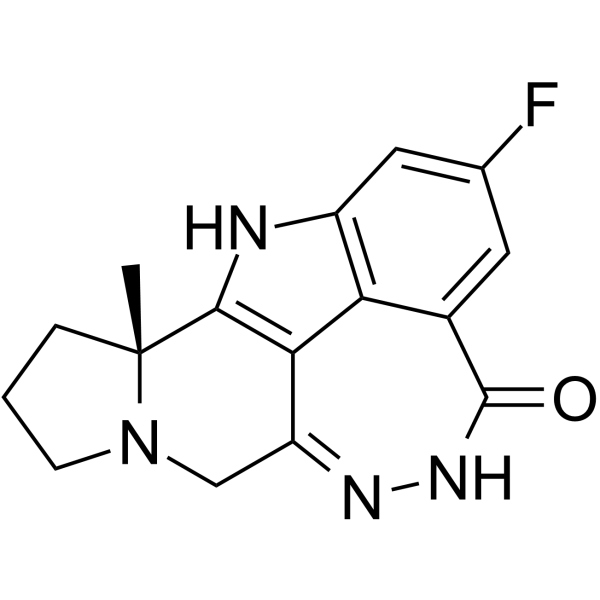
HY-104044
PamiparibPARP1/2 Inhibitor -
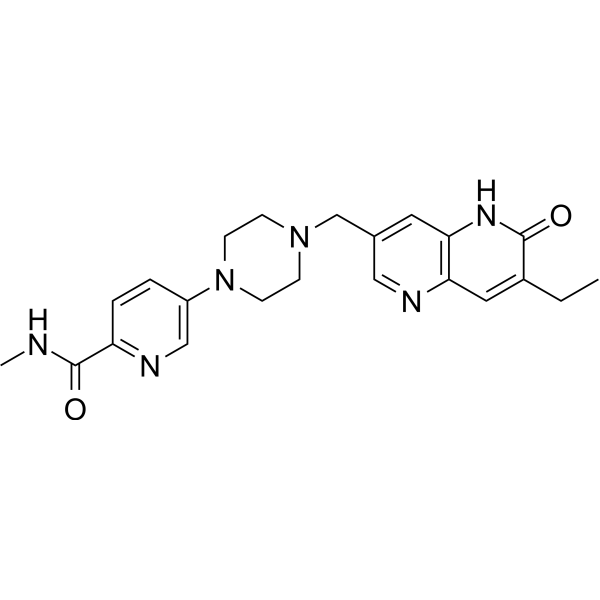
HY-132167
SaruparibPARP Inhibitor -
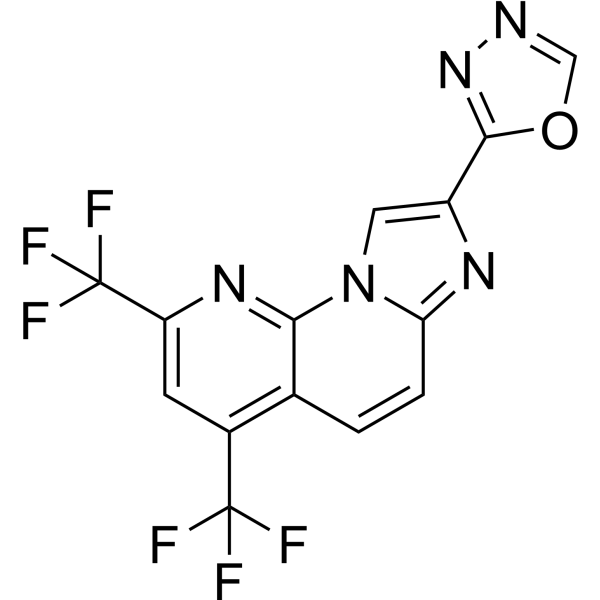
HY-W063968
RO8191 -
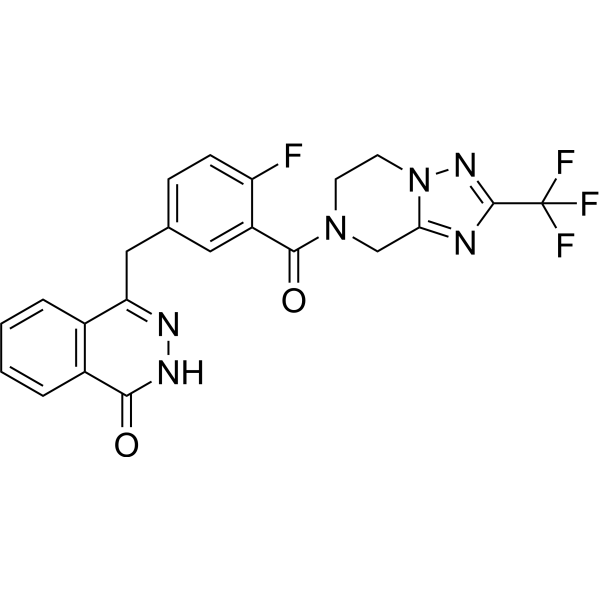
HY-114778
FluzoparibPARP1 Inhibitor -
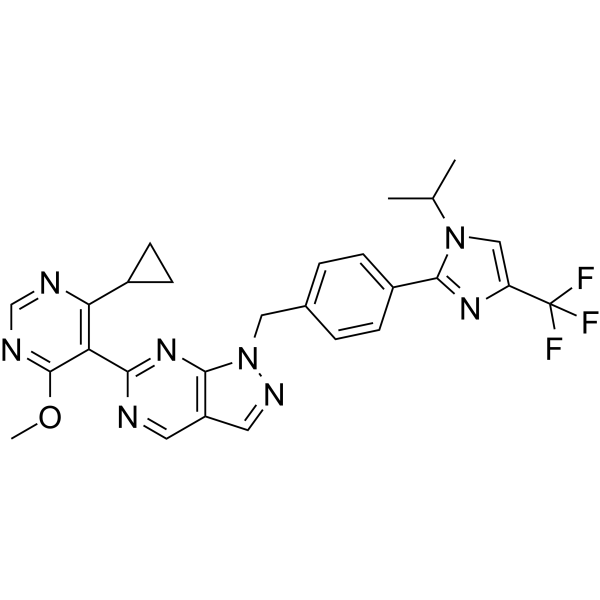
HY-145471
KSQ-4279USP1 Inhibitor
MedChemExpress(MCE)の使用を引用している文献 Iniparib
More

生物活性
製品説明
IC50 & Target
[3]|
PARP1 |
体外実験
Iniparib nonselectively modifies cysteine-containing proteins in tumor cells[1]. Iniparib (100 μM) weakly inhibits SSB repair, and the inhibition can be reversed by knockdown of PARP1[2]. Iniparib in combination with cisplatin is cytotoxic to Myc/MDA-231 with EMT changes[3].
MedChemExpress (MCE) has not independently confirmed the accuracy of these methods. They are for reference only.
臨床実験
| NCT Number | Sponsor | Condition | Start Date |
Phase

|
|---|---|---|---|---|
| NCT01329991 | Plexxikon| | 2011-05 | PHASE1 |


化学情報
-
CAS 番号 160003-66-7
-
性状 Solid
-
分子量 292.03
-
分子式 C7H5IN2O3
-
Color Light yellow to yellow
-
SMILES
O=C(C1=CC=C(C([N+]([O-])=O)=C1)I)N
-
別名
BSI-201; NSC-746045; IND-71677
-
輸送条件
Room temperature in continental US; may vary elsewhere.
-
保管条件
Powder -20°C 3 years 4°C 2 years In solvent -80°C 2 years -20°C 1 year


Publications (6)
-
Journal Impact Factor
-
Most Recent
-
Nucleic Acids Res
2023 Jun 23;51(11):5565-5583. PMID: 37140030 -
Clin Cancer Res
Drug-Driven Synthetic Lethality: Bypassing Tumor Cell Genetics with a Combination of AsiDNA and PARP Inhibitors. [Abstract]2017 Feb 15;23(4):1001-1011. PMID: 27559053 -
Acta Biomater
Biodegradable oxygen-producing manganese-chelated metal organic frameworks for tumor-targeted synergistic chemo/photothermal/ photodynamic therapy. [Abstract]2022 Jan 15:138:463-477. PMID: 34718179 -
J Mol Med (Berl)
2019 Aug;97(8):1183-1193. PMID: 31201471 -
-


溶剤 & 溶解度
体外:
DMSO : 100 mg/mL (342.43 mM; Need ultrasonic; Hygroscopic DMSO has a significant impact on the solubility of product, please use newly opened DMSO)
Please refer to the solubility information to select the appropriate solvent. Once prepared, please aliquot and store the solution to prevent product inactivation from repeated freeze-thaw cycles.
Storage method and period of stock solution: -80°C, 2 years; -20°C, 1 year. When stored at -80°C, please use it within 2 years. When stored at -20°C, please use it within 1 year.
Please refer to the solubility information to select the appropriate solvent. Once prepared, please aliquot and store the solution to prevent product inactivation from repeated freeze-thaw cycles.
Storage method and period of stock solution: -80°C, 2 years; -20°C, 1 year. When stored at -80°C, please use it within 2 years. When stored at -20°C, please use it within 1 year.
濃度 (開始) × 体積 (開始) = 濃度 (終了) × 体積 (終了)
体内:
Select the appropriate dissolution method based on your experimental animal and administration route.
- For the following dissolution methods, please ensure to first prepare a clear stock solution using an In Vitro approach and then sequentially add co-solvents:
- To ensure reliable experimental results, the clarified stock solution can be appropriately stored based on storage conditions. As for the working solution for In Vivo experiments, it is recommended to prepare freshly and use it on the same day.
- The percentages shown for the solvents indicate their volumetric ratio in the final prepared solution. If precipitation or phase separation occurs during preparation, heat and/or sonication can be used to aid dissolution.
Add each solvent one by one: 10% DMSO 40% PEG300 5% Tween-80 45% Saline
Solubility: ≥ 2.5 mg/mL (8.56 mM); Clear solution
This protocol yields a clear solution of ≥ 2.5 mg/mL (saturation unknown).
Taking 1 mL working solution as an example, add 100 μL DMSO stock solution (25.0 mg/mL) to 400 μL PEG300, and mix evenly; then add 50 μL Tween-80 and mix evenly; then add 450 μL Saline to adjust the volume to 1 mL.
Preparation of Saline: Dissolve 0.9 g sodium chloride in ddH₂O and dilute to 100 mL to obtain a clear Saline solution.
Add each solvent one by one: 10% DMSO 90% (20% SBE-β-CD in Saline)
Solubility: ≥ 2.5 mg/mL (8.56 mM); Clear solution
This protocol yields a clear solution of ≥ 2.5 mg/mL (saturation unknown).
Taking 1 mL working solution as an example, add 100 μL DMSO stock solution (25.0 mg/mL) to 900 μL 20% SBE-β-CD in Saline, and mix evenly.
Preparation of 20% SBE-β-CD in Saline (4°C, storage for one week): 2 g SBE-β-CD powder is dissolved in 10 mL Saline, completely dissolve until clear.
In Vivo Dissolution Calculator
Please enter the basic information of animal experiments:
-
-
-
-
Recommended: Prepare an additional quantity of animals to account for potential losses during experiments.
Please enter your animal formula composition:
-
%DMSO +
Recommended: Keep the proportion of DMSO in working solution below 2% if your animal is weak.
-
%+
-
+%Tween-80 + +
-
%Saline +
The co-solvents required include: DMSO, . All of co-solvents are available by MedChemExpress (MCE). , Tween 80. All of co-solvents are available by MedChemExpress (MCE).
Working solution concentration: 0.22 mg/mL
Method for preparing stock solution: mg drug dissolved in μL DMSO. Stock solution concentration: mg/mL.
1. Take μL DMSO stock solution;
2. Add μL .
μL , mix evenly;
3. Then add μL Tween 80, mix evenly;
4. Then add μL
Please ensure that the stock solution in the first step is dissolved to a clear state, and add co-solvents in sequence. You can use ultrasonic heating (ultrasonic cleaner, recommended frequency 20-40 kHz), vortexing, etc. to assist dissolution.


純度とドキュメンテーション
-
データシート (275 KB)
-
SDS (393 KB)
- English - EN (393 KB)
- Français - FR (393 KB)
- Deutsch - DE (393 KB)
- Norwegian - NO (393 KB)
- Español - ES (393 KB)
- Swedish - SV (393 KB)
- Italian - IT (393 KB)
- Korean - KR (393 KB)
- Portuguese - PT (393 KB)
-
取扱説明書 (2659 KB)
参考文献
[1]. Liu X, et al. Iniparib nonselectively modifies cysteine-containing proteins in tumor cells and is not a bona fide PARP inhibitor. Clin Cancer Res. 2012 Jan 15;18(2):510-23. [Content Brief]
[2]. Yin S, et al. Myc mediates cancer stem-like cells and EMT changes in triple negative breast cancers cells. PLoS One. 2017 Aug 17;12(8):e0183578. [Content Brief]
[3]. Ma W, et al. Differential effects of poly(ADP-ribose) polymerase inhibition on DNA break repair in human cells are revealed with Epstein-Barr virus. Proc Natl Acad Sci U S A. 2012 Apr 24;109(17):6590-5. [Content Brief]


Complete Stock Solution Preparation Table
Please refer to the solubility information to select the appropriate solvent. Once prepared, please aliquot and store the solution to prevent product inactivation from repeated freeze-thaw cycles.
Storage method and period of stock solution: -80°C, 2 years; -20°C, 1 year. When stored at -80°C, please use it within 2 years. When stored at -20°C, please use it within 1 year.
| Optional Solvent | Concentration Solvent Mass | 1 mg | 5 mg | 10 mg | 25 mg |
|---|---|---|---|---|---|
| DMSO | 1 mM | 3.4243 mL | 17.1215 mL | 34.2431 mL | 85.6076 mL |
| 5 mM | 0.6849 mL | 3.4243 mL | 6.8486 mL | 17.1215 mL | |
| 10 mM | 0.3424 mL | 1.7122 mL | 3.4243 mL | 8.5608 mL | |
| 15 mM | 0.2283 mL | 1.1414 mL | 2.2829 mL | 5.7072 mL | |
| 20 mM | 0.1712 mL | 0.8561 mL | 1.7122 mL | 4.2804 mL | |
| 25 mM | 0.1370 mL | 0.6849 mL | 1.3697 mL | 3.4243 mL | |
| 30 mM | 0.1141 mL | 0.5707 mL | 1.1414 mL | 2.8536 mL | |
| 40 mM | 0.0856 mL | 0.4280 mL | 0.8561 mL | 2.1402 mL | |
| 50 mM | 0.0685 mL | 0.3424 mL | 0.6849 mL | 1.7122 mL | |
| 60 mM | 0.0571 mL | 0.2854 mL | 0.5707 mL | 1.4268 mL | |
| 80 mM | 0.0428 mL | 0.2140 mL | 0.4280 mL | 1.0701 mL | |
| 100 mM | 0.0342 mL | 0.1712 mL | 0.3424 mL | 0.8561 mL |


Iniparib 関連分類
HY-12015 関連分類
 Powered by Bioz