



Dihexa
Based on 6 publication(s) in Google Scholar
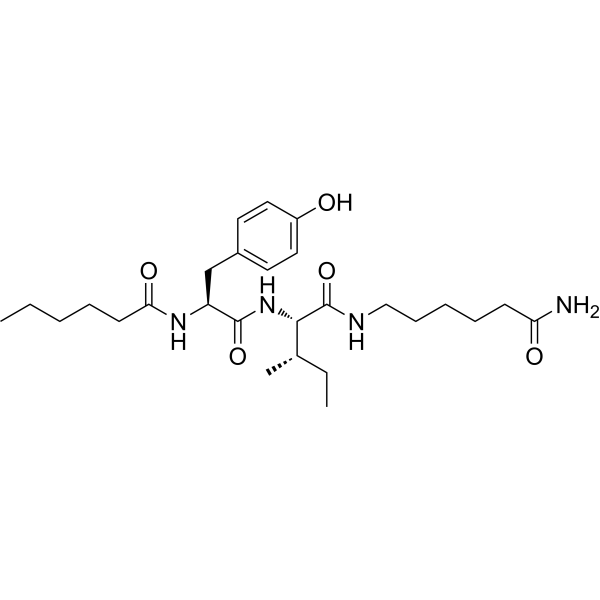
Dihexa, an oligopeptide drug, is an orally active and blood-brain barrier-permeable angiotensin IV analog. Dihexa binds to hepatocyte growth factor (HGF) with high affinity (Kd=65 pM) and potentiates its activity at its receptor, c-Met. Dihexa exhibits excellent antidementia activity and improves cognitive function in animal models. Dihexa may have therapeutic potential as a treatment Alzheimer’s disease.
For research use only. We do not sell to patients.
- Purity : 98.92%
- CAS No.: 1401708-83-5
- Formula: C27H44N4O5
- Molecular Weight:504.66
-
Storage:Powder -20°C, 3 years , 4°C, 2 years ; In solvent -80°C, 6 months , -20°C, 1 month

To place orders, for customer services and technical support, please contact: MedChemExpress USA
Tel: 609-228-6898 E-mail: [email protected] [email protected]


-
 Biological Activity
-
Chemical Information
-
Solvent & Solubility
- Protocols
- Purity & Documentation
- References
-
 Help & FAQs


-
HY-10182
LaduviglusibGSK-3 Inhibitor -
HY-B0166
L-Ascorbic acidAntioxidant -
HY-18085
QuercetinFlavonoid Antioxidant -
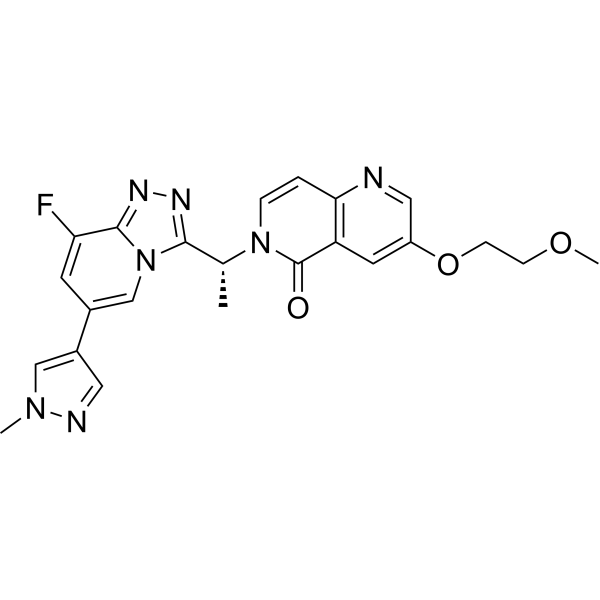
HY-18696
AMG-337MET Kinase Inhibitor -
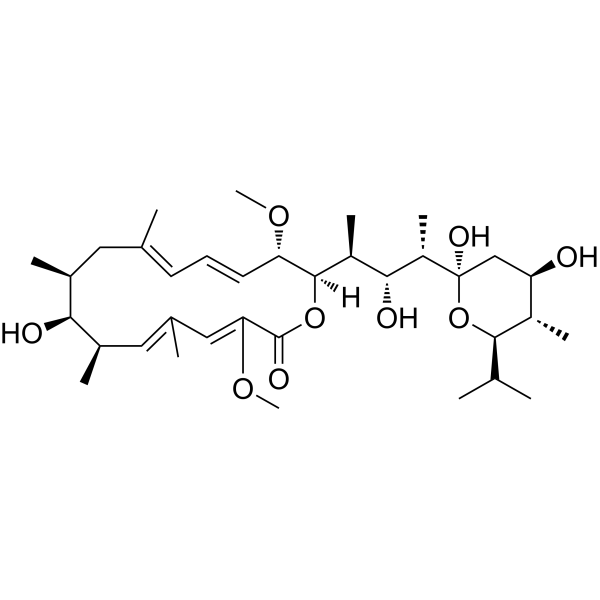
HY-100558
Bafilomycin A1V-ATPase Inhibitor -
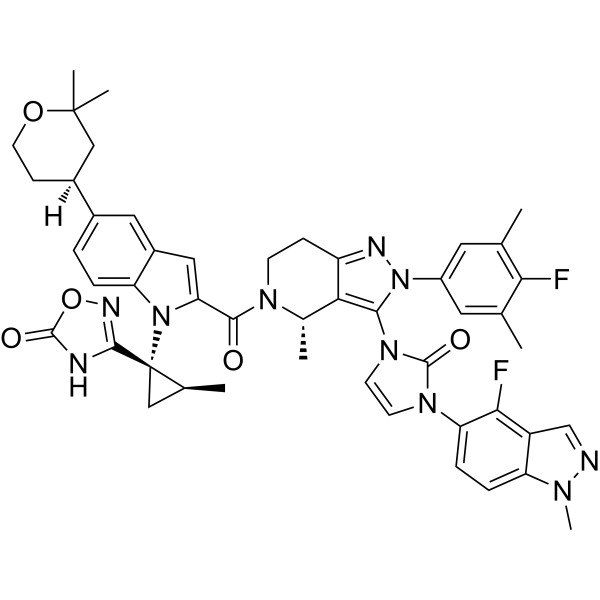
HY-112185
OrforglipronGLP-1R Agonist -
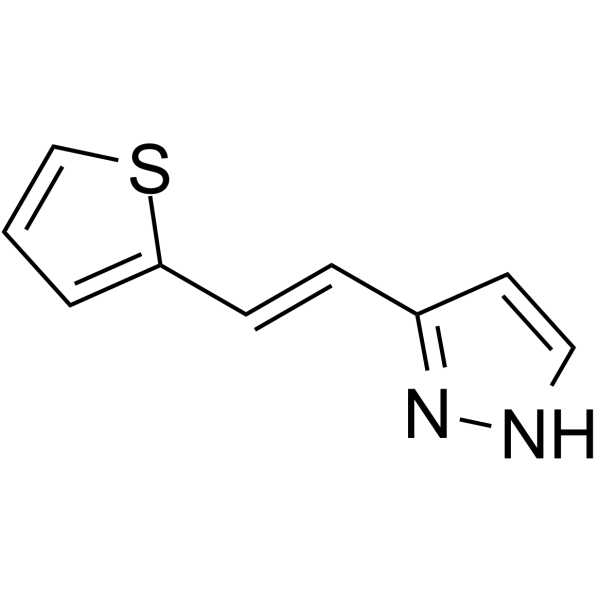
HY-137455
Terevalefimc-Met Receptor Activator -
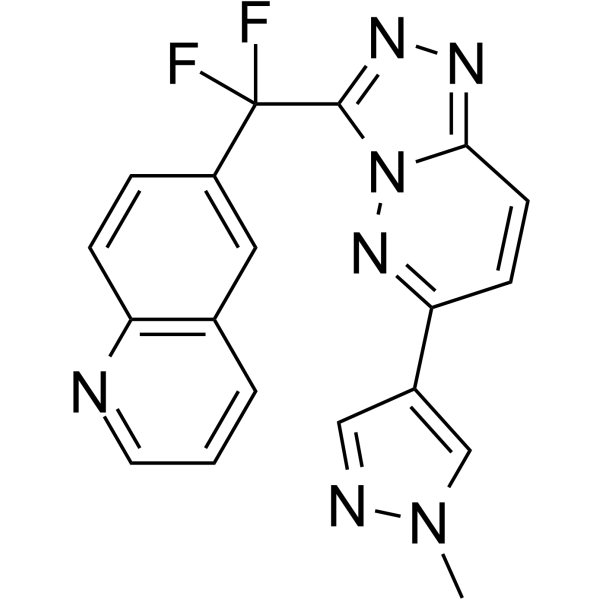
HY-50683
JNJ-38877605c-Met/HGFR Inhibitor -
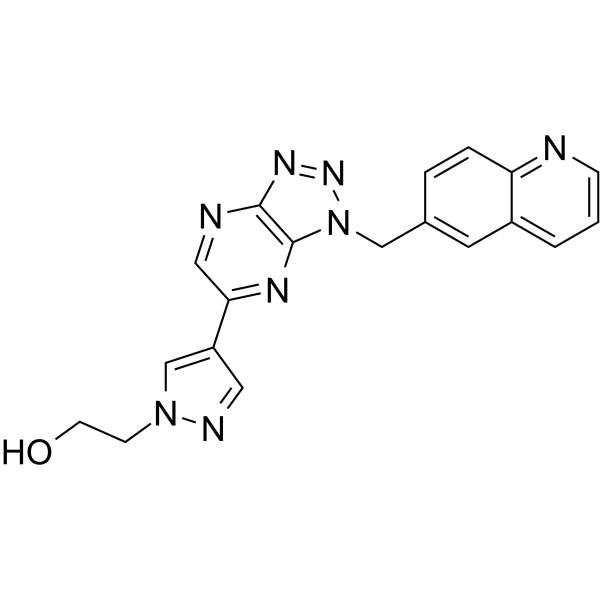
HY-12017
PF-04217903c-Met Kinase Inhibitor -
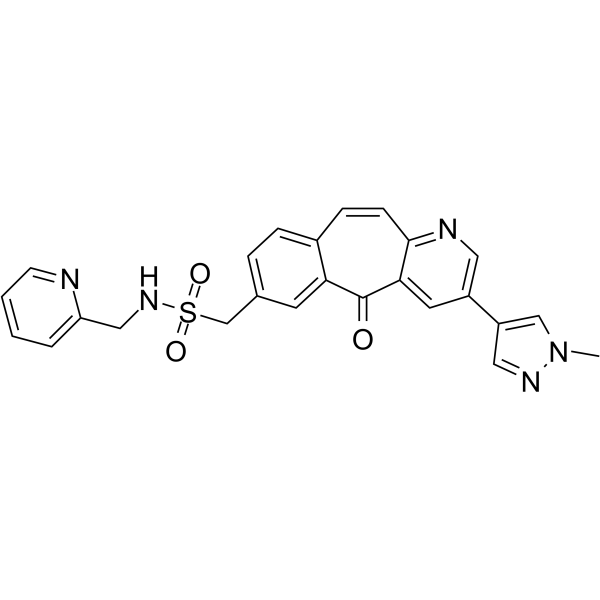
HY-13299
MK-8033c-Met/Ron Inhibitor -
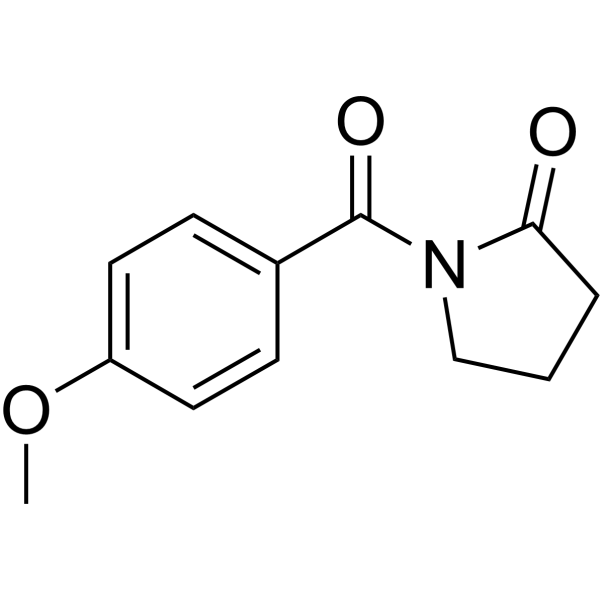
HY-10932
AniracetamNootropics and Neuroprotective Agent
Publications Citing Use of MedChemExpress (MCE) Dihexa
More Customer Validation & Images

-
Cell Imaging/Staining
-
WB
-
ELISA


Biological Activity
Description
IC50 & Target
Kd: 65 pM (HGF)[1]
In Vitro
Dihexa binds with high affinity to HGF and both dihexa and its parent compound Norleucine 1-AngIV induce c-Met phosphorylation in the presence of subthreshold concentrations of HGF and augment HGF-dependent cell scattering. Further, dihexa and Nle1-AngIV induce hippocampal spinogenesis and synaptogenesis similar to HGF itself. Dihexa effectively inhibits HGF dimerization at 1 μM. While dihexa at 1 nM and 10 pM alone does not activate c-Met, it markedly augments the capacity of HGF at 1.25 and 2.5 ng/mL to activate c-Met[1].
MedChemExpress (MCE) has not independently confirmed the accuracy of these methods. They are for reference only. Further protocols information, click here.
In Vivo
MedChemExpress (MCE) has not independently confirmed the accuracy of these methods. They are for reference only.


Chemical Information
-
CAS No. 1401708-83-5
-
Appearance Solid
-
Molecular Weight 504.66
-
Formula C27H44N4O5
-
Color White to off-white
-
SMILES
OC(C=C1)=CC=C1C[C@H](NC(CCCCC)=O)C(N[C@@H]([C@@H](C)CC)C(NCCCCCC(N)=O)=O)=O
-
Synonyms
PNB-0408; N-hexanoic-Try-Ile-(6)-amino hexanoic amide; Hexanoyl-Tyr-Ile-Ahx-NH2
-
Shipping
Room temperature in continental US; may vary elsewhere.
-
Storage
Powder -20°C 3 years 4°C 2 years In solvent -80°C 6 months -20°C 1 month


Publications (6)
-
Journal Impact Factor
-
Most Recent
-
Stem Cell Res Ther
Hepatocyte-like cells derived from human induced pluripotent stem cells using small molecules: implications of a transcriptomic study. [Abstract]2020 Sep 11;11(1):393. PMID: 32917265 -
Brain Sci
AngIV-Analog Dihexa Rescues Cognitive Impairment and Recovers Memory in the APP/PS1 Mouse via the PI3K/AKT Signaling Pathway. [Abstract]2021 Nov 11;11(11):1487. PMID: 34827486
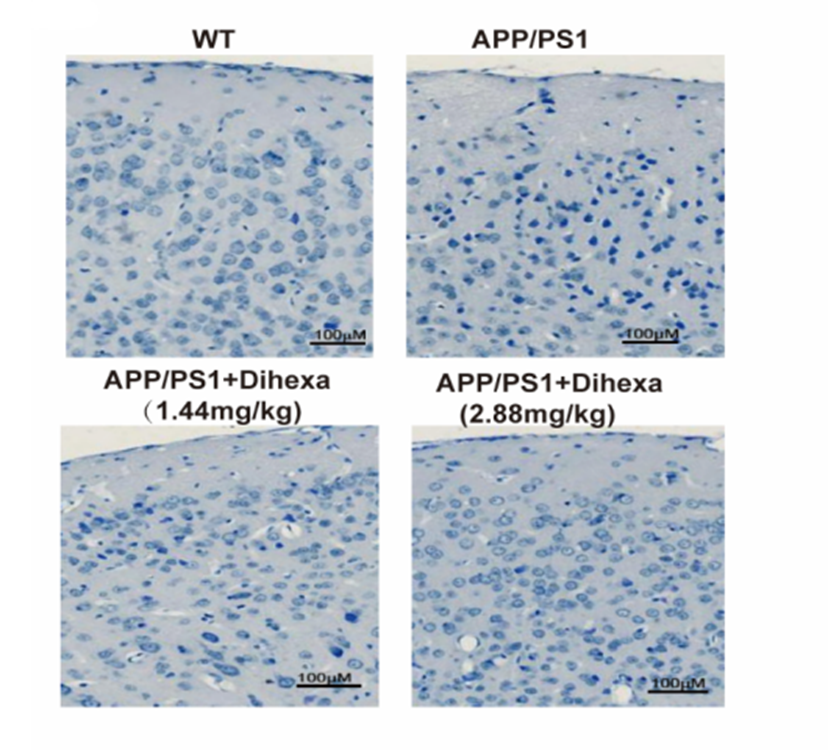
Dihexa purchased from MedChemExpress. Usage Cited in: Brain Sci. 2021 Nov 11;11(11):1487. [Abstract]
Nissl staining results of the effects of Dihexa (1.44 mg/kg and 2.88 mg/kg) on the neuronal cells in the cerebral cortex.
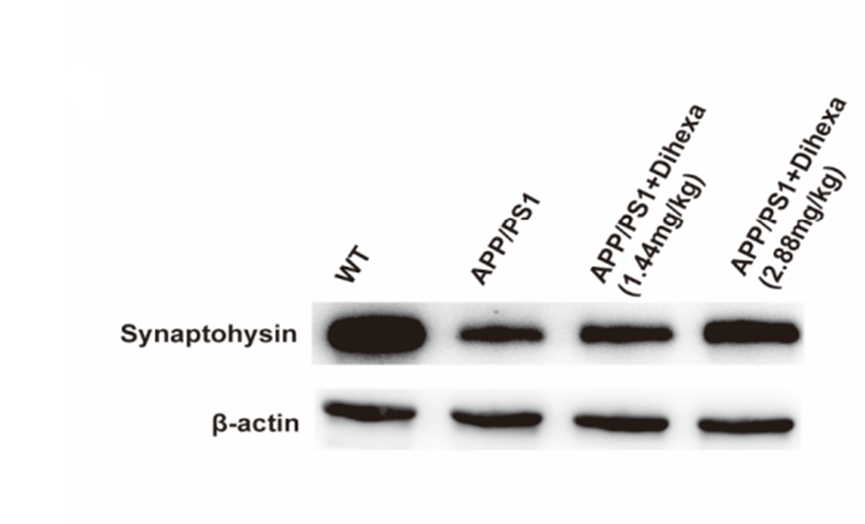
Dihexa purchased from MedChemExpress. Usage Cited in: Brain Sci. 2021 Nov 11;11(11):1487. [Abstract]
Expression of synaptophysin in mouse brains in Dihexa-treated (1.44 mg/kg and 2.88 mg/kg) APP/PS1 mice.
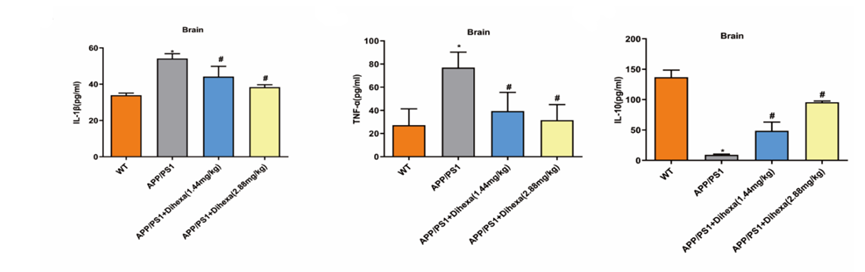
Dihexa purchased from MedChemExpress. Usage Cited in: Brain Sci. 2021 Nov 11;11(11):1487. [Abstract]
The levels of IL-1β, TNF-α, and IL-10 in the brain were investigated by ELISA in Dihexa-treated (1.44 mg/kg and 2.88 mg/kg) APP/PS1 mice.
-
-
Chemosphere
Developmental toxicity assessments for TBBPA and its commonly used analogs with a human embryonic stem cell liver differentiation model. [Abstract]2023 Jan:310:136924. PMID: 36272632 -
Methods Mol Biol
Homogeneous Differentiation of Functional Hepatocytes from Human Induced Pluripotent Stem Cells. [Abstract]2022;2429:127-142. PMID: 35507159 -
Sci Total Environ
Silver nanoparticles (AgNPs) and AgNO3 perturb the specification of human hepatocyte-like cells and cardiomyocytes. [Abstract]2020 Jul 10:725:138433. PMID: 32302844


Solvent & Solubility
In Vitro:
DMSO : 100 mg/mL (198.15 mM; Need ultrasonic; Hygroscopic DMSO has a significant impact on the solubility of product, please use newly opened DMSO)
Please refer to the solubility information to select the appropriate solvent. Once prepared, please aliquot and store the solution to prevent product inactivation from repeated freeze-thaw cycles.
Storage method and period of stock solution: -80°C, 6 months; -20°C, 1 month. When stored at -80°C, please use it within 6 months. When stored at -20°C, please use it within 1 month.
Please refer to the solubility information to select the appropriate solvent. Once prepared, please aliquot and store the solution to prevent product inactivation from repeated freeze-thaw cycles.
Storage method and period of stock solution: -80°C, 6 months; -20°C, 1 month. When stored at -80°C, please use it within 6 months. When stored at -20°C, please use it within 1 month.
Concentration (start) × Volume (start) = Concentration (final) × Volume (final)
In Vivo:
Select the appropriate dissolution method based on your experimental animal and administration route.
- For the following dissolution methods, please ensure to first prepare a clear stock solution using an In Vitro approach and then sequentially add co-solvents:
- To ensure reliable experimental results, the clarified stock solution can be appropriately stored based on storage conditions. As for the working solution for In Vivo experiments, it is recommended to prepare freshly and use it on the same day.
- The percentages shown for the solvents indicate their volumetric ratio in the final prepared solution. If precipitation or phase separation occurs during preparation, heat and/or sonication can be used to aid dissolution.
Add each solvent one by one: 10% DMSO 40% PEG300 5% Tween-80 45% Saline
Solubility: ≥ 2.5 mg/mL (4.95 mM); Clear solution
This protocol yields a clear solution of ≥ 2.5 mg/mL (saturation unknown).
Taking 1 mL working solution as an example, add 100 μL DMSO stock solution (25.0 mg/mL) to 400 μL PEG300, and mix evenly; then add 50 μL Tween-80 and mix evenly; then add 450 μL Saline to adjust the volume to 1 mL.
Preparation of Saline: Dissolve 0.9 g sodium chloride in ddH₂O and dilute to 100 mL to obtain a clear Saline solution.
In Vivo Dissolution Calculator
Please enter the basic information of animal experiments:
-
-
-
-
Recommended: Prepare an additional quantity of animals to account for potential losses during experiments.
Please enter your animal formula composition:
-
%DMSO +
Recommended: Keep the proportion of DMSO in working solution below 2% if your animal is weak.
-
%+
-
+%Tween-80 + +
-
%Saline +
The co-solvents required include: DMSO, . All of co-solvents are available by MedChemExpress (MCE). , Tween 80. All of co-solvents are available by MedChemExpress (MCE).
Working solution concentration: 0.22 mg/mL
Method for preparing stock solution: mg drug dissolved in μL DMSO. Stock solution concentration: mg/mL.
1. Take μL DMSO stock solution;
2. Add μL .
μL , mix evenly;
3. Then add μL Tween 80, mix evenly;
4. Then add μL
Please ensure that the stock solution in the first step is dissolved to a clear state, and add co-solvents in sequence. You can use ultrasonic heating (ultrasonic cleaner, recommended frequency 20-40 kHz), vortexing, etc. to assist dissolution.

Protocols
-
Protocol for Water Maze
The Morris Water Maze is a rodent spatial learning and memory assay in which a mouse or rat swims in opaque water to find an escape platform; in the hidden-platform version, the animal cannot see the platform and must use distal extra-maze cues to learn its fixed spatial location. The assay primarily measures hippocampus-dependent spatial learning during acquisition trials and spatial reference memory during probe trials after platform removal; readouts include escape latency, swim path length, swim speed, quadrant occupancy, platform-site crossings, and proximity to the former platform location.


Purity & Documentation
-
Data Sheet (272 KB)
-
SDS (252 KB)
- English - EN (252 KB)
- Français - FR (252 KB)
- Deutsch - DE (252 KB)
- Norwegian - NO (252 KB)
- Español - ES (252 KB)
- Swedish - SV (252 KB)
- Italian - IT (252 KB)
- Korean - KR (252 KB)
- Portuguese - PT (252 KB)
-
Handling Instructions (2659 KB)
References
[1]. Benoist CC, et al. The procognitive and synaptogenic effects of angiotensin IV-derived peptides are dependent on activation of the hepatocyte growth factor/c-met system. J Pharmacol Exp Ther. 2014 Nov;351(2):390-402. [Content Brief]
[2]. McCoy AT, et al. Evaluation of metabolically stabilized angiotensin IV analogs as procognitive/antidementia agents. J Pharmacol Exp Ther. 2013 Jan;344(1):141-54. [Content Brief]


Complete Stock Solution Preparation Table
Please refer to the solubility information to select the appropriate solvent. Once prepared, please aliquot and store the solution to prevent product inactivation from repeated freeze-thaw cycles.
Storage method and period of stock solution: -80°C, 6 months; -20°C, 1 month. When stored at -80°C, please use it within 6 months. When stored at -20°C, please use it within 1 month.
| Optional Solvent | Concentration Solvent Mass | 1 mg | 5 mg | 10 mg | 25 mg |
|---|---|---|---|---|---|
| DMSO | 1 mM | 1.9815 mL | 9.9077 mL | 19.8153 mL | 49.5383 mL |
| 5 mM | 0.3963 mL | 1.9815 mL | 3.9631 mL | 9.9077 mL | |
| 10 mM | 0.1982 mL | 0.9908 mL | 1.9815 mL | 4.9538 mL | |
| 15 mM | 0.1321 mL | 0.6605 mL | 1.3210 mL | 3.3026 mL | |
| 20 mM | 0.0991 mL | 0.4954 mL | 0.9908 mL | 2.4769 mL | |
| 25 mM | 0.0793 mL | 0.3963 mL | 0.7926 mL | 1.9815 mL | |
| 30 mM | 0.0661 mL | 0.3303 mL | 0.6605 mL | 1.6513 mL | |
| 40 mM | 0.0495 mL | 0.2477 mL | 0.4954 mL | 1.2385 mL | |
| 50 mM | 0.0396 mL | 0.1982 mL | 0.3963 mL | 0.9908 mL | |
| 60 mM | 0.0330 mL | 0.1651 mL | 0.3303 mL | 0.8256 mL | |
| 80 mM | 0.0248 mL | 0.1238 mL | 0.2477 mL | 0.6192 mL | |
| 100 mM | 0.0198 mL | 0.0991 mL | 0.1982 mL | 0.4954 mL |


Dihexa Related Classifications
HY-16969 Related Classifications
 Powered by Bioz