



Diphenylterazine
Based on 11 publication(s) in Google Scholar
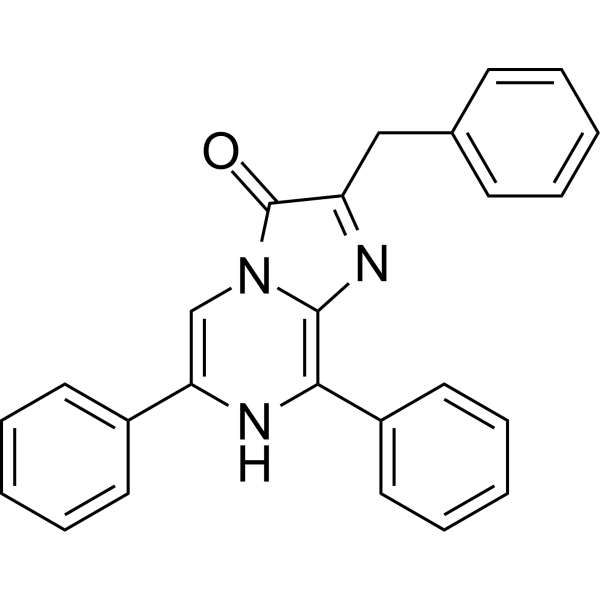
Diphenylterazine (DTZ) is a bioluminescence agent. Diphenylterazine alone yielded very little background, leading to excellent signal-to-background ratios.
For research use only. We do not sell to patients.
- Purity : 98.50%
- CAS No.: 344940-63-2
- Formula: C25H19N3O
- Molecular Weight:377.44
-
Storage:Shipping with dry ice
-80°C, protect from light, stored under nitrogen

To place orders, for customer services and technical support, please contact: MedChemExpress USA
Tel: 609-228-6898 E-mail: [email protected] [email protected]


-
 Biological Activity
-
Chemical Information
-
Solvent & Solubility
- Purity & Documentation
- References
-
 Help & FAQs


-
HY-18743
CoelenterazineLuminescent Enzyme Substrate -
HY-Y0873
PEG300Neutral Polymer -
HY-D0079
DihydroethidiumFluorescent -

HY-Y1891
Tween 80 -
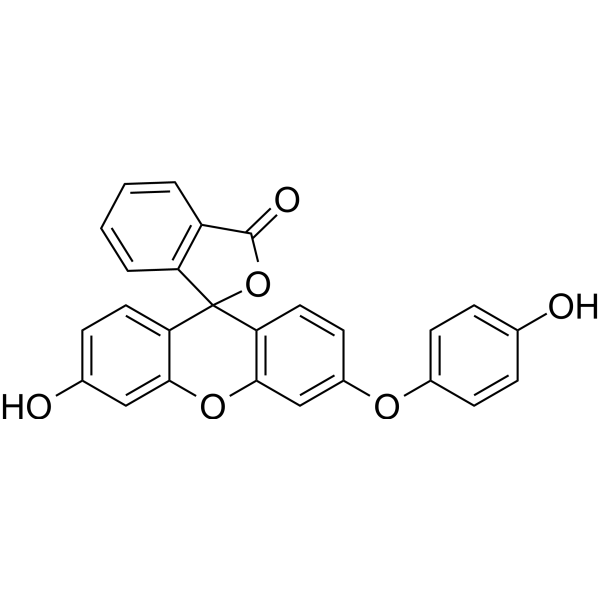
HY-111330
Hydroxyphenyl FluoresceinROS Probe -
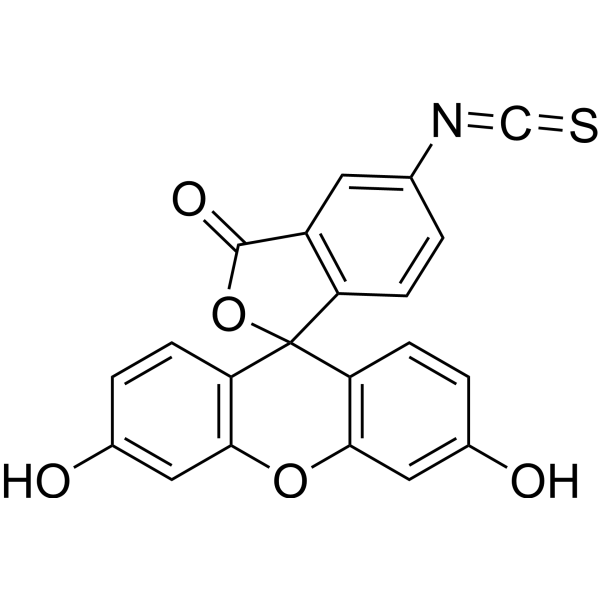
HY-66019
FITCFluorochrome -
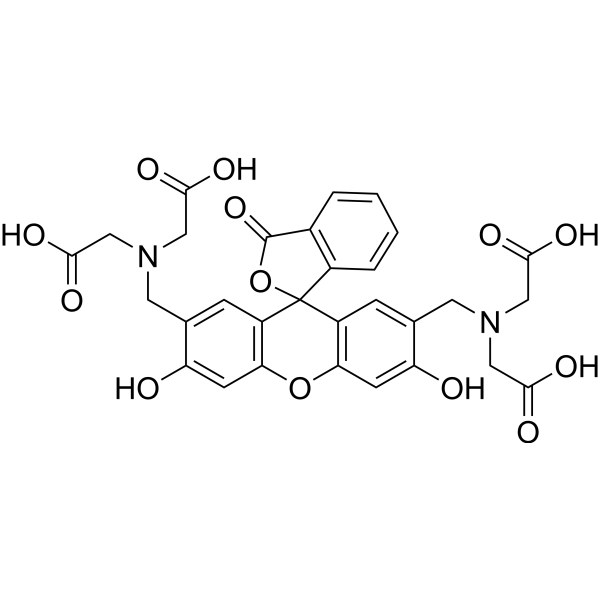
HY-D0040
CalceinFluorescent Dye -
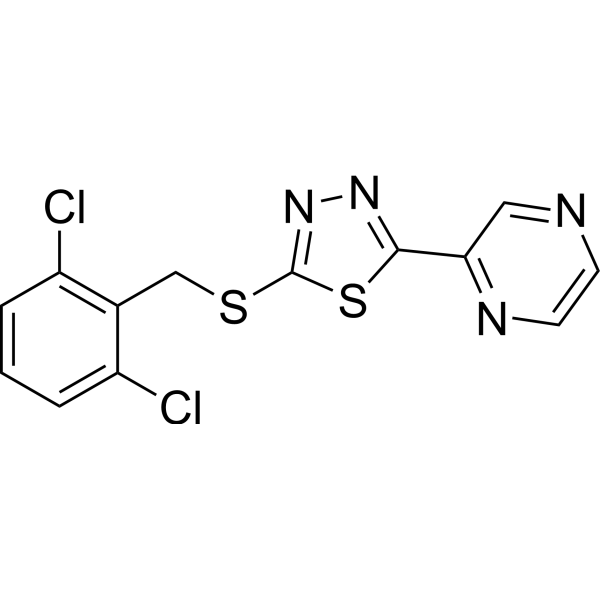
HY-18723
Yoda 1Piezo1 Agonist -
HY-12591
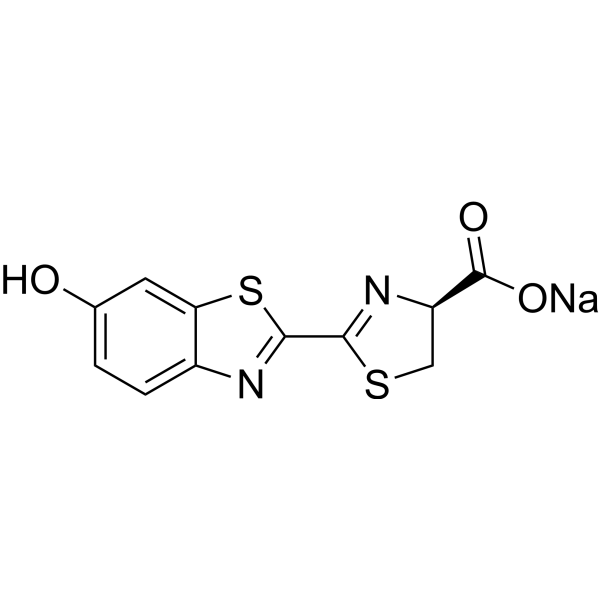
D-Luciferin sodiumSubstrate for Luciferase -
HY-D0815
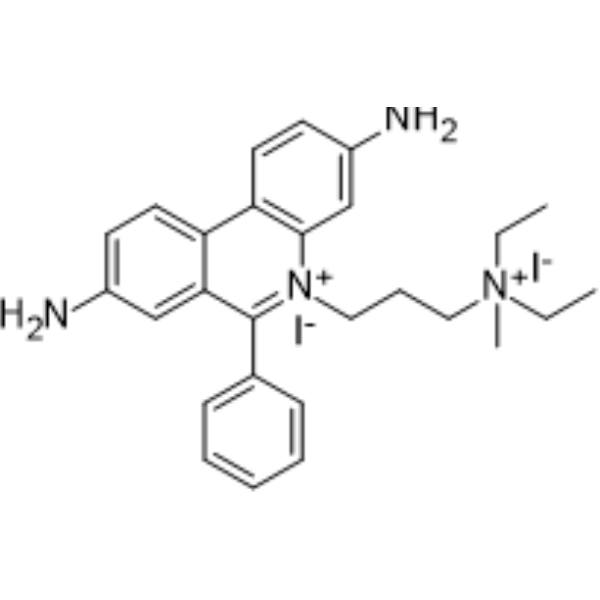
Propidium IodideFluorochrome -
HY-D0938
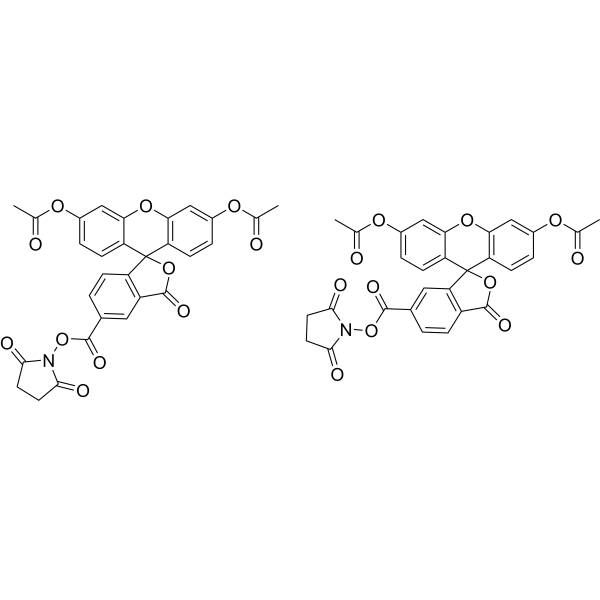
CFDA-SECell Proliferation Fluorescent Probe -
HY-13226
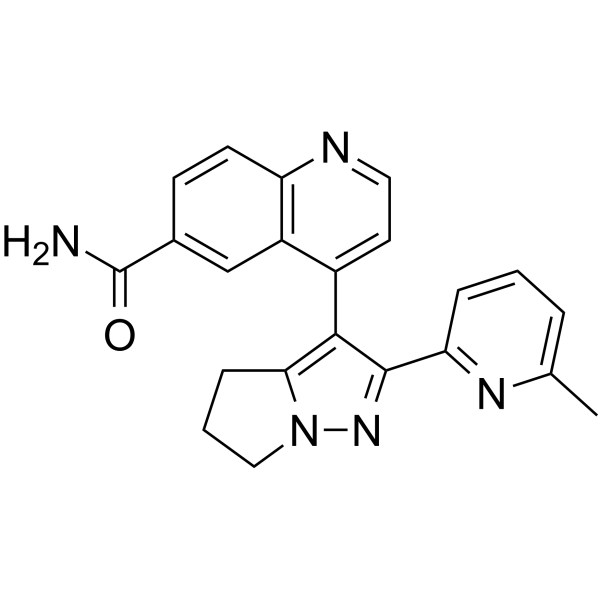
GalunisertibTGFβRI Inhibitor
Publications Citing Use of MedChemExpress (MCE) Diphenylterazine
More- Nature. 2023 Feb;614(7949):774-780. [Abstract]
- Nat Commun. 2022 Dec 17;13(1):7799. [Abstract]
- Mol Cell. 2025 Mar 20;85(6):1176-1188.e5. [Abstract]
- Adv Sci (Weinh). 2024 Apr;11(13):e2308750. [Abstract]
- JACS Au. 2026 Mar 12;6(3):1739–1756.
- Biosensors (Basel). 2024 Dec 21;14(12):637. [Abstract]
- Sci Rep. 2020 Oct 6;10(1):16616. [Abstract]
- Cancers (Basel). 2022 Sep 28;14(19):4735. [Abstract]
- J Biol Chem. 2021 Nov;297(5):101266. [Abstract]
- ACS Chem Biol. 2019 May 17;14(5):959-965. [Abstract]
- Patent. US20230142621A1.
 Customer Validation & Images

-
Bio/Physico-chemical Assay
-
Bio/Physico-chemical Assay
-
Bio/Physico-chemical Assay
-
Others
-
Cell Imaging/Staining


Biological Activity
Description
In Vitro
Diphenylterazine elicits minimal cell toxicity at millimolar concentrations[1].
Diphenylterazine (DTZ) has high quantum yield, red-shifted emission, favorable in vivo pharmacokinetics and lacks cofactors required for light emission. Yeh AH (2023) used Diphenylterazine (DTZ) as the target substrate of luciferase, and the multinuclear transport factor NTF2-like superfamily as the target topology, to de novo design a small and stable protein scaffold to make the size and shape of the pocket suitable for Diphenylterazine. This method screens out designed luciferases with high selectivity and overcomes the limitations of natural proteins. The catalytic efficiency of the de novo designed luciferase for Diphenylterazine (kcat/Km = 106/M/s) is comparable to that of natural luciferase, but the substrate specificity is higher[2].
Notes: To make a stock solution for DTZ (Diphenylterazine), first, a premixture is prepared by dissolving 17.6 mg of L-ascorbic acid (HY-B0166) in 10 mL ethanol and 10 mL 1,2-propanediol; next, 1 mg of Diphenylterazine is dissolved in 88 μL of the premix, resulting in a 30 mM Diphenylterazine stock solution containing 5 mM L-ascorbic acid.
The stock solution should be stable for a few months in -80°C freezers. It may also be aliquoted to 10-20 μL each at -80°C for the convenience of use. We want to note that this new formulation greatly enhances substrate stability, compared to the conventional acidic alcohol solution[3].
MedChemExpress (MCE) has not independently confirmed the accuracy of these methods. They are for reference only.
In Vivo
1. Female nude mice were injected subcutaneously with HeLa cells[4].
2. Diphenylterazine (0.3 μmol (0.113 mg); 100 μL) was injected intravenously on days 1, 3, 5, 7, 14, and 28 after tumor implantation.
3. Approximately 5 minutes later, images were taken using a bioluminescence imaging system.
.
MedChemExpress (MCE) has not independently confirmed the accuracy of these methods. They are for reference only.
Dyeing Example


Chemical Information
-
CAS No. 344940-63-2
-
Appearance Solid
-
Molecular Weight 377.44
-
Formula C25H19N3O
-
Color Orange to reddish brown
-
SMILES
O=C1C(CC2=CC=CC=C2)=NC3=C(C4=CC=CC=C4)NC(C5=CC=CC=C5)=CN31
-
Synonyms
DTZ
-
Shipping
Shipping with dry ice.
-
Storage
-80°C, protect from light, stored under nitrogen


Publications (11)
-
Journal Impact Factor
-
Most Recent
-
Nature
2023 Feb;614(7949):774-780. PMID: 36813896
Diphenylterazine purchased from MedChemExpress. Usage Cited in: Nature. 2023 Feb;614(7949):774-780. [Abstract]
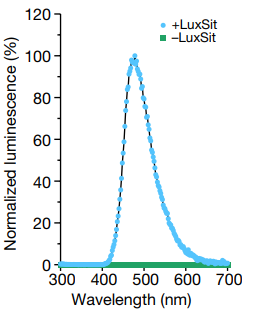
Luminescence emission spectra of DTZ in the presence (blue) and absence (green) of LuxSit.
Diphenylterazine purchased from MedChemExpress. Usage Cited in: Nature. 2023 Feb;614(7949):774-780. [Abstract]
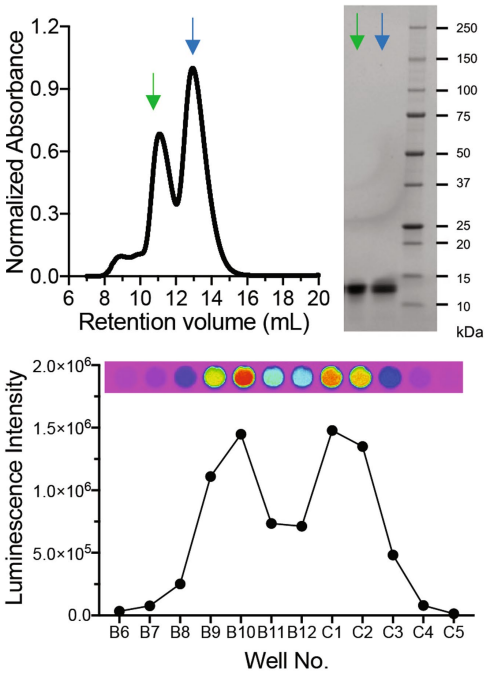
Dimeric SEC peak was observed when LuxSit-i was concentrated to a high concentration (~50 μM) in Tris pH 8.0 buffer. Both dimeric and monomeric SEC fractions showed the expected size on SDS–PAGE and both peaks were catalytically active to emit luminescence in the presence of 25 μM DTZ.
Diphenylterazine purchased from MedChemExpress. Usage Cited in: Nature. 2023 Feb;614(7949):774-780. [Abstract]
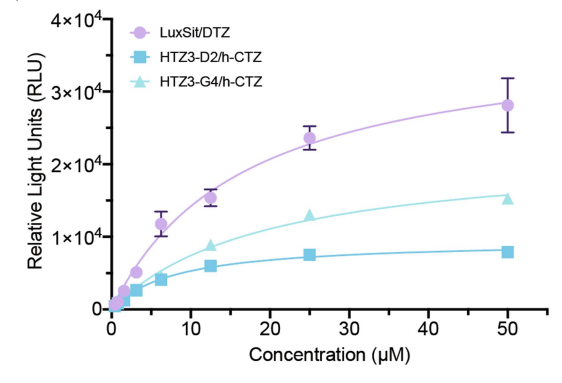
Substrate concentration dependence of LuxSit (w/ DTZ), HTZ3-D2 (w/ h-CTZ), and HTZ3-G4 (w/ h-CTZ) activity in PBS. All data points were fitted to the Michaelis-Menten equation. HTZ3-D2 and HTZ3-G4 showed Km values of 7.9 and 19.5 μM with ~25% and ~58% Imax of LuxSit, respectively.
Diphenylterazine purchased from MedChemExpress. Usage Cited in: Nature. 2023 Feb;614(7949):774-780. [Abstract]
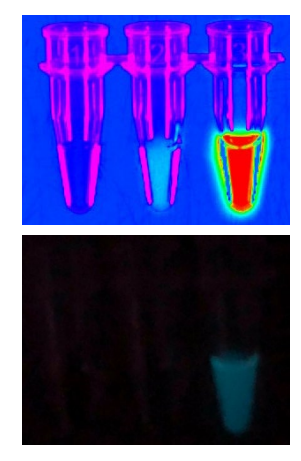
Luminescence images acquired by a BioRad Imager (top) or an Apple iPhone 8 camera (bottom). Tubes from left to right: DTZ only; DTZ plus 100 nM purified LuxSit; and DTZ plus 100 nM purified LuxSit-i, showing the high efficiency of photon production.
Diphenylterazine purchased from MedChemExpress. Usage Cited in: Nature. 2023 Feb;614(7949):774-780. [Abstract]
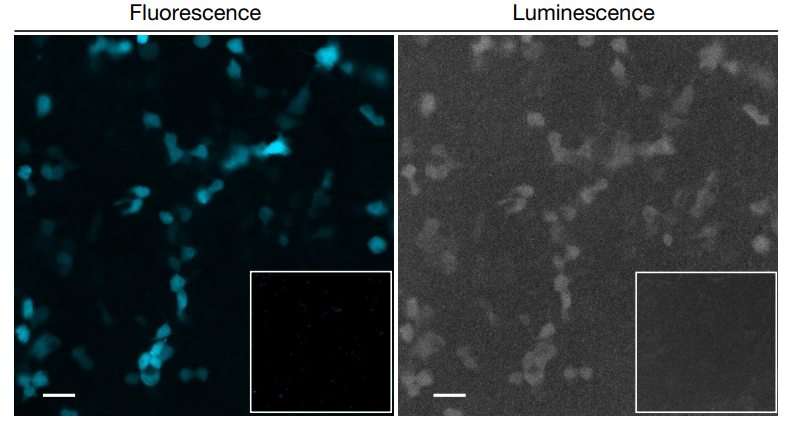
Fluorescence and luminescence microscopic images of live HEK293T cells transiently expressing LuxSit-i-mTagBFP2; LuxSit-i activity can be detected at single-cell resolution. Left, fluorescence channel representing the mTagBFP2 signal. Right, total luminescence photons were collected during a course of a 10-s exposure without excitation light, immediately after adding 25 µM DTZ. Insets, negative control, untransfected cells with DTZ.
-
Nat Commun
USP5-Beclin 1 axis overrides p53-dependent senescence and drives Kras-induced tumorigenicity. [Abstract]2022 Dec 17;13(1):7799. PMID: 36528652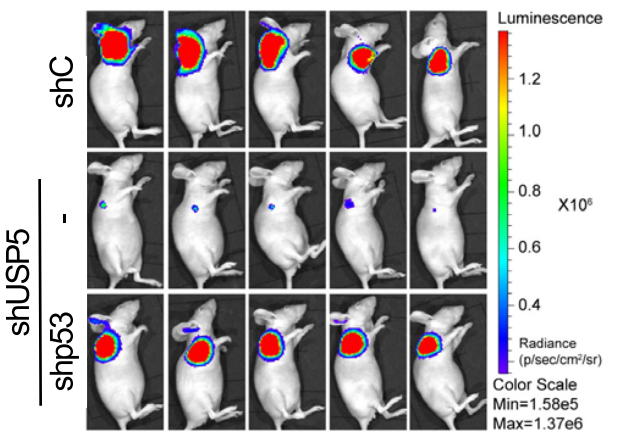
Diphenylterazine purchased from MedChemExpress. Usage Cited in: Nat Commun. 2022 Dec 17;13(1):7799. [Abstract]
Diphenylterazine (DTZ) was injected into tumor regions in anesthetized mice and bioluminescence was subsequently imaged.
-
Mol Cell
2025 Mar 20;85(6):1176-1188.e5. PMID: 40010342 -
Adv Sci (Weinh)
2024 Apr;11(13):e2308750. PMID: 38247166 -
-
Biosensors (Basel)
A Novel Approach Using LuxSit-i Enhanced Toehold Switches for the Rapid Detection of Vibrio parahaemolyticus. [Abstract]2024 Dec 21;14(12):637. PMID: 39727902 -
Sci Rep
In vivo imaging of long-term accumulation of cancer-derived exosomes using a BRET-based reporter. [Abstract]2020 Oct 6;10(1):16616. PMID: 33024173 -
Cancers (Basel)
Nuclear Beclin 1 Destabilizes Retinoblastoma Protein to Promote Cell Cycle Progression and Colorectal Cancer Growth. [Abstract]2022 Sep 28;14(19):4735. PMID: 36230664 -
J Biol Chem
Exosome-mediated mRNA delivery in vivo is safe and can be used to induce SARS-CoV-2 immunity. [Abstract]2021 Nov;297(5):101266. PMID: 34600888 -
ACS Chem Biol
2019 May 17;14(5):959-965. PMID: 30969754 -


Solvent & Solubility
In Vitro:
DMF : 11.11 mg/mL (29.44 mM; Need ultrasonic; DMSO can inactivate Diphenylterazine's activity)
H2O : < 0.1 mg/mL (insoluble; DMSO can inactivate Diphenylterazine's activity)
Please refer to the solubility information to select the appropriate solvent. Once prepared, please aliquot and store the solution to prevent product inactivation from repeated freeze-thaw cycles.
Storage method and period of stock solution: -80°C, 6 months (protect from light, stored under nitrogen). When stored at -80°C, please use it within 6 months.
Please refer to the solubility information to select the appropriate solvent. Once prepared, please aliquot and store the solution to prevent product inactivation from repeated freeze-thaw cycles.
Storage method and period of stock solution: -80°C, 6 months (protect from light, stored under nitrogen). When stored at -80°C, please use it within 6 months.
Concentration (start) × Volume (start) = Concentration (final) × Volume (final)


Purity & Documentation
-
Data Sheet (280 KB)
-
SDS (394 KB)
- English - EN (394 KB)
- Français - FR (394 KB)
- Deutsch - DE (394 KB)
- Norwegian - NO (394 KB)
- Español - ES (394 KB)
- Swedish - SV (394 KB)
- Italian - IT (394 KB)
- Korean - KR (394 KB)
- Portuguese - PT (394 KB)
-
Handling Instructions (2659 KB)
References
[1]. Yeh HW, et al. Red-shifted luciferase-luciferin pairs for enhanced bioluminescence imaging. Nat Methods. 2017 Oct;14(10):971-974. [Content Brief]
[2]. Yeh AH, et al. De novo design of luciferases using deep learning. Nature. 2023 Feb;614(7949):774-780. [Content Brief]
[3]. Practical Notes for teLuc-DTZ and Antares2-DTZ (updated 07/29/2019).
[4]. Hsien-Wei Yeh, et al. ATP-Independent Bioluminescent Reporter Variants To Improve in Vivo Imaging. ACS Chem Biol. 2019 May 17;14(5):959-965. [Content Brief]


Complete Stock Solution Preparation Table
Please refer to the solubility information to select the appropriate solvent. Once prepared, please aliquot and store the solution to prevent product inactivation from repeated freeze-thaw cycles.
Storage method and period of stock solution: -80°C, 6 months (protect from light, stored under nitrogen). When stored at -80°C, please use it within 6 months.
| Optional Solvent | Concentration Solvent Mass | 1 mg | 5 mg | 10 mg | 25 mg |
|---|---|---|---|---|---|
| DMF | 1 mM | 2.6494 mL | 13.2471 mL | 26.4943 mL | 66.2357 mL |
| 5 mM | 0.5299 mL | 2.6494 mL | 5.2989 mL | 13.2471 mL | |
| 10 mM | 0.2649 mL | 1.3247 mL | 2.6494 mL | 6.6236 mL | |
| 15 mM | 0.1766 mL | 0.8831 mL | 1.7663 mL | 4.4157 mL | |
| 20 mM | 0.1325 mL | 0.6624 mL | 1.3247 mL | 3.3118 mL | |
| 25 mM | 0.1060 mL | 0.5299 mL | 1.0598 mL | 2.6494 mL |


Diphenylterazine Related Classifications
HY-111382 Related Classifications
 Powered by Bioz