



Luciferase Substrate
- 1
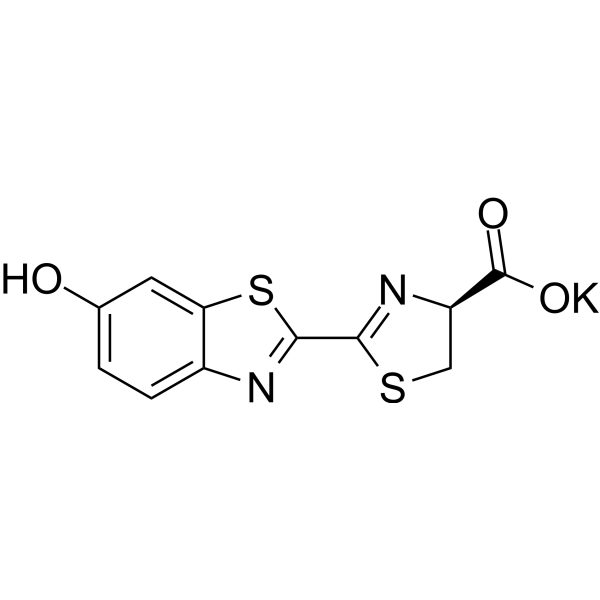
- Formula: C11H7KN2O3S2
- Molecular Weight: 318.41
D-luciferin potassium is the natural substrate of the enzyme luciferase (Luc) that catalyzes the production of the typical yellowgreen light of fireflies. The 560 nm chemiluminescence from this reaction peaks within seconds, with light output that is proportional to luciferase concentration when the substrate luciferin is present in excess. The luciferase (luc) gene is a popular reporter gene for research and agent screening. Chemiluminescent techniques are virtually background-free, making the luc reporter gene ideal for detecting low-level gene expression. As little as 0.02 pg of luciferase can be reliably measured in a standard scintillation counter. In addition to its role as a reporter of gene expression, luciferase is commonly used in an extremely sensitive assay for ATP. We offer the firefly luciferase (HY-P1004A), luciferin free acid (HY-12591A), as well as its water-soluble sodium salts (HY-12591) and potassium salts (HY-12591B) .
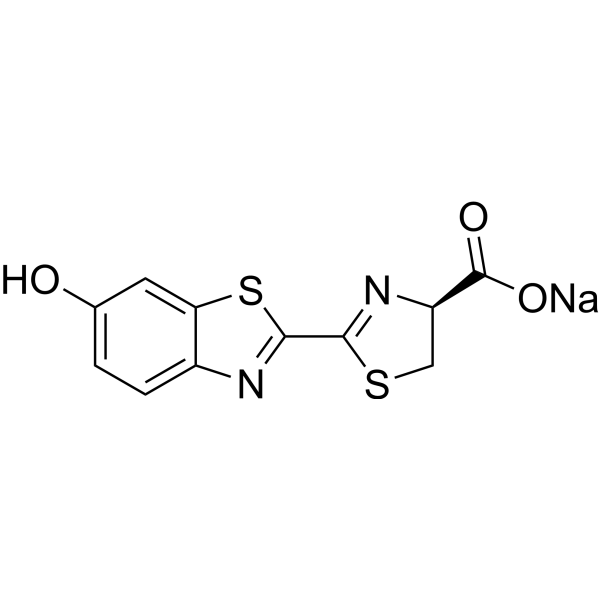
- Formula: C11H7N2NaO3S2
- Molecular Weight: 302.30
D-luciferin sodium is the natural substrate of the enzyme luciferase (Luc) that catalyzes the production of the typical yellowgreen light of fireflies. The 560 nm chemiluminescence from this reaction peaks within seconds, with light output that is proportional to luciferase concentration when the substrate luciferin is present in excess. The luciferase (luc) gene is a popular reporter gene for research and agent screening. Chemiluminescent techniques are virtually background-free, making the luc reporter gene ideal for detecting low-level gene expression. As little as 0.02 pg of luciferase can be reliably measured in a standard scintillation counter. In addition to its role as a reporter of gene expression, luciferase is commonly used in an extremely sensitive assay for ATP. We of er the firefly luciferase (HY-P1004A), luciferin free acid (HY-12591A), as well as its water-soluble sodium salts (HY-12591) and potassium salts (HY-12591B) .
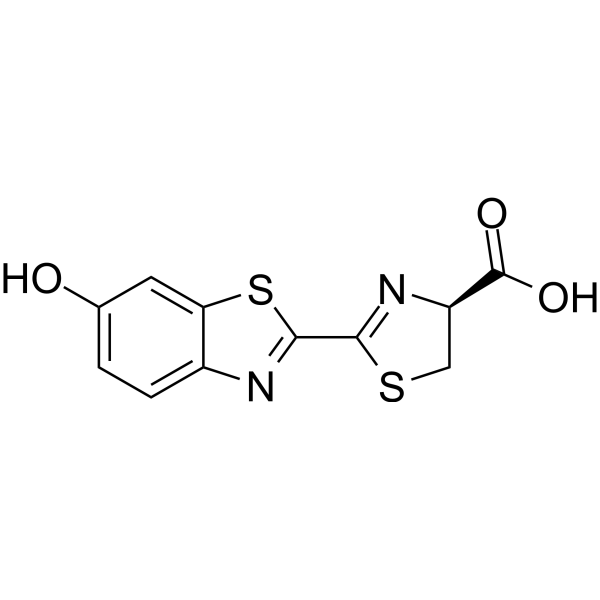
- Formula: C11H8N2O3S2
- Molecular Weight: 280.33
D-luciferin is the natural substrate of the enzyme luciferase (Luc) that catalyzes the production of the typical yellowgreen light of fireflies. The 560 nm chemiluminescence from this reaction peaks within seconds, with light output that is proportional to luciferase concentration when the substrate luciferin is present in excess. The luciferase (luc) gene is a popular reporter gene for research and agent screening. Chemiluminescent techniques are virtually background-free, making the luc reporter gene ideal for detecting low-level gene expression. As little as 0.02 pg of luciferase can be reliably measured in a standard scintillation counter. In addition to its role as a reporter of gene expression, luciferase is commonly used in an extremely sensitive assay for ATP. We of er the firefly luciferase (HY-P1004A), luciferin free acid (HY-12591A), as well as its water-soluble sodium salts (HY-12591) and potassium salts (HY-12591B) .
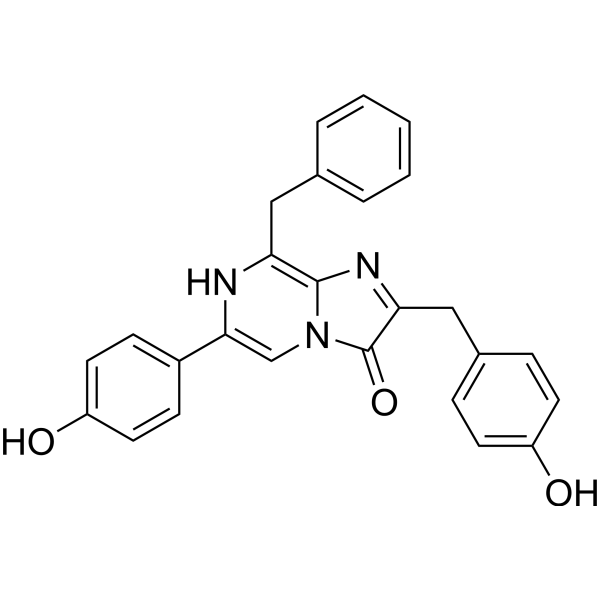
- Formula: C26H21N3O3
- Molecular Weight: 423.46
Coelenterazine is a luminescent enzyme substrate for apoaequorin and Renilla luciferase. Renilla luciferase and substrate coelenterazine has been used as the bioluminescence donor in bioluminescence resonance energy transfer (BRET) to detect protein-protein interactions. Coelenterazine is a superoxide anion-sensitive chemiluminescent probe and it can also be used in chemiluminescent detection of peroxynitrite (Ex/Em = 429/466 nm).
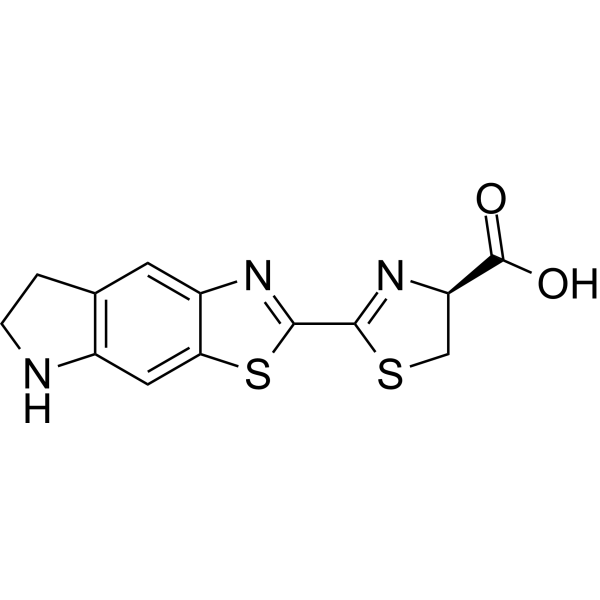

Luciferase (bacterial) acts as a luminescence inducer and catalyst. Luciferase (bacterial) catalyzes the reduction of methylene blue, quinones, ferricyanide, and FMN using reduced DPN (HY-12452) (or an alternative electron donor for FMN). Luciferase (bacterial) binds to reduced FMN to form a luminescent reaction complex. Luciferase (bacterial) scavenges reactive oxygen species (ROS) and protects bacterial cells from oxidative stress damage. Luciferase (bacterial) is applicable to studies related to oxidative stress.
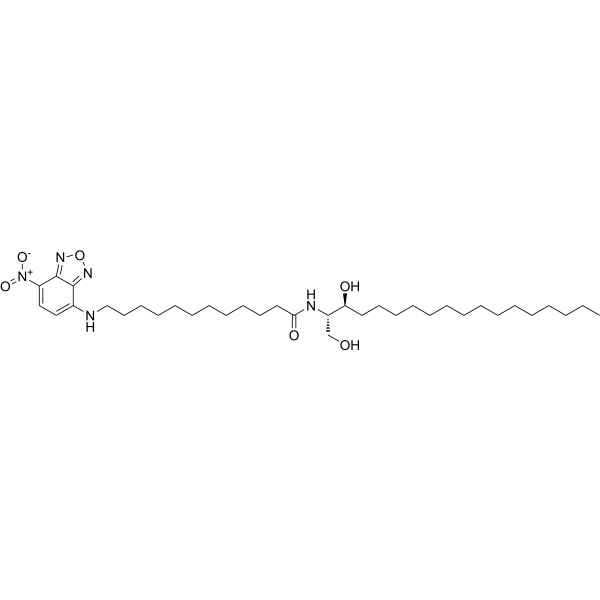
- Formula: C36H63N5O6
- Molecular Weight: 661.92
N-(NBD-Aminolauroyl)safingol is a fluorescent group.
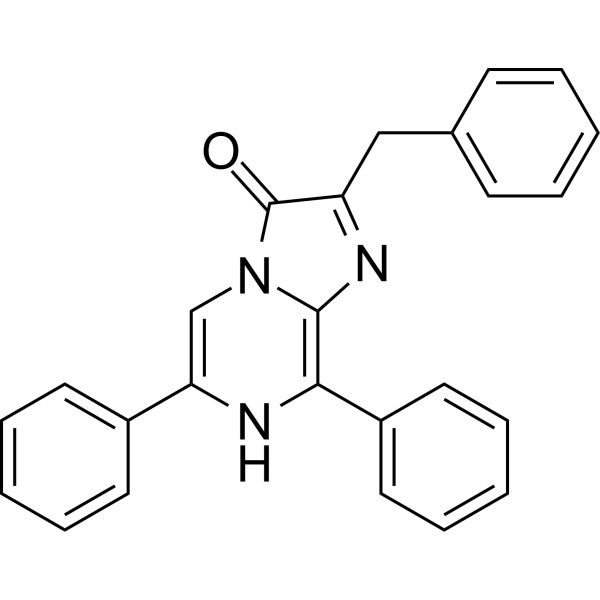
- Formula: C25H19N3O
- Molecular Weight: 377.44
Diphenylterazine (DTZ) is a bioluminescence agent. Diphenylterazine alone yielded very little background, leading to excellent signal-to-background ratios.
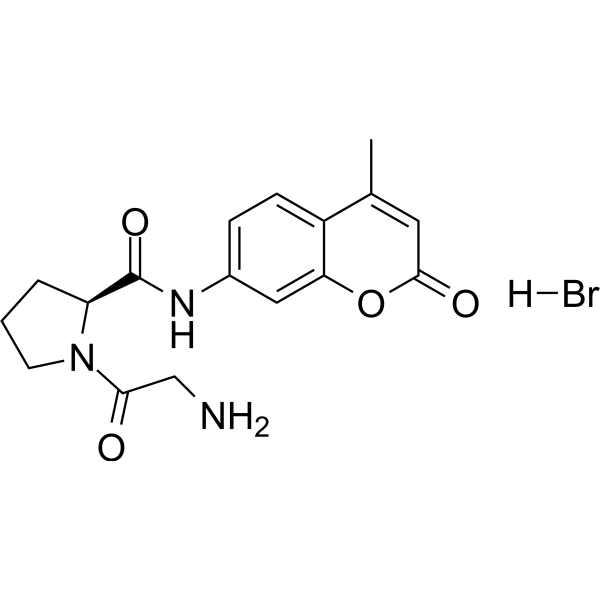
- Formula: C17H20BrN3O4
- Molecular Weight: 410.27
Gly-Pro-AMC hydrobromide is a fluorescent dye, it can be used as a specific fluorescent substrate for detecting Dipeptidyl peptidase IV (DPP-IV) activity.

Luciferase, firefly is the light-emitting enzyme responsible for the bioluminescence of fireflies and click beetles. Luciferase, firefly catalytic substrate is D-luciferin (HY-12591B).
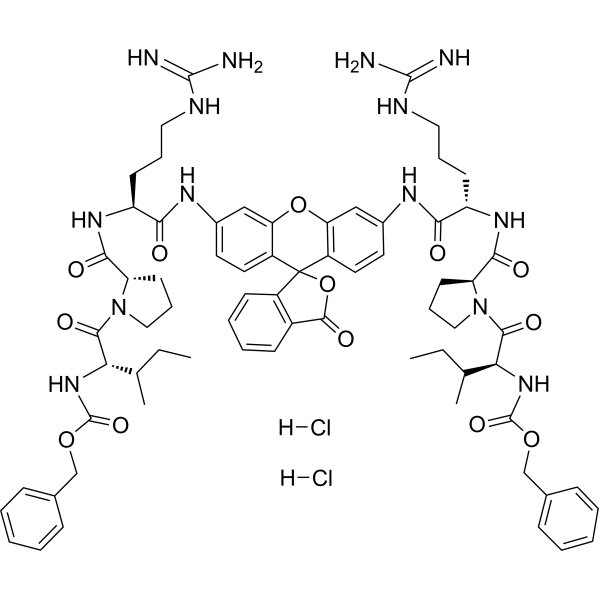
- Formula: C70H88Cl2N14O13
- Molecular Weight: 1404.44
BZiPAR is a fluorescent probe. BZiPAR also is a substrate of trypsin that becomes fluorescent after cleavage by the protease.
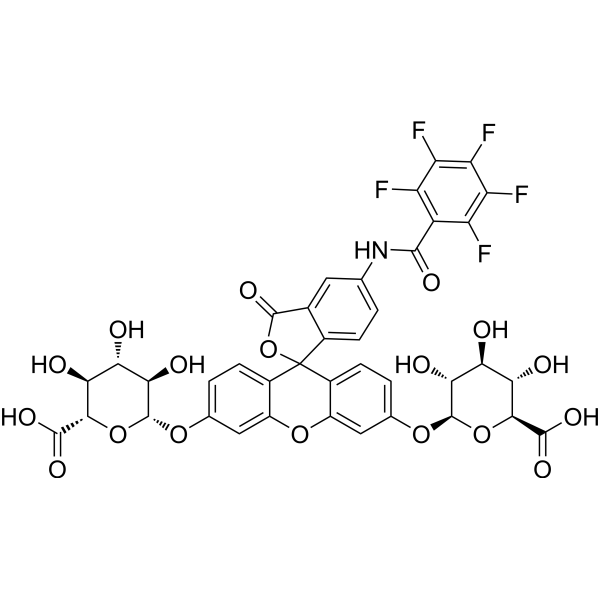
- Formula: C39H28F5NO18
- Molecular Weight: 893.63
FDGlcU can be used as a fluorescent probe for non-invasively image with a high level of fluorescent activity. FDGlcU is non-fluorescent when the fluorescein is conjugated with two mono-glucuronides (Ex/Em=480/514 nm).
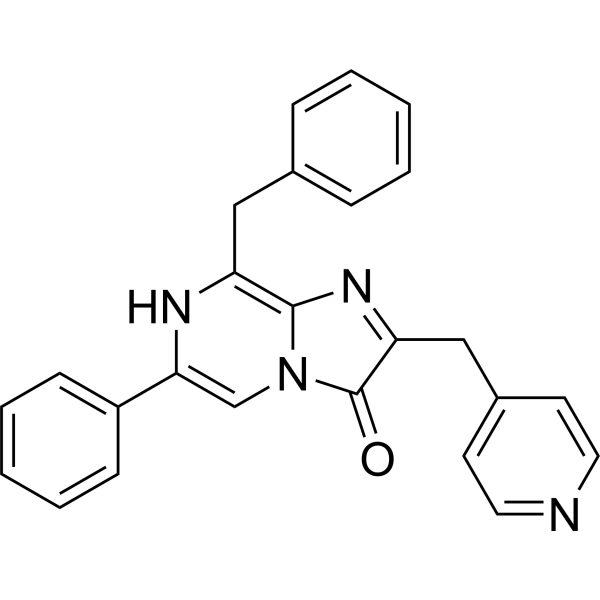
- Formula: C25H20N4O
- Molecular Weight: 392.45
pyCTZ (Pyridyl CTZ), a pyridyl Coelenterazine (CTZ) analog, and is an ATP-independent pyridyl substrate of LumiLuc luciferase. pyCTZ generates strong blue bioluminescence in the presence of luciferases. pyCTZ can be used for aequorin-based calcium sensing.

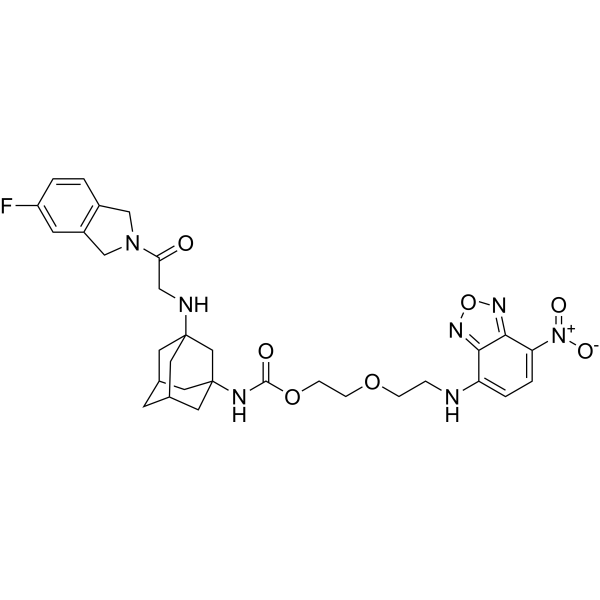
- Formula: C31H36FN7O7
- Molecular Weight: 637.66
DPP-8/9 probe-1 (compound 20) is a fluorescent probe targeting Dipeptidyl Peptidase DPP8/9, which can be selectively labeled and visualized in vitro by fluorescence microscopy Active DPP8/9. DPP-8/9 probe-1 contains a nitrobenzoxadiazole (NBD) tag and has high affinity and selectivity for DPP8/9 over related S9 family members (IC50 of 210 nM and 15 nM, respectively).
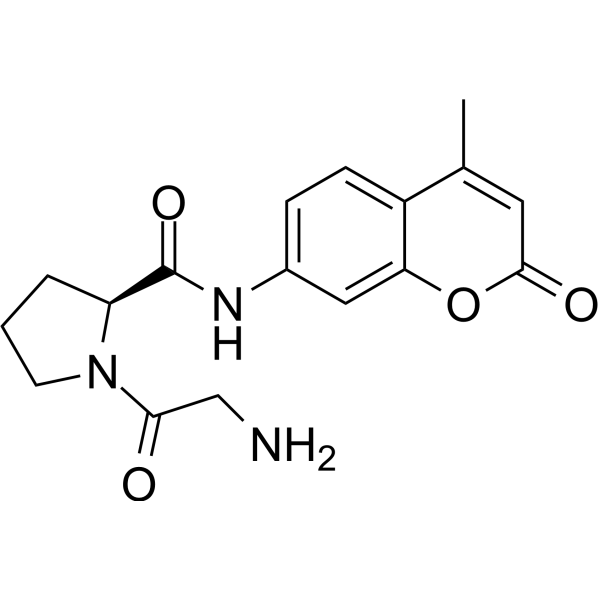
- Formula: C17H19N3O4
- Molecular Weight: 329.35
Gly-Pro-AMC is a biological active peptide. (This is a fluorescent dipeptidylaminopeptidase IV substrate, Abs/Em=353/442 nm.)
![1-[3-(Succinimidyloxycarbonyl)benzyl]-4-[2-(3,4-dihydro-2H-1-benzopyran-6-yl)-5-oxazolyl]pyridinium bromide](https://file.medchemexpress.com/product_pic/hy-d1507.gif "Click to View 1-[3-(Succinimidyloxycarbonyl)benzyl]-4-[2-(3,4-dihydro-2H-1-benzopyran-6-yl)-5-oxazolyl]pyridinium bromide Product Detail")
- Formula: C29H24BrN3O6
- Molecular Weight: 590.42
1-[3-(Succinimidyloxycarbonyl)benzyl]-4-[2-(3,4-dihydro-2H-1-benzopyran-6-yl)-5-oxazolyl]pyridinium bromide is a fluorescence dye.
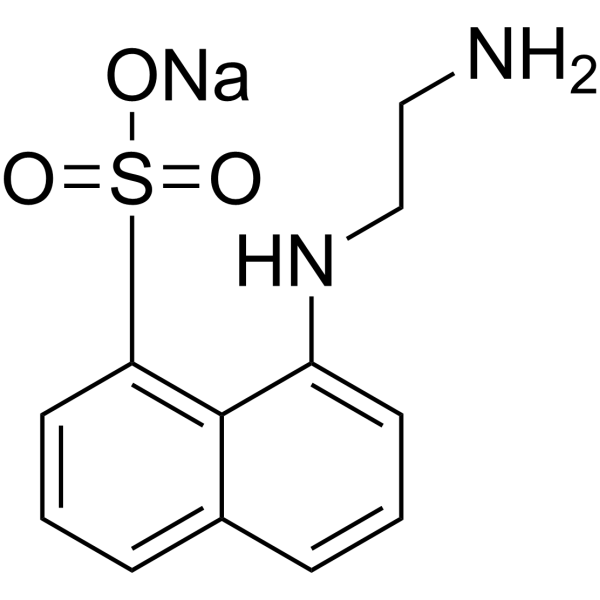
- Formula: C12H13N2NaO3S
- Molecular Weight: 288.30
N-(Aminoethyl)-8-naphthylamine-1-sulfonic acid sodium (1,8-EDNAS sodium) is a multifunctional dye. Dyes are important tools in biological experiments. They can help researchers observe and analyze cell structures, track biomolecules, evaluate cell functions, distinguish cell types, detect biomolecules, study tissue pathology and monitor microorganisms. Their applications range from basic scientific research to clinical A wide range of diagnostics. Dyes are also widely used in traditional fields such as textile dyeing, as well as in emerging fields such as functional textile processing, food pigments and dye-sensitized solar cells.
- 1



