



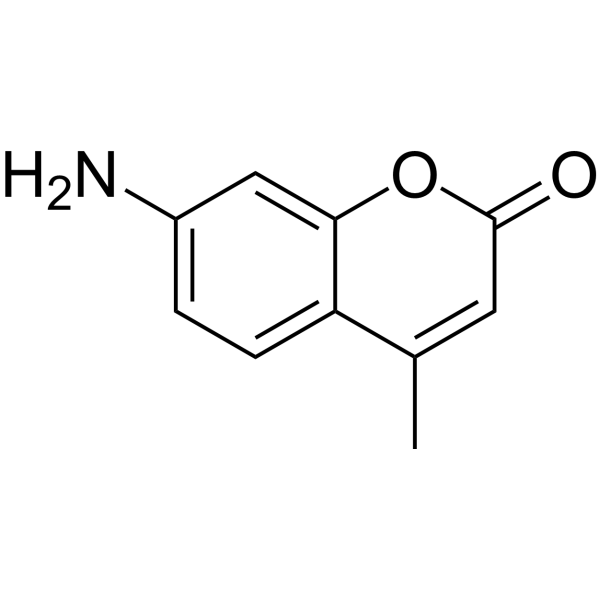
7-Amino-4-methylcoumarin

Based on 1 Customer Validation
7-Amino-4-methylcoumarin belongs to the coumarin class, can be isolated from the endophytic fungus Xylaria sp. and has a broad spectrum of antibacterial activity. 7-Amino-4-methylcoumarin is also commonly used as an important laser dye that emits in the blue region, capable of analyzing glycoprotein monosaccharides and N-linked oligosaccharides, and is also utilized in tissue pathology analysis, enzyme activity measurement, and copper ion detection. The excitation wavelength and emission wavelength are 351 nm and 430 nm, respectively.
For research use only. We do not sell to patients.
- Purity : 99.89%
- CAS No.: 26093-31-2
- Formula: C10H9NO2
- Molecular Weight:175.19
-
Storage:
4°C, protect from light
* In solvent : -80°C, 6 months; -20°C, 1 month (protect from light)

To place orders, for customer services and technical support, please contact: MedChemExpress USA
Tel: 609-228-6898 E-mail: [email protected] [email protected]


-
 Biological Activity
-
Chemical Information
-
Solvent & Solubility
- Purity & Documentation
- References
-
 Help & FAQs


-
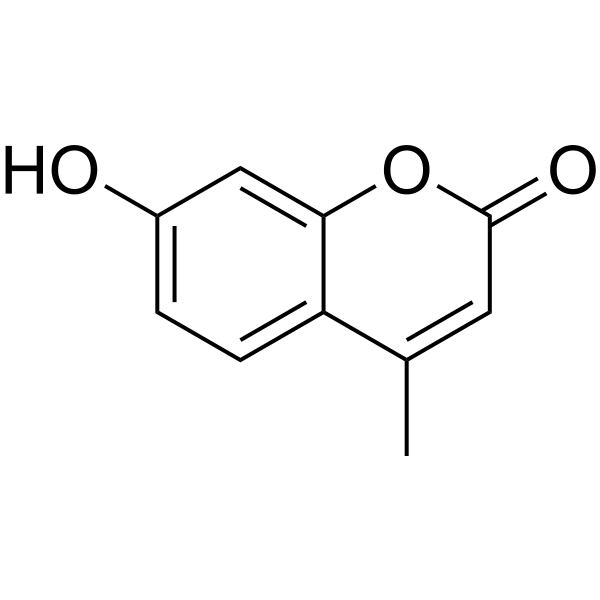
HY-N0187
4-Methylumbelliferone -
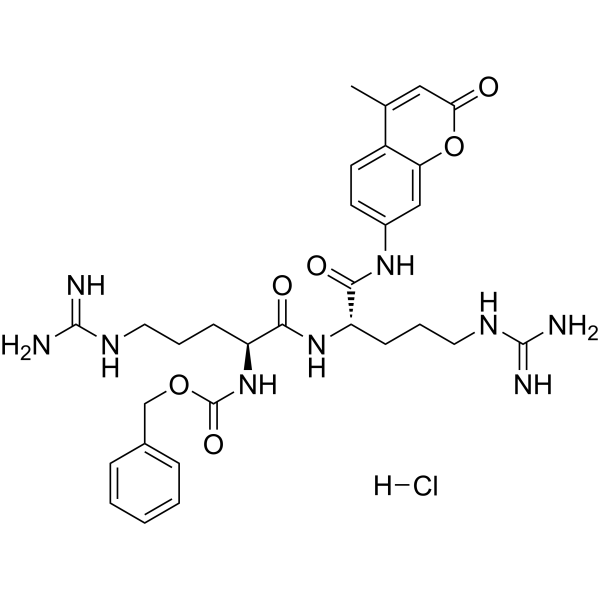
HY-134434
Z-Arg-Arg-AMC hydrochloride -
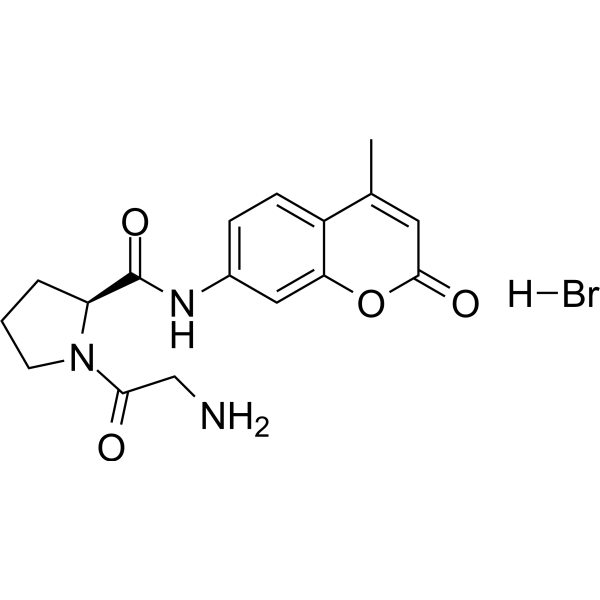
HY-137834
Gly-Pro-AMC hydrobromide -
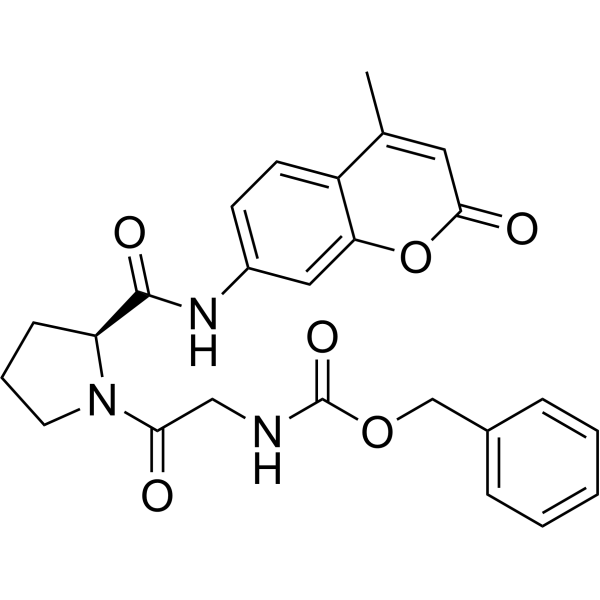
HY-D1670
Z-Gly-Pro-AMC -
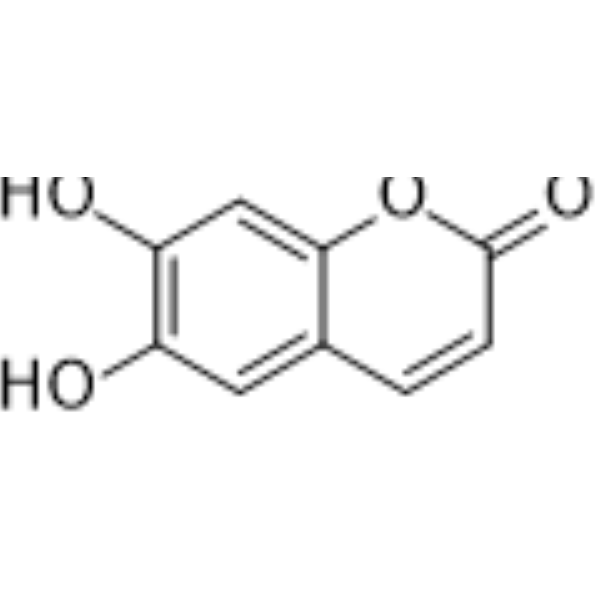
HY-N0284
Esculetin -
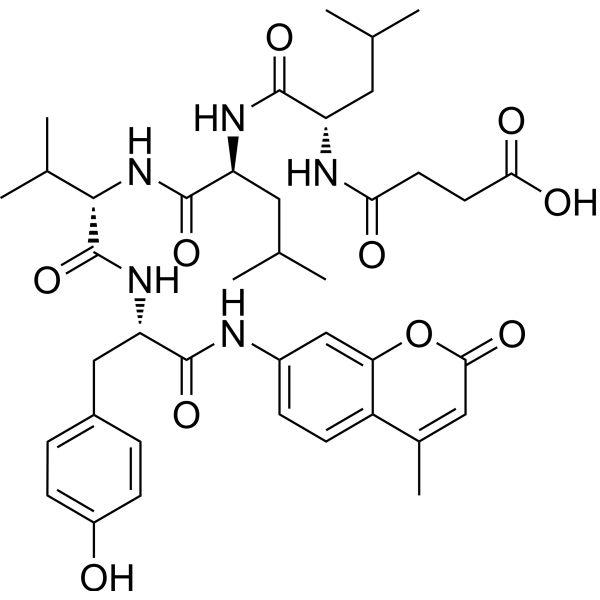
HY-P1002
Suc-Leu-Leu-Val-Tyr-AMC -
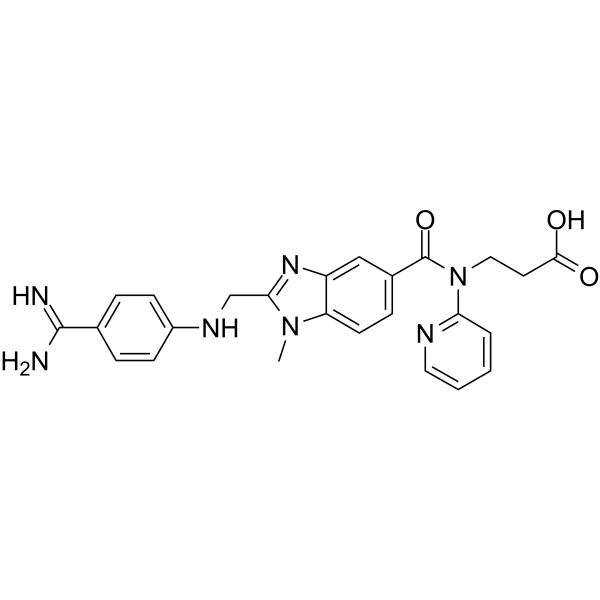
HY-10163
Dabigatran -
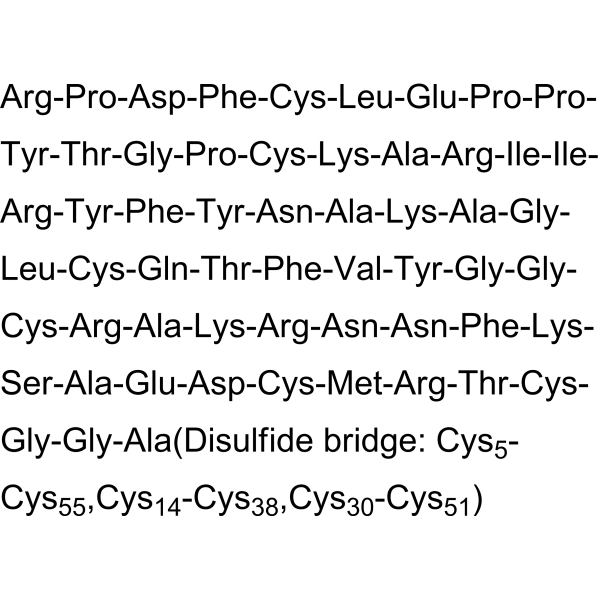
HY-P0017
Aprotinin -
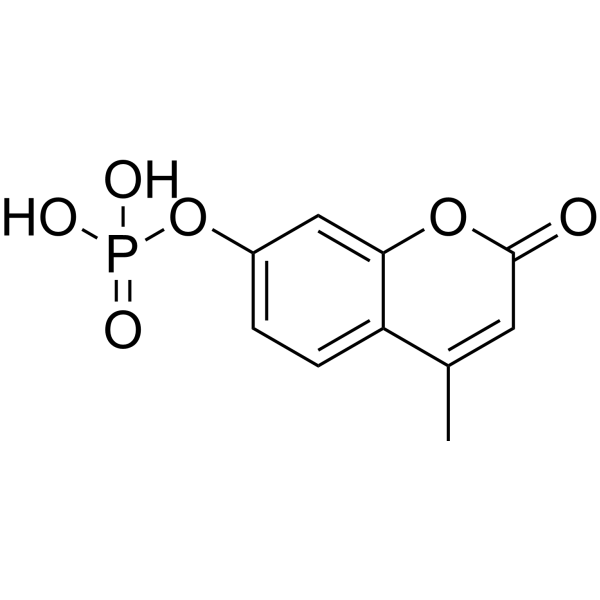
HY-D0994
4-Methylumbelliferyl phosphate -
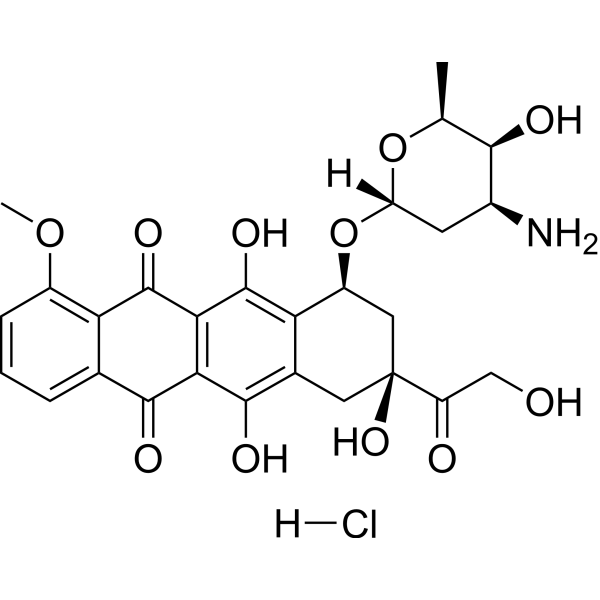
HY-15142
Doxorubicin hydrochloride -
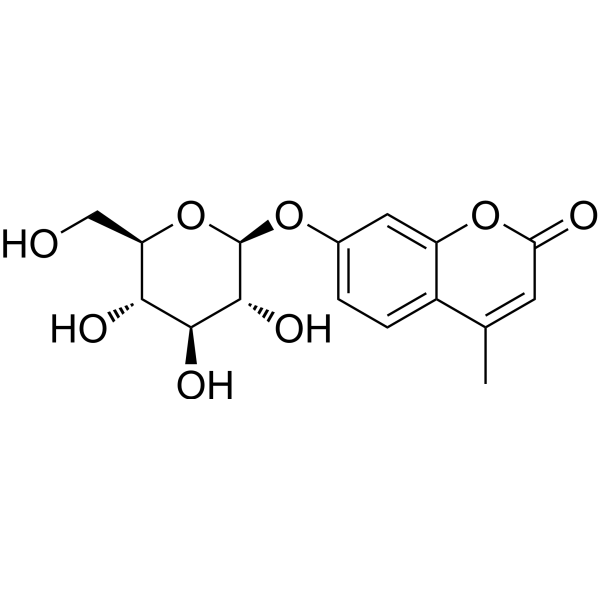
HY-123633
4-Methylumbelliferyl β-D-Glucopyranoside -
HY-10010
Ko 143
All Antibiotic Isoforms
More

Biological Activity
Description
Cellular Effect
|
Cell Line

|
Type | Value | Description | References |
|---|---|---|---|---|
| A549 | GI50 |
>100 μM
Compound: 1; AMC
|
Antiproliferative activity against human A549 cells assessed as growth inhibition measured after 48 hrs by sulforhodamine B assay
Antiproliferative activity against human A549 cells assessed as growth inhibition measured after 48 hrs by sulforhodamine B assay
|
[PMID: 31271961] |
| B16-F10 | IC50 |
>10 μM
Compound: AMC
|
Cytotoxicity against mouse B16-F10 cells assessed as cell growth inhibition measured after 72 hrs by MTT assay
Cytotoxicity against mouse B16-F10 cells assessed as cell growth inhibition measured after 72 hrs by MTT assay
|
[PMID: 33956447] |
| HBL-100 | GI50 |
>100 μM
Compound: 1; AMC
|
Antiproliferative activity against human HBL100 cells assessed as growth inhibition measured after 48 hrs by sulforhodamine B assay
Antiproliferative activity against human HBL100 cells assessed as growth inhibition measured after 48 hrs by sulforhodamine B assay
|
[PMID: 31271961] |
| HeLa | GI50 |
>100 μM
Compound: 1; AMC
|
Antiproliferative activity against human HeLa cells assessed as growth inhibition measured after 48 hrs by sulforhodamine B assay
Antiproliferative activity against human HeLa cells assessed as growth inhibition measured after 48 hrs by sulforhodamine B assay
|
[PMID: 31271961] |
| HepG2 | IC50 |
>10 μM
Compound: AMC
|
Cytotoxicity against human HepG2 cells assessed as cell growth inhibition measured after 72 hrs by MTT assay
Cytotoxicity against human HepG2 cells assessed as cell growth inhibition measured after 72 hrs by MTT assay
|
[PMID: 33956447] |
| HT-29 | IC50 |
>10 μM
Compound: AMC
|
Cytotoxicity against human HT-29 cells assessed as cell growth inhibition measured after 72 hrs by MTT assay
Cytotoxicity against human HT-29 cells assessed as cell growth inhibition measured after 72 hrs by MTT assay
|
[PMID: 33956447] |
| T47D | GI50 |
>100 μM
Compound: 1; AMC
|
Antiproliferative activity against human T47D cells assessed as growth inhibition measured after 48 hrs by sulforhodamine B assay
Antiproliferative activity against human T47D cells assessed as growth inhibition measured after 48 hrs by sulforhodamine B assay
|
[PMID: 31271961] |
| U-937 | CC50 |
>2000 μM
Compound: 10
|
Cytotoxicity against human U937 cells by trypan blue assay after 48 hrs
Cytotoxicity against human U937 cells by trypan blue assay after 48 hrs
|
[PMID: 18060791] |
| U-937 | IC50 |
>2000 μM
Compound: 10
|
Growth inhibition of human U937 cells by [3H]thymidine incorporation assay
Growth inhibition of human U937 cells by [3H]thymidine incorporation assay
|
[PMID: 18060791] |
| U-937 | CC50 |
>2000 μM
Compound: 12
|
Cytotoxicity against human U937 cells after 48 hrs by trypan blue assay
Cytotoxicity against human U937 cells after 48 hrs by trypan blue assay
|
[PMID: 22925447] |
| U-937 | IC50 |
>2000 μM
Compound: 12
|
Antiproliferative activity against human U937 cells assessed as incorporation of [3H]-methyl-thymidine after 12 hrs by scintillation counting
Antiproliferative activity against human U937 cells assessed as incorporation of [3H]-methyl-thymidine after 12 hrs by scintillation counting
|
[PMID: 22925447] |
| WiDr | GI50 |
>100 μM
Compound: 1; AMC
|
Antiproliferative activity against human WiDr cells assessed as growth inhibition measured after 48 hrs by sulforhodamine B assay
Antiproliferative activity against human WiDr cells assessed as growth inhibition measured after 48 hrs by sulforhodamine B assay
|
[PMID: 31271961] |
In Vitro
Guidelines (The following is our recommended protocol. This protocol only provides guidance and should be modified according to your specific needs).
7-Amino-4-methylcoumarin for histopathological analysis[2]
(1) Stock solution preparation: Dissolve 7-Amino-4-methylcoumarin in DMSO at a concentration of 10 mg/mL and store at room temperature in the dark.
(2) Working solution preparation: Dissolve 25 μL of 7-Amino-4-methylcoumarin stock solution and 2.5 mg of 2-pyridine borane in 50 mL of 1 mg/mL aqueous citric acid solution.
(3) Tissue sections are first deparaffinized and hydrated, then oxidized in 0.5% (w/v) periodic acid aqueous solution for 10 minutes.
(4) After rinsing with distilled water, stain the sections with 7-Amino-4-methylcoumarin working solution for 10 minutes.
(5) After rinsing again with distilled water, counterstain the sections with Mayer’s hematoxylin for 1 minute.
(6) Wash the sections under lukewarm tap water (approximately 40°C) for 5 minutes, then immerse in a solution of eosin Y diluted 3:1 with 95% ethanol for 2 minutes.
(7) After rinsing with distilled water, dehydrate and clear the sections, then mount with the non-fluorescent anhydrous mounting medium Entellan New.
(8) Use an inverted microscope equipped with LED illumination (385 nm UV fluorescence), with a 96 H & E filter set BP390/40, BS420, and BP450/40 for bright-field morphological analysis and UV-excited fluorescence signal analysis.
7-Amino-4-methylcoumarin for enzyme activity assay[3]
(1) Culture Rhodococcus and related actinomycetes on glucose yeast extract agar at 25°C for five days.
(2) Dissolve 5 mg of the enzyme to be tested in 200 μL N,N-dimethylformamide to prepare a 2×10⁻³ M solution. Dilute to 10 mL with 0.05 M Tris buffer and adjust pH to 7.0. The substrate solution can be used immediately without sterilization or stored at -20°C for up to 3 months.
(3) Fluorescent 7-Amino-4-methylcoumarin is generated from conjugated substrates through enzymatic hydrolysis. Excitation occurs at 380 nm, close to the strong 366 nm spectral line of a mercury arc lamp, with strong fluorescence emission at 460 nm in the blue region.
(4) Lightly draw 20 mm diameter circles with a pencil on Whatman No. 3 filter paper (approximately 90 mm) placed inside the lid of a standard 100 mm Petri dish.
(5) Use wooden toothpicks to transfer inocula of five-day cultured Rhodococcus and related actinomycetes into the circled areas on the filter paper. Inoculate 8-10 spots per dish and rub firmly into the paper, then add one drop of substrate using an automatic pipette.
(6) Use the bottom of the Petri dish as a lid and incubate the reaction mixture at 37°C for 10 minutes.
(7) Record a positive reaction when strong light-blue fluorescence is observed under a UV lamp.
7-Amino-4-methylcoumarin for Cu2+ detection[4]
(1) Dissolve 7-Amino-4-methylcoumarin and o-phenylenediamine (OPD) in 0.2 M Tris-HCl buffer at pH 7.4 to final concentrations of 50 μM and 50 mM, respectively, and adjust the pH to 7-9.
(2) Prepare a copper sulfate stock solution and dilute to obtain concentrations ranging from 0-300 μM.
(3) Mix 100 μL of different concentrations of Cu2+ solution with AMC (20 μL, 50 μM), OPD (50 μL, 50 mM), and Tris-HCl (830 μL, 0.2 M, pH 7.4) thoroughly at 37°C for 2 minutes, then incubate the mixture in a 37°C water bath for 2 hours. Record the fluorescence intensity ratio change (F557/F438) of the ratiometric sensor using a fluorescence spectrophotometer at an excitation wavelength of 360 nm.
(4) Keep 20 μL 50 μM AMC, 50 μL 50 mM OPD, and 830 μL 0.2 M Tris-HCl buffer (pH = 7.4) in a 2 mL centrifuge tube at 37°C in a water bath for 2 minutes; then add 100 μL of different metal ions to the reaction solution and react at 37°C for 2 hours. Record the fluorescence intensity ratio change of the ratiometric sensor using an F-4500 fluorescence spectrophotometer at an excitation wavelength of 360 nm.
MedChemExpress (MCE) has not independently confirmed the accuracy of these methods. They are for reference only.


Chemical Information
-
CAS No. 26093-31-2
-
Appearance Solid
-
Molecular Weight 175.19
-
Formula C10H9NO2
-
Color White to off-white
-
SMILES
O=C1C=C(C)C2=CC=C(N)C=C2O1
-
Synonyms
Coumarin 120; AMC
-
Shipping
Room temperature in continental US; may vary elsewhere.
-
Storage
4°C, protect from light
* In solvent : -80°C, 6 months; -20°C, 1 month (protect from light)


Solvent & Solubility
In Vitro:
DMSO : 100 mg/mL (570.81 mM; Need ultrasonic; Hygroscopic DMSO has a significant impact on the solubility of product, please use newly opened DMSO)
Please refer to the solubility information to select the appropriate solvent. Once prepared, please aliquot and store the solution to prevent product inactivation from repeated freeze-thaw cycles.
Storage method and period of stock solution: -80°C, 6 months; -20°C, 1 month (protect from light). When stored at -80°C, please use it within 6 months. When stored at -20°C, please use it within 1 month.
Please refer to the solubility information to select the appropriate solvent. Once prepared, please aliquot and store the solution to prevent product inactivation from repeated freeze-thaw cycles.
Storage method and period of stock solution: -80°C, 6 months; -20°C, 1 month (protect from light). When stored at -80°C, please use it within 6 months. When stored at -20°C, please use it within 1 month.
Concentration (start) × Volume (start) = Concentration (final) × Volume (final)


Purity & Documentation
-
Data Sheet (277 KB)
-
SDS (546 KB)
- English - EN (546 KB)
- Français - FR (546 KB)
- Deutsch - DE (546 KB)
- Norwegian - NO (546 KB)
- Español - ES (546 KB)
- Swedish - SV (546 KB)
- Italian - IT (546 KB)
- Korean - KR (546 KB)
- Portuguese - PT (546 KB)
-
Handling Instructions (2659 KB)
References
[1]. Żamojć K, et al. Fluorescence quenching of 7-amino-4-methylcoumarin by different TEMPO derivatives. Spectrochim Acta A Mol Biomol Spectrosc. 2015 Feb 5;136 Pt C:1875-80. [Content Brief]
[2]. Hiroshi Takase, et al. 7-Amino-4-methylcoumarin as a fluorescent substitute for Schiff's reagent: a new method that can be combined with hemalum and eosin staining on the same tissue section. Biotech Histochem. 2023 Jan;98(1):54-61. [Content Brief]
[4]. Xiaoyan Sun, wt al. A highly sensitive and selective ratiometric sensing platform based on 7-amino-4-methylcoumarin for naked-eye visual fluorescence sensing of Cu2. Spectrochim Acta A Mol Biomol Spectrosc. 2022 Feb 15;267(Pt 2):120627. [Content Brief]


Complete Stock Solution Preparation Table
Please refer to the solubility information to select the appropriate solvent. Once prepared, please aliquot and store the solution to prevent product inactivation from repeated freeze-thaw cycles.
Storage method and period of stock solution: -80°C, 6 months; -20°C, 1 month (protect from light). When stored at -80°C, please use it within 6 months. When stored at -20°C, please use it within 1 month.
| Optional Solvent | Concentration Solvent Mass | 1 mg | 5 mg | 10 mg | 25 mg |
|---|---|---|---|---|---|
| DMSO | 1 mM | 5.7081 mL | 28.5404 mL | 57.0809 mL | 142.7022 mL |
| 5 mM | 1.1416 mL | 5.7081 mL | 11.4162 mL | 28.5404 mL | |
| 10 mM | 0.5708 mL | 2.8540 mL | 5.7081 mL | 14.2702 mL | |
| 15 mM | 0.3805 mL | 1.9027 mL | 3.8054 mL | 9.5135 mL | |
| 20 mM | 0.2854 mL | 1.4270 mL | 2.8540 mL | 7.1351 mL | |
| 25 mM | 0.2283 mL | 1.1416 mL | 2.2832 mL | 5.7081 mL | |
| 30 mM | 0.1903 mL | 0.9513 mL | 1.9027 mL | 4.7567 mL | |
| 40 mM | 0.1427 mL | 0.7135 mL | 1.4270 mL | 3.5676 mL | |
| 50 mM | 0.1142 mL | 0.5708 mL | 1.1416 mL | 2.8540 mL | |
| 60 mM | 0.0951 mL | 0.4757 mL | 0.9513 mL | 2.3784 mL | |
| 80 mM | 0.0714 mL | 0.3568 mL | 0.7135 mL | 1.7838 mL | |
| 100 mM | 0.0571 mL | 0.2854 mL | 0.5708 mL | 1.4270 mL |


7-Amino-4-methylcoumarin Related Classifications
HY-D0027 Related Classifications
 Powered by Bioz